
Integrating audio into a holiday light display elevates the festive experience—especially when synchronized music dances with twinkling lights. But nothing breaks the illusion of magic faster than exposed speaker wires snaking up through the branches of your Christmas tree. A tangled mess of cables can undermine an otherwise polished setup. Fortunately, with thoughtful planning and a few clever techniques, you can seamlessly conceal those wires while maintaining functionality and safety.
The goal isn’t just aesthetics; it’s about preserving the immersive quality of your display. Whether you're hosting a neighborhood light show or simply enhancing your family’s holiday ambiance, hiding speaker wires contributes to a more professional and enchanting presentation. This guide walks through proven methods, materials, and strategies used by display designers and audio enthusiasts alike to keep wiring invisible and secure.
Understanding the Challenge: Why Speaker Wires Stand Out
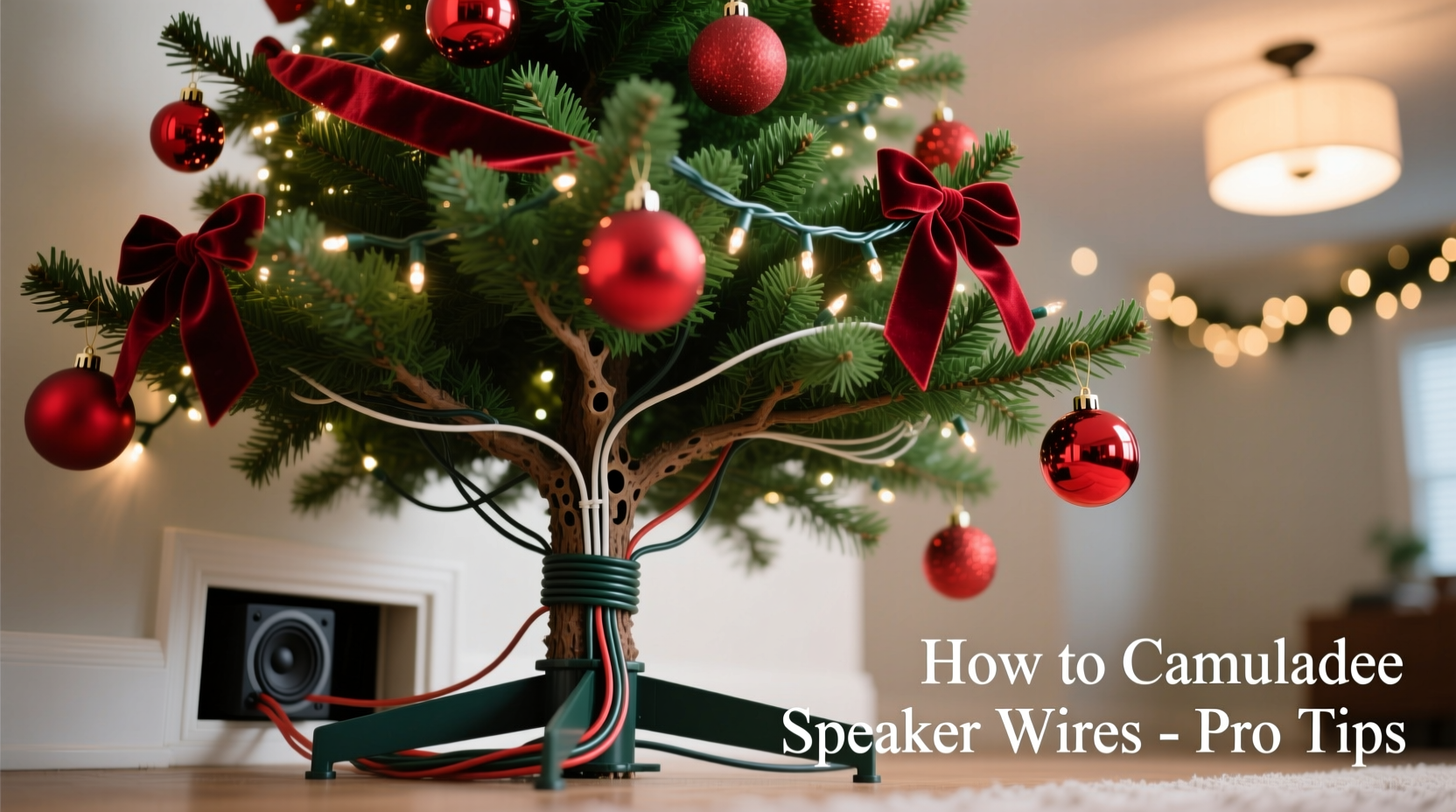
Speaker wires are typically thin, dark-colored cables that run from an amplifier or audio source to outdoor-rated speakers positioned near or within the tree. Unlike low-voltage lighting cords, which can blend into bark or shadows, speaker wires often need to travel vertically through open space—making them highly visible, especially at night under spotlighting.
Additionally, many DIY setups use basic black or red/black stranded wire that lacks insulation thickness or color variation, increasing contrast against green foliage. Wind, snow, and foot traffic can also dislodge loosely placed wires, exposing them over time.
“Audio is half the experience in modern holiday displays. If the wires are obvious, the audience notices the mechanics instead of the magic.” — Daniel Ruiz, Professional Holiday Display Designer
Step-by-Step Guide to Concealing Speaker Wires
Camouflaging speaker wires requires a combination of physical concealment, strategic routing, and material selection. Follow this sequence for optimal results:
- Plan Your Wire Path Early: Before assembling the tree or installing lights, determine where the speaker will be located and map the most direct yet hidden route for the wire.
- Choose the Right Cable Type: Opt for flat, dark-brown or olive-green speaker wire if possible. Round black cables catch light and create shadows; flat profiles hug surfaces better and reflect less.
- Route Along Natural Features: Use the trunk, central pole (if artificial), or backside branches as natural cover. Avoid crossing open limbs where light would highlight the wire.
- Secure with Low-Profile Fasteners: Use twist ties, green landscape staples, or reusable cable clips designed for outdoor use. Never staple directly into wood or plastic forms.
- Add Camouflage Layers: Wrap sections of wire with faux ivy, garland, or textured tape matching the tree’s color. This breaks up the straight-line appearance of cables.
- Test Audio and Adjust Placement: After concealment, play audio at full volume to ensure no rattling or vibration dislodges the wire.
Effective Camouflage Materials and Methods
Different trees—real, artificial, pre-lit, or custom-built—require tailored approaches. Below are some of the most reliable materials and how to apply them effectively.
- Faux Garland or Tinsel Vines: Drape these around the trunk or along back branches, weaving the wire underneath. Choose darker green or brown varieties for subtlety.
- Rope Light Sleeves: These translucent rubber tubes, often used to protect LED rope lights, can encase speaker wires. Fill them with shredded mulch or moss for texture.
- Garden Twist Ties with Foliage: Available at craft stores, these come wrapped in vine-like material and double as both fastener and cover.
- Textured Electrical Tape: Use matte-finish, bark-patterned tape (common in theater props) to wrap short exposed segments. Match the shade to your tree stand or base.
- Internal Routing (Artificial Trees): Some premium artificial trees have hollow trunks or internal channels. Feed wires through these before stacking sections.
When Realism Matters: Matching Texture and Shadow
Light creates shadows, and shadows reveal edges. A smooth black wire casts a sharper shadow than a textured, irregular surface. To reduce visibility:
- Break up long runs with small loops tucked behind ornaments or branches.
- Avoid tight, straight lines—natural elements aren’t perfectly linear.
- Use multiple small wires instead of one thick bundle; they’re easier to hide individually.
Do’s and Don’ts: Best Practices Summary
| Do | Don't |
|---|---|
| Use flat, dark-colored speaker wire | Use bright or reflective cables |
| Secure wires every 6–8 inches outdoors | Leave wires dangling or loosely draped |
| Conceal entry/exit points at base and top | Allow wires to emerge abruptly from soil or canopy |
| Check connections monthly for wear | Ignore fraying or moisture exposure |
| Label wires at both ends for troubleshooting | Mix unlabeled cables in junction boxes |
Real Example: Transforming a Backyard Tree Display
Consider Mark T., a homeowner in Portland who upgraded his annual Christmas light show to include synchronized audio. His Douglas fir stood 18 feet tall, lit with over 5,000 LEDs, but the speaker wire ran visibly up the front trunk—a detail neighbors repeatedly commented on.
For the next season, Mark rerouted the wire to the north-facing side of the tree, secured it with green vinyl-coated staples every 7 inches, and wrapped the lower 4 feet in a strip of preserved moss garland. He fed the upper section through a split in a decorative wooden star topper, exiting discreetly behind the finial. The result? No visible wires from any viewing angle, even during daytime.
“It took an extra hour,” Mark said, “but now people ask how I got the music to feel like it’s coming from the tree itself.”
Alternative Techniques for Different Tree Types
Your approach should vary depending on whether your tree is real, artificial, potted, or part of a larger display structure.
Real Trees
Natural bark and irregular branching offer excellent opportunities for concealment. Press wires into crevices along the trunk and anchor them beneath lower boughs. Cover the base with a decorative skirt or basket, routing the wire underneath it toward the power/audio source.
Artificial Trees
Many modular trees allow internal wire management. Assemble the bottom section first, thread the speaker wire through the central rod, then continue stacking. Exit the wire near the intended speaker location using a small notch or gap between branches.
Potted or Container Trees
If your tree sits in a planter, run the wire down through the inside of the pot, exiting near the drainage hole. From there, route it under mulch or along a garden edge to the amplifier. Conceal the base connection with fake pinecones or decorative rocks.
Custom-Built Displays
Some enthusiasts build frames or lattices shaped like trees. In these cases, integrate the speaker wire into the frame during construction—using PVC conduits painted to match or embedding channels behind faux bark panels.
Essential Checklist: Camouflage Like a Pro
Before finalizing your display, go through this checklist to ensure complete wire concealment:
- ☐ Selected flat-profile, dark-colored speaker wire
- ☐ Planned wire path avoiding high-visibility zones
- ☐ Secured wire every 6–12 inches with weather-resistant fasteners
- ☐ Wrapped or covered exposed segments with matching material
- ☐ Tested audio output and checked for vibration issues
- ☐ Inspected entire route after dark for glints or shadows
- ☐ Protected ground-level connections from moisture and pets
- ☐ Labeled both ends of the wire for future maintenance
Frequently Asked Questions
Can I paint speaker wires to match my tree?
Painting standard speaker wire is not recommended. Most paints won’t adhere well to plastic insulation and may compromise conductivity or waterproofing. Instead, choose pre-colored wire or wrap it with colored, non-conductive tape rated for outdoor use.
Is it safe to run speaker wires through tree branches?
Yes, as long as the wires are rated for outdoor use and properly secured. Avoid wrapping tightly around living branches, as growth over time can damage insulation. Maintain slack and use soft ties that won’t cut into bark.
What if I don’t want to drill or modify my artificial tree?
No modifications are necessary. Use adhesive-backed hook-and-loop cable clips in inconspicuous locations—like the back of trunk sections—and route wires behind dense foliage. Many find this method just as effective as internal routing.
Final Thoughts: Elevate Your Display with Invisible Details
The difference between a good holiday display and a breathtaking one lies in attention to detail. While lights and music capture attention, it’s the absence of distractions—like visible wires—that sustains the illusion. Camouflaging speaker wires isn’t merely cosmetic; it’s an act of storytelling, guiding viewers to focus on emotion rather than infrastructure.
By combining smart planning, appropriate materials, and a bit of creativity, you can maintain flawless audio delivery without compromising visual elegance. These techniques scale from modest front-yard trees to elaborate public installations, proving that professionalism doesn’t require complexity—just intention.




 浙公网安备
33010002000092号
浙公网安备
33010002000092号 浙B2-20120091-4
Comments
No comments yet. Why don't you start the discussion?