
Carrying a large purse is often a necessity—whether you're a busy professional, a parent on the go, or someone who prefers to keep everything within reach. But what starts as convenience can quickly lead to chronic shoulder pain, neck stiffness, and poor posture. The weight of a fully loaded tote, especially when carried on one shoulder for extended periods, places uneven stress on your musculoskeletal system. Over time, this imbalance can contribute to muscle strain, spinal misalignment, and even long-term postural damage.
The good news? You don’t have to give up your favorite bag to protect your body. With mindful habits, strategic packing, and a few simple adjustments, you can carry a large purse comfortably and safely. This guide offers practical, science-backed solutions to help you avoid discomfort while maintaining both style and functionality.
Understand the Impact of Heavy Bag Carrying
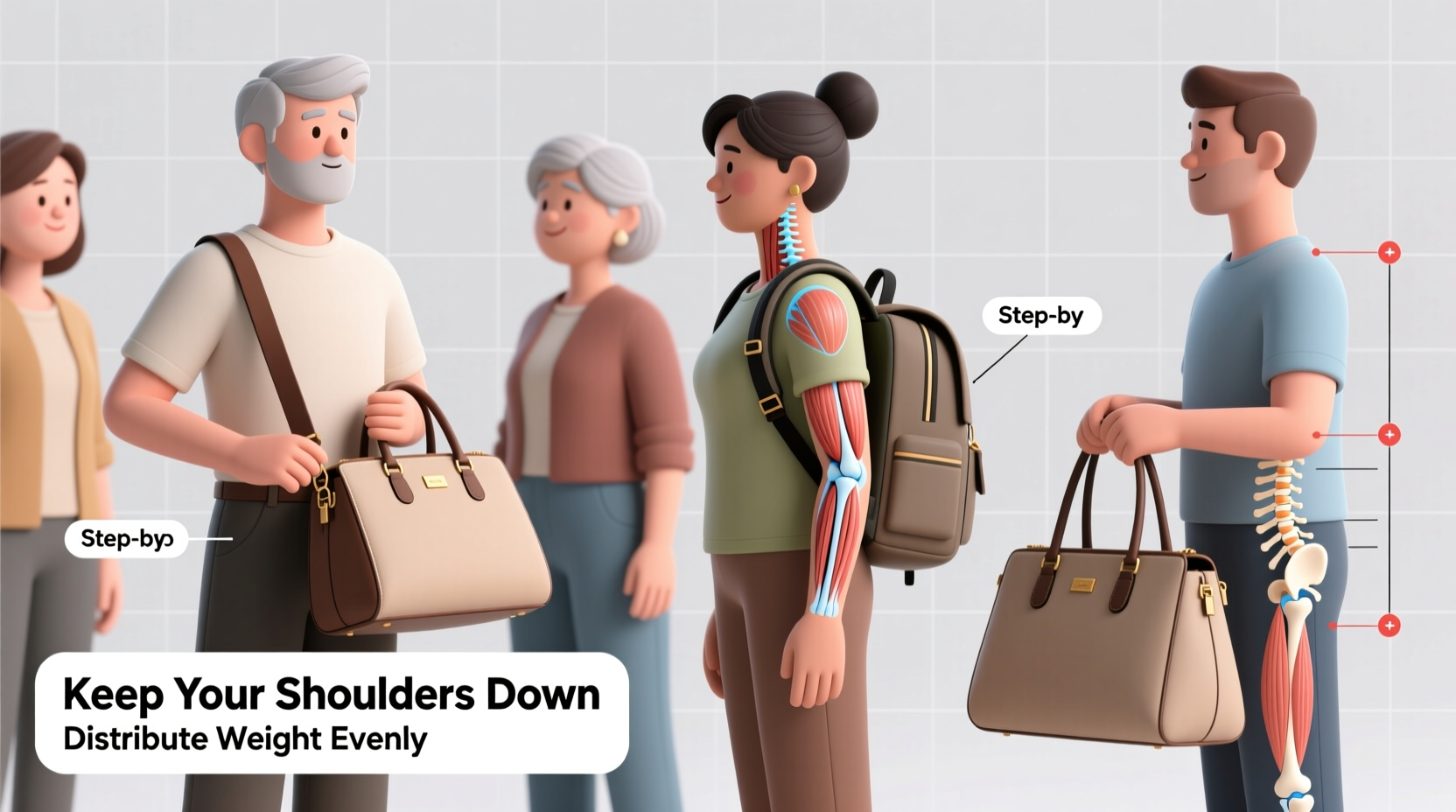
When you sling a heavy purse over one shoulder, your body compensates in subtle but significant ways. The weight pulls your torso to one side, causing your spine to curve laterally—a movement known as lateral flexion. To counterbalance, muscles on the opposite side contract, leading to asymmetrical tension. Over hours or days, this creates muscular imbalances that may manifest as:
- Pain or tightness in the shoulder, neck, or upper back
- Headaches from cervical strain
- Reduced range of motion in the shoulders
- Forward head posture or rounded shoulders
- Numbness or tingling in the arm due to nerve compression
A 2021 study published in the *Journal of Physical Therapy Science* found that women who regularly carried shoulder bags weighing more than 4 kilograms (about 8.8 lbs) reported significantly higher rates of musculoskeletal discomfort compared to those using lighter loads or alternative carrying methods.
“Carrying excessive weight on one side of the body forces postural adaptation. What feels like minor discomfort today could evolve into chronic pain if left unaddressed.” — Dr. Lena Patel, DPT, Orthopedic Rehabilitation Specialist
Choose the Right Bag with Ergonomic Design
Not all large purses are created equal. The design of your bag plays a crucial role in how it affects your body. Prioritize features that promote balance, comfort, and weight distribution.
Key Features to Look For:
- Wide, padded straps: Narrow straps concentrate pressure on a small area of the shoulder. Wider, cushioned straps distribute weight more evenly.
- Crossbody capability: Bags with adjustable straps that can be worn across the chest shift weight closer to your center of gravity, reducing strain.
- Structured bottom: A firm base prevents sagging and keeps contents organized, minimizing shifting weight.
- Multipoint carry options: Purses that offer both top handles and shoulder straps allow you to alternate carrying styles throughout the day.
Material Matters
Heavier materials like full-grain leather add structural durability but also increase baseline weight—even before adding contents. Consider lightweight synthetics or canvas blends if you frequently carry bulky items. The goal is to minimize dead weight so your load stays functional, not burdensome.
Distribute Weight Strategically Inside Your Purse
How you pack your bag is just as important as how you carry it. Unevenly distributed weight causes the bag to tilt, forcing your body to compensate with awkward postures.
Smart Packing Checklist
- Use internal organizers or pouches to group similar items (makeup, tech, documents).
- Place heavier items (laptops, water bottles, books) closest to your back and centered in the bag.
- Keep frequently used items in outer pockets to avoid constant reaching and twisting.
- Remove unnecessary items daily—don’t carry yesterday’s receipts or empty coffee cups.
- Invest in mini containers to consolidate loose items and reduce shifting.
| Item Type | Recommended Placement | Rationale |
|---|---|---|
| Laptop or tablet | Back panel, against your body | Minimizes forward pull and stabilizes center of gravity |
| Water bottle | Side pocket or lower interior | Prevents top-heavy imbalance |
| Wallet & keys | Front zippered compartment | Reduces need to dig deep, minimizing shoulder torque |
| Makeup or toiletries | Top section or dedicated pouch | Keeps light items from dragging down the upper area |
Adopt Body-Friendly Carrying Habits
Even the best-designed bag can cause harm if used incorrectly. Integrate these techniques into your daily routine to protect your posture and joints.
Alternate Shoulders Regularly
Switching sides every 10–15 minutes allows muscles to recover and reduces cumulative strain. Set a reminder on your phone or use natural cues (e.g., after exiting a building) to prompt the switch.
Wear It Crossbody When Possible
Adjust the strap so the bag rests diagonally across your torso, ideally near your hip. This position engages your core slightly and aligns the load with your spine’s natural curvature.
Avoid “Hiking” the Shoulder
Many people instinctively lift their shoulder to keep a slipping bag in place. This action contracts the trapezius muscle excessively and leads to tension buildup. Instead, adjust the strap length so the bag sits securely without needing constant readjustment.
Use Both Hands Occasionally
If your purse has top handles, carry it by hand for short stretches—like walking through an airport or entering a building. This gives your shoulders a break and encourages upright posture.
Real-Life Example: Sarah’s Shoulder Pain Turnaround
Sarah, a 34-year-old marketing manager, carried a large leather tote packed with her laptop, charger, planner, gym clothes, and makeup for nearly eight hours a day. After six months, she began experiencing persistent pain at the base of her neck and numbness in her right arm.
She consulted a physical therapist who identified unilateral loading as the primary cause. Together, they implemented changes:
- She replaced her rigid leather tote with a lightweight crossbody satchel featuring padded straps.
- She started using a separate slim laptop sleeve and only carried essentials.
- She adopted a habit of switching shoulders every 15 minutes and performed daily shoulder rolls.
Within three weeks, Sarah reported a 70% reduction in pain. By week six, her symptoms had largely resolved. Her experience underscores how small behavioral shifts can yield significant health improvements.
Step-by-Step Guide to Pain-Free Purse Carrying
Follow this daily routine to prevent discomfort and maintain healthy posture:
- Before Leaving Home: Weigh your bag. If it exceeds 10% of your body weight (e.g., more than 11 lbs for a 110-lb person), remove non-essentials.
- Select the Right Carry Style: Opt for crossbody or two-shoulder carry if available. Avoid single-shoulder carry for walks longer than five minutes.
- Adjust Strap Length: Ensure the bag sits at or above hip level. Too low = increased leverage and strain.
- Midday Reset: During lunch or a break, take your bag off, stretch your shoulders, and repack if needed.
- End-of-Day Check: Empty unnecessary items. Clean out receipts, wrappers, and unused products immediately.
Frequently Asked Questions
Can carrying a heavy purse cause permanent posture damage?
Yes, chronic one-sided loading can lead to postural adaptations such as scoliosis-like curvature or forward head posture. While not true scoliosis, this functional asymmetry can become ingrained over time and may require physical therapy to correct.
Are backpacks better than purses for preventing pain?
In most cases, yes. Backpacks distribute weight evenly across both shoulders and close to the spine. However, many professionals prefer the look of a purse. If you must use a purse, mimic backpack benefits by choosing crossbody styles and keeping weight under 10% of your body weight.
What exercises help counteract purse-related strain?
Strengthening the rhomboids, lower trapezius, and rotator cuff muscles improves postural support. Simple daily exercises include seated rows with resistance bands, shoulder blade squeezes, and chin tucks to correct forward head posture.
Final Tips for Long-Term Comfort
Your purse should serve you—not sabotage your health. Think of it as an extension of your daily ergonomics, much like your office chair or footwear. A few proactive choices make a lasting difference:
- Conduct a weekly “purge” to remove clutter.
- Keep a mini inventory list of essential items to avoid overpacking.
- Consider rotating between two bags—one for work, one for weekends—to vary load patterns.
- Pay attention to early warning signs: tingling, fatigue, or stiffness are signals to reassess your habits.
“The body tolerates imbalance for a surprisingly long time—but eventually, it demands payment in pain. Smart carrying habits are preventive medicine.” — Dr. Marcus Tran, Chiropractic Biomechanics Researcher
Take Action Today for a Pain-Free Tomorrow
You don’t need to sacrifice function or fashion to carry your belongings safely. Start tonight by unpacking your purse and weighing it. Replace bulky items with compact alternatives. Adjust your strap length and plan to switch shoulders tomorrow. Small changes compound into lasting relief.
If you’ve struggled with shoulder pain from purse carrying, share your story or tips in the comments. Your experience could help someone else avoid years of discomfort. Let’s redefine what it means to carry our lives with confidence—and without pain.




 浙公网安备
33010002000092号
浙公网安备
33010002000092号 浙B2-20120091-4
Comments
No comments yet. Why don't you start the discussion?