
Carrying everything you need—from work essentials to gym gear or weekend supplies—can quickly turn a manageable load into a back-straining burden. The key isn’t just about stuffing more into your backpack; it’s about intelligent organization, weight distribution, and choosing what truly matters. Overloading leads to discomfort, posture issues, and even long-term musculoskeletal problems. But with the right techniques, you can significantly increase your carrying capacity while staying balanced, comfortable, and efficient.
This guide breaks down proven methods used by travelers, students, commuters, and outdoor enthusiasts to pack more without compromising comfort or safety. From strategic layering to gear selection and body mechanics, these insights will transform how you use your backpack for daily life or extended trips.
Choose the Right Backpack for Your Needs
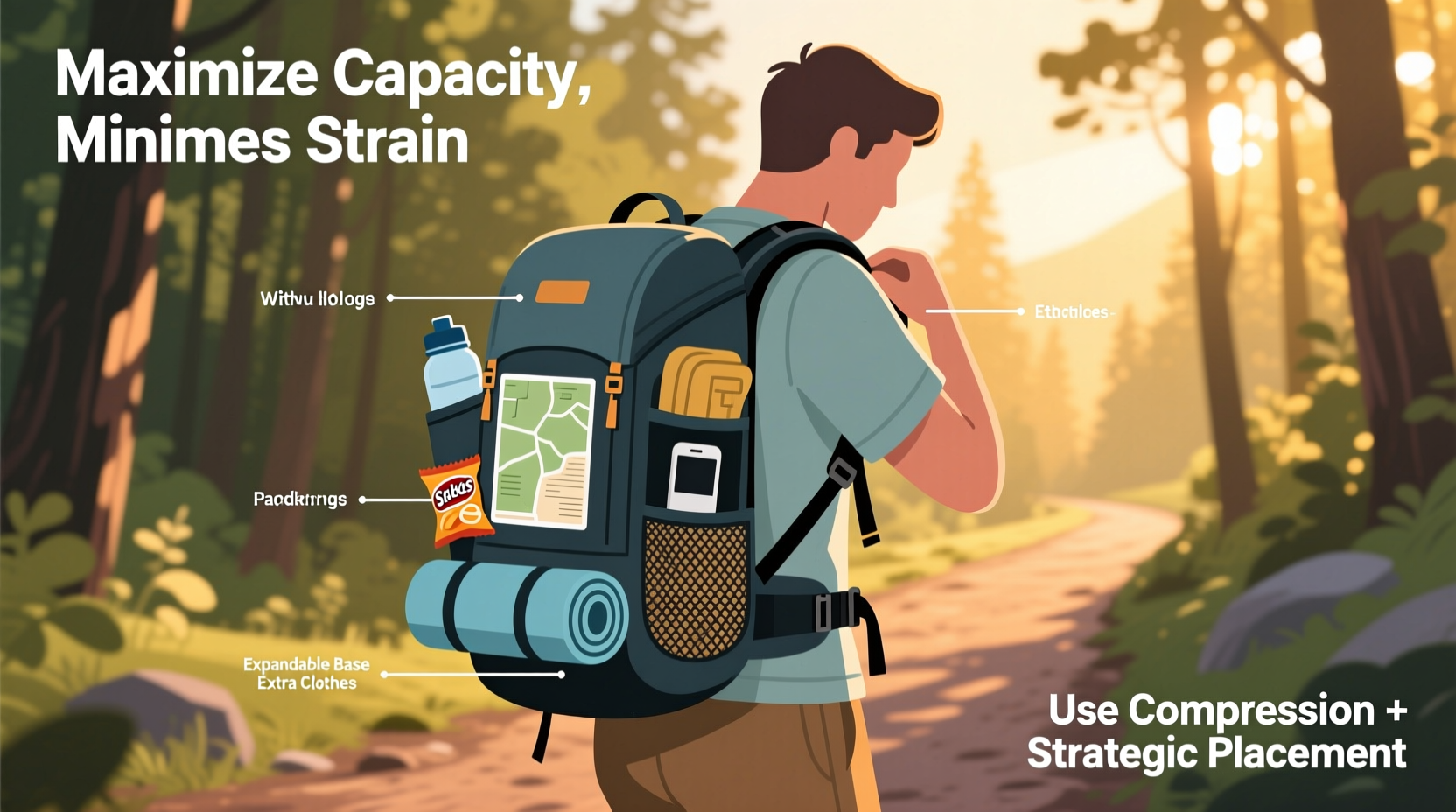
Not all backpacks are created equal. A poorly designed bag—even if large—can make carrying 15 pounds feel like 30. The foundation of smart loading begins with selecting a backpack that supports both capacity and ergonomics.
Look for models with:
- Adjustable, padded shoulder straps
- A supportive chest or hip strap (especially for loads over 10 lbs)
- Multiple compartments for organization
- Back ventilation panels to reduce sweat buildup
- Durable, lightweight materials like ripstop nylon or polyester
For example, hiking backpacks often feature load-lifter straps and frames that transfer weight to the hips, reducing spinal pressure. Commuter packs may include laptop sleeves and quick-access pockets but still benefit from ergonomic design. If you're regularly carrying heavy loads, consider a 40–50 liter pack with a built-in frame sheet or aluminum stays.
“Your backpack should support your spine, not compromise it. A well-fitted pack with proper weight transfer can reduce perceived load by up to 30%.” — Dr. Lena Torres, Physical Therapist & Ergonomics Consultant
Master the Art of Packing Order and Layering
How you place items inside your backpack affects balance far more than total weight alone. Poorly distributed contents create tipping forces, uneven shoulder strain, and awkward posture. Follow this logical layering system to maintain equilibrium and accessibility.
Step-by-Step: Optimal Packing Sequence
- Bottom Layer – Soft, Non-Essential Items: Pack clothes, sleeping bags, or extra layers at the base. These conform to the shape of the pack and act as cushioning.
- Middle Layer – Heavy Core Items: Place dense objects like laptops, books, or cooking gear close to your back and centered between your shoulder blades. This keeps the center of gravity tight and reduces forward pull.
- Top Layer – Frequently Used Gear: Store items you’ll access during the day—wallet, phone, snacks, rain jacket—at the top or in an upper compartment.
- External Pockets – Quick-Access Essentials: Use side mesh pockets for water bottles, umbrellas, or transit cards. Reserve front zipper pockets for keys, pens, or masks.
Reduce Bulk Without Sacrificing Functionality
You don’t need to bring everything you own. Smart packing means minimizing volume through substitution, compression, and multi-use items. Volume equals resistance—bulky items shift weight and limit usable space.
Effective Space-Saving Techniques
- Roll clothes instead of folding: Rolling compresses air out and prevents deep creases. Use compression cubes for added efficiency.
- Use vacuum or compression sacks: Especially useful for jackets, sweaters, or sleeping bags. Can reduce volume by up to 50%.
- Transfer liquids to smaller containers: Decant shampoo, lotion, or coffee into travel-sized bottles rather than carrying full retail packaging.
- Combine functions: Choose a jacket that doubles as insulation, or shoes that work for walking and casual wear.
- Ditch unnecessary packaging: Remove instruction booklets, excess plastic, or promotional inserts from new gadgets before packing.
| Item Type | Bulk Reduction Strategy | Potential Space Saved |
|---|---|---|
| Clothing (x5 outfits) | Roll + compression cube | ~35% |
| Toiletries | Mini containers + solid bar soap | ~50% |
| Cables & Chargers | Multi-port USB-C hub | ~40% |
| Books/Documents | Digital copies on tablet | ~70% |
| Snacks | Vacuum-sealed portions | ~30% |
Real Example: The Urban Commuter’s Dilemma
Maya, a graphic designer in Seattle, routinely carried her 15-inch laptop, sketchbook, lunch, water bottle, headphones, and a change of clothes to coworking spaces. Her old backpack weighed nearly 22 pounds when fully loaded, causing neck pain and fatigue by mid-afternoon.
She restructured her approach using three key principles: weight redistribution, item consolidation, and timing. She replaced her hardcover sketchbook with a digital drawing tablet, switched to a collapsible silicone water bottle, and began leaving non-essential shoes at the office twice a week. She also started using a hip belt on her upgraded backpack to offload lower-back stress.
The result? A consistent pack weight of 12 pounds with better balance and no pain. She gained space for a light sweater and still accessed everything she needed—all without increasing backpack size.
Weight Limits and Body Mechanics
No matter how clever your packing, exceeding safe weight thresholds leads to injury risk. General guidelines suggest:
- Children (elementary): No more than 10–15% of body weight
- Teens and adults: Maximum 15–20% of body weight
- Extended carrying (e.g., hiking): Up to 25% only with properly fitted gear and training
For a 150-pound adult, that means keeping loads under 22.5 pounds. But weight isn’t the only factor—how it’s carried matters more. A poorly balanced 15-pound pack can feel heavier than a well-distributed 20-pound one.
Signs You’re Overloaded
- Leaning forward to stay upright
- Numbness or tingling in shoulders or arms
- Difficulty breathing or restricted chest movement
- Sweating excessively due to poor airflow
- Straps digging into skin despite padding
Essential Packing Checklist
Before zipping up your backpack, run through this checklist to ensure efficiency, balance, and necessity:
- ✅ Have I removed all unnecessary packaging?
- ✅ Are heavy items centered and close to my back?
- ✅ Is my laptop or tablet secured in a padded sleeve?
- ✅ Am I using compression sacks or rolled clothing to save space?
- ✅ Do I have quick access to ID, phone, and wallet?
- ✅ Are liquids sealed and stored upright in a waterproof pouch?
- ✅ Is the total weight within 20% of my body weight?
- ✅ Are straps adjusted to fit snugly without restricting movement?
- ✅ Did I leave behind anything I can acquire later or go without?
- ✅ Is the hip/chest strap engaged if carrying over 10 lbs?
Frequently Asked Questions
Can I carry more if I use a larger backpack?
Not necessarily. A bigger backpack tempts overpacking. Instead of increasing volume, focus on optimizing what you carry. A 30-liter pack with excellent organization often holds more functionally than a disorganized 50-liter bag.
What’s the best way to carry a laptop without adding bulk?
Use a dedicated, padded compartment against your back. Avoid placing it in outer pockets where it shifts or protrudes. Consider a lightweight ultrabook or tablet if portability is critical. Never stack heavy books directly on top of your laptop inside the pack.
Are rolling backpacks a good alternative?
They can be, especially in urban environments with smooth surfaces. However, they fail on stairs, trails, or crowded transit. They also lack weight transfer to the hips and can cause shoulder imbalance when carried by hand. For most people, a well-packed traditional backpack remains superior.
Final Thoughts: Carry Smarter, Not Harder
Maximizing what fits in your backpack isn’t about brute force—it’s about precision, planning, and respect for your body’s limits. By choosing the right gear, organizing strategically, and eliminating waste, you can comfortably carry more than you thought possible.
Every ounce saved through smart decisions compounds into greater mobility, less fatigue, and longer-lasting physical comfort. Whether you're commuting across town or trekking through nature, the difference lies not in the size of your bag, but in the intelligence behind what goes inside it.




 浙公网安备
33010002000092号
浙公网安备
33010002000092号 浙B2-20120091-4
Comments
No comments yet. Why don't you start the discussion?