
In a world where we juggle IDs, credit cards, transit passes, loyalty programs, and access badges, the traditional wallet has become obsolete for many. Carrying ten or more cards in a standard bifold not only creates an uncomfortable lump in your pocket but increases the risk of damage, misplacement, or even theft. Yet, going cardless isn’t always an option—especially when digital alternatives aren’t universally accepted. The real solution lies in smarter organization, modern tools, and behavioral habits that keep your essentials secure, accessible, and discreet.
This guide explores proven strategies to streamline your card-carrying routine. From minimalist wallets to tech-enabled solutions and organizational psychology, you’ll learn how to reduce physical burden while enhancing security and efficiency.
Assess Your Card Needs: Less Is More
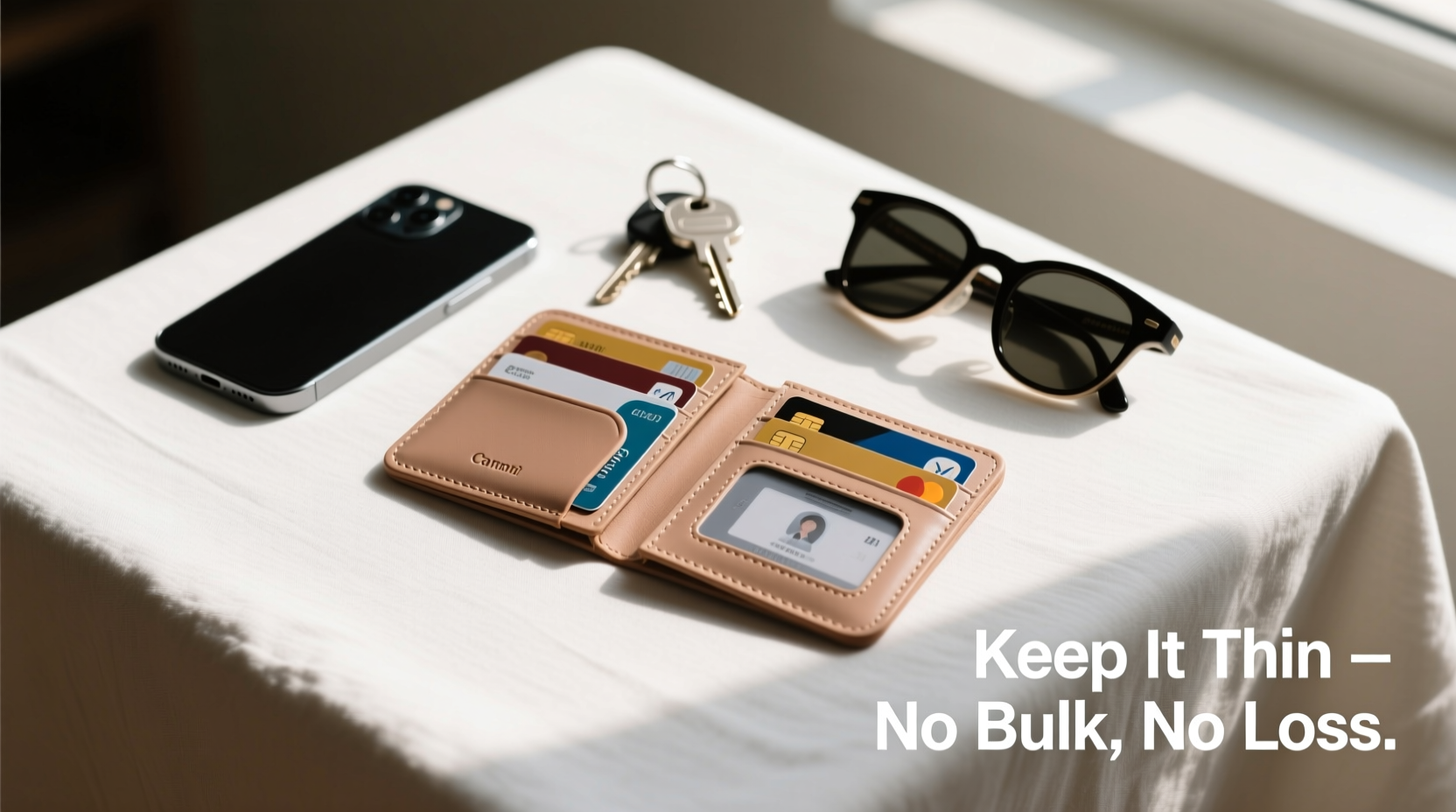
The first step toward minimizing pocket bulk is evaluating which cards you actually need on hand daily. Most people carry 30–50% more than necessary out of habit, not necessity. Start by laying out every card you own and categorizing them:
- Daily Use: Driver’s license, primary credit/debit card, office badge, transit card
- Situational: Secondary credit card, gym membership, library card, insurance ID
- Rarely Used: Backup cards, expired rewards, old memberships
Keep only the “Daily Use” group in your immediate rotation. Store situational cards at home in a labeled organizer. Digitize what you can—many services now offer mobile versions via apps like Apple Wallet or Google Pay.
Choose the Right Carrier: Beyond the Traditional Wallet
Not all wallets are created equal. The right carrier depends on lifestyle, profession, and environment. Below is a comparison of popular options based on capacity, profile, security, and durability.
| Type | Card Capacity | Profile (Thin?) | Security Features | Best For |
|---|---|---|---|---|
| Bifold Leather Wallet | 4–6 | No | None | Formal settings, low-card users |
| Front-Pocket Slim Wallet | 3–5 | Yes | RFID blocking, quick-access slot | Minimalists, urban commuters |
| Tactical Money Clip with Sleeve | 5–8 + cash | Moderate | Reinforced stitching, anti-slip grip | Professionals needing both cards and cash |
| Modular Card Organizer (e.g., Secrid, Ridge) | 4–7 | Yes | Aluminum shell, RFID protection | Design-conscious users |
| Digital Card Case (e.g., Coin, Cred) | Virtual: up to 8–10 | Ultra-thin | Biometric lock, app-based switching | Early adopters, tech-heavy lifestyles |
For most, a front-pocket slim wallet made of aluminum or reinforced polymer offers the best balance. These are designed to resist bending, block RFID skimming, and maintain a profile thinner than a smartphone. Brands like Ridge, Dango, and Bellroy have engineered models that hold up to six cards without expansion.
“Carrying fewer cards doesn’t mean less capability—it means better prioritization. A well-designed carrier reduces friction in daily routines.” — Marcus Lin, Urban Mobility Consultant
Step-by-Step Guide: Streamlining Your Daily Carry
Follow this five-step process to reduce bulk and eliminate clutter while ensuring you never lose critical cards.
- Audit All Cards: Remove everything from your wallet. Sort into must-have, situational, and obsolete categories. Discard expired or unused cards immediately.
- Digitize Where Possible: Add compatible cards to Apple Wallet, Google Pay, or Samsung Wallet. This includes boarding passes, event tickets, and some credit cards.
- Select a Minimalist Carrier: Choose a slim, durable case that fits 3–5 cards comfortably. Ensure it supports front-pocket carry to prevent sagging pants and back strain.
- Organize by Priority: Place your most-used card (e.g., debit) in the outermost slot for quick tap-and-go payments. Keep ID behind it for easy access during checks.
- Create a Home Storage System: Use a labeled card holder or small drawer organizer for backup cards. Include emergency contacts and spare keys if needed.
This system ensures that only essential items leave the house, reducing risk and discomfort.
Preventing Loss: Habits and Systems That Work
Losing a card is more than inconvenient—it can lead to fraud, service disruption, and hours spent canceling and replacing. The best defense is a combination of physical safeguards and behavioral consistency.
One effective method is anchoring: always placing your cardholder in the same location when indoors—such as a ceramic dish by the front door or a dedicated desk tray. This eliminates the “Where did I put it?” panic and builds muscle memory.
Another strategy is pairing. Link your card carrier with another daily item—like your keys or phone. Since you’re unlikely to leave home without either, attaching them (via keychain or proximity alert) reduces the chance of forgetting your cards.
Additionally, take photos of the back of each card (excluding full CVV) and store them encrypted in a password manager. This speeds up cancellation if lost, providing quick access to customer service numbers and account details.
Real Example: How a Freelancer Reduced His Carry from 9 Cards to 4
Jamal, a freelance photographer based in Portland, used to carry a thick leather wallet packed with nine cards: two credit cards, a business debit, driver’s license, health insurance, gym key, camera rental membership, public transit pass, and a backup emergency card. After developing chronic lower back pain from sitting with a bulky wallet in his back pocket, he decided to reevaluate.
He started by digitizing his transit and gym memberships using QR codes in his phone’s note app. He consolidated spending onto one travel rewards card and kept a secondary card only for emergencies. His insurance card was saved in his iPhone Wallet, and he stored a high-resolution scan of his driver’s license in a secure cloud folder.
He switched to a titanium card holder that holds four cards flush with a money clip. Now, he carries only his license, primary credit card, secondary card, and a stacked chip-enabled debit. Total thickness: 3.2 mm. He reports improved posture, faster checkout times, and zero incidents of loss in over 14 months.
Do’s and Don’ts of Multi-Card Management
| Do | Don’t |
|---|---|
| Use RFID-blocking materials if carrying contactless cards | Stack too many cards in a tight space—this damages chips and magstripes |
| Rotate cards monthly based on usage patterns | Carry expired or inactive cards “just in case” |
| Store backups in a fireproof home safe or locked drawer | Leave cards loose in pockets—static cling or deep bends cause loss |
| Label cards lightly with symbols (e.g., dot on work badge) for blind identification | Write sensitive info (PINs, passwords) on or near cards |
| Check carrier integrity every 3 months for wear | Use adhesive “card sleeves” that peel and gum up slots |
Frequently Asked Questions
Can I really rely on digital wallets instead of physical cards?
Yes, in most urban and developed areas. Apple Wallet, Google Pay, and Samsung Pay are accepted at over 85% of U.S. retailers and growing globally. However, rural locations, small vendors, and some government offices may still require physical cards. Always carry at least one backup card for emergencies.
What’s the safest way to carry multiple cards in high-theft areas?
Use an RFID-shielded, aluminum-bodied cardholder worn in a front pocket. Avoid back pockets, especially in crowded places. Consider a hidden waist wallet for travel. Pair with a Bluetooth tracker for real-time location alerts.
How do I prevent cards from scratching or demagnetizing?
Avoid stacking cards directly against each other, especially magnetic-stripe ones. Use a rigid cardholder with individual slots or dividers. Keep away from phones, magnets, and extreme heat. Never leave cards on car dashboards or near speakers.
Final Checklist: Optimize Your Card-Carrying Routine
- ✅ Audit all physical cards and remove unnecessary ones
- ✅ Digitize eligible cards using mobile wallet apps
- ✅ Invest in a slim, durable, front-pocket-friendly carrier
- ✅ Organize cards by frequency of use
- ✅ Set up a consistent home storage spot (anchor point)
- ✅ Attach a Bluetooth tracker to your cardholder
- ✅ Back up card details securely in a password manager
- ✅ Review and rotate cards quarterly
Conclusion: Carry Smart, Live Lighter
Reducing pocket bulk isn’t just about comfort—it’s about intentionality. Every item you carry should earn its place. By critically assessing your needs, adopting minimalist hardware, and building reliable habits, you can carry multiple cards with confidence, security, and ease. The goal isn’t to carry less for the sake of minimalism, but to carry better for the sake of living better.




 浙公网安备
33010002000092号
浙公网安备
33010002000092号 浙B2-20120091-4
Comments
No comments yet. Why don't you start the discussion?