
Moving to a new home is exciting—but it comes with a long list of administrative tasks. One of the most important? Updating your address. Whether you're relocating across town or across the country, failing to notify key institutions can lead to missed bills, lost mail, delayed tax refunds, and even identity theft risks. The good news: you don’t need to pay anyone to handle this. With careful planning and the right steps, you can change your address for free and keep everything running smoothly.
Why Changing Your Address Matters
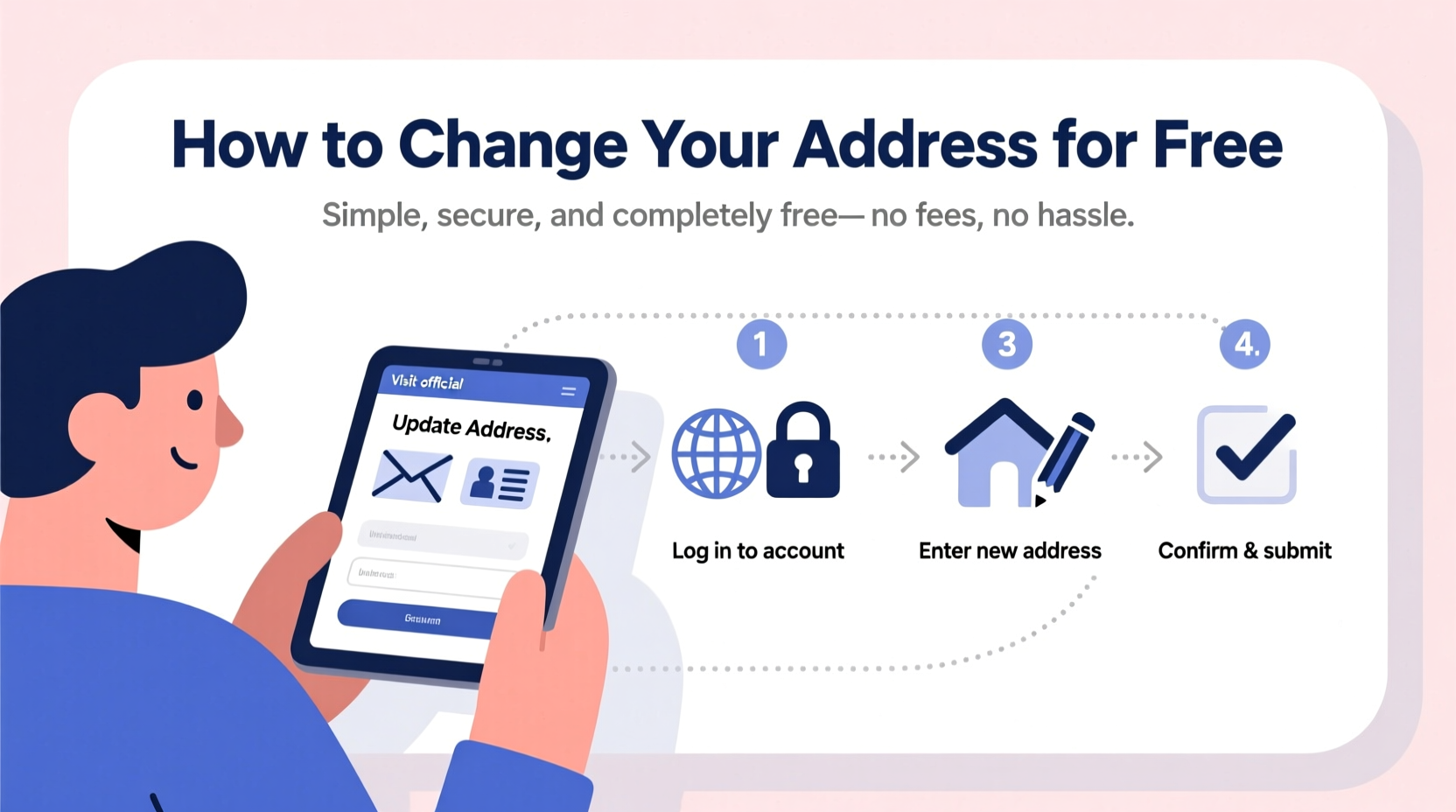
Your address is tied to nearly every aspect of modern life: banking, healthcare, government services, subscriptions, and utilities. When you move without updating your information, critical documents may be sent to your old residence—where they could fall into the wrong hands or simply go unread. According to the U.S. Postal Service, over 40 million people file change-of-address requests annually, yet countless others skip formal updates, risking service interruptions and financial penalties.
Updating your address isn’t just about redirecting mail—it’s about maintaining continuity in your personal and financial affairs. Doing it correctly ensures uninterrupted access to services and protects your privacy.
Step-by-Step Guide to Changing Your Address for Free
You can complete most address changes at no cost using official websites and direct communication methods. Follow this timeline-based approach to stay organized and avoid gaps in service.
- 6 Weeks Before Moving: Begin compiling a list of organizations that need your new address (see checklist below).
- 2–3 Weeks Before Moving: Update non-government accounts like banks, insurance providers, and subscription services.
- 7 Days Before Moving: Submit your official USPS Change of Address request online or in person.
- On Moving Day: Confirm mail forwarding has started and verify utility transfers.
- 1 Week After Moving: Check your new mailbox for forwarded mail and resolve any issues.
- Within 30 Days: Update DMV, voter registration, and other state-level agencies.
Essential Checklist: Who to Notify When You Move
To prevent disruptions, inform all relevant parties. Use this comprehensive checklist to track your progress:
- United States Postal Service (USPS)
- Internal Revenue Service (IRS) and state tax agency
- Department of Motor Vehicles (DMV)
- Banking institutions (checking, savings, credit cards)
- Employer and payroll department
- Health insurance provider and medical offices
- Utility companies (electric, gas, water, internet)
- Rental or mortgage company
- Subscription services (streaming, meal kits, magazines)
- Online shopping accounts (Amazon, eBay)
- Voter registration office
- Children’s schools and daycare centers
- Professional licenses or membership organizations
How to File a Free Change of Address with USPS
The U.S. Postal Service offers a secure, free way to forward your mail for up to 12 months. While third-party sites charge fees, the official USPS website does not—if you use the correct portal.
Here’s how to do it:
- Go to moversguide.usps.com — the only authorized site for free COA (Change of Address) submissions.
- Select “Start Your Move” and choose between individual, family, or business relocation.
- Provide your current address, new address, and move date (must be within 15 days to 3 months from today).
- Verify identity using a government-issued ID (driver’s license, passport, etc.). This prevents fraud and confirms legitimacy.
- Submit the form and wait for a confirmation email containing your validation code.
- Expect a physical letter at your old address within 5 business days with a PIN to finalize the process.
Once confirmed, USPS will forward First-Class Mail, periodicals, and marketing mail for 12 months. Premium services like Express Mail are included; however, packages require separate arrangements with carriers.
“Filing your change of address through the official USPS movers site is not only free—it's the most reliable method to ensure your mail follows you.” — Lisa Tran, Consumer Affairs Officer, USPS
What Not to Do: Common Mistakes When Changing Your Address
Avoid these frequent errors that delay transitions or expose you to risk:
| Do | Don’t |
|---|---|
| Use the official USPS moversguide.usps.com site | Use third-party sites like “USPSChangeofAddress.org”—many charge $40+ for a free service |
| Update your driver’s license within 30 days (varies by state) | Assume DMV auto-updates when you renew plates |
| Notify creditors and monitor accounts post-move | Ignore statements sent to your old address |
| Forward digital communications (email filters, notifications) | Forget to update emergency contacts with new location |
Real Example: How Sarah Avoided Identity Theft During Her Move
Sarah Thompson moved from Denver to Austin last year. She updated her bank, employer, and subscription services early but forgot to file a USPS change of address until two weeks after moving. During that gap, her credit card statement was delivered to her old apartment, where a previous tenant intercepted it and opened a fraudulent line of credit.
After discovering the breach, Sarah contacted the Federal Trade Commission and placed a fraud alert. She learned the hard way that even one missed step can have serious consequences. Since then, she uses a digital checklist and sets calendar reminders six weeks before every planned move. Now, she completes all address updates at least ten days prior—and recommends others do the same.
Frequently Asked Questions
Is there really a free way to change my address with USPS?
Yes. The only free and official method is through moversguide.usps.com. Beware of copycat websites that mimic the USPS design but charge unnecessary fees. If a site asks for payment upfront to submit a COA form, it’s not legitimate.
Does changing my address with USPS automatically update my driver’s license?
No. The USPS does not notify your state’s DMV. You must separately update your license either online, by mail, or in person, depending on your state’s rules. Failure to do so within the required timeframe (usually 10–30 days) may result in fines.
Can I extend mail forwarding beyond one year?
Standard forwarding lasts 12 months. After that, you’ll need to submit a new request if still needed. However, indefinite forwarding isn't available. For permanent relocations, ensure all accounts reflect your new address well before the deadline.
Final Steps: Secure and Simplify Your Transition
Changing your address doesn’t have to be stressful or expensive. By using trusted government resources, organizing your notifications in advance, and avoiding common pitfalls, you can protect your data and maintain seamless access to essential services. Remember: the goal isn’t just to redirect mail—it’s to fully transition your identity to a new location with confidence.
Start today. Gather your list of contacts, bookmark the official USPS mover’s page, and set reminders. A few hours of proactive work now can save you months of frustration later.




 浙公网安备
33010002000092号
浙公网安备
33010002000092号 浙B2-20120091-4
Comments
No comments yet. Why don't you start the discussion?