
Choosing the right campsite is about more than just finding flat ground. The ideal spot offers both a stunning vista and a sense of seclusion—two qualities that don’t always go hand in hand. A breathtaking overlook might leave you exposed to curious eyes, while a secluded grove could block out the sunrise over the mountains. Striking the right balance between view and privacy requires foresight, awareness, and a few strategic decisions before you pitch your tent.
Whether you're backpacking deep into the wilderness or pulling into a developed campground, the principles remain the same: evaluate terrain, consider sightlines, respect natural features, and be mindful of other campers. With thoughtful planning, you can enjoy panoramic beauty without sacrificing personal space or serenity.
Understanding the Trade-Off Between View and Privacy
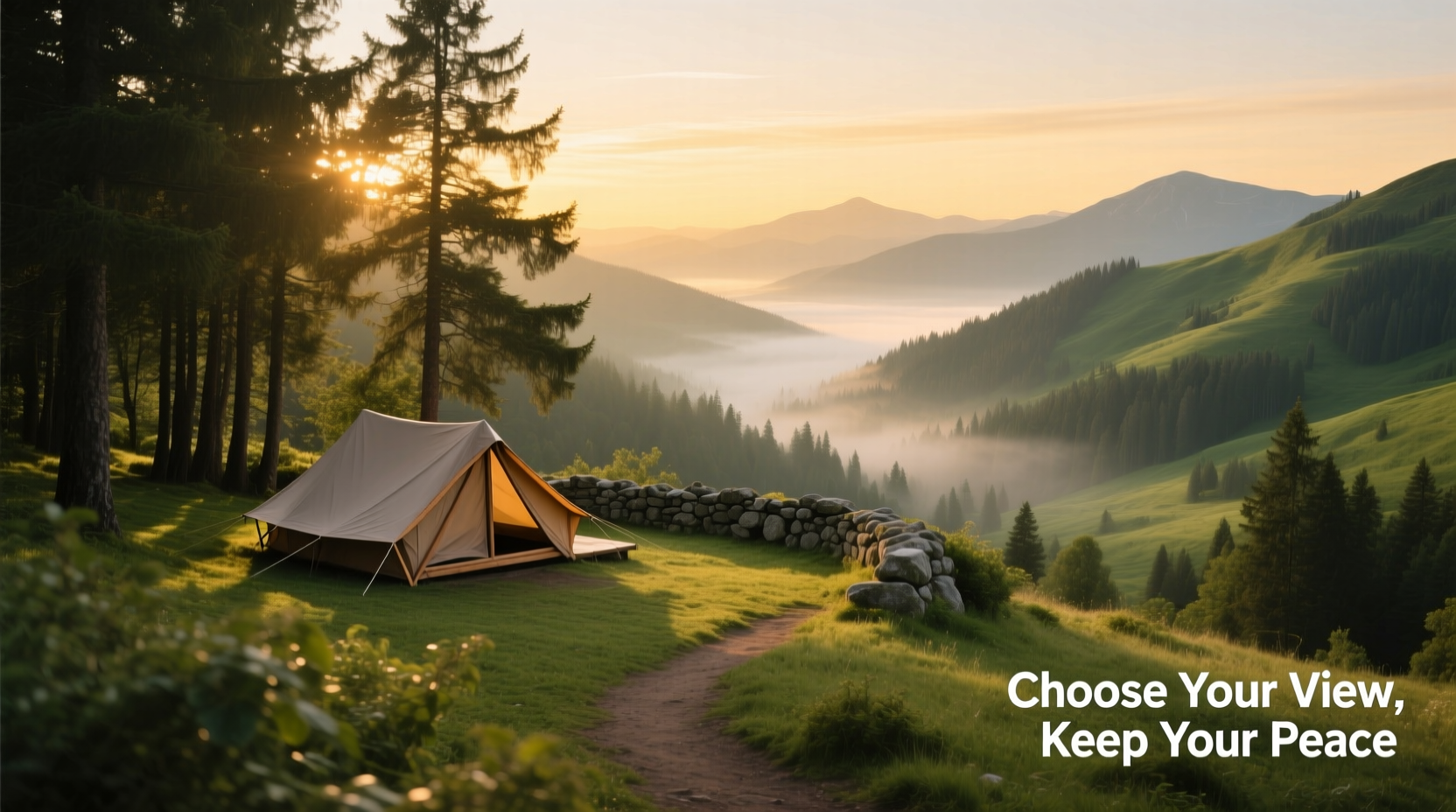
The tension between an open view and a private setting stems from basic topography and human behavior. Elevated sites often provide sweeping vistas but are visible from multiple angles. Conversely, low-lying or densely wooded areas offer concealment but may obscure scenic elements like lakes, ridgelines, or star-filled skies.
It's important to recognize that “privacy” in camping doesn’t mean total isolation. It means minimizing unwanted visual and auditory exposure to others while still enjoying access to natural beauty. Similarly, a “great view” isn’t limited to mountain panoramas—it can include tree canopies, rippling water, or even the way morning light filters through leaves.
Key Factors That Influence View and Privacy
Several environmental and logistical factors determine whether a site delivers on both aesthetics and solitude. Understanding these will help you make informed choices when evaluating potential campsites.
Terrain and Elevation
Higher elevations typically offer better views but increase visibility to others. Slopes can work to your advantage: a slight incline provides drainage and blocks lower-angle sightlines. Avoid ridge tops if privacy is a priority—while the scenery may be unmatched, your tent becomes a beacon against the skyline.
Vegetation and Natural Barriers
Dense trees, shrubs, and rock formations act as natural screens. Coniferous forests maintain year-round coverage, making them excellent for privacy. However, too much foliage can block airflow and sunlight. Aim for mixed zones where clusters of trees frame a distant view rather than completely surrounding your site.
Proximity to Trails and Roads
Sites near main trails or parking areas tend to be noisier and less private, even if they boast great views. A short walk off the beaten path often yields spots with comparable scenery and far greater tranquility. Use topographic maps or apps to identify side spurs or secondary loops within campgrounds.
Water Features
Lakeshores and riversides are highly desirable for their views, but they also attract crowds. Early arrival increases your chances of securing a prime location. For added privacy, look slightly upstream or downstream from obvious landing points.
“Some of the best campsites aren’t the most accessible ones. Often, moving just 200 meters off a trail gives you both solitude and unobstructed views.” — Daniel Reyes, Wilderness Guide and NOLS Instructor
Step-by-Step Guide to Evaluating a Campsite
Finding the sweet spot between view and privacy follows a logical process. Apply this sequence whether you’re scouting in person or planning ahead using satellite imagery.
- Assess the approach: Walk around the perimeter of the potential site. Note who might see you from nearby trails, roads, or adjacent campsites.
- Check sightlines: Stand at tent height and scan for windows, footpaths, or high-ground vantage points that peer into your space.
- Face the view intentionally: Position your tent so the entrance and primary seating area face the desired landscape—sunrise, lake, valley—while your back remains sheltered by terrain or trees.
- Test for wind and sun: Even the best view loses appeal if you’re baking in afternoon sun or battling gusts all night. Observe shadow patterns and listen for wind channels in trees.
- Confirm legal and ecological boundaries: Ensure you’re at least 200 feet from water sources and outside designated protected zones. Some scenic areas restrict camping to preserve fragile ecosystems.
- Re-evaluate at different times: If possible, visit the site morning and evening. Light changes dramatically alter both visibility and perceived privacy.
Do’s and Don’ts: Balancing Aesthetics and Discretion
| Do | Don't |
|---|---|
| Choose a site where natural features (boulders, bushes) shield your sleeping area | Select a fully exposed hilltop unless you’re prepared for visibility |
| Orient your cooking and social zone toward the view | Set up directly on a trail or in a clearing visible from multiple directions |
| Arrive early to claim optimal transitional zones (edge of forest, near bend in river) | Assume first-come, first-served means settling for the first available spot |
| Use camouflage-colored gear to blend into surroundings | Use bright tents or tarps that draw attention |
| Respect buffer zones between you and other groups | Camp closer than 70–100 feet from another party without checking norms |
Real Example: Finding Harmony in the Sawtooth Range
In central Idaho’s Sawtooth National Recreation Area, a group of hikers aimed to camp near Alice Lake—a destination known for its reflective waters and jagged peaks. Most campers set up directly on the shore, creating a semi-social atmosphere with little privacy.
One pair ventured 150 yards up a faint use trail along the eastern flank. They found a small clearing nestled between lodgepole pines and a granite outcrop. From their tent, they had a framed view of the lake and peak reflections at dawn, partially obscured by trees that blocked sightlines from below. The sound of chatter from the main site faded into background ambiance.
By sacrificing full frontal access to the water, they gained quiet, shade during midday, and a sense of ownership over their space. Their compromise wasn’t perfection—it meant carrying water uphill—but it delivered the balance they sought: beauty without exposure.
Checklist: Your Site Selection Toolkit
- ✅ Scout multiple options before committing
- ✅ Verify distance from water (200 ft minimum in most areas)
- ✅ Face tent doorway toward desired view
- ✅ Identify natural windbreaks and sun protection
- ✅ Confirm proximity to other groups (aim for 70+ feet)
- ✅ Check for overhead hazards (dead branches, loose rocks)
- ✅ Ensure flat, dry ground with slight slope for drainage
- ✅ Assess morning/evening light and shadows
- ✅ Use vegetation or terrain to create visual buffers
- ✅ Leave no trace—depart as if you were never there
FAQ: Common Questions About View and Privacy
Can I have both a great view and complete privacy?
Pure isolation with a panoramic outlook is rare, especially in popular areas. However, smart positioning—such as setting up just behind a tree line or on a terraced slope—can deliver both. In remote backcountry zones, opportunities increase, but always prioritize safety and regulations over ideal conditions.
What should I do if the best-view sites are already taken?
Shift your focus to secondary vistas. A side-angle glimpse of a lake or partial mountain profile can feel just as rewarding. Often, sites slightly removed from prime locations offer better sleep quality due to reduced foot traffic and noise. Remember, the experience matters more than the postcard shot.
Does tent color affect privacy?
Absolutely. Brightly colored tents (red, yellow, orange) stand out against natural backgrounds and attract attention. Earth-toned or green-gray tents blend into forests and meadows, reducing visual impact. This not only enhances your privacy but also respects Leave No Trace principles by minimizing human imprint.
Final Considerations: Ethics, Environment, and Enjoyment
Balancing view and privacy isn’t just about personal comfort—it’s about coexisting responsibly with nature and other visitors. Choosing a site that minimizes visual disturbance to others shows consideration. Avoid \"claiming\" scenic points simply because they’re attractive; rotate usage and avoid creating new impact zones.
Additionally, remember that some of the most memorable camping experiences come not from picture-perfect settings, but from moments of connection: the sound of wind in pine needles, the first sip of coffee under soft light, the feeling of being tucked away in a hidden corner of the wild. These sensations often flourish more in moderately secluded spots than in exposed showpieces.
Ultimately, the perfect campsite isn’t defined by Instagram potential. It’s where you feel grounded, safe, and immersed—where the horizon inspires awe and the surrounding trees whisper quiet. That equilibrium, between openness and enclosure, is what makes a place truly yours, even if only for one night.
Conclusion: Make Your Next Campsite a Sanctuary
The pursuit of the ideal campsite is part of the adventure itself. By learning to read landscapes, anticipate sightlines, and weigh trade-offs thoughtfully, you gain more than a good night’s sleep—you cultivate a deeper relationship with the outdoors. The next time you venture into the backcountry or pull into a state park, take a few extra minutes to assess not just the view, but the space around it. Look beyond the obvious spots. Seek edges, transitions, and subtle clearings. Let natural contours guide you toward a place that offers both beauty and reprieve.




 浙公网安备
33010002000092号
浙公网安备
33010002000092号 浙B2-20120091-4
Comments
No comments yet. Why don't you start the discussion?