
Selecting the right Christmas tree topper is more than just tradition—it’s an exercise in proportion, style, and seasonal storytelling. A well-chosen topper acts as the crowning element of your holiday display, tying together color schemes, ornamentation, and overall tree presence. Yet many people overlook one critical factor: the relationship between the topper and the tree’s dimensions. Too large, and it overwhelms; too small, and it disappears into the branches. The key lies in understanding scale, design intent, and visual balance.
Whether you're decorating a 6-foot spruce in the living room or a 2-foot tabletop pine, every tree deserves a topper that enhances—not competes with—its form. From classic stars and angels to modern geometric shapes and handmade designs, the options are vast. But without considering your tree’s height, width, and fullness, even the most beautiful topper can fall flat.
Understand Proportion: Why Size Matters
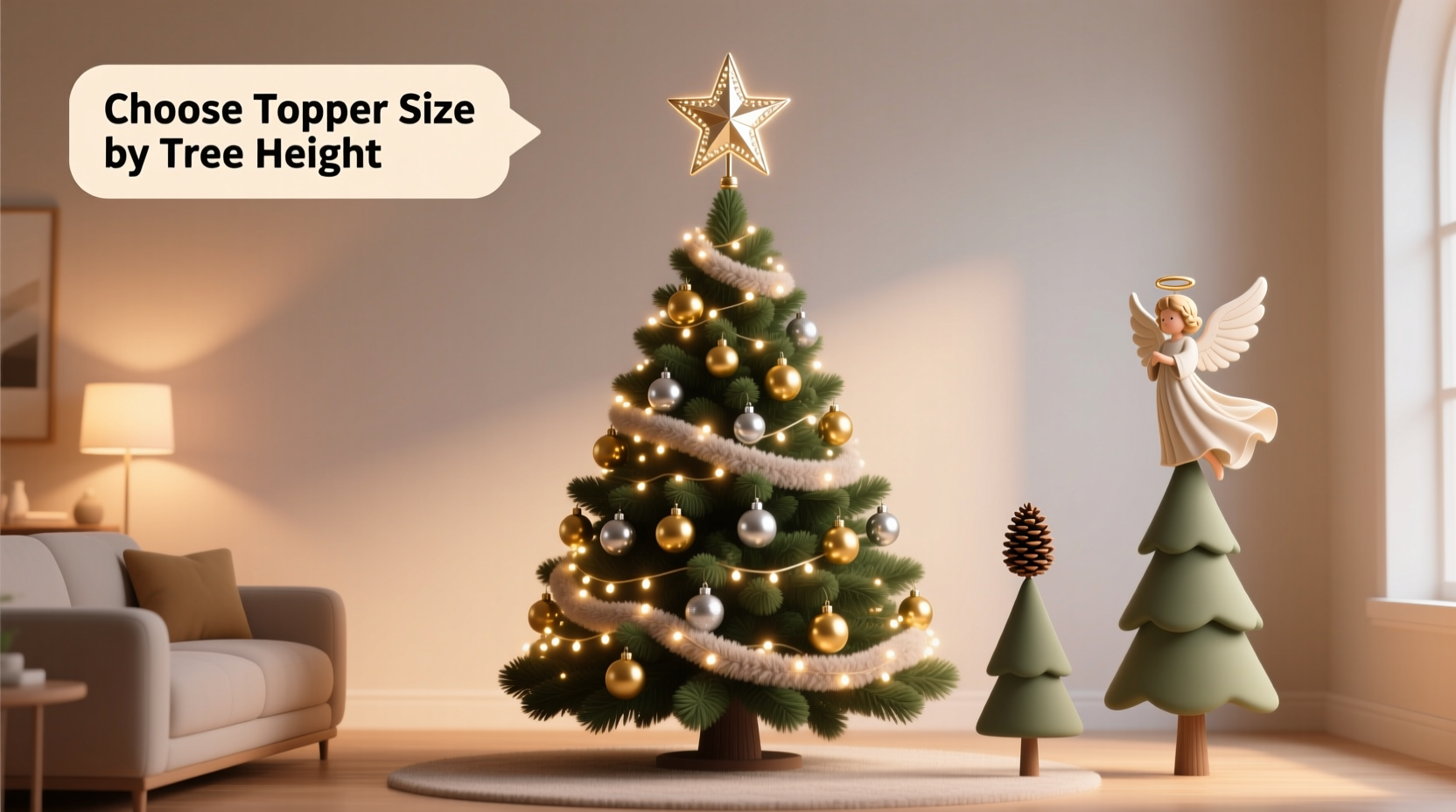
The most common mistake in Christmas tree styling is mismatched scale. A towering 9-foot tree demands a different approach than a compact pre-lit model meant for a bookshelf. The ideal topper should be visually present but not dominant—typically occupying no more than 10–15% of the tree’s total height.
For example, a 72-inch (6-foot) tree should carry a topper between 7 and 11 inches in diameter or height. This ensures it’s noticeable from across the room without appearing top-heavy. Oversized toppers on smaller trees create imbalance, making the tree look strained or comically burdened. Conversely, a tiny star on a massive fir can get lost in the foliage, diminishing its symbolic importance.
Fullness also plays a role. A densely branched Fraser fir supports a slightly larger topper than a sparse aluminum tree because the branches provide structural support and visual grounding. If your tree has open gaps near the top, opt for a slimmer or vertically oriented topper to avoid drawing attention to empty spaces.
Matching Toppers to Tree Heights: A Practical Guide
Different tree sizes call for different strategies. Below is a breakdown of recommended topper dimensions based on standard tree heights, along with suitable styles and mounting considerations.
| Tree Height | Recommended Topper Size | Best Style Options | Mounting Tips |
|---|---|---|---|
| 2–3 feet (24–36 in) | 3–5 inches | Mini star, felt angel, knitted snowflake, LED sparkler | Use floral wire or mini tree picks; avoid heavy bases |
| 4–5 feet (48–60 in) | 5–8 inches | Classic star, slender angel, bow, light cluster | Attach with sturdy tree topper holder or bendable stem |
| 6–7 feet (72–84 in) | 8–11 inches | Large star, detailed angel, cascading ribbon, flameless candle | Use weighted base or secure to central branch with wire |
| 8+ feet (96+ in) | 10–14 inches | Grand star, life-sized angel, dramatic bow, custom sculpture | Requires professional-grade mount; consider ceiling support for very tall trees |
This guide helps maintain visual harmony. For instance, a 3-inch glittery star works beautifully on a child’s bedroom tree but would vanish atop a grand hall centerpiece. Similarly, a 14-inch illuminated star may dominate a medium tree, pulling focus away from carefully arranged ornaments below.
Style and Theme: Beyond Physical Dimensions
While size is foundational, the topper must also align with your tree’s theme. A rustic farmhouse tree with burlap bows and wooden ornaments pairs better with a hand-carved wooden star than a chrome geometric shape. Likewise, a glamorous gold-and-black tree calls for a sleek metallic topper rather than a traditional fabric angel.
Color coordination is equally important. A white-flocked tree with silver accents benefits from a cool-toned topper—such as a frosted glass orb or silver star—while a warm-toned tree with red berries and gold lights shines under a golden flame or vintage angel.
“People forget that the topper sets the tone for the entire tree. It's not just an accessory—it's the exclamation point at the end of your holiday sentence.” — Lydia Hartman, Interior Stylist & Holiday Design Consultant
Consider texture as well. A fluffy faux-fur pom-pom topper adds whimsy to a kid-friendly tree but might clash with a minimalist Scandinavian design. In contrast, a smooth ceramic dove complements a serene, monochromatic palette but could feel out of place on a vibrant, eclectic tree bursting with tinsel and candy canes.
Step-by-Step: How to Choose and Install the Right Topper
Follow this practical sequence to ensure your topper complements both the size and spirit of your tree.
- Measure your tree. Use a tape measure to record height from stand to tip. Note the width at the top third of the tree, where the topper will sit.
- Determine your theme. Is your tree traditional, modern, rustic, or playful? This will narrow down appropriate styles.
- Select a topper within the 10–15% height rule. For a 72-inch tree, aim for 7–11 inches. Adjust slightly based on fullness and branch structure.
- Test stability. Before final placement, gently place the topper on the tree. Does it wobble? Does it sink into the branches? You may need a support rod or internal wiring.
- Secure it properly. Use flexible floral wire, a dedicated tree topper holder, or a weighted base. Avoid adhesives or permanent modifications.
- Step back and evaluate. View the tree from multiple angles and distances. Is the topper visible but balanced? Does it enhance the overall aesthetic?
If your tree leans toward asymmetry—common with real evergreens—you may need to angle the topper slightly or use hidden wires to center it visually. For artificial trees with a built-in topper slot, ensure the attachment mechanism can handle the weight and width of your chosen piece.
Real Example: Balancing Elegance and Scale
Sophie, a homeowner in Vermont, struggled each year with her 7.5-foot Balsam fir. She loved her heirloom porcelain angel, but it kept tipping over, and guests often missed it entirely. After consulting a local decorator, she realized the issue wasn’t the angel itself—but its presentation.
The angel stood 14 inches tall, which was acceptable for the tree’s height, but its wide wingspan created instability. The solution? A custom clear acrylic stand that cradled the base, allowing the angel to sit higher and more securely. Additionally, Sophie added subtle uplighting from beneath the top branches, which drew attention upward and made the topper a focal point without increasing its size.
The result transformed her tree from “nice” to “showstopping.” The topper now complemented the tree’s grandeur without fighting for dominance. This case illustrates that sometimes, the right choice isn’t about replacing an item—but refining its placement and visibility.
Avoiding Common Mistakes
Even experienced decorators make missteps when choosing a topper. Here are frequent errors and how to prevent them:
- Choosing based on sentiment alone. While heirlooms are meaningful, they may not suit your current tree. Consider displaying oversized or ill-fitting pieces elsewhere, like mantels or shelves.
- Ignoring weight distribution. Heavy toppers can bend or snap the top branch. Always reinforce the apex with a metal support rod if needed.
- Over-lighting the topper. LED halos or illuminated stars are beautiful, but too many competing light sources can create visual clutter. Balance brightness with the rest of the tree’s lighting.
- Mismatching eras. A mid-century modern tree with clean lines clashes with a Victorian lace angel. Keep design periods consistent unless intentionally mixing styles.
Checklist: Choosing Your Perfect Tree Topper
Before finalizing your selection, run through this checklist to ensure harmony and balance:
- ✅ Measured tree height and calculated 10–15% topper size range
- ✅ Confirmed topper fits the tree’s theme (e.g., rustic, modern, traditional)
- ✅ Verified color and material complement tree palette
- ✅ Tested stability—does it stay upright without support?
- ✅ Checked weight—will it damage or bend the top branch?
- ✅ Assessed visibility—can it be seen clearly from across the room?
- ✅ Planned installation method (wire, stand, clip, etc.)
Frequently Asked Questions
Can I use a non-traditional topper like a bow or snowflake?
Absolutely. Non-traditional toppers such as oversized bows, abstract sculptures, or even themed figures (like Santa or reindeer) work well as long as they respect proportion and theme. A velvet bow should still follow size guidelines—roughly 8–10 inches wide for a 6-foot tree—to avoid looking cartoonish.
What if my tree topper keeps falling off?
This usually indicates inadequate support. Try inserting a thin metal rod (available at craft stores) into the tree stand and securing the topper to it. Alternatively, use bendable floral wire to anchor the topper to strong upper branches. Avoid relying solely on friction or gravity, especially with heavier pieces.
Should the topper match the tree skirt or other decor?
It doesn’t need to match exactly, but it should coordinate. Shared colors, materials, or design motifs create cohesion. For example, a gold-threaded tree skirt pairs beautifully with a gold-rimmed star, even if their patterns differ. The goal is harmony, not duplication.
Final Thoughts: Elevate Your Holiday Display
The Christmas tree topper is more than a finishing touch—it’s a statement. When chosen with attention to size, style, and balance, it completes your tree’s narrative and elevates your entire holiday ambiance. Whether you prefer timeless elegance or bold creativity, the right topper brings focus, meaning, and joy to your celebration.
Take the time this season to assess not just what you love, but what works. Measure, plan, and install with intention. A tree that feels “finished” isn’t just about full branches and twinkling lights—it’s about that perfect crowning moment, where everything comes together in harmony.




 浙公网安备
33010002000092号
浙公网安备
33010002000092号 浙B2-20120091-4
Comments
No comments yet. Why don't you start the discussion?