
Aromatherapy has become a cornerstone of modern wellness routines, and essential oil diffusers are central to creating calming, energizing, or purifying environments at home or in the workplace. Among the various types of diffusers, reed diffusers remain popular for their simplicity, continuous fragrance release, and decorative appeal. At the heart of every effective reed diffuser is the diffuser stone—a porous material designed to absorb essential oils and steadily disperse their aroma into the air. However, not all stones perform equally. Some lose potency within weeks, while others deliver consistent scent for months. The key lies in selecting a stone that both lasts and distributes fragrance evenly. This guide explores the science, materials, and practical considerations behind choosing a high-performance diffuser stone.
Understanding How Diffuser Stones Work
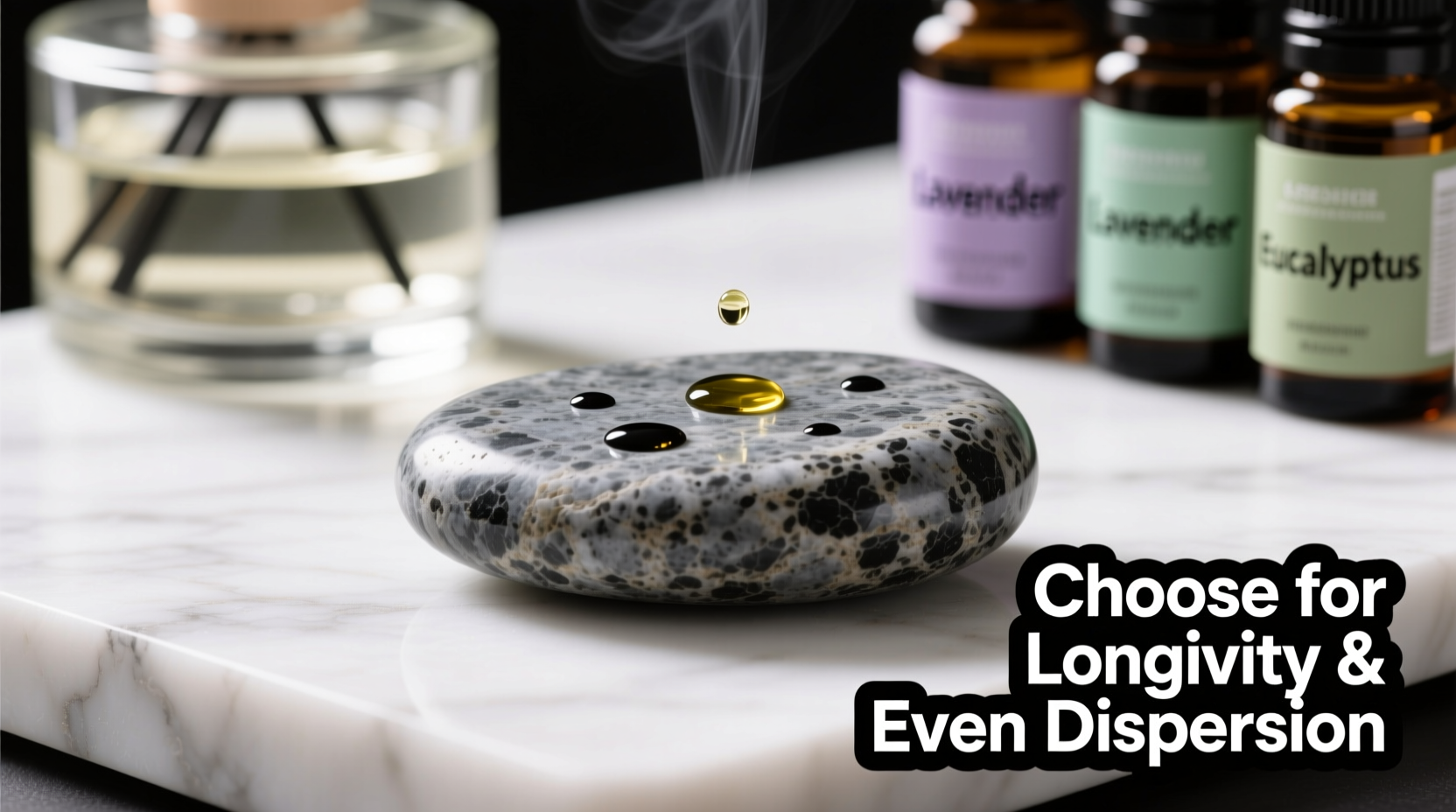
Diffuser stones function through capillary action—the process by which liquids move through narrow spaces without external assistance like gravity. When placed in a container with essential oil or a carrier-oil mixture, the stone absorbs the liquid and gradually releases its volatile compounds into the surrounding air. Unlike fans or heat-based diffusion systems, stones offer silent, passive dispersion, making them ideal for bedrooms, offices, or meditation spaces where noise and airflow disruption are undesirable.
The effectiveness of this process depends on three factors: porosity, surface area, and material stability. A highly porous stone provides more channels for oil absorption, increasing both capacity and evaporation rate. Surface area determines how much of the stone is exposed to air, influencing how quickly the scent is released. Finally, material stability ensures the stone doesn’t degrade, crack, or clog over time—common issues with low-quality options.
“Choosing the right diffuser stone isn’t just about aesthetics—it’s about engineering sustained aromatic performance.” — Dr. Lena Patel, Material Scientist & Aromatherapy Consultant
Types of Materials Used in Diffuser Stones
Not all porous materials are created equal. The market offers several types of diffuser stones, each with distinct advantages and drawbacks. Understanding these differences is crucial for making an informed decision.
| Material | Porosity Level | Lifespan | Scent Release Consistency | Common Issues |
|---|---|---|---|---|
| Volcanic Rock (Basalt) | High | 6–12 months | Even, gradual release | Can retain residue if not cleaned |
| Zeolite | Very High | 8–14 months | Excellent control, slow release | Higher cost, less common |
| Clay (Terracotta) | Moderate | 3–6 months | Inconsistent; weakens over time | Prone to cracking and mineral buildup |
| Activated Charcoal | High | 4–7 months | Strong initial burst, fades quickly | Odor retention from previous oils |
| Synthetic Porous Ceramics | Variable | 5–10 months | Depends on formulation | Inferior blends may clog or degrade |
Volcanic rock and zeolite stand out as the top performers. Volcanic basalt is naturally formed under extreme pressure and heat, resulting in micro-fissures that act as efficient oil conduits. Zeolite, a microporous aluminosilicate mineral, has a cage-like molecular structure capable of trapping and slowly releasing aromatic molecules—making it ideal for extended use and controlled diffusion.
Key Features of a Long-Lasting, Even-Dispensing Stone
To ensure your diffuser stone delivers optimal performance, focus on these five critical attributes:
- Density-Porosity Balance: The best stones have a balanced internal structure—porous enough to absorb oil efficiently but dense enough to prevent rapid saturation and leakage. Overly porous stones may leak oil onto surfaces, while overly dense ones fail to wick effectively.
- Uniform Pore Distribution: Inconsistent pore sizes lead to uneven oil uptake and irregular scent release. Look for stones with a homogenous texture and no visible cracks or voids.
- Chemical Inertness: The stone should not react with essential oils. Reactive materials can alter the chemical composition of delicate oils like citrus or lavender, diminishing therapeutic benefits and producing off-odors.
- Resistance to Clogging: Oils with high resin content (e.g., frankincense, myrrh) can gum up pores over time. High-quality stones resist clogging due to smooth internal channels and non-stick mineral surfaces.
- Dimensional Stability: The stone should maintain its shape and integrity when exposed to oil and humidity. Swelling, cracking, or crumbling indicates poor structural quality.
Manufacturers sometimes coat stones with sealants to enhance durability, but these coatings can inhibit oil absorption. Always opt for unsealed, naturally porous stones unless the product explicitly states that the sealant is breathable and oil-permeable.
Step-by-Step Guide to Selecting the Right Stone
Follow this systematic approach to identify a diffuser stone that meets both longevity and even dispersion criteria:
- Determine Your Scent Preferences: If you prefer strong, immediate fragrance, choose a stone with higher surface exposure. For subtle, all-day diffusion, prioritize materials like zeolite that release scent slowly.
- Check the Material Source: Reputable brands disclose the origin and type of stone used. Volcanic rock from regions like Iceland or Indonesia often has superior porosity due to geological activity.
- Inspect Physical Characteristics: Examine the stone under light. It should appear uniformly textured with fine, interconnected pores. Avoid stones with large air pockets or chalky patches.
- Test Oil Absorption Rate: Place a drop of carrier oil (like fractionated coconut oil) on the surface. A quality stone will draw the oil inward within 30–60 seconds without leaving a greasy film.
- Evaluate Long-Term Performance Claims: Look for third-party testing or customer reviews that confirm usage beyond six months without significant scent degradation.
- Consider Replaceability: Choose diffuser systems where the stone can be replaced independently. This allows you to refresh the diffusion element without discarding the entire unit.
Real-World Example: Office Space Fragrance Upgrade
A wellness-focused startup in Portland struggled with inconsistent scent distribution in their open-plan office. They initially used terracotta diffuser stones, but employees complained of weak fragrance after two weeks and occasional musty odors. After consulting an aromatherapist, they switched to zeolite-based stones paired with a blend of lemon, peppermint, and cedarwood in a neutral carrier oil. Within days, the scent became noticeably more balanced and lasted over ten months with only bi-monthly oil refills. Employee feedback highlighted improved focus and mood, attributing part of the benefit to the steady, non-overpowering aroma.
Common Mistakes to Avoid
- Using stones with incompatible oils: Thick resins or absolutes can clog lower-grade stones. Always dilute viscous oils properly.
- Overfilling the reservoir: Submerging the entire stone reduces air exposure, slowing evaporation and promoting mold growth in humid climates.
- Neglecting cleaning between uses: Residual oils can oxidize and block pores. Rinse stones with isopropyl alcohol and let them dry completely before reuse.
- Placing near vents or direct sunlight: Air currents and heat accelerate uneven evaporation, causing the stone to deplete faster on one side.
- Assuming all “natural” stones are equal: Natural doesn’t always mean better. Poorly processed volcanic rock may contain contaminants or inconsistent pore structures.
Frequently Asked Questions
How often should I replace my diffuser stone?
High-quality stones like zeolite or premium basalt typically last 8–12 months with regular use. Replace the stone if you notice significantly reduced scent output, visible clogging, or discoloration that doesn’t improve after cleaning.
Can I clean and reuse a diffuser stone?
Yes, most mineral-based stones can be cleaned. Soak in 70% isopropyl alcohol for 15–20 minutes, then rinse with distilled water and air-dry for 24 hours. Avoid soap, as residues can interfere with oil absorption.
Do diffuser stones work with all essential oils?
Most do, but oils high in resins (e.g., patchouli, vetiver) or citrus oils (which degrade faster) require more maintenance. Pair such oils with highly resistant stones like zeolite and consider shorter rotation cycles.
Checklist: Choosing a Durable, Even-Release Diffuser Stone
- ✅ Confirm the stone is made from volcanic rock, zeolite, or high-grade ceramic
- ✅ Verify uniform texture and absence of surface flaws
- ✅ Test absorption with a drop of oil before full use
- ✅ Ensure compatibility with your preferred essential oil blends
- ✅ Choose a design that allows partial air exposure for balanced evaporation
- ✅ Check availability of replacement stones for long-term sustainability
- ✅ Read verified user reviews focusing on longevity and consistency
Final Thoughts: Quality Matters in Passive Diffusion
Selecting a diffuser stone isn’t merely a matter of aesthetics or convenience—it directly impacts the effectiveness and longevity of your aromatherapy experience. A well-chosen stone enhances mood, supports respiratory wellness, and creates a consistently pleasant environment without constant maintenance. By prioritizing material integrity, structural uniformity, and proven performance, you invest in a component that works quietly and reliably over time. Whether you're enhancing a personal sanctuary or curating ambiance in a professional space, the right diffuser stone ensures that every breath carries the intended essence—calm, clarity, or energy—exactly as nature and science intended.




 浙公网安备
33010002000092号
浙公网安备
33010002000092号 浙B2-20120091-4
Comments
No comments yet. Why don't you start the discussion?