
The iPhone 15 represents a significant investment—both financially and functionally. With its advanced camera system, powerful processor, and sleek design, it's built to perform at the highest level. But no matter how carefully you handle your device, everyday use brings risks: accidental drops, pocket debris, table scrapes, and exposure to dust and moisture. A high-quality case is not just an accessory; it’s a critical layer of defense. Choosing the right one ensures your phone stays protected, functional, and visually pristine for years.
Not all cases are created equal. Many look stylish but fail under real-world stress. Others promise durability but compromise on usability or aesthetics. The key is finding a balance between rugged protection, long-term resilience, and everyday convenience. This guide breaks down what truly makes a case durable, how to evaluate materials and design, and what features matter most when securing your iPhone 15.
Understand What Makes a Case Truly Durable
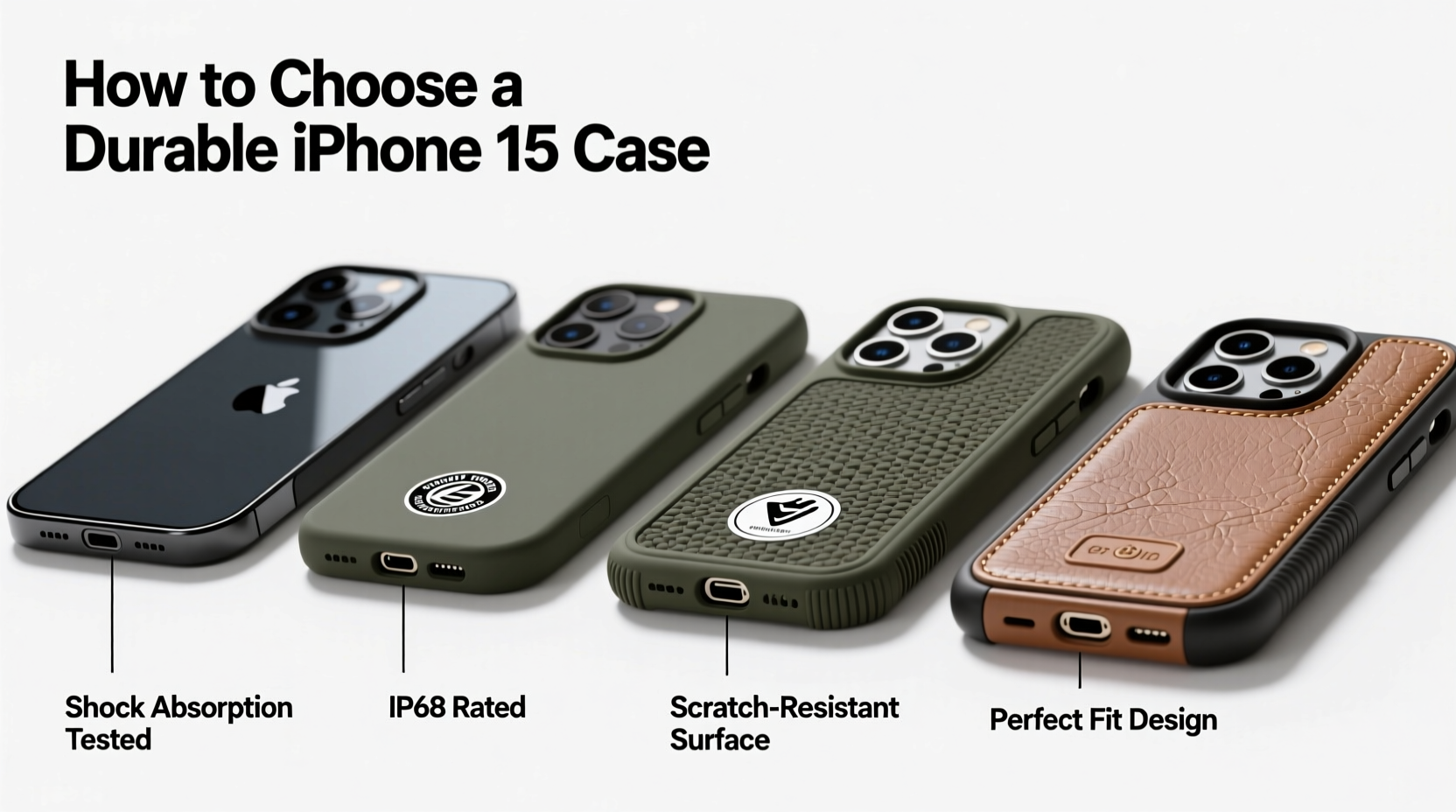
Durability isn’t just about thickness or bulk—it’s about intelligent engineering and material integrity. A durable case must absorb impact, resist wear, maintain structural integrity over time, and protect every vulnerable point of the iPhone 15.
Key components of durability include:
- Shock absorption: Multi-layer construction with soft inner linings (like TPU) and rigid outer shells (like polycarbonate) disperses impact energy during drops.
- Scratch resistance: Hard exteriors prevent fine abrasions from keys, coins, or rough surfaces.
- Corner reinforcement: Rounded, elevated corners act as bumpers during corner-first impacts—the most common type of drop.
- Material stability: High-grade thermoplastics retain shape and flexibility over time without yellowing or cracking.
Compare Materials: Which Offers the Best Long-Term Protection?
The material defines how well a case performs over time. While many options exist, only a few stand up to prolonged use without degrading.
| Material | Pros | Cons | Best For |
|---|---|---|---|
| TPU (Thermoplastic Polyurethane) | Flexible, shock-absorbent, affordable | Can yellow over time, attracts dust | Daily users wanting slim yet protective fit |
| Polycarbonate (Hard Plastic) | Rigid, scratch-resistant, maintains clarity | Limited shock absorption alone | Style-focused users who want visibility |
| Hybrid (TPU + Polycarbonate) | Combines flexibility and rigidity; best overall protection | Slightly bulkier than single-material cases | Anyone seeking maximum durability |
| Silicone | Soft grip, pleasant texture | Wears down quickly, hard to clean | Light users prioritizing feel over longevity |
| Leather (Synthetic or Genuine) | Elegant appearance, ages well | Poor impact protection unless reinforced | Professional settings where aesthetics matter |
For lasting protection, hybrid cases consistently outperform others. They combine the cushioning of TPU with the armor-like exterior of polycarbonate, offering both drop resistance and surface durability.
Design Features That Enhance Longevity and Functionality
Beyond materials, specific design choices determine how well a case holds up over months of use.
Elevated Edges for Screen and Camera Protection
A case with raised bezels around the screen and camera module prevents direct contact with flat surfaces. Without this, even minor rests on a desk can lead to micro-scratches or lens damage.
Precise Cutouts and Button Coverage
Poorly aligned ports or stiff buttons degrade user experience and may indicate low manufacturing quality. Durable cases feature laser-precise openings and responsive button caps that don’t loosen over time.
Matte Finish vs. Glossy
Matte finishes resist fingerprints and reduce visible scratches better than glossy surfaces, which tend to show every mark and wear pattern faster.
“Most iPhone damage occurs within the first 18 inches off the ground—from hand to floor. A good case needs to survive repeated low-impact drops, not just one dramatic fall.” — David Lin, Mobile Device Engineer
Step-by-Step Guide to Selecting Your Ideal Case
Follow this sequence to make a confident, informed decision:
- Determine your risk profile: Do you frequently commute, work outdoors, or have children? Higher-risk environments demand more robust protection.
- Choose your primary goal: Is it maximum drop protection, minimal bulk, wallet functionality, or aesthetic appeal?
- Select the right material: Opt for hybrid construction if protection is top priority.
- Verify compatibility: Ensure the case is specifically designed for the iPhone 15 model you own (e.g., iPhone 15 Pro Max has different dimensions).
- Check for certifications: Look for MIL-STD-810G rating or independent lab test results.
- Read long-term reviews: Focus on feedback mentioning performance after 6+ months of use.
- Test ergonomics: If buying in-store, check grip comfort, button responsiveness, and ease of removal.
Real-World Example: How One User Avoided Costly Damage
Mark, a field technician in Colorado, uses his iPhone 15 Pro daily across job sites, trucks, and ladders. Within three months of switching to a reputable hybrid case with MIL-STD certification, he experienced two significant drops—one from a ladder (~7 feet) onto concrete, another into a gravel driveway.
In both instances, the phone survived with no cracks or internal issues. The case showed scuff marks and minor corner dents, but maintained structural integrity. “I used to replace my phone every year due to screen damage,” Mark said. “Now, two years later, my iPhone 15 still looks and works like new. The case took the hit so my phone didn’t have to.”
This scenario underscores the value of investing in a case engineered for real-life conditions—not just idealized showroom settings.
Essential Checklist Before You Buy
Use this checklist to ensure you’re getting a genuinely durable iPhone 15 case:
- ✅ Specifically designed for iPhone 15 (not universal fit)
- ✅ Made from hybrid TPU + polycarbonate or equivalent
- ✅ Includes raised edges for screen and camera
- ✅ MIL-STD-810G or equivalent drop-test certification
- ✅ Precision cutouts for all ports and speakers
- ✅ Non-slip, textured sides for improved grip
- ✅ Resists yellowing (especially important for clear cases)
- ✅ Positive long-term user reviews (6+ months of use reported)
Frequently Asked Questions
Do clear cases yellow over time?
Yes, many clear cases—especially lower-quality TPU ones—yellow due to UV exposure, heat, and oils from skin. To minimize this, choose brands using anti-yellowing coatings or opt for matte-finish clear variants known for greater stability.
Are MagSafe-compatible cases less durable?
Not necessarily. Many durable cases now integrate MagSafe rings without sacrificing protection. Just ensure the magnetic ring is securely embedded and doesn’t create weak points in the case structure.
How often should I replace my iPhone case?
Inspect your case every 6–12 months. Replace it if you notice cracks, warping, loss of elasticity, loose fit, or worn-down corners. Even minor degradation reduces protective effectiveness.
Protect Your Investment Wisely
Your iPhone 15 deserves more than a decorative sleeve—it needs reliable, long-term armor. A durable case isn’t an expense; it’s a cost-saving measure that prevents hundreds in potential repair bills. By focusing on proven materials, smart design, and verified performance, you can find a case that stands up to daily challenges while preserving your phone’s condition.




 浙公网安备
33010002000092号
浙公网安备
33010002000092号 浙B2-20120091-4
Comments
No comments yet. Why don't you start the discussion?