
A well-chosen leather strap watch is more than a timepiece—it’s a statement of taste, reliability, and craftsmanship. Unlike metal bracelets that can tarnish or scratch easily, a quality leather strap ages gracefully, developing a unique patina over time. However, not all leather straps are built to last. Many fail prematurely due to poor materials, weak stitching, or inadequate construction. Choosing a durable leather strap watch requires attention to detail, an understanding of leather types, and knowledge of design elements that contribute to longevity.
Understanding Leather Types: Not All Are Created Equal
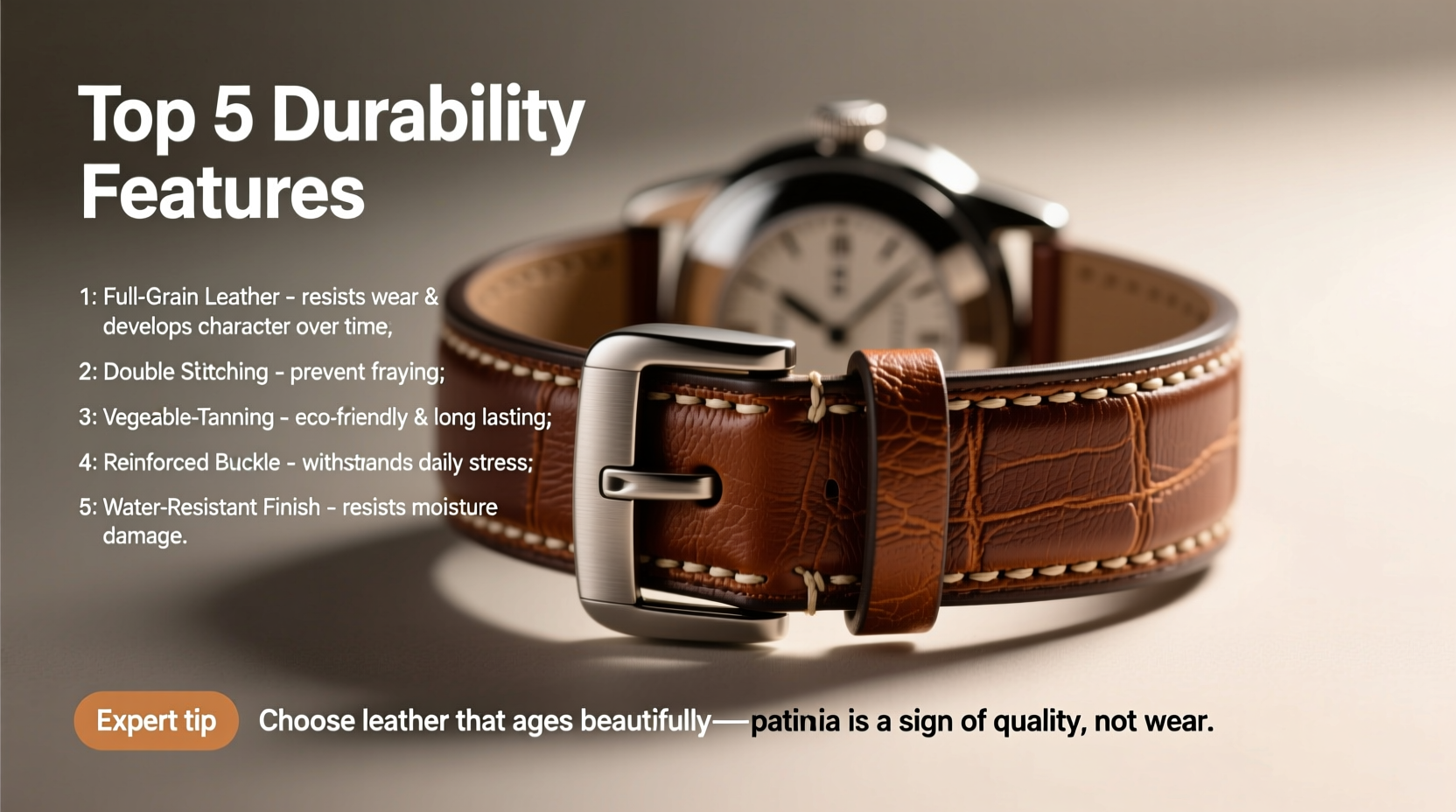
The foundation of a durable leather strap lies in the type of hide used. Leather varies significantly in quality, texture, and resilience. The most common types found on watches include full-grain, top-grain, corrected-grain, and bonded leather—each with distinct characteristics.
| Leather Type | Durability | Appearance Over Time | Best For |
|---|---|---|---|
| Full-Grain | Excellent | Develops rich patina; resists wear | Daily wear, heirloom pieces |
| Top-Grain | Good | Smooth finish; minimal aging | Casual or office wear |
| Corrected-Grain | Fair | Uniform look; may crack over time | Budget models |
| Bonded Leather | Poor | Fades and peels quickly | Short-term use only |
Full-grain leather is the gold standard. It retains the original grain and natural imperfections, which actually make it stronger. As it ages, exposure to light and skin oils enhances its color and character. Top-grain leather is sanded and refinished, offering a sleeker appearance but less breathability and durability. Avoid bonded leather entirely—it’s made from leftover scraps mixed with adhesives and often fails within months.
Construction and Stitching: The Hidden Strength
Beyond the leather itself, how the strap is constructed determines its lifespan. Pay close attention to stitching techniques, lining materials, and attachment hardware.
- Saddle stitching uses two needles and a single thread looped through the leather. If one end breaks, the rest remains intact. This handcrafted method is slower but far more durable than machine stitching.
- Machine stitching, while consistent, uses a lockstitch that unravels completely if cut or broken at any point.
- Lining material should be soft but strong—preferably calfskin or suede. Avoid synthetic linings, which trap moisture and accelerate deterioration.
- Attachment points (where the strap meets the watch case) must be reinforced. Look for tapered ends and double-layered leather at lugs.
“Stitching isn’t just cosmetic—it’s structural. A poorly stitched strap will fray at stress points within weeks.” — Daniel Reyes, Watch Strap Artisan & Founder of Horus Straps
Choosing the Right Thickness and Fit
A strap that’s too thin will crease excessively and crack under pressure. Too thick, and it becomes uncomfortable and prone to warping. The ideal thickness depends on wrist size and usage.
- Standard thickness: 2.0–3.0 mm is optimal for daily wear. Thinner straps (under 2.0 mm) may feel flimsy and wear out faster.
- Tapered design: High-quality straps taper from the lug width (e.g., 20mm) to the buckle (e.g., 18mm), ensuring a smooth drape and even stress distribution.
- Lug fit: Ensure the strap width matches your watch case exactly. A 20mm watch needs a 20mm strap. Gaps or tight fits cause strain and premature tear.
Consider your wrist circumference. Larger wrists benefit from slightly thicker straps (2.5–3.0 mm) for support, while slimmer wrists suit 2.0–2.4 mm for comfort. Always check flexibility—press the strap; it should bend smoothly without kinking.
Water Resistance and Environmental Care
Leather is naturally vulnerable to moisture, sweat, and UV exposure. While no leather strap is fully waterproof, certain treatments and habits improve resistance.
- Vegetable-tanned leather absorbs moisture more readily than chrome-tanned, making it less ideal for humid climates unless regularly conditioned.
- Some brands apply water-resistant coatings or waxes during finishing. Ask about treatment methods before purchase.
- Avoid wearing leather strap watches in the shower, swimming, or during intense workouts.
Maintaining Longevity: A Simple Care Routine
Durability isn’t just about initial quality—it’s also sustained through maintenance. Follow this checklist to preserve your strap’s integrity:
📋 **Leather Strap Care Checklist**- Wipe gently with a dry, soft cloth after each wear
- Condition every 4–6 weeks using leather balm or cream
- Store in a cool, dry place away from direct sunlight
- Allow the strap to air out overnight once a week
- Replace if deep cracks, mold, or persistent odor appear
Real-World Example: From Daily Wear to Heirloom
James, a financial analyst in Chicago, purchased a vintage-inspired field watch with a full-grain leather strap three years ago. Instead of opting for the cheaper model with a synthetic band, he invested $120 in a piece featuring saddle-stitched, vegetable-tanned leather. He rotates it with a silicone strap during summer workouts and conditions it monthly. Today, the leather has developed a warm honey tone and conforms perfectly to his wrist. “It feels like it was made for me,” he says. “People constantly ask where I bought it.” In contrast, his colleague’s fashion watch—half the price, bonded leather—began peeling within eight months.
This illustrates a core principle: upfront investment in quality pays off in both aesthetics and function.
Expert Tips for Smart Buying
Before purchasing, evaluate the entire package—not just the movement or dial. Use this step-by-step guide to assess durability:
- Inspect the leather source: Reputable brands disclose origin (e.g., Italian, French, or Shell Cordovan from Japan).
- Check the underside: Flip the strap. Full-grain leather will have a consistent texture and natural grain on both sides.
- Test the edges: Burnished edges should be smooth, not frayed or painted over cheaply.
- Examine the buckle: Stainless steel or titanium buckles resist corrosion. Avoid flimsy base-metal clasps.
- Read return policies: Buy from retailers who allow returns if the strap feels low-quality upon arrival.
Frequently Asked Questions
Can I replace a leather strap myself?
Yes. Most straps use spring bars and can be swapped with a simple tool. Just ensure the new strap matches the lug width and thickness. Replacement takes under two minutes.
How long should a good leather strap last?
With proper care, a full-grain leather strap lasts 12–24 months with daily wear. Some users report 3+ years with rotation and conditioning. Bonded or thin straps may need replacement in 3–6 months.
Is Shell Cordovan worth the extra cost?
For enthusiasts, yes. Shell Cordovan—a dense, shell-like leather from horsehide—is extremely resistant to creasing and water. It doesn’t develop a traditional patina but gains depth with polishing. Ideal for formal wear, though less flexible than calf leather.
Final Thoughts: Build a Timeless Collection
Choosing a durable leather strap watch isn’t about chasing trends—it’s about selecting a companion that evolves with you. Prioritize full-grain leather, hand-finishing, and thoughtful construction. Pair smart buying habits with simple care, and your watch won’t just tell time; it’ll tell your story.




 浙公网安备
33010002000092号
浙公网安备
33010002000092号 浙B2-20120091-4
Comments
No comments yet. Why don't you start the discussion?