
Travel speakers are essential companions for outdoor adventures, beach days, camping trips, and even remote work setups. But not all portable speakers deliver long-term reliability. Many fail prematurely due to poor construction, inadequate weather resistance, or subpar battery design. Choosing a truly durable travel speaker means going beyond sound quality and focusing on materials, engineering, and real-world resilience.
A well-chosen speaker can last five years or more—even under frequent use—while a poorly built one may crack, malfunction, or lose charging capability within months. Understanding what makes a speaker tough enough to withstand drops, moisture, dust, and temperature changes is crucial when investing in your next portable audio device.
Build Quality: Materials That Withstand the Elements
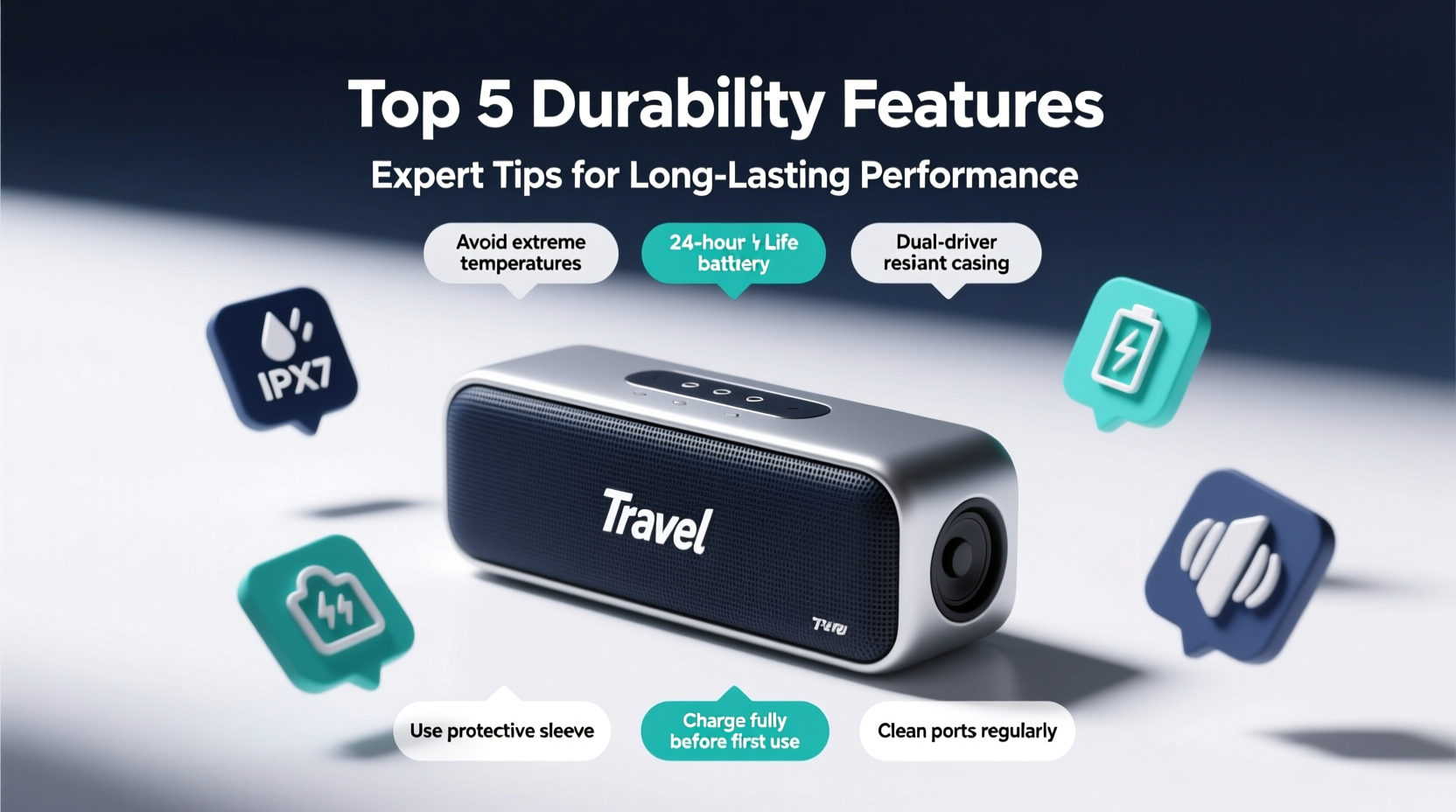
The physical construction of a travel speaker determines its ability to survive rough handling. Look beyond sleek designs and focus on structural integrity. High-quality rubberized exteriors absorb shock from drops, while reinforced corners protect vulnerable points. Metal grilles over drivers are preferable to plastic ones, as they resist cracking and offer better protection against punctures.
Rugged polymers like ABS (acrylonitrile butadiene styrene) are commonly used in outdoor gear for their impact resistance and lightweight properties. Some premium models incorporate magnesium alloy housings, which provide exceptional strength without adding bulk.
Avoid speakers with large glass panels, flimsy hinges, or excessive seams. These areas are prone to water ingress and mechanical failure. Instead, opt for seamless, injection-molded bodies that minimize weak points.
Water and Dust Resistance: Why IP Ratings Matter
One of the most critical durability factors is environmental protection. The International Protection (IP) rating system provides standardized insight into a speaker’s resistance to solids and liquids.
| IP Rating | Dust Protection | Water Protection | Suitable For |
|---|---|---|---|
| IPX7 | No official dust seal | Submersible up to 1m for 30 minutes | Beach, poolside, rainy hikes |
| IP67 | Full dustproofing | Same as IPX7 | Dusty trails, deserts, wet conditions |
| IP68 | Dust-tight | Extended submersion beyond 1m | Marine use, kayaking, diving trips |
For true durability, aim for at least IP67. This ensures complete protection from sand, dirt, and accidental dunks in lakes or pools. Note that “water-resistant” is not a regulated term—always verify the actual IP code.
“Don’t trust marketing slogans like ‘splash-proof.’ Always check the official IP rating. It’s the only reliable indicator of real-world survivability.” — Jordan Lin, Audio Engineer at Outdoor Sound Labs
Battery Longevity and Charging Design
A speaker might survive the elements, but if its battery degrades quickly, it won’t last. Lithium-ion batteries are standard, but their lifespan depends on usage patterns and internal management systems.
High-end models include battery preservation features such as:
- Automatic shutdown after idle periods
- Overcharge and thermal protection circuits
- Low-temperature charging cutoffs
- Replaceable or field-serviceable battery modules
Speakers with USB-C charging tend to outlast those with micro-USB ports, which wear out faster due to fragile connectors. Models supporting pass-through charging (play while charging) add convenience during extended trips.
Real Example: The Desert Festival Test
A music journalist tested three mid-range speakers at a week-long desert festival. Two failed by day three—one from sand infiltration jamming the buttons, the other due to overheating in direct sun. Only the IP67-rated model with passive cooling vents and sealed controls survived daily dust storms and 110°F temperatures. Its silicone-sealed battery compartment prevented degradation despite constant recharging via solar power banks.
Sound Performance vs. Durability Trade-offs
Loudness and bass response often come at the expense of durability. Speakers with large passive radiators or open acoustic chambers sacrifice structural rigidity. While they produce deeper low ends, these components are vulnerable to impact damage.
Instead, look for balanced designs that prioritize efficiency over sheer volume. Modern digital signal processing (DSP) allows compact units to deliver rich sound without fragile moving parts. Dual-driver stereo separation in a single unit typically offers better durability than paired wireless speakers, which increase the risk of losing or damaging one half.
Expert Buying Checklist: 7 Must-Have Features
Use this checklist before purchasing any travel speaker to ensure long-term reliability:
- Minimum IP67 rating – Ensures dustproofing and full waterproofing.
- Rubberized or metal-reinforced casing – Absorbs shocks and resists UV degradation.
- USB-C with fast charging – Future-proof connector with better longevity.
- Battery protection circuitry – Prevents overcharging and deep discharge.
- Drop resistance certified to 1.5m+ – Verified through MIL-STD-810G or manufacturer drop tests.
- Sealed control buttons – Tactile, non-porous buttons prevent moisture entry.
- Repairability or warranty of 2+ years – Indicates manufacturer confidence in durability.
Maintenance Habits for Extended Lifespan
Even the toughest speaker needs proper care. Follow these steps to maximize longevity:
- Clean after exposure to saltwater or sand: Rinse with fresh water and dry thoroughly before storage.
- Store in a climate-controlled environment: Avoid leaving in hot cars or damp basements.
- Charge monthly if unused: Keep lithium batteries between 40–80% charge during storage.
- Use protective cases: Neoprene sleeves add cushioning and scratch resistance.
- Update firmware regularly: Manufacturers often release stability and power-efficiency improvements.
“The biggest killer of portable electronics isn’t accidents—it’s neglect. A speaker stored improperly for six months can suffer irreversible battery damage.” — Dr. Lena Torres, Consumer Electronics Researcher
Frequently Asked Questions
Can I leave my travel speaker in the car?
It’s not recommended. Interior temperatures can exceed 150°F in summer, causing battery swelling and screen delamination (if applicable). Prolonged heat also accelerates internal component aging. Remove the speaker when possible or park in shade.
How do I know if my speaker’s battery is degrading?
Signs include significantly reduced playtime (e.g., dropping from 12 to 4 hours), difficulty holding charge overnight, or sudden shutdowns at 20%+ battery. If software updates don’t help, the cell may need replacement.
Are rugged speakers heavier? Is it worth the trade-off?
Yes, durable models are generally 20–40% heavier due to reinforced shells and larger batteries. However, the added weight translates directly into resilience. For backpacking or air travel, consider whether you prioritize lightness over reliability in harsh conditions.
Final Thoughts: Invest in Resilience, Not Just Sound
Selecting a durable travel speaker isn’t just about surviving a splash or a fall—it’s about consistent performance across seasons, climates, and adventures. Prioritize verified protection ratings, robust materials, intelligent power management, and reputable warranties. A $150 speaker that lasts six years costs less per year than three $70 models failing annually.
Think long-term: durability reduces electronic waste, saves money, and ensures your soundtrack never cuts out mid-hike. Whether you're navigating mountain trails or lounging by the lake, a well-built speaker becomes a trusted companion—not just another gadget destined for early obsolescence.




 浙公网安备
33010002000092号
浙公网安备
33010002000092号 浙B2-20120091-4
Comments
No comments yet. Why don't you start the discussion?