
Protecting your AirPods is essential—not just from scratches, but from the daily wear and tear of being in pockets, bags, and hands. While Apple’s original case offers basic protection, it lacks resilience against drops, impacts, and environmental exposure. Choosing a long-lasting AirPods case isn’t about flashy designs or extra bells and whistles; it’s about selecting one engineered for endurance. The right case can extend the life of your AirPods by years, saving you money and hassle in the long run.
Material Quality: The Foundation of Durability
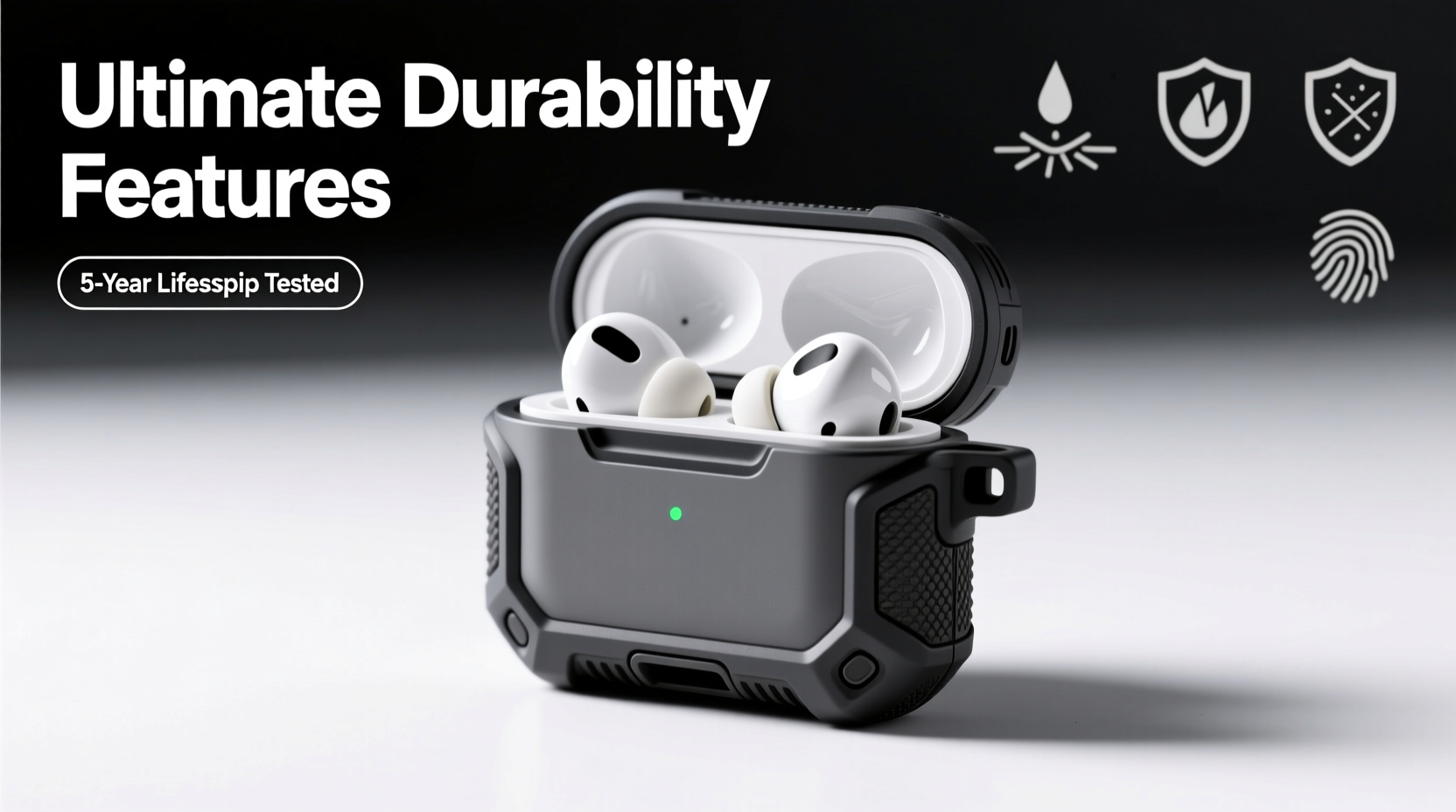
The material of an AirPods case directly influences its ability to withstand impact, resist abrasion, and endure frequent handling. Not all materials are created equal, and understanding the differences can help you make a smarter investment.
- TPU (Thermoplastic Polyurethane): Flexible, shock-absorbent, and resistant to oils and UV rays. Ideal for everyday use due to its balance of softness and strength.
- PC (Polycarbonate): Rigid, scratch-resistant, and excellent at deflecting impact. Often used in hybrid cases with TPU for added toughness.
- Silicone: Soft and grippy, but prone to tearing over time and collecting dust. Best for light use, not long-term durability.
- Aluminum/Metal Alloys: Extremely durable and stylish, but heavier and may interfere with wireless charging if not designed properly.
A hybrid construction—combining a hard outer shell (PC) with a soft inner layer (TPU)—offers the best of both worlds: rigidity on the outside and cushioning within. This dual-layer design is a hallmark of premium protective cases.
Shock Resistance and Drop Protection
Drops are the number one cause of AirPods damage. A truly durable case must absorb and disperse impact energy effectively. Look for cases that explicitly mention military-grade drop protection (MIL-STD-810G), which means they’ve been tested to survive falls from up to 6 feet onto concrete.
Key features that enhance shock resistance include:
- Raised edges around the lid and base to prevent direct contact with surfaces.
- Cushioned corners, where most impact occurs during a fall.
- Internal padding or gel lining to cradle the AirPods snugly.
Independent lab tests show that well-designed cases reduce internal impact force by up to 70%, significantly lowering the risk of battery or circuit damage after a drop.
“Drop protection isn’t just about surviving one fall—it’s about consistent performance over time. A case should protect through hundreds of minor bumps, not just one dramatic drop.” — Dr. Alan Zhou, Materials Engineer at Consumer Tech Labs
Secure Fit and Lid Mechanism
No matter how tough the exterior, a poorly fitting case defeats the purpose. If your AirPods rattle inside or the lid doesn’t snap shut securely, components can shift during impact, increasing the chance of internal damage.
When evaluating fit, consider:
- Precision cutouts that align perfectly with charging ports and button placements.
- A lid that closes firmly without excessive force or looseness.
- Internal retention mechanisms like rubberized grips or magnetic closures.
Magnetic lids are increasingly popular because they offer reliable closure while remaining easy to open. However, ensure the magnet strength is calibrated—too weak, and it won’t stay shut; too strong, and it could interfere with the AirPods’ own magnets or charging function.
Do’s and Don’ts of Case Fit
| Do’s | Don’ts |
|---|---|
| Choose cases with precise port alignment | Use bulky cases that block the status light |
| Test lid closure before regular use | Select cases requiring force to close |
| Ensure buttons remain fully functional | Accept loose internal movement |
Wireless Charging Compatibility
One of the most overlooked aspects of durability is long-term functionality. Many third-party cases disable or hinder wireless charging, forcing users to remove the case frequently—which increases exposure to drops and dirt.
A durable case should support seamless Qi wireless charging without removal. Look for models specifically labeled as “wireless charging compatible” and verify this feature in user reviews. Some high-end cases even include built-in stands or kickstands for convenient charging angles.
Additionally, ensure the case does not trap heat during charging. Overheating accelerates battery degradation in both the case and the AirPods. Ventilation channels or thermally conductive materials help dissipate heat efficiently.
Real-World Example: Commuter’s Case Survival Test
Jamal, a city courier in Chicago, uses his AirPods throughout the day for navigation and calls. In one year, his original case cracked twice from being tossed into backpacks and dropped on pavement. He switched to a rugged hybrid TPU+PC case with MIL-STD certification. After 18 months of heavy use—including multiple drops from waist height and exposure to rain—the case shows only minor scuffing. His AirPods remain fully functional, and he hasn’t experienced any charging issues thanks to the case’s optimized wireless compatibility.
This real-world scenario underscores that durability isn’t theoretical—it’s proven through consistent, demanding use.
Step-by-Step Guide to Selecting a Long-Lasting Case
- Assess Your Usage Pattern: Are you active, travel frequently, or work in rugged environments? High-impact lifestyles demand maximum protection.
- Check Material Specs: Prioritize TPU, PC, or hybrid builds. Avoid cheap silicone or unknown plastics.
- Verify Drop Protection Claims: Look for MIL-STD-810G or similar certifications backed by independent testing.
- Test Fit and Function: Ensure perfect alignment, secure lid closure, and unobstructed controls.
- Confirm Wireless Charging Support: Make sure no removal is needed and charging remains efficient.
- Read Verified User Reviews: Focus on long-term feedback (6+ months) about wear, cracking, or lid failure.
- Consider Warranty or Replacement Policy: Brands offering lifetime warranties or free replacements often stand behind product longevity.
Frequently Asked Questions
Can a durable case still be slim?
Yes. Modern engineering allows for slim profiles without sacrificing protection. Look for cases using aerospace-grade polymers or reinforced polycarbonate shells. These offer high strength-to-thickness ratios, providing defense without bulk.
Do expensive cases last longer?
Not always—but higher-priced options often use better materials, undergo rigorous testing, and offer warranties. A $25 case from a reputable brand may outlast three $8 no-name cases bought over two years.
How often should I replace my AirPods case?
If properly chosen, a high-quality case should last 2–3 years under normal conditions. Replace it if you notice cracks, loose fittings, yellowing (especially in clear cases), or inconsistent lid closure.
Final Checklist Before Buying
- ✅ Made from TPU, PC, or hybrid material
- ✅ MIL-STD or equivalent drop protection certified
- ✅ Secure, magnetic or snap-fit lid
- ✅ Supports wireless charging without removal
- ✅ Precision-cut openings for all ports and lights
- ✅ Positive long-term user reviews (12+ months)
- ✅ Includes warranty or satisfaction guarantee
Conclusion
Your AirPods are a valuable part of your daily routine—whether for work, workouts, or relaxation. Protecting them with a truly durable case isn’t an indulgence; it’s a practical decision that preserves performance, avoids replacement costs, and ensures reliability. By focusing on material strength, shock absorption, secure fit, and charging compatibility, you can find a case that lasts as long as your listening habits do.




 浙公网安备
33010002000092号
浙公网安备
33010002000092号 浙B2-20120091-4
Comments
No comments yet. Why don't you start the discussion?