
Selecting the right pillow isn't just about softness or brand reputation—it's about aligning your head, neck, and spine in a way that supports restful, pain-free sleep. Your sleeping position plays a crucial role in determining the ideal height, firmness, and material of your pillow. A mismatch can lead to morning stiffness, headaches, or chronic neck and shoulder pain. Understanding how your body interacts with your pillow during different sleep postures allows you to make an informed decision that enhances both comfort and long-term spinal health.
Why Sleeping Position Matters When Choosing a Pillow
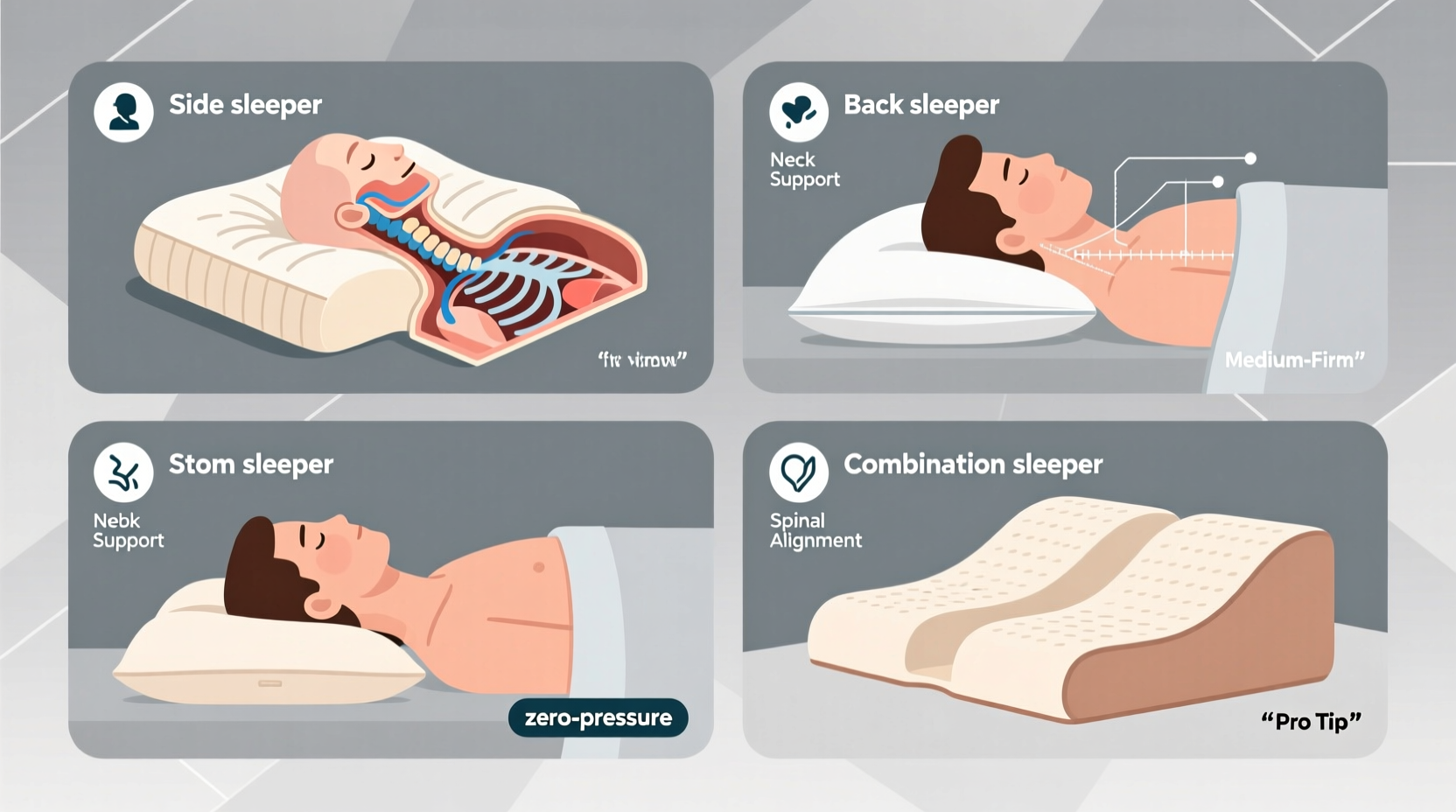
Your body forms different angles depending on whether you sleep on your side, back, or stomach. These positions place varying demands on cervical (neck) alignment. The goal is to keep your spine in a neutral position—neither tilted upward nor compressed downward—throughout the night.
For example, side sleepers need more loft (height) to fill the gap between their shoulder and head, while stomach sleepers require minimal elevation to avoid overextending the neck. Back sleepers fall somewhere in the middle, needing moderate support that maintains the natural curve of the cervical spine.
Choosing a pillow without considering your primary sleep posture often leads to compromised support. Over time, poor alignment can contribute to muscle strain, nerve compression, and even disrupted breathing patterns during sleep.
“Proper pillow selection is one of the most overlooked yet impactful factors in improving sleep quality and reducing musculoskeletal discomfort.” — Dr. Rebecca Langston, D.C., Board-Certified Chiropractor
Matching Pillow Type to Your Sleep Position
Sleeping on Your Side: Support Needs and Best Options
Side sleeping is the most common position and places significant pressure on the shoulders and hips. Because the distance between the ear and outside shoulder is greater than in other positions, side sleepers require a higher-loft pillow to maintain spinal neutrality.
A pillow that’s too flat will cause the head to tilt downward, straining the neck muscles. Conversely, one that’s too thick forces the head upward, creating tension along the upper spine. The ideal side-sleeper pillow fills the space between the neck and mattress without pushing the head forward or allowing it to sink excessively.
- Recommended loft: High (4–6 inches)
- Ideal materials: Memory foam, latex, or shredded foam with contouring ability
- Shape preference: Contoured or cervical pillows that support the neck’s natural curve
Sleeping on Your Back: Balancing Support and Comfort
Back sleepers benefit from a pillow that provides gentle lift under the head and extra support under the neck (cervical region). The natural inward curve of the cervical spine should be preserved, not flattened or exaggerated.
A medium-loft pillow (3–5 inches) typically works best. Too much height tilts the chin toward the chest, restricting airways and increasing snoring risk. Too little causes the head to fall back, straining posterior neck muscles.
Materials like memory foam, down alternative, or hybrid blends offer balanced responsiveness. Some back sleepers prefer ergonomic designs with built-in cervical rolls that cradle the neck while keeping the head slightly elevated.
| Sleep Position | Recommended Loft | Best Materials | Avoid |
|---|---|---|---|
| Side Sleeper | High (4–6\") | Memory foam, latex, shredded foam | Thin down pillows, low-loft options |
| Back Sleeper | Medium (3–5\") | Memory foam, down alternative, hybrid | Overly plush or flat pillows |
| Stomach Sleeper | Low (2–3\") or none | Soft down, polyester fill, thin foam | Thick, firm pillows |
Sleeping on Your Stomach: Minimizing Neck Strain
Stomach sleeping is the least biomechanically favorable position because it often requires turning the head sharply to one side for extended periods. This rotation stresses the cervical vertebrae and surrounding tissues.
The best approach for stomach sleepers is to use a very thin pillow—or no pillow at all—to minimize unnatural neck extension. If going pillow-free feels uncomfortable, opt for a soft, compressible option like down or low-density foam that allows the head to remain nearly level with the spine.
Some specialty pillows are designed specifically for stomach sleepers, featuring ultra-low profiles and breathable materials to reduce heat buildup and encourage neutral alignment.
Material Considerations Based on Sleep Style and Preferences
Beyond loft and shape, the filling material significantly affects temperature regulation, durability, and feel. Here’s how common pillow types perform across different sleep positions:
- Memory Foam: Excellent for side and back sleepers who need consistent support. Conforms closely to the head and neck but may retain heat unless ventilated or gel-infused.
- Shredded Memory Foam: Offers adjustable loft and improved airflow. Ideal for those who want to customize firmness by adding or removing fill.
- Latex: Naturally supportive and resilient, good for side sleepers wanting eco-friendly materials. Firmer than memory foam but highly durable.
- Down & Feather: Soft and moldable, suitable for back and stomach sleepers. Requires frequent fluffing and may trigger allergies.
- Polyester Fiberfill: Affordable and lightweight, best for stomach sleepers or occasional use. Flattens faster than premium materials.
- Buckwheat: Firm, breathable, and fully adjustable. Popular among people seeking orthopedic support, though noisy and heavy.
Temperature-sensitive sleepers should prioritize breathable covers (like Tencel or cotton) and open-cell foams. Those with allergies benefit from hypoallergenic fills and removable, washable covers.
Step-by-Step Guide to Testing and Selecting Your Ideal Pillow
Finding the right pillow involves more than reading labels—it requires personal testing and observation. Follow this practical sequence to ensure your choice truly supports your sleep posture:
- Identify your dominant sleep position. Use a sleep diary or wearable tracker for a week to confirm whether you're primarily a side, back, or stomach sleeper.
- Measure your shoulder width and sleeping height gap. Lie on your side on a firm surface; measure the distance from the outside of your shoulder to the bottom of your ear. This gives a baseline for needed loft.
- Test pillows in-store or via home trial programs. Spend at least 5–10 minutes lying down with each candidate. Bring your own pajamas if possible to simulate real conditions.
- Evaluate neck alignment. Ask someone to take a photo of you lying on the pillow, or set up a timer on your phone. Check that your cervical spine appears straight, not bent up or down.
- Assess comfort after 3–5 nights. Many pillows take time to adjust to. Sleep on it for several nights before deciding. Note any morning stiffness or jaw tension.
- Adjust or replace as needed. Some brands offer exchange programs within 30–100 days. Don’t hesitate to upgrade if alignment issues persist.
Real-Life Example: How Sarah Fixed Her Morning Neck Pain
Sarah, a 38-year-old graphic designer, struggled with persistent neck pain and headaches upon waking. She identified as a side sleeper and had been using a soft down pillow she loved for its plush feel. However, after consulting a physical therapist, she realized her head was sinking far below shoulder level, causing her neck to bend sharply each night.
She switched to a medium-firm shredded memory foam pillow with a contoured design, adjusting the fill to achieve a 5-inch loft. Within a week, her morning stiffness decreased dramatically. After two weeks, her headaches disappeared entirely. The change wasn’t about luxury—it was about alignment.
Her experience underscores a key truth: comfort should never come at the expense of structural support. What feels soft initially may cause long-term strain if it fails to uphold proper posture.
Essential Checklist Before Buying a New Pillow
Use this checklist to ensure your next pillow purchase aligns with your sleep needs:
- ✅ I know my primary sleep position (side, back, or stomach)
- ✅ I’ve measured the distance from my ear to shoulder when lying on my side
- ✅ I’ve considered my temperature preferences (hot sleeper? Need cooling materials?)
- ✅ I’m aware of any allergies (dust mites, feathers, etc.)
- ✅ I’m prioritizing support over initial softness
- ✅ I’m buying from a brand that offers a sleep trial or warranty
- ✅ I plan to test the pillow for at least 3–5 nights before making a final judgment
Frequently Asked Questions
Can one pillow work for multiple sleeping positions?
Yes, especially if you’re a combination sleeper. Shredded foam or adjustable pillows allow you to modify loft depending on your position. Look for medium-firm models with versatile shaping that support both side and back sleeping. Avoid extremely high or ultra-thin designs if you switch frequently.
How often should I replace my pillow?
Most experts recommend replacing pillows every 1–2 years, depending on material and use. Signs it’s time for a replacement include lumps, loss of shape, yellowing, or waking up with increased neck/shoulder pain. Memory foam lasts longer (18–24 months), while down and fiberfill degrade faster (6–18 months).
Are expensive pillows worth the investment?
Not always, but higher-priced options often include better materials, ergonomic design, and trial periods. A $100 pillow with adaptive support and cooling technology may outperform five cheap replacements over two years. Focus on value—durability, health benefits, and comfort—rather than price alone.
Final Thoughts: Make Support a Priority, Not an Afterthought
Your pillow is not merely a comfort accessory—it’s a critical component of your sleep ecosystem. Just as you’d invest in a quality mattress or ergonomic chair, choosing a pillow tailored to your sleeping position ensures your body recovers properly each night. Whether you're a dedicated side sleeper needing substantial lift or a stomach sleeper aiming to reduce neck torque, the right support makes a measurable difference in how you feel each morning.
Don’t let marketing claims or aesthetics override biomechanics. Test thoroughly, prioritize alignment, and remember that true comfort includes waking up pain-free. Your spine will thank you for the attention to detail.




 浙公网安备
33010002000092号
浙公网安备
33010002000092号 浙B2-20120091-4
Comments
No comments yet. Why don't you start the discussion?