
Every day, millions of iPhone users rely on their devices for communication, productivity, photography, and entertainment. Yet one of the most common threats to an iPhone’s longevity isn’t software-related—it’s physical damage from drops, impacts, and everyday wear. While Apple builds durable phones, no device is immune to a fall onto concrete or a tumble down stairs. That’s where a high-quality shockproof case becomes essential. Not all cases offer equal protection, and choosing the wrong one can leave your phone vulnerable despite the added bulk. Understanding what makes a case truly shockproof—and how to use it properly—can mean the difference between a minor scare and a costly repair.
Understanding Shockproof vs. Rugged vs. Durable: What Really Matters
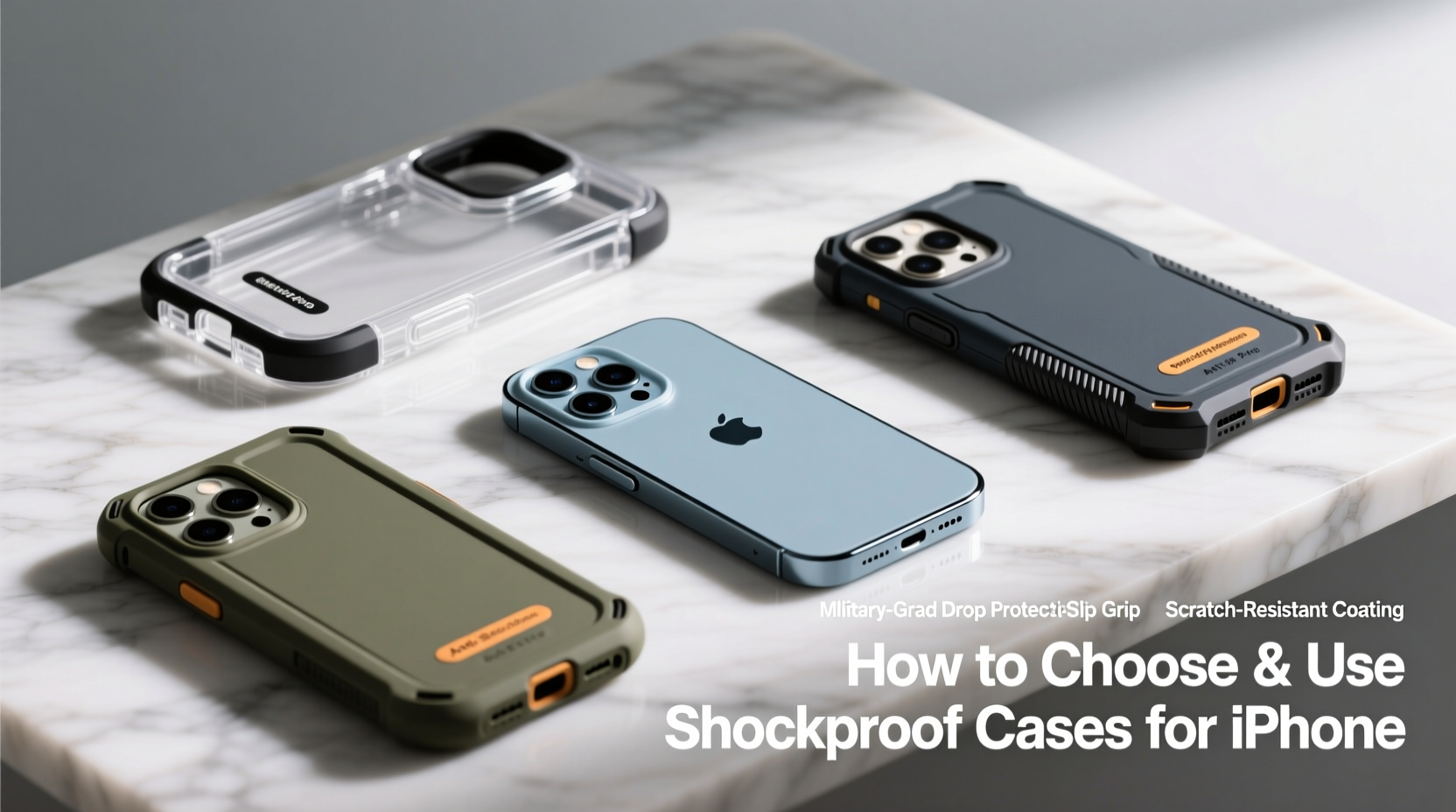
The terms “shockproof,” “rugged,” and “drop-resistant” are often used interchangeably, but they don’t always mean the same thing. True shockproof cases are engineered to absorb and disperse impact energy through specialized materials like TPU (thermoplastic polyurethane), silicone, reinforced polycarbonate, and sometimes even air cushion technology.
A case labeled “durable” may resist scratches but not survive a 6-foot drop. A “rugged” case typically includes raised bezels, reinforced corners, and layered construction, making it ideal for outdoor use or high-risk environments. Genuine shockproof cases undergo standardized testing—such as MIL-STD-810G—to verify performance under controlled drop conditions.
“Not all ‘tough’ cases are tested to military standards. Look for independent lab certification when true impact resistance matters.” — David Lin, Mobile Device Protection Engineer
Key Features of an Effective Shockproof Case
When shopping for a shockproof case, several design and material factors determine its real-world effectiveness. Prioritize these features to ensure maximum protection:
- Multi-layer construction: Combines hard outer shell with soft inner lining to absorb shock.
- Raised edges around screen and camera: Prevents direct contact with surfaces during face-down drops.
- Certified drop protection: Look for MIL-STD-810G or equivalent certification for drops from 6+ feet.
- Precise cutouts: Ensure full access to ports and buttons without compromising structural integrity.
- Grip-enhancing texture: Reduces the chance of accidental slips.
Material Comparison: Pros and Cons
| Material | Impact Resistance | Durability | Weight & Bulk |
|---|---|---|---|
| TPU (Thermoplastic Polyurethane) | High – excellent shock absorption | Moderate – may yellow over time | Low to moderate |
| Polycarbonate (Hard Plastic) | Moderate – resists scratches but less flexible | High – long-lasting | Low |
| Silicone | Low to moderate – good grip but limited impact dispersion | Moderate – prone to tearing | Low |
| Hybrid (TPU + Polycarbonate) | Very High – best overall protection | High – balanced resilience | Moderate to high |
How to Choose the Right Shockproof Case for Your Lifestyle
Your daily routine should dictate your case choice. A desk-bound professional has different needs than a construction worker or an avid hiker. Matching your case to your environment ensures both safety and usability.
Step-by-Step Guide: Selecting Your Ideal Case
- Assess your risk level: Do you frequently carry your phone in a backpack, work at heights, or have young children nearby? Higher risk demands higher protection.
- Determine compatibility: Ensure the case is designed specifically for your iPhone model (e.g., iPhone 15 Pro Max vs. iPhone SE).
- Check for certifications: Look for MIL-STD-810G, IP68 (for water/dust resistance), or third-party lab test videos.
- Evaluate usability: Will the case interfere with wireless charging, MagSafe accessories, or port accessibility?
- Read verified reviews: Focus on user experiences involving actual drops, not just appearance.
Real-World Example: How a Shockproof Case Saved an iPhone 14 Pro
In early 2023, Sarah M., a landscape photographer based in Colorado, dropped her iPhone 14 Pro from a hiking trail ledge estimated at 8 feet above rocky terrain. The phone landed screen-down on jagged stone. She was using a well-known brand hybrid shockproof case with MIL-STD-810G certification. Upon retrieval, the phone had visible scuff marks and a small crack in the case corner—but the screen remained intact, and the device powered on without issue.
“I’ve dropped my phone before with a basic silicone case, and it cracked instantly,” she said. “This time, I didn’t even need to replace the screen. The case absorbed everything.”
This example illustrates that while no case guarantees 100% protection, certified shockproof models significantly increase survival odds—even in extreme scenarios.
Best Practices for Using and Maintaining Your Shockproof Case
Even the best case loses effectiveness if misused or poorly maintained. Follow these practices to ensure lasting protection:
- Inspect regularly: Check for cracks, warping, or separation between layers. Replace immediately if compromised.
- Clean both phone and case: Dirt and debris trapped between the case and phone can create pressure points during impact.
- Avoid extreme temperatures: Prolonged exposure to heat (like a hot car) can degrade TPU and reduce shock absorption.
- Don’t remove the case unnecessarily: Frequent installation/removal wears out the snap-fit and weakens structural seal.
- Pair with a screen protector: A shockproof case protects edges and corners, but a tempered glass shield defends the display.
“Think of your case as part of a protection system—not a standalone solution.” — TechGuard Labs, Independent Testing Facility
Frequently Asked Questions
Do shockproof cases really make a difference?
Yes. Independent drop tests consistently show that certified shockproof cases reduce internal damage and screen breakage by up to 80% compared to bare phones or flimsy cases. The multi-layer design disperses kinetic energy, preventing it from transferring directly to the phone’s chassis.
Can I use wireless charging with a shockproof case on?
Most modern shockproof cases are designed to be wireless charging compatible, especially those marketed for iPhone models with MagSafe. However, thick or metal-reinforced cases may interfere. Always verify this feature before purchase.
How often should I replace my shockproof case?
Every 12–18 months, or sooner if you notice physical damage, discoloration, or reduced fit. Over time, materials fatigue and lose their ability to absorb shocks effectively.
Action Checklist: Maximizing iPhone Protection
- ✔️ Choose a case with MIL-STD-810G or equivalent certification
- ✔️ Confirm compatibility with your exact iPhone model
- ✔️ Install a tempered glass screen protector
- ✔️ Clean the case and phone monthly to remove debris
- ✔️ Inspect for cracks or deformation every 3 months
- ✔️ Replace the case every 1–2 years or after a major impact
- ✔️ Avoid exposing the case to prolonged sunlight or extreme heat
Final Thoughts: Invest in Protection, Not Repairs
An iPhone represents a significant investment—both financially and functionally. Spending $30–$60 on a reliable shockproof case is a fraction of the cost of a screen replacement or logic board repair. More importantly, it preserves your data, workflow, and peace of mind. The right case, chosen wisely and maintained properly, acts as an invisible guardian through daily bumps, drops, and accidents. Don’t wait until after a shattered screen to take protection seriously. Evaluate your habits, select a case that matches your lifestyle, and commit to consistent care. Your iPhone—and your wallet—will thank you.




 浙公网安备
33010002000092号
浙公网安备
33010002000092号 浙B2-20120091-4
Comments
No comments yet. Why don't you start the discussion?