
For passionate anime fans, collecting merchandise is more than a hobby—it’s an emotional investment. From limited edition figures to vintage posters, the items we collect often carry deep personal meaning. But beyond sentimentality, a growing number of collectors are approaching anime memorabilia as tangible assets. The key lies in knowing which pieces are likely to appreciate rather than depreciate. While most mass-produced goods lose value quickly, certain anime merchandise can become highly sought after, fetching premium prices years later. The difference between a fleeting purchase and a future treasure comes down to foresight, research, and disciplined selection.
Value retention in anime collectibles isn’t random. It follows predictable patterns rooted in scarcity, cultural impact, production quality, and community demand. Understanding these dynamics allows collectors to make informed decisions—transforming casual acquisitions into strategic investments. Whether you're building a personal shrine to your favorite series or curating a portfolio with resale potential, selecting the right items from the start is crucial.
Understand What Drives Value in Anime Merchandise
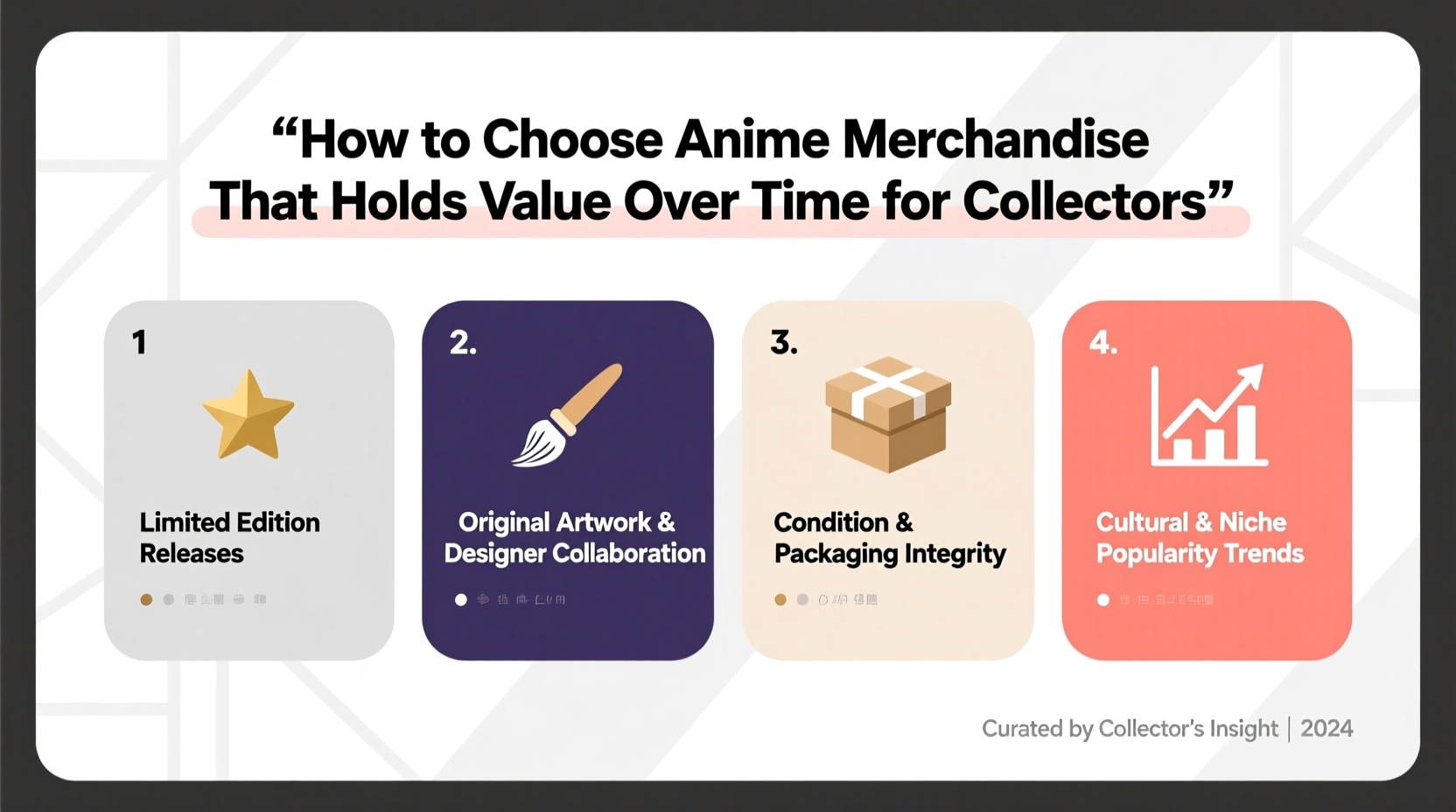
The foundation of any valuable collection is recognizing what makes certain items rare and desirable. Unlike everyday consumer goods, high-value anime merchandise typically shares several key characteristics: limited availability, strong franchise popularity, exceptional craftsmanship, and historical significance.
Rarity is perhaps the most powerful driver of value. Items released in small batches—such as convention exclusives, first-print Blu-rays, or prototype figurines—naturally become harder to find over time. When combined with high demand, scarcity fuels price increases. For example, early 2000s Inuyasha box sets with original artwork now sell for hundreds of dollars due to discontinued production and nostalgic appeal.
Licensing and authenticity also play critical roles. Officially licensed products from reputable companies like Good Smile Company, Aniplex, or Bandai tend to hold value better than bootlegs or unofficial reproductions. Authenticity can be verified through holographic stickers, serial numbers, and packaging integrity. Counterfeit goods may look convincing at first glance but lack long-term market credibility.
“Collectors who focus on authenticity and provenance are the ones seeing real returns. A sealed, factory-fresh figure from 2010 can double in value if it’s genuine and well-preserved.” — Kenji Tanaka, Vintage Anime Appraiser & Tokyo Collector’s Guild Advisor
Additionally, consider the cultural footprint of the anime itself. Series that break into global markets—like Attack on Titan, Demon Slayer, or Neon Genesis Evangelion—generate sustained interest across generations. Their merchandise benefits from ongoing media exposure, reboots, and international fan engagement, all of which support lasting demand.
Focus on High-Quality Production and Materials
Not all figures, apparel, or accessories are created equal. The materials used and the precision of manufacturing directly affect both durability and desirability. Collectors who want their items to retain value must pay close attention to build quality.
PVC figures, for instance, vary widely in paint application, sculpt detail, and stability. Premium lines such as Nendoroid, Figma, or Master Grade models use superior molds and hand-finishing techniques, making them more resilient to yellowing, chipping, or joint degradation. These factors matter not only for display but also for resale—buyers consistently favor mint-condition, high-end releases.
Similarly, clothing made from heavyweight cotton or silk-screened prints lasts longer than fast-fashion anime tees. Limited-run apparel from collaborations—like those between My Hero Academia and Uniqlo or Supreme—are particularly valuable because they blend fashion credibility with fandom appeal.
When evaluating physical media, opt for Blu-ray box sets with hard-shell cases, art books, and bonus content. DVDs degrade faster and were often mass-distributed, reducing their collectibility. In contrast, region-free or collector’s edition releases with exclusive commentary tracks or behind-the-scenes documentaries remain in demand among purists and archivists.
Do’s and Don’ts of Assessing Build Quality
| Do | Don't |
|---|---|
| Inspect paint finish under natural light for inconsistencies | Assume all boxed items are flawless—check for factory defects |
| Choose items with UV-resistant coatings (especially for displays) | Expose delicate fabrics or paper goods to direct sunlight |
| Verify manufacturer reputation (e.g., Kotobukiya vs. unknown brands) | Buy unbranded replicas sold online without reviews |
| Look for numbered certificates of authenticity | Ignore packaging condition—even minor dents reduce resale value |
Build a Strategic Acquisition Timeline
Timing matters just as much as selection. Some of the most valuable anime collectibles were acquired at launch and preserved untouched. Others gained prominence only after a show’s unexpected success. A proactive acquisition strategy helps collectors stay ahead of market shifts.
Follow this step-by-step approach to maximize long-term value:
- Monitor upcoming releases: Subscribe to official studio newsletters, follow anime expos like Anime Expo or Comiket, and join forums such as MyAnimeList or Reddit’s r/AnimeMerch. Early awareness gives you a chance to pre-order limited stock before it sells out.
- Pre-order wisely: Many high-value items are available only during initial pressings. However, avoid overcommitting—only reserve what fits your budget and storage capacity. Pre-orders should be selective, not impulsive.
- Preserve in original condition: Keep boxes sealed with plastic wrap or anti-static bags. Store in climate-controlled environments away from humidity and temperature swings. Never remove items unless for photography or appraisal.
- Track secondary market trends: Use platforms like Mandarake, eBay completed listings, or Yahoo! Japan Auctions to observe price movements. If a previously affordable item begins rising steadily, consider adding another unit while still accessible.
- Reassess annually: Every 12–18 months, review your collection. Identify underperforming items and evaluate whether to hold, trade, or sell. This keeps your portfolio dynamic and focused on growth.
This timeline transforms collecting from passive accumulation into active stewardship. Just as investors monitor stock performance, serious collectors track the trajectory of their holdings.
Real Example: The Rise of the Fate/stay night Saber Figure
In 2006, Good Smile Company released a 1/8-scale Nendoroid of Saber from Fate/stay night. At the time, it retailed for around ¥5,400 (~$50). While popular among fans, it wasn’t considered a major investment piece. Over the next decade, however, the Fate franchise exploded globally with sequels, movies, and mobile games like Fate/Grand Order.
By 2018, sealed, unused versions of the original Nendoroid began appearing at auction sites for over $300. By 2023, some graded specimens sold for more than $700. The surge was driven by three factors: the character’s enduring icon status, the discontinuation of the model, and its role as one of the earliest modern anime figures to feature intricate articulation and facial expression swaps.
Those who recognized the cultural momentum of the Fate series—and held onto their figures instead of displaying or gifting them—realized significant financial returns. This case illustrates how combining fandom insight with preservation discipline creates opportunities for appreciation.
Essential Checklist for Future-Proof Collecting
To ensure your anime merchandise stands the test of time, follow this practical checklist every time you make a purchase:
- ✅ Confirm the item is officially licensed (look for logos from Aniplex, Toei, Shueisha, etc.)
- ✅ Check production run size—if unclear, search collector communities for estimates
- ✅ Verify whether the item is part of a numbered or limited edition
- ✅ Inspect packaging for completeness (manuals, certificates, extra faces/accessories)
- ✅ Store in a dark, dry place with stable temperature (ideally 18–22°C / 65–72°F)
- ✅ Avoid opening unless necessary; once opened, value drops significantly
- ✅ Document purchases with receipts and photos for provenance
- ✅ Join collector networks to stay informed about emerging trends and resales
Frequently Asked Questions
Does opening anime merchandise destroy its value?
Generally, yes—especially for figures, plushies, and boxed sets. Sealed items in pristine condition command the highest premiums. Once opened, wear and tear become inevitable, and the item transitions from “collector-grade” to “used collectible.” There are exceptions, such as custom display pieces or artist-signed variants, but for most mass-market goods, keeping them sealed preserves maximum value.
Are newer anime series worth collecting for investment?
Yes, but with caution. Recent hits like Jujutsu Kaisen or Chainsaw Man have strong potential due to massive global followings and multimedia expansions. However, oversaturation is a risk—many items are produced in large quantities early in a series’ run, diluting scarcity. Focus on special editions, collaboration products, or early releases before the franchise peaks in popularity.
How do I verify the authenticity of secondhand anime merchandise?
Start by examining packaging details: font accuracy, logo placement, and barcode functionality. Compare against official product images from the manufacturer’s website. Request clear photos of serial numbers, holograms, and included accessories. Purchase only from trusted sellers with positive feedback histories. Platforms like Mandarake provide authentication services for Japanese imports, adding an extra layer of security.
Conclusion: Curate with Purpose, Collect with Vision
Selecting anime merchandise that holds value isn’t about chasing every new release or hoarding every variant. It’s about curating with intention—choosing pieces that combine artistic merit, cultural relevance, and structural integrity. The most successful collectors think decades ahead, treating each acquisition as both a tribute to their passion and a potential legacy asset.
By focusing on authenticity, preserving condition, and understanding market signals, you can build a collection that grows in worth and meaning over time. Whether your goal is personal enjoyment or future resale, the principles remain the same: quality over quantity, patience over impulse, and knowledge over guesswork.




 浙公网安备
33010002000092号
浙公网安备
33010002000092号 浙B2-20120091-4
Comments
No comments yet. Why don't you start the discussion?