
Integrating a bidet into your bathroom routine offers undeniable benefits: improved hygiene, reduced toilet paper use, and enhanced comfort. But when it comes time to install one, a critical decision arises—should you go with a bidet attachment or a standalone bidet unit? Both options serve the same fundamental purpose, but they differ significantly in installation, functionality, cost, and space requirements. Understanding these differences is key to making a choice that aligns with your lifestyle, bathroom layout, and long-term goals.
Understanding the Core Differences
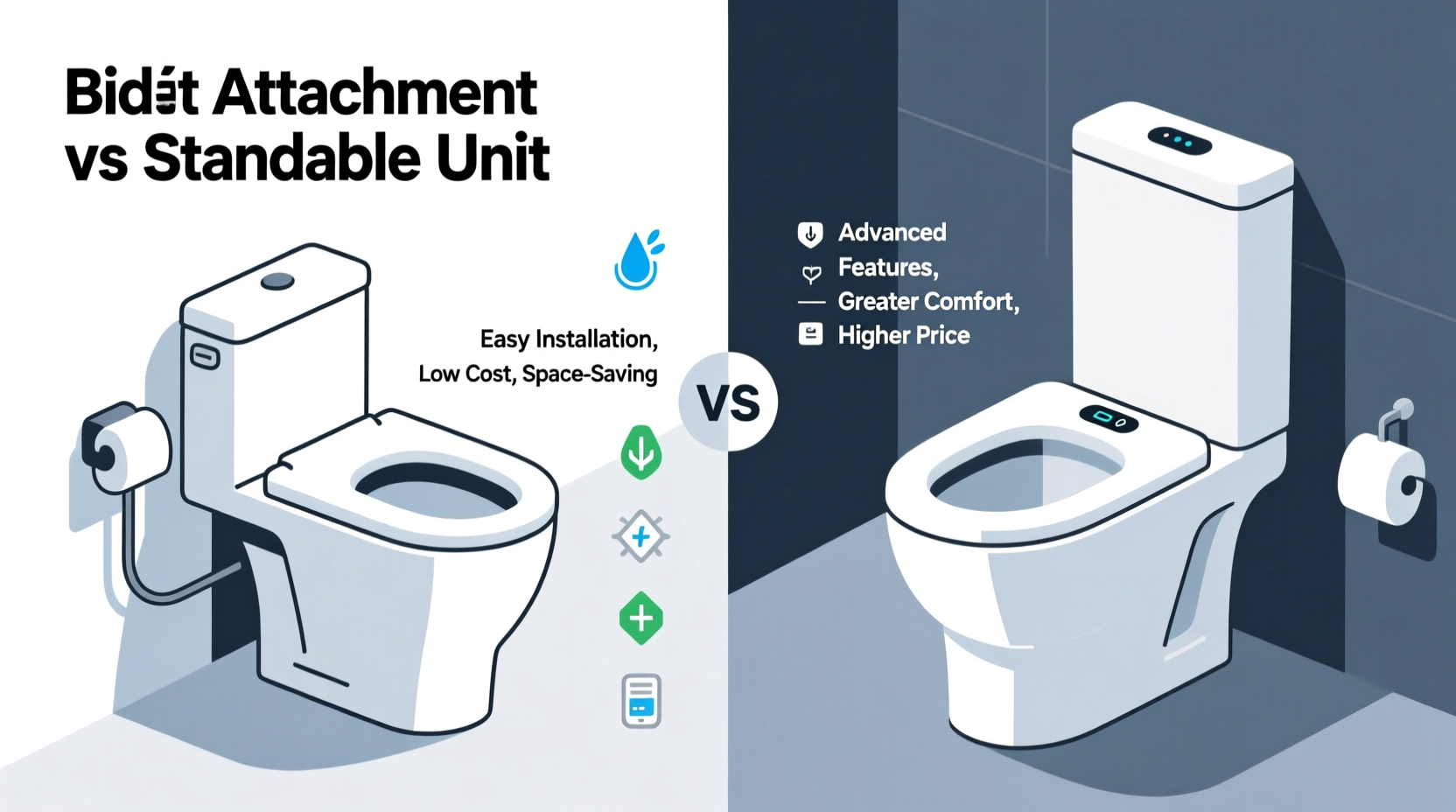
A bidet attachment (also known as a bidet seat or add-on bidet) is designed to mount directly onto your existing toilet. It connects to the water supply line behind the toilet and replaces or fits beneath the standard toilet seat. These units are compact, relatively easy to install, and typically more affordable than standalone models.
In contrast, a standalone bidet is a separate plumbing fixture—similar in appearance to a low sink or shallow basin—installed next to the toilet. It requires its own dedicated space, water connections, and often professional installation. While less common in North American homes due to space constraints, standalone bidets are standard in many European and Asian countries and offer a traditional, hands-free cleansing experience.
The choice between the two isn’t just about preference—it’s about practicality, available space, and what kind of user experience you’re seeking.
Bidet Attachments: Compact and Convenient
Bidet attachments have gained widespread popularity for good reason. They transform an ordinary toilet into a hygienic, modern fixture without altering the bathroom’s footprint. Most models come with adjustable water pressure, temperature control (in electric versions), nozzle positioning, and even heated seats. Installation can usually be completed in under an hour with basic tools and no need for a plumber.
These units are ideal for renters, small bathrooms, or anyone looking for a low-impact upgrade. Because they integrate seamlessly with your current setup, there's minimal disruption during installation. Battery-powered or plug-in electric models offer advanced features, while non-electric versions rely solely on water pressure and are simpler to maintain.
Standalone Units: Traditional and Spacious
Standalone bidets stand as independent fixtures, requiring floor space and separate plumbing. They operate much like a sink—you sit or straddle the unit and use a faucet to control water flow. Some modern standalone models include spray functions, heated surfaces, and drying systems, but most traditional ones require manual wiping after use.
Because they demand additional square footage and construction work, standalone bidets are more commonly found in new builds or major renovations. They appeal to those who value tradition, privacy in hygiene routines, or want to replicate the experience common in countries where bidets are standard.
Key Factors to Consider When Choosing
Selecting the right type of bidet involves evaluating several practical factors. Your final decision should reflect not only personal comfort but also logistical feasibility.
Available Bathroom Space
This is often the deciding factor. Standalone bidets require at least 15–20 inches of clear floor space beside the toilet, plus clearance for opening doors and moving around. In smaller half-baths or powder rooms, this may simply not be possible.
Bidet attachments, by comparison, take up zero extra space. Since they replace the toilet seat, they’re perfect for compact layouts, accessible bathrooms, or multi-user households where every inch counts.
Budget and Installation Costs
Bidet attachments are generally more cost-effective. Basic non-electric models start around $50, while premium electric versions with remote controls and air dryers range from $200 to $500. Most can be self-installed using a screwdriver and wrench.
Standalone bidets vary widely in price. The fixture itself can cost anywhere from $200 to over $1,000, depending on material (porcelain, composite stone) and design. However, the real expense lies in installation—plumbing rerouting, flooring adjustments, and labor can easily add $800–$2,000 to the total cost.
“Choosing a bidet isn’t just about hygiene—it’s an investment in long-term comfort and sustainability. For most homeowners, attachments offer the best balance of function and affordability.” — Dr. Lena Patel, Public Health & Sanitation Researcher
Hygiene Preferences and User Needs
Some users prefer the physical separation a standalone bidet provides. Sitting on a dedicated fixture may feel more sanitary or intuitive, especially for older adults or individuals with mobility issues who benefit from side access.
Conversely, bidet attachments offer precision cleaning with targeted nozzles, adjustable angles, and warm water options. Many people find the integrated experience more convenient—no need to get up and move between fixtures. Features like self-cleaning nozzles, deodorizers, and automatic flushing enhance both cleanliness and ease of use.
Water Efficiency and Environmental Impact
Both types are environmentally friendly compared to excessive toilet paper use. A single roll of toilet paper requires approximately 37 gallons of water to produce. Bidets use just a fraction of a gallon per wash—typically between 0.5 and 1.5 gallons, depending on duration.
Attachments tend to be slightly more efficient because they use pressurized streams rather than filling a basin. Standalone units may use more water if users leave the tap running during use, though aerated faucets and timers can mitigate waste.
Comparison Table: Attachment vs. Standalone Bidet
| Feature | Bidet Attachment | Standalone Bidet |
|---|---|---|
| Installation Complexity | Low – DIY in under 1 hour | High – Requires plumbing and flooring work |
| Space Required | None – uses existing toilet | Significant – needs dedicated floor area |
| Cost (Unit + Install) | $50–$600 | $500–$3,000+ |
| Water Usage per Use | 0.5–1.2 gallons | 1–2 gallons (depending on flow rate) |
| Advanced Features | Heated seat, warm water, air dryer, remote | Limited; mostly manual controls |
| Suitability for Renters | Excellent – removable | Poor – permanent fixture |
| Maintenance | Easy – wipe down, nozzle self-clean | Regular basin cleaning required |
Step-by-Step Guide to Making Your Decision
Follow this logical sequence to determine which option suits your situation best.
- Assess your bathroom layout. Measure the space around your toilet. Is there room for a second fixture without blocking doors or drawers?
- Determine your budget. Include both purchase price and potential installation costs. Can you afford professional plumbing if needed?
- Evaluate user needs. Are elderly family members, children, or individuals with disabilities using the bathroom? Some find attachments easier to use due to proximity and support features.
- Check water heater capacity. Electric bidet attachments with heated water draw from your home’s hot water system. Ensure your tank or on-demand heater can handle the load.
- Consider long-term plans. Are you planning to sell the home soon? A standalone bidet might not provide a strong ROI unless the market expects luxury fixtures.
- Test usability preferences. Visit a showroom or try a friend’s bidet. Experience firsthand whether you prefer sitting on the toilet with a spray or transferring to a separate unit.
- Decide and commit. Once you’ve weighed all factors, choose the option that balances functionality, comfort, and feasibility.
Real-Life Scenario: Two Households, Two Choices
Case Study 1: Urban Apartment Renovation
Sarah and James live in a 700-square-foot condo in downtown Seattle. Their guest bathroom is tight, measuring just 5x7 feet. When upgrading their aging toilet, they wanted better hygiene but couldn’t sacrifice space. They chose a high-end bidet attachment with heated seat, warm water, and remote control. Installation took 45 minutes using their existing tools. Now, guests consistently compliment the “luxury hotel” feel of the bathroom—all without changing the footprint.
Case Study 2: Custom Home Build
The Rivera family built a new home in Austin with universal design principles in mind. Their master suite includes a spacious bathroom with room to spare. They opted for a sleek, wall-mounted standalone bidet in white porcelain, positioned near the shower for accessibility. Though the installation added $1,400 to the plumbing budget, they appreciate the traditional European aesthetic and independence it offers. Their elderly mother, who visits frequently, finds it easier to use than leaning forward on a toilet.
Checklist: Choosing the Right Bidet Type
- ✅ Measured available floor space around the toilet
- ✅ Confirmed household budget including installation
- ✅ Identified primary users and their mobility needs
- ✅ Checked local plumbing codes (especially for standalone units)
- ✅ Researched product reviews and warranty terms
- ✅ Verified electrical outlet availability (for electric attachments)
- ✅ Considered resale value and aesthetic impact
- ✅ Tested demo models if possible
Frequently Asked Questions
Can I install a bidet attachment myself?
Yes, most bidet attachments are designed for DIY installation. You’ll need a wrench and screwdriver, and the process typically takes 30–60 minutes. Just shut off the water, disconnect the toilet supply line, attach the T-valve included in the kit, and reconnect everything. No special permits or skills are required.
Are standalone bidets more hygienic than attachments?
Not inherently. Both can be highly sanitary when maintained properly. Standalone bidets eliminate contact with the toilet surface, which some users prefer. However, modern bidet attachments feature antimicrobial seats, self-cleaning nozzles, and UV sterilization in premium models, making them equally clean.
Do bidet attachments work with all toilets?
Most do, but compatibility depends on toilet shape (round or elongated) and mounting hardware. Check the manufacturer’s fit guide before purchasing. Some very old or oddly shaped toilets may not support certain models. Wall-mounted toilets may require specific adapters.
Final Thoughts and Next Steps
The decision between a bidet attachment and a standalone unit ultimately hinges on your unique circumstances. For the majority of modern households—especially those in urban environments, rentals, or compact spaces—a bidet attachment delivers exceptional value, convenience, and performance without demanding structural changes.
However, if you’re building from scratch, designing a luxury bathroom, or prioritize traditional hygiene practices, a standalone bidet can be a worthwhile addition that enhances both function and style.
No matter which path you choose, integrating a bidet into your daily routine represents a meaningful step toward better personal care, environmental responsibility, and long-term savings. With clearer understanding and careful planning, you can make a confident, informed decision that improves your quality of life for years to come.




 浙公网安备
33010002000092号
浙公网安备
33010002000092号 浙B2-20120091-4
Comments
No comments yet. Why don't you start the discussion?