
Daytime lip care isn’t just about hydration—it’s also about presentation. Whether you're heading to the office, running errands, or meeting friends for coffee, your lips play a subtle but significant role in your overall appearance. Clear and tinted lip balms both offer moisture and protection, but they serve different aesthetic and functional purposes. Choosing between them depends on more than personal preference; it involves understanding your skin tone, daily routine, sensitivity, and long-term lip health goals.
A well-chosen lip balm enhances natural beauty without drawing attention away from your face. It can provide a polished look while still feeling lightweight and effortless. But with so many options available—some sheer, some glossy, some medicated—knowing which type suits your daytime needs requires thoughtful consideration. This guide breaks down the key differences, benefits, and strategic factors that influence the decision between clear and tinted formulas.
Understanding the Core Differences
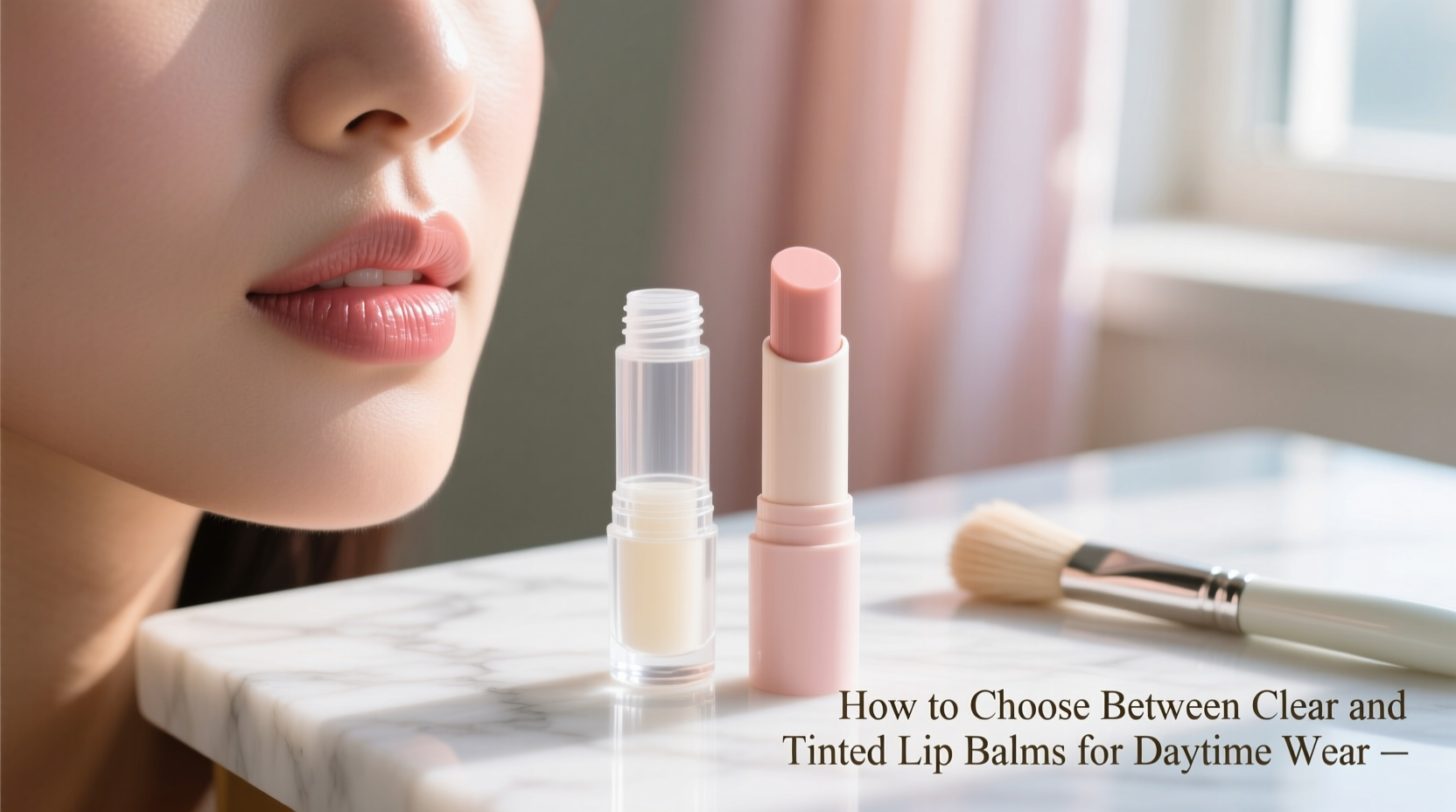
At first glance, clear and tinted lip balms may seem interchangeable. Both deliver hydration through base ingredients like shea butter, beeswax, coconut oil, or lanolin. However, their formulation diverges beyond moisture delivery.
- Clear lip balms are typically transparent or translucent, designed purely for nourishment and protection. They often contain higher concentrations of emollients and occlusives to seal in moisture.
- Tinted lip balms combine moisturizing properties with pigments—natural or synthetic—that add a hint of color. These range from barely-there washes to buildable hues resembling lipstick.
The addition of pigment affects texture, longevity, and application experience. Tinted versions may feel slightly heavier due to added waxes or film-formers that help the color adhere. In contrast, clear balms usually glide on smoothly with minimal residue, making them ideal for frequent reapplication throughout the day.
Skin Tone and Natural Lip Color: Matching Your Shade Strategy
Your natural skin tone and baseline lip color should heavily influence whether you go clear or tinted during daylight hours. The goal of daytime wear is often enhancement, not transformation.
For individuals with fair to light skin tones, especially those who blush easily or have pink undertones, a rose-tinted balm can mimic a healthy flush. A sheer berry or peach works well for medium complexions with warm or olive undertones. Deeper skin tones benefit from richer tints—think plum, terracotta, or deep coral—that complement melanin-rich lips without washing them out.
However, if your natural lip color is already vibrant or evenly toned, a clear balm might be sufficient. Over-applying tint when unnecessary can result in an unnatural “made-up” look during casual settings. Conversely, if your lips appear pale or uneven, a tint evens out discoloration subtly.
“Tinted balms work best when they mirror what your lips would look like if they were perfectly hydrated and slightly flushed.” — Dr. Lena Patel, Dermatological Aesthetic Consultant
Functional Considerations: SPF, Longevity, and Reapplication
One of the most overlooked aspects of daytime lip care is sun protection. Lips lack melanocytes compared to facial skin, making them more vulnerable to UV damage, premature aging, and even skin cancer. For this reason, dermatologists recommend using lip products with SPF 15 or higher daily—even in winter or on cloudy days.
Here’s where product choice matters:
| Feature | Clear Lip Balm | Tinted Lip Balm |
|---|---|---|
| SPF Availability | Widely available, often at higher SPF levels (up to SPF 50) | Limited; many tints do not include SPF unless explicitly labeled |
| Reapplication Frequency | Every 1–2 hours under sun exposure | Less frequent due to pigment retention, but SPF degrades equally fast |
| Texture & Comfort | Lightweight, non-sticky, ideal for dry climates | Slightly thicker; some leave a slight stain after wearing off |
| Allergen Risk | Lower (fewer additives) | Moderate (pigments and dyes may irritate sensitive skin) |
If you spend extended time outdoors—commuting, walking, or working near windows—a clear balm with high SPF is functionally superior. You can reapply frequently without worrying about color buildup or smudging. On the other hand, tinted balms with SPF do exist, though they are less common and sometimes costlier. When choosing one, verify the label states \"broad-spectrum SPF\" and check expiration dates, as sunscreen efficacy diminishes over time.
Real-Life Scenario: Choosing Based on Lifestyle
Consider Sarah, a 32-year-old graphic designer who works remotely but commutes twice weekly to client meetings. Her mornings involve school drop-offs, meaning she has five minutes to get ready. She wants something low-effort yet polished.
On remote days, Sarah uses a clear balm with SPF 30. It keeps her lips hydrated through hours of screen time and air-conditioned environments. Since she rarely sees colleagues face-to-face, full makeup feels excessive. The clear balm maintains comfort without looking “done.”
On commute days, she switches to a soft mauve-tinted balm. It adds warmth to her complexion, pairs well with minimal concealer and mascara, and gives the impression of intentional grooming. The tint lasts through morning coffee and early meetings, fading evenly by lunchtime.
Sarah’s approach reflects a practical balance: functionality on relaxed days, subtle enhancement when visibility increases. Her strategy demonstrates that switching between clear and tinted isn’t inconsistent—it’s context-aware.
Step-by-Step Guide to Selecting Your Daytime Balm
Follow these steps each time you evaluate or replace your lip balm to ensure optimal performance and suitability:
- Assess your environment: Do you spend time outdoors? Is your workspace climate-controlled? High wind or sun exposure favors SPF-rich clear balms.
- Evaluate your skin tone and lip condition: Pale or uneven lips may benefit from a universal tint (e.g., sheer rose). Naturally even-toned lips may only need moisture.
- Check ingredient safety: Avoid parabens, artificial fragrances, and allergens like phenol or menthol if you have sensitivities.
- Determine desired finish: Glossy? Matte? Natural shine? Clear balms typically offer dewier finishes; tints vary widely—sample before committing.
- Test wearability: Apply mid-morning and observe how it feels and looks over 3–4 hours. Does it feather? Dry out? Stain cups?
- Review SPF compliance: If sun exposure is likely, confirm SPF presence and plan reapplication every two hours.
Do’s and Don’ts: Quick Reference Table
| Action | Clear Balm | Tinted Balm |
|---|---|---|
| Use under makeup | ✔️ Ideal base | ⚠️ May interfere with lipstick adhesion |
| Wear during exercise | ✔️ Lightweight and non-drip | ❌ Pigment may transfer to water bottles |
| Apply before flying | ✔️ Prevents chapping in dry cabin air | ✔️ Acceptable, but may fade faster |
| Share with others | ❌ Never share any lip product | ❌ Higher contamination risk due to applicator contact |
| Use on sensitive or cracked lips | ✔️ Soothing and gentle | ⚠️ Dyes may sting broken skin |
Expert Insight: What Dermatologists Recommend
Dr. Amara Singh, a board-certified dermatologist specializing in facial wellness, emphasizes prevention over correction: “Most patients come in with vertical lip lines or chronic dryness because they’ve used irritating products or skipped sun protection. A simple clear balm with SPF applied religiously does more for anti-aging than expensive serums.”
She notes that while tinted balms are appealing for their cosmetic effect, they shouldn’t replace protective routines. “If you love the look of a tint, use it—but layer it over a clear SPF balm. That way, you get color and defense.”
“The lips are one of the first areas to show signs of dehydration and UV damage. Daily balm use isn’t vanity—it’s essential skincare.” — Dr. Amara Singh, MD, FAAD
Frequently Asked Questions
Can I layer a tinted balm over a clear SPF one?
Yes, and it’s actually recommended if your tint lacks SPF. Apply the clear SPF balm first, let it absorb for 30 seconds, then add the tinted layer for color. This ensures sun protection isn’t compromised.
Do tinted balms dry out lips more than clear ones?
Not inherently, but some pigments and waxes can be slightly drying. Look for hydrating ingredients like hyaluronic filling spheres, squalane, or jojoba oil in tinted formulas to counteract this.
How often should I replace my lip balm?
Every 6–12 months, depending on usage and storage. Exposure to heat, humidity, and repeated finger contact introduces bacteria. Discard if the smell changes, texture separates, or irritation occurs upon application.
Final Checklist Before You Buy
- ☑ Contains SPF 15 or higher (especially for daytime)
- ☑ Free from known irritants (fragrance, alcohol, menthol)
- ☑ Matches your natural lip hue or complements your skin tone
- ☑ Comes in a hygienic packaging format (twist-up stick or tube preferred over pot jars)
- ☑ Feels comfortable after 30 minutes of wear (no tightness or stickiness)
- ☑ Sourced from a reputable brand with transparent labeling
Conclusion: Make the Choice Work for Your Day
There’s no single “best” option between clear and tinted lip balms—only what works best for your lifestyle, skin needs, and aesthetic preferences. Clear balms excel in protection and simplicity, making them ideal for everyday essentials and sensitive skin. Tinted balms bridge skincare and cosmetics, offering a touch of polish with minimal effort.
The smartest approach is flexibility: keep a clear SPF balm in your medicine cabinet for nightly repair and sunny days, and maintain a neutral-tint favorite in your bag for moments when you want to look put-together in seconds. By aligning your choice with purpose—not just preference—you invest in both immediate comfort and long-term lip health.




 浙公网安备
33010002000092号
浙公网安备
33010002000092号 浙B2-20120091-4
Comments
No comments yet. Why don't you start the discussion?