
For many people, hair extensions are more than a beauty accessory—they’re a confidence booster, a style reinvention tool, or a solution to thinning or slow-growing hair. But the real test of a good extension isn’t just length or volume; it’s how naturally they move. Do they sway with your head like your own hair? Do they blend seamlessly when you toss your hair back or dance under the lights? That lifelike motion is what separates average extensions from exceptional ones.
The choice between clip-in and sew-in extensions plays a crucial role in achieving this natural movement. While both options offer benefits, they differ significantly in installation, maintenance, longevity, and—most importantly—how they behave once on your head. Understanding these differences can help you make an informed decision that aligns with your lifestyle, hair type, and styling goals.
Understanding Natural Movement in Hair Extensions
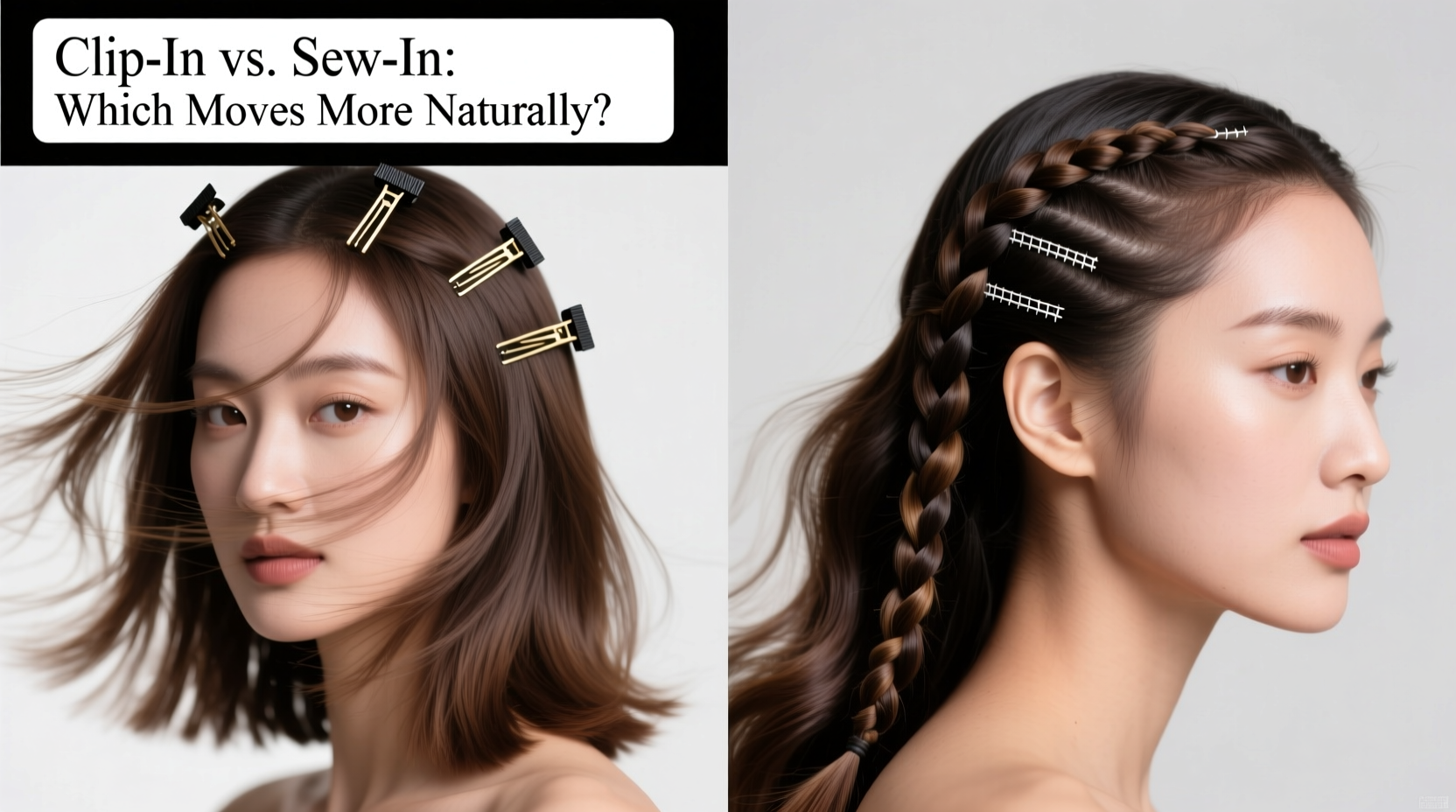
Natural movement refers to how closely extensions mimic the behavior of your biological hair. This includes how they fall, swing, bounce, and respond to wind, water, and motion. Achieving this realism depends on several factors: weight distribution, attachment method, texture match, and root blending.
Clip-ins are typically heavier at the weft because the clips add bulk, which can cause them to hang differently than your natural strands. Sew-ins, on the other hand, are integrated directly into your scalp via braiding and sewing, allowing for a more uniform weight distribution and a seamless flow from roots to ends.
“Natural movement starts at the root. If the extension doesn’t emerge from the scalp like your own hair, the illusion breaks.” — Latoya Simmons, Celebrity Hairstylist & Extension Specialist
That said, advancements in clip-in technology—such as micro-wefts and lightweight silicone clips—have narrowed the gap. Still, the fundamental mechanics of how each type attaches influence movement, comfort, and realism.
Clip-In vs. Sew-In: A Detailed Comparison
To determine which option delivers better natural movement, it helps to compare them across key categories. The table below outlines critical differences:
| Feature | Clip-In Extensions | Sew-In Extensions |
|---|---|---|
| Installation Time | 5–15 minutes (DIY) | 2–4 hours (professional) |
| Movement Realism | Good (can shift or slip with activity) | Excellent (moves as one with natural hair) |
| Weight Distribution | Uneven (clips create pressure points) | Even (distributed through cornrows) |
| Lifespan | 6–12 months (with care) | 8–12 weeks per install; trackable up to 1 year with maintenance |
| Hair Health Impact | Low (non-damaging if used correctly) | Moderate to high (risk of traction if not maintained) |
| Styling Flexibility | High (removable daily) | Moderate (limited access to scalp) |
| Swimming & Exercise | Not recommended (slippage risk) | Possible (once properly secured) |
This comparison shows that while sew-ins generally provide superior natural movement due to their integration with your scalp, they require more commitment and maintenance. Clip-ins offer convenience and flexibility but may lack the fluidity of a permanent set—especially during dynamic activities.
When Clip-Ins Deliver Convincing Movement
Despite their limitations, modern clip-ins can achieve surprisingly realistic movement—when chosen and applied correctly. The key lies in quality, placement, and blending.
High-end clip-ins now feature ultra-thin wefts and low-profile clips that minimize bulk. When layered strategically beneath your natural hair, they catch the light and move in harmony with your strands. For best results, use multiple smaller pieces rather than one thick weft. This reduces weight concentration and allows for incremental layering that mimics natural growth patterns.
Texture matching is equally vital. Human hair extensions that mirror your curl pattern, wave, or straightness will integrate more naturally. For example, someone with loose waves should avoid pin-straight extensions, even if the color matches perfectly—the movement will be off.
One real-world example: Maya, a marketing executive, uses clip-ins two to three times a week for client meetings. She chose a 20-piece set with tapered ends and hand-tied wefts. By placing smaller pieces near her crown and temples, she avoids bulk and achieves a soft, bouncy movement that colleagues often mistake for a new haircut.
Why Sew-Ins Excel in Lifelike Motion
Sew-in extensions, also known as braided weaves, are installed by flat-braiding natural hair into cornrows and then sewing wefts onto the braids using a needle and thread. Because the base is your own scalp and the extensions emerge from within the braided foundation, the result is a seamless transition from root to tip.
This structural integration means sew-ins move as a single unit with your natural hair. There are no clips to dislodge or sudden shifts when turning your head. Wind, water, and motion affect them uniformly, creating a convincing illusion of naturally long, full hair.
Additionally, sew-ins allow for versatile parting and updos. Since the hair is fully attached, you can pull it back into a high ponytail or bun without exposing clips or tape lines—a common giveaway with temporary systems.
“I’ve had clients cry when they see themselves from the back in a mirror after a sew-in. They finally feel like their hair belongs to them.” — Jamal Reyes, Master Braider & Salon Owner
However, this realism comes at a cost. Improper installation or prolonged wear without maintenance can lead to tension on the scalp, resulting in traction alopecia. It’s essential to choose a skilled stylist, opt for lighter wefts if needed, and follow a removal schedule—typically every 6 to 8 weeks.
Step-by-Step Guide: Choosing Based on Your Lifestyle
Your daily routine should heavily influence your decision. Follow this timeline to identify the best fit:
- Week 1: Assess Your Routine
Track how often you style your hair, exercise, swim, or sleep with extensions in. Note any special events coming up. - Day 7: Evaluate Hair Type & Density
Thin or fine hair may struggle to conceal clips, making sew-ins a better camouflage option. Thick hair can hide clips more easily but may become weighed down. - Day 10: Consult a Professional
Visit a licensed stylist experienced in both methods. Bring reference photos and discuss your movement expectations. - Day 14: Test a Sample
If possible, try a clip-in set for a day and schedule a temporary sew-in trial (some salons offer half-installs for testing). - Day 21: Make Your Decision
Weigh comfort, maintenance time, budget, and desired realism. Prioritize natural movement if it’s non-negotiable for your confidence.
Checklist: Key Questions Before You Decide
- Do I want daily removal or a longer-term solution?
- Will I be swimming, sweating, or exercising regularly?
- Can my natural hair support the weight of sewn-in wefts?
- Am I willing to commit 2–4 hours for installation and regular salon visits?
- Do I have sensitive skin or a history of scalp irritation?
- Is my budget $200+ for quality sew-ins, or am I looking for a $100–$150 clip-in option?
- How important is undetectable root blending for my personal or professional image?
Common Myths About Natural Movement
Several misconceptions cloud the decision-making process:
- Myth: All human hair moves naturally.
Truth: Even human hair extensions can look stiff if poorly processed or improperly installed. - Myth: Clip-ins always look fake.
Truth: High-quality, well-blended clip-ins are nearly indistinguishable in person. - Myth: Sew-ins don’t damage hair.
Truth: Tension, tight braids, and neglect can cause irreversible hair loss.
Natural movement isn’t guaranteed by price or material alone—it’s a product of technique, maintenance, and realistic expectations.
Frequently Asked Questions
Can I sleep with clip-in extensions in?
It’s not recommended. Sleeping with clip-ins increases friction, tangling, and stress on both the extensions and your natural hair. Remove them before bed and store them flat or on a stand.
Do sew-in extensions feel heavy?
They can, especially with thick textures or excessive lengths. Opt for 16–20 inches and consult your stylist about lightweight wefts or adding only partial volume. Most adjust to the sensation within a few days.
Which type lasts longer overall?
Clip-ins, when cared for properly, can last over a year since they’re not worn daily. Sew-ins are typically removed every 6–8 weeks, but you can reuse the same bundles 2–3 times with proper cleaning and storage, extending their total lifespan.
Final Recommendation: Match Method to Movement Goals
If your top priority is undetectable, fluid movement that withstands activity and styling, a sew-in is likely your best bet. It offers the closest approximation to natural hair growth and behaves consistently in all conditions. However, it demands time, skill, and ongoing care.
If you value flexibility, minimal commitment, and the ability to switch between natural and enhanced looks daily, high-quality clip-ins can deliver impressive movement—especially when applied with precision and blended carefully.
Conclusion
Choosing between clip-in and sew-in hair extensions for natural movement isn’t about which is objectively better—it’s about which aligns with your life, hair goals, and definition of authenticity. Both can deliver stunning, lifelike results when selected thoughtfully and maintained with care. Consider your daily habits, consult a trusted professional, and prioritize quality over convenience. When your extensions move like your hair, you stop thinking about them—and that’s the ultimate sign of success.




 浙公网安备
33010002000092号
浙公网安备
33010002000092号 浙B2-20120091-4
Comments
No comments yet. Why don't you start the discussion?