
Selecting the right foundation isn’t just about matching your shade—it’s about understanding how the finish interacts with your skin’s natural tendencies and the environment around you. Matte and dewy foundations serve different purposes, and choosing the wrong one can lead to cakiness, shine, or dryness within hours of application. The key lies in aligning your foundation choice with both your skin type and the climate you live in or are preparing for.
While dewy foundations create a luminous, hydrated glow that mimics healthy skin, matte formulas control oil and minimize shine—ideal for humid conditions or oily complexions. But even if you fall into a particular skin category, external factors like humidity, temperature, and seasonal shifts can dramatically influence how your skin behaves and how your foundation performs. Understanding these dynamics ensures your makeup enhances your skin rather than fights against it.
Skin Types and Foundation Behavior
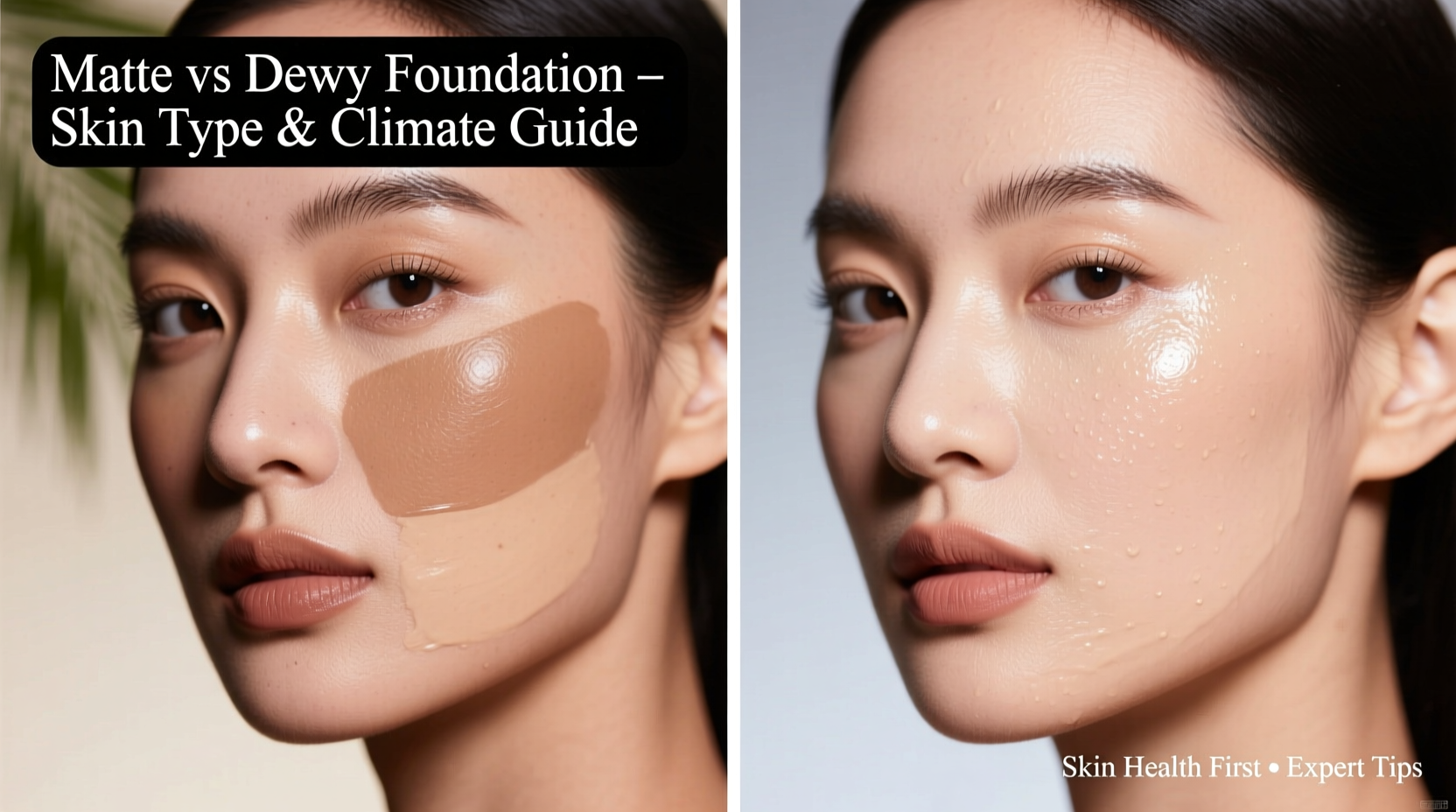
Your skin type is the first factor to consider when deciding between matte and dewy finishes. Each skin type responds differently to ingredients and textures, affecting longevity, comfort, and appearance.
- Oily Skin: Prone to excess sebum production, especially in the T-zone (forehead, nose, chin). Dewy foundations may amplify shine, leading to a greasy look by midday. Matte formulas absorb oil and provide a smooth, shine-free canvas.
- Dry Skin: Lacks natural moisture, often appearing flaky or tight. Dewy foundations enhance radiance and blur texture, while matte ones can settle into fine lines and emphasize dry patches.
- Combination Skin: Oily in some areas (typically the T-zone) and normal to dry elsewhere. A balanced approach is needed—perhaps a dewy base with targeted mattifying products where needed.
- Normal Skin: Well-balanced and neither too oily nor too dry. This skin type has more flexibility; both finishes can work depending on climate and desired aesthetic.
- Sensitive or Acne-Prone Skin: May react poorly to heavy silicones or alcohol in matte formulas. Dewy finishes with hydrating, non-comedogenic ingredients are often gentler, provided they don’t trap oil.
Climate’s Role in Foundation Performance
The weather doesn’t just affect your wardrobe—it directly impacts your skin and makeup. Humidity, temperature, and air quality alter sebum production, hydration levels, and product breakdown.
In high-humidity environments, such as tropical or coastal regions, skin produces more oil as a protective response. Even those with dry or normal skin may experience unexpected shine. Matte foundations perform better here because they resist melting and slipping. Conversely, in cold, dry climates, skin loses moisture rapidly. Dewy foundations help maintain a supple, glowing appearance and prevent foundation from clinging to dry patches.
Seasonal changes also require adjustments. Summer calls for lightweight, oil-controlling formulas, while winter benefits from hydrating, radiant bases. Travelers should consider carrying two foundations—one for home conditions and another for destination climates.
“Foundation isn’t one-size-fits-all. I tell my clients to treat their makeup like skincare: adjust it seasonally and regionally for optimal results.” — Lena Torres, Celebrity Makeup Artist and Skincare Consultant
Comparing Matte vs. Dewy: Key Differences
To make an informed decision, it helps to break down the core characteristics of each finish.
| Feature | Matte Finish | Dewy Finish |
|---|---|---|
| Texture | Flat, velvety, often powder-like | Luminous, silky, sometimes liquid-gel |
| Best For | Oily, combination, acne-prone skin | Dry, mature, dull skin |
| Climate Suitability | Hot, humid, tropical | Cold, dry, temperate |
| Longevity | High (resists fading and sliding) | Moderate (may require touch-ups) |
| Pore Visibility | Minimizes appearance | May accentuate if not prepped well |
| Common Ingredients | Silica, clay, alcohol, powders | Hyaluronic acid, glycerin, oils, light-reflectors |
| Makeup Look | Natural-satin to flat, polished | Glowing, fresh, youthful |
Step-by-Step Guide: Choosing Your Ideal Finish
Follow this practical process to determine whether matte or dewy is best for you—right now.
- Assess Your Current Skin Type: Wash your face, wait 30 minutes without applying products, then observe. Shine across the forehead and nose? Likely oily. Tightness or flaking? Dry. A mix? Combination.
- Evaluate Your Climate: Are you in a humid summer or dry winter? High altitude? Air-conditioned office all day? These microclimates affect skin behavior.
- Consider Your Desired Outcome: Do you want a polished, camera-ready look (matte), or a “just came from a spa” glow (dewy)? Be honest about maintenance—dewy looks stunning but may need blotting in heat.
- Test Formulas Strategically: Apply two foundation samples—one matte, one dewy—to clean skin. Wear them for at least 6 hours, noting how they feel and look over time.
- Analyze Results: Did the matte foundation dry out your cheeks? Did the dewy one turn shiny by noon? Use real-world performance to guide your final pick.
Hybrid Approaches and Customization
Modern makeup allows for customization. You’re not locked into a single finish. Many professionals use a “zone-specific” method to balance both benefits.
For example, apply a dewy foundation overall for radiance, then lightly dust a translucent matte powder only on the T-zone. Alternatively, mix a drop of facial oil into a matte foundation to soften its finish for dry skin. Conversely, blend a matte primer under a dewy foundation to extend wear in humid conditions.
This tailored approach respects your skin’s variability and environmental demands. It’s especially useful for combination skin, where one finish alone can’t address all concerns.
Mini Case Study: Maria’s Seasonal Switch
Maria, a marketing executive in Miami, struggled with her foundation melting off by 11 a.m. during summer months. She had combination skin—oily T-zone, dry cheeks—and used a dewy formula year-round because she loved the glow. After switching to a lightweight matte foundation in summer and using a hydrating serum underneath, her makeup lasted through client meetings without touch-ups. In winter, she returned to her dewy favorite, adding a moisturizing mist to refresh her complexion. Her routine now adapts to climate, not habit.
Common Mistakes to Avoid
- Choosing Finish Over Function: Loving the look of dewy skin doesn’t mean it’s right for your oily face in July.
- Skipping Prep Work: Dewy foundations on dehydrated skin highlight flakes. Matte ones on oily skin without blotting may cake.
- Ignoring Setting Products: A dewy foundation can be tamed with a mattifying setting spray. A matte one can be revived with a luminous mist.
- Using the Wrong Tools: Dense sponges or brushes can overwork matte foundations, causing pilling. Lighter stippling tools work better for dewy blends.
Checklist: Foundation Finish Decision Guide
Use this checklist before purchasing or applying foundation:
- ☐ I’ve identified my current skin type (not what I think it is).
- ☐ I’ve considered the current climate and humidity level.
- ☐ I’ve tested the foundation for at least 6 hours.
- ☐ My skincare routine supports the foundation (e.g., moisturizer for dewy, mattifying primer for oily zones).
- ☐ I’m open to adjusting my choice seasonally or situationally.
- ☐ I’m not prioritizing trend over performance.
Frequently Asked Questions
Can I use a dewy foundation if I have oily skin?
Yes, but with caution. Opt for lightweight, water-based dewy formulas labeled “non-comedogenic” and avoid heavy oils. Pair with a mattifying primer on the T-zone and set with a translucent powder. Blotting papers can help manage midday shine without removing the glow entirely.
Will a matte foundation make my skin look older?
Some matte foundations, especially older or heavily powdered formulas, can settle into fine lines and emphasize texture. Choose modern matte liquids with hydrating ingredients (like glycerin or squalane) and avoid overly drying powders. Proper exfoliation and moisturizing beforehand also prevent aging effects.
How do I transition between seasons without buying new foundation?
You don’t always need a new product. In warmer months, layer a mattifying primer under your dewy foundation. In colder months, mix a drop of facial oil into your matte foundation or spritz with a hydrating facial mist after application to revive radiance.
Expert Insight: The Layering Principle
“The finish starts with skincare. If your skin is well-balanced, any foundation will look better. I recommend a hydrating serum for all skin types—even oily ones—because dehydration triggers more oil. Then build your base accordingly.” — Dr. Nina Patel, Dermatologist and Cosmetic Formulation Advisor
This insight underscores that foundation performance is only as good as the canvas beneath it. No amount of matte powder can fix chronically oily skin caused by dehydration. Likewise, no luminous primer can save a dewy foundation on flaky, unexfoliated skin.
Final Thoughts and Action Steps
Choosing between matte and dewy foundation isn’t about following trends—it’s about listening to your skin and adapting to your environment. There’s no universal “best” finish. What works for a model in Los Angeles may fail in Singapore. What looks flawless in winter might crack by spring.
Start by observing your skin objectively. Track how it changes with seasons and locations. Experiment with one new formula at a time, using the step-by-step guide and checklist provided. Don’t hesitate to mix, layer, or alternate finishes based on daily needs.
Remember, great makeup isn’t invisible—it’s intelligent. It moves with you, survives your day, and enhances your natural beauty without drawing attention to itself. When your foundation choice aligns with your skin and climate, that’s exactly what happens.




 浙公网安备
33010002000092号
浙公网安备
33010002000092号 浙B2-20120091-4
Comments
No comments yet. Why don't you start the discussion?