
Selecting the right phone case goes beyond aesthetics—it’s about matching your lifestyle with a design that can endure real-world use. Among the most debated choices is whether to go for a matte or glossy finish. Both offer distinct visual appeal and functional differences, but their performance under daily wear and tear varies significantly. For people who carry their phones in pockets, bags, or work environments with frequent contact, understanding these differences is essential. The decision impacts not just how your device looks today, but how it holds up over months of use.
Understanding Matte and Glossy Finishes
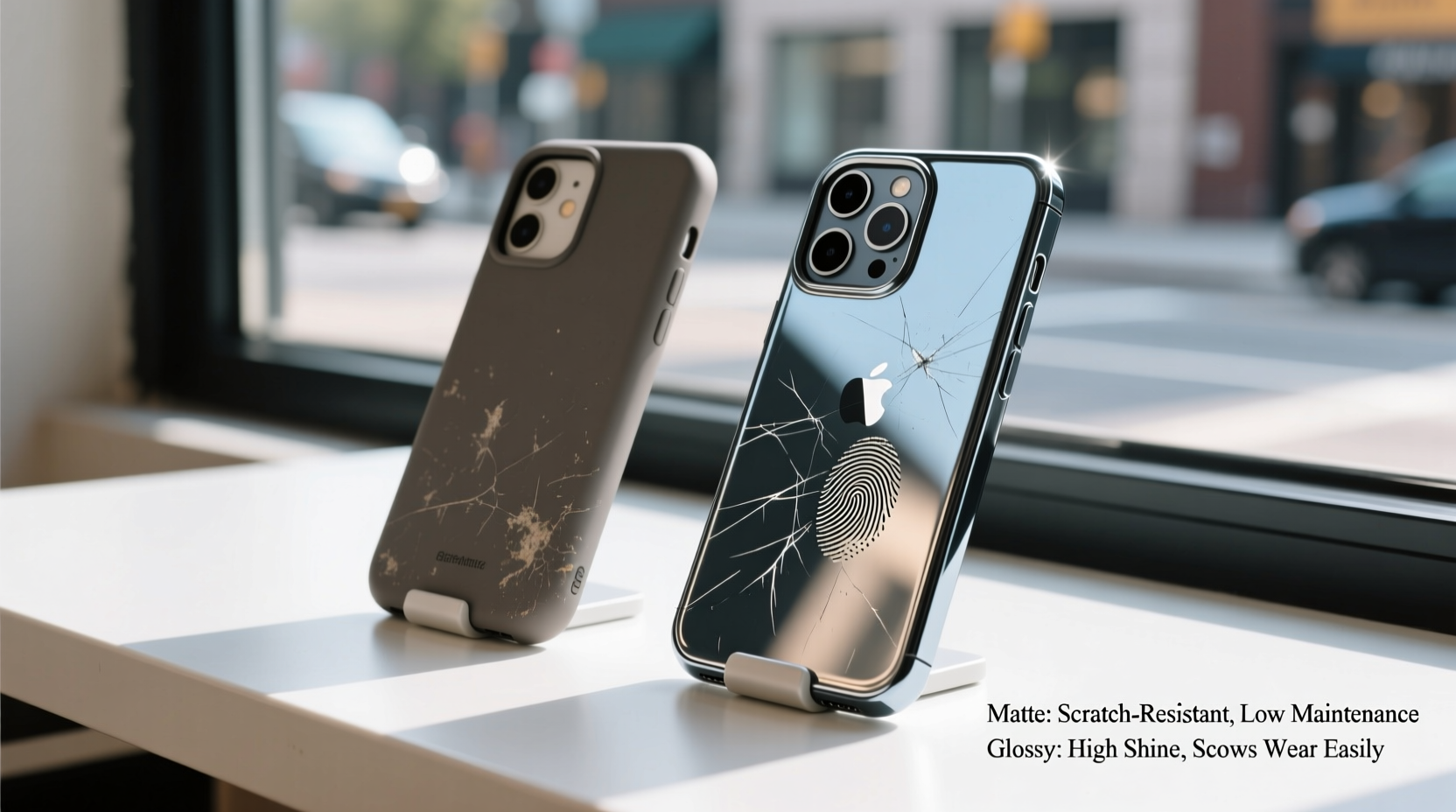
The fundamental difference between matte and glossy phone cases lies in surface texture and light interaction. A matte finish diffuses light, reducing reflections and creating a soft, non-shiny appearance. This texture often feels slightly rubberized or velvety to the touch. In contrast, a glossy finish reflects light directly, producing a sleek, polished look similar to glass or lacquered surfaces.
Manufacturers achieve these finishes through different materials and coating processes. Matte cases typically use thermoplastic polyurethane (TPU) with a textured additive or silicone blends that resist fingerprints and smudges. Glossy cases are usually made from hard polycarbonate or high-gloss TPU, sometimes with a UV-coated layer that enhances shine but may degrade over time.
While both types protect against drops and scratches, their long-term resilience diverges. A glossy case might impress at first glance, but its reflective surface tends to show every fingerprint, dust particle, and micro-scratch. Matte finishes, while more forgiving visually, may accumulate dirt in textured grooves if not cleaned regularly.
Durability Under Daily Use
Daily wear and tear include pocket lint, friction from fabric, exposure to oils from skin, accidental drops, and environmental debris. How each finish responds to these stressors determines longevity and user satisfaction.
Glossy cases are prone to developing fine scratches, commonly known as \"swirl marks,\" even from routine handling. These become highly visible due to the reflective nature of the surface. Over time, what starts as a pristine mirror-like back turns into a web of micro-abrasions, especially around edges and corners where contact is frequent.
Matte finishes, by contrast, scatter light and obscure minor scuffs. While they aren’t immune to damage, scratches tend to blend into the texture rather than stand out. However, matte coatings can wear off in high-contact areas—such as along the sides or near buttons—revealing a shinier base layer underneath. This peeling effect is common in lower-quality matte cases that rely on a sprayed-on finish rather than an integrated material.
A 2023 consumer durability test conducted by MobileGadget Lab found that after six months of daily use, 78% of glossy cases showed noticeable scratching, compared to only 35% of premium matte cases. However, 22% of budget matte cases experienced surface degradation due to coating failure, highlighting the importance of build quality regardless of finish.
“Finish longevity isn’t just about material—it’s about how the surface interacts with everyday friction. Matte wins in concealment, but only if the coating is bonded properly.” — Daniel Reeves, Materials Engineer at TechShield Labs
Comparing Performance: Matte vs. Glossy
| Feature | Matte Finish | Glossy Finish |
|---|---|---|
| Fingerprint Resistance | High – resists smudges and oils | Low – shows every touch clearly |
| Scratch Visibility | Low – scratches blend into texture | High – swirl marks are obvious |
| Grip & Slip Resistance | High – better traction in hand | Low – slippery, especially when wet |
| Stain Accumulation | Moderate – can trap dirt in texture | Low – smooth surface wipes clean easily |
| Long-Term Appearance | Consistent, if coating is durable | Deteriorates visibly over time |
| Pocket Lint Attraction | Higher – static can attract fibers | Lower – smoother surface repels lint |
This comparison reveals trade-offs. Matte cases excel in usability and discretion but require occasional cleaning to maintain their look. Glossy cases offer a premium aesthetic initially but demand constant wiping and are less forgiving in active environments.
Real-Life Scenarios: Who Benefits From Which Finish?
Consider Sarah, a field service technician who visits construction sites daily. Her phone goes in and out of tool belts, pockets, and dusty vans. After two months with a glossy case, she noticed deep scratches and constant smudging from gloves and grease. She switched to a matte rubberized case and reported immediate improvement—not just in appearance, but in confidence that her phone wouldn’t slip from her hand.
On the other hand, James, a marketing executive, values presentation. He uses his phone frequently in client meetings and prefers the polished look of a glossy case. Despite the need for regular cleaning, he finds the aesthetic worth the maintenance. He keeps a microfiber cloth handy and replaces his case every four to five months—a planned cost he accepts for professional image.
These examples illustrate that the best choice depends on environment and priorities. High-movement, rugged settings favor matte for practicality. Controlled, image-conscious environments may justify glossy for its sleek profile—even with higher upkeep.
Step-by-Step Guide to Choosing Your Ideal Case
Follow this sequence to make a confident, informed decision based on your daily routine:
- Assess Your Environment: Do you work outdoors, commute heavily, or handle machinery? If yes, prioritize grip and scratch resistance—matte is likely better.
- Evaluate Handling Frequency: If you pick up your phone dozens of times a day, oils and friction will affect glossy finishes quickly.
- Check Your Cleaning Habits: Are you diligent about wiping devices? If not, avoid glossy—it will look dirty within hours.
- Test Grip Safety: Hold a sample of each finish. Does the glossy version feel secure? If it slips easily, it’s a risk in busy settings.
- Consider Longevity vs. Style Cycle: If you change cases often for fashion, glossy may suit short-term use. For long-term protection, matte offers better value.
- Verify Material Quality: Look for terms like “hard-coated matte” or “scratch-resistant polycarbonate.” Avoid cases that don’t specify materials.
- Budget for Replacement: Glossy cases may need replacing sooner. Factor in cost per month of use when comparing options.
Common Myths Debunked
Several misconceptions influence phone case decisions. One is that glossy cases offer better protection because they look stiffer. In reality, protection comes from internal structure and shock-absorbing layers, not surface shine. Another myth is that matte finishes never scratch—they do, but the texture hides damage better.
Some believe that glossy cases yellow faster. While true for older plastics, modern UV-stable polycarbonates resist discoloration unless exposed to extreme sunlight. Matte cases, particularly lighter shades, can appear dingy over time if not wiped regularly, especially white or beige variants that absorb stains from hands and surfaces.
“The finish doesn’t determine protection level. It’s the internal geometry—like air pockets and corner reinforcement—that absorbs impact.” — Lena Park, Product Designer at ShieldWorks Inc.
Checklist: Selecting the Right Finish for Your Lifestyle
- ☐ I work in a high-dust or outdoor environment → lean toward matte
- ☐ I carry my phone in a bag with keys or tools → matte reduces scratch visibility
- ☐ I value a sleek, professional appearance → glossy may suit, if maintained
- ☐ I frequently use my phone with wet or oily hands → avoid glossy (slippery)
- ☐ I dislike cleaning smudges multiple times a day → avoid glossy
- ☐ I change phone accessories often for style → glossy acceptable for short-term use
- ☐ I want one case to last a year or more → invest in high-quality matte
Frequently Asked Questions
Does matte coating wear off over time?
Yes, especially on lower-end cases. The matte layer is sometimes a spray-on finish that can degrade after several months of heavy use. Opt for cases where the matte texture is part of the material itself, not just a surface treatment, to extend lifespan.
Can I clean a matte case like a glossy one?
Use caution. While both can be wiped with a damp cloth, avoid alcohol-based cleaners on matte finishes—they can strip the coating. For stubborn grime, use mild soap and water, then dry thoroughly. Glossy cases tolerate stronger cleaners but may haze if abrasive cloths are used.
Which finish protects better against drops?
Neither finish inherently provides better drop protection. Impact resistance depends on the case’s internal design, such as raised edges, shock-absorbing corners, and material thickness. However, matte cases often use softer TPU, which can offer slightly better grip during falls, reducing slide distance after impact.
Final Considerations and Recommendations
The choice between matte and glossy isn’t just personal preference—it’s a functional decision shaped by how you interact with your phone daily. For most users leading active lives, matte finishes deliver superior practicality. They hide wear, improve grip, and maintain a cleaner appearance with less effort. Glossy cases serve best in low-friction environments where visual impression outweighs durability concerns.
Invest in quality regardless of finish. A well-made matte case from a reputable brand will outlast multiple cheap glossy alternatives. Look for warranties, user reviews mentioning long-term use, and material transparency from manufacturers. Some premium brands now offer nano-textured matte finishes that resist both scratches and lint—bridging the gap between form and function.
Ultimately, your phone case should support your lifestyle, not fight against it. A scratched glossy back or a lint-covered matte side shouldn’t distract you from using your device with confidence.




 浙公网安备
33010002000092号
浙公网安备
33010002000092号 浙B2-20120091-4
Comments
No comments yet. Why don't you start the discussion?