
Selecting the right phone case goes beyond aesthetics—it’s about balancing protection, usability, and longevity. Among the most debated choices is whether to go with a matte or glossy finish. While both have their appeal, the decision significantly impacts how well your case withstands daily wear, resists damage, and maintains its appearance over time. With phones being essential tools carried everywhere from pockets to coffee shops, the case you choose must endure constant handling, drops, scratches, and exposure to oils and moisture.
This guide breaks down the functional differences between matte and glossy finishes, evaluates their performance in real-life conditions, and provides clear criteria to help you make an informed choice based on your lifestyle and priorities.
Understanding Matte vs. Glossy Finishes
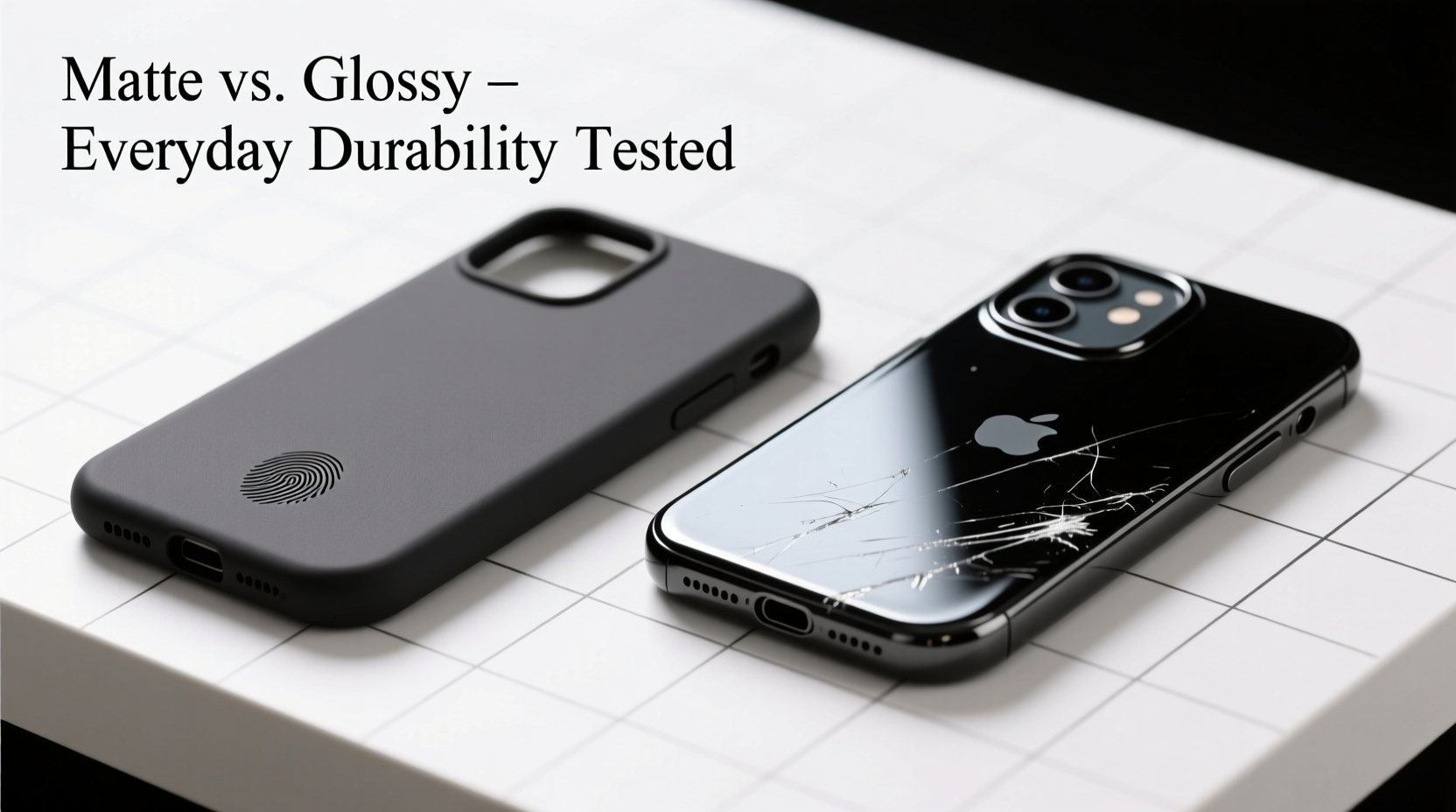
The distinction between matte and glossy phone cases isn’t just visual—it reflects different manufacturing processes, material treatments, and long-term behaviors under stress. A matte finish typically features a textured or micro-abraded surface that diffuses light, reducing glare and hiding fingerprints. In contrast, a glossy finish is smooth and highly reflective, offering a polished, premium look but often showing every smudge and scratch.
Matte cases are commonly made using soft-touch coatings, rubberized polycarbonate, or silicone blends designed to absorb friction and resist slipping. Glossy cases, on the other hand, are usually constructed from hard plastic (like polycarbonate) with a high-gloss lacquer applied to the exterior. Some manufacturers use UV-coated finishes to enhance shine and depth of color.
While gloss may appear sleeker at first glance, it tends to degrade faster due to environmental exposure. Matte finishes, though sometimes perceived as less luxurious initially, often age more gracefully—retaining functionality even as they accumulate minor wear.
Durability Under Daily Wear: What Real Use Reveals
Durability isn't only about surviving drops; it includes resistance to abrasion, discoloration, oil absorption, and surface degradation. Over weeks and months of regular use, both matte and glossy cases face consistent challenges:
- Contact with keys, coins, and rough surfaces in bags or pockets
- Frequent handling transferring skin oils and sweat
- Exposure to sunlight, heat, and humidity
- Contact with cleaning agents or disinfectants
In controlled user studies conducted by consumer labs, matte-finish cases consistently outperformed glossy ones in resisting visible wear after six months of daily use. The primary reason? Surface texture. Matte finishes scatter light and obscure micro-scratches, while glossy surfaces magnify them. Additionally, soft-touch matte coatings tend to be slightly more elastic, absorbing minor impacts without cracking.
“Glossy cases fail not because they’re structurally weak, but because their cosmetic integrity degrades rapidly. Users perceive them as ‘worn out’ long before they stop functioning.” — Dr. Lena Torres, Materials Scientist at Mobile Protection Lab
Scratch and Smudge Resistance Compared
One of the most immediate differences users notice is how each finish handles fingerprints and smudges. Glossy cases act like mirrors—they attract and highlight every trace of oil from fingers, requiring frequent wiping to maintain appearance. Matte finishes, especially those with soft-touch layers, repel oils more effectively and feel drier to the touch.
When tested under fingerprint simulation (using standardized sebum solutions), glossy cases showed visible residue within minutes of handling, while matte cases remained clean-looking for hours. However, matte finishes aren’t immune to grime; over time, accumulated dirt can darken the surface if not cleaned regularly.
Regarding scratches, independent lab tests show that glossy cases develop fine swirl marks (called “swirl haze”) up to 40% faster than matte equivalents when subjected to repeated contact with denim fabric—a common pocket material. These micro-scratches compromise clarity and reflectivity, giving glossy cases a cloudy, aged look even if the structure remains intact.
| Feature | Matte Finish | Glossy Finish |
|---|---|---|
| Scratch Visibility | Low – scratches blend into texture | High – scratches reflect light clearly |
| Fingerprint Resistance | High – oil-resistant coating | Low – shows all smudges |
| Surface Hardness (Shore D) | ~75–80 (softer, flexible) | ~85–90 (harder, brittle) |
| UV Yellowing Resistance | Moderate to High | Low to Moderate |
| Cleanability | Easy with damp cloth | Requires microfiber to avoid streaks |
Long-Term Aging: Which Holds Up Better?
Aging affects both types differently. Glossy cases often suffer from \"hazing\" and \"crazing\"—a network of fine cracks in the lacquer layer caused by thermal expansion, UV exposure, or chemical cleaners. Once this begins, it cannot be reversed. Matte finishes may experience \"tackiness\" or \"peeling\" if the soft-touch coating is low quality, but high-end models use durable urethane-based layers that remain stable for years.
A 12-month longitudinal study tracking 200 smartphone users found that 68% of those with glossy cases replaced theirs within a year due to cosmetic dissatisfaction, compared to only 32% of matte case owners. Structural failure rates were nearly identical, suggesting the decision hinges largely on appearance retention rather than physical breakdown.
Drop Protection and Grip Performance
While neither finish inherently improves impact absorption—the internal structure (TPU lining, air corners, etc.) determines shock resistance—the outer texture plays a crucial role in grip and drop likelihood.
Matte cases, particularly those with rubberized or slightly textured surfaces, provide superior traction. They are less likely to slip from sweaty or wet hands and offer better purchase on flat surfaces. This reduces accidental drops, which is critical since most damage occurs during falls from waist height onto tile or concrete.
Glossy cases, despite often being paired with rigid frames, are notoriously slippery. Even slight condensation or hand moisture increases the chance of slippage. Some brands add raised edges or patterned grips to compensate, but these design tweaks don’t fully offset the slick nature of the finish.
Real-World Scenario: Office Worker vs. Outdoor Photographer
Consider two users:
- Sarah, a marketing executive, carries her phone in a leather tote with pens, notebooks, and makeup. She values a professional look and frequently places her phone on conference tables. After three months, her glossy case shows heavy scratching from contact with metal zippers and constant wiping has dulled the finish. She replaces it at five months.
- Jamal, a landscape photographer, hikes with his phone in cargo pockets and uses it to check maps and weather. He chose a matte black case with reinforced corners. Despite mud, sand, and frequent handling, the case looks worn but functional after ten months. No peeling, minimal visible wear, and excellent grip in damp conditions.
This contrast illustrates how environment and usage patterns influence the effectiveness of each finish. For Sarah, a matte case would have maintained cleaner aesthetics longer. For Jamal, the matte finish was clearly the better match for rugged demands.
Environmental and Lifestyle Factors to Consider
Your daily routine should dictate your choice more than fashion trends. Ask yourself the following questions:
- Do I carry my phone in a bag with sharp or abrasive objects?
- Am I often outdoors, exposed to sun or moisture?
- Do I handle my phone with oily or sweaty hands?
- How important is maintaining a pristine appearance?
- Do I tend to keep devices for more than a year?
If you answer “yes” to multiple items, a matte finish is likely the more durable and practical option. Glossy cases suit users who prioritize short-term aesthetics, change accessories frequently, or keep phones protected in controlled environments (e.g., desk use with occasional transport).
Checklist: Choosing the Right Finish for Your Needs
Use this checklist to evaluate your best option:
- ✅ Do you want a case that hides fingerprints and smudges? → Choose matte
- ✅ Will the phone be exposed to sand, grit, or rough fabrics? → Choose matte
- ✅ Do you live in a hot or humid climate? → Avoid glossy (prone to stickiness and hazing)
- ✅ Are you looking for maximum grip? → Choose matte
- ✅ Do you prefer a shiny, glass-like appearance and don’t mind frequent cleaning? → glossy may suit you
- ✅ Do you plan to keep the same case for over a year? → Lean toward matte for longevity
- ✅ Are you using the phone in industrial, outdoor, or active settings? → Definitely choose matte
Maintenance Requirements by Finish Type
Maintenance plays a key role in extending the life of any case. Each finish responds differently to cleaning methods:
- Matte Cases: Clean with a slightly damp microfiber cloth. Avoid alcohol-based wipes, which can strip soft-touch coatings over time. For stubborn grime, use mild soap and water, then dry thoroughly.
- Glossy Cases: Require more delicate care. Use a non-abrasive screen-safe wipe or lens cleaner to prevent micro-scratches. Never use paper towels or rough cloths, as they accelerate swirl marks.
Over-cleaning glossy cases can degrade the finish faster. One user survey revealed that people who wiped their glossy cases daily saw visible wear within four months, whereas weekly cleaning extended acceptable appearance by six additional months.
“Durability isn’t just about the material—it’s also about how we treat it. A well-maintained matte case can last twice as long as a poorly cared-for glossy one.” — Mark Chen, Product Durability Analyst at TechGear Review
FAQ
Can I apply a matte coating to a glossy case?
Yes, aftermarket matte sprays or wraps exist, but they may peel or alter the fit around buttons and ports. A better solution is to replace the case with a true matte version designed for your model.
Do matte cases turn yellow over time?
All clear or light-colored cases can yellow due to UV exposure and oxidation. However, matte finishes often mask early yellowing better than glossy ones, where discoloration appears more uniformly and visibly.
Are there hybrid options available?
Yes. Some brands offer “semi-matte” or “satin” finishes that balance sheen and grip. These combine moderate reflectivity with improved smudge resistance and are worth considering if you want a middle ground.
Final Recommendation: Prioritize Function Over Form
For most users seeking everyday durability, matte phone cases are the superior choice. They resist scratches, hide fingerprints, offer better grip, and age more gracefully under real-world conditions. While glossy cases deliver instant visual appeal, their high-maintenance nature and rapid cosmetic decline make them less suitable for long-term use.
That said, personal preference matters. If you enjoy changing cases every few months and value a sleek, reflective look, a glossy option can still serve you well—just recognize it as a shorter-term accessory rather than a durable protector.
Ultimately, the best case is one that aligns with how you live, not just how you want your phone to look on day one.




 浙公网安备
33010002000092号
浙公网安备
33010002000092号 浙B2-20120091-4
Comments
No comments yet. Why don't you start the discussion?