
In compact homes and apartments, every inch of floor space matters—especially in the dining area. The shape of your dining table isn’t just a matter of aesthetics; it directly impacts functionality, traffic flow, and comfort. While both square and round tables offer advantages for small spaces, the right choice depends on your room’s dimensions, layout, lifestyle, and design goals. Understanding the subtle differences between these two popular shapes can help you make a decision that enhances both form and function.
Understanding Space Dynamics in Small Dining Areas
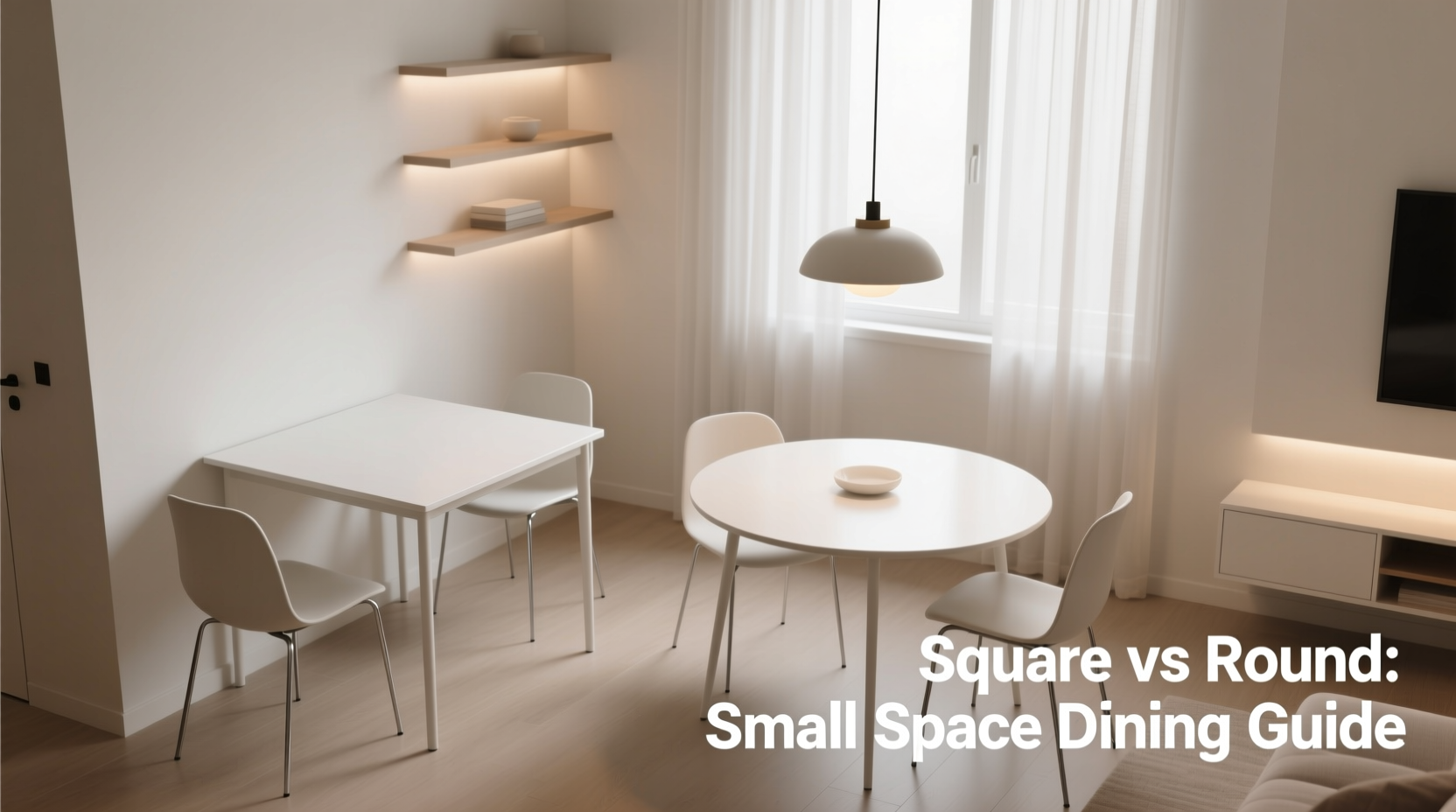
Small dining areas are often multipurpose—serving as a breakfast nook, workspace, or extension of the kitchen. Because of this, spatial planning is critical. The table must accommodate meals without obstructing movement or making the room feel cramped.
Round and square tables interact differently with confined spaces. A round table reduces sharp corners, promoting safer navigation and smoother foot traffic. In contrast, a square table aligns better with architectural lines, especially in rooms with right angles, and can be tucked neatly into corners or against walls when paired with benches or built-in seating.
The key metric to consider is clearance: allow at least 30 inches (76 cm) between the edge of the table and any wall, cabinet, or furniture. This ensures chairs can be pulled out comfortably and people can move around freely. For a four-person setup, total space should ideally exceed 8 feet by 8 feet (2.4 m x 2.4 m).
Pros and Cons: Round vs. Square Tables
Each table shape brings distinct strengths and limitations to small spaces. Evaluating them side-by-side helps clarify which best suits your needs.
| Feature | Round Table | Square Table |
|---|---|---|
| Footprint Efficiency | Excellent—no corners extend beyond diameter | Good—but corners take up more perceived space |
| Traffic Flow | Superior—no sharp edges to bump into | Fair—corners can obstruct pathways if not positioned carefully |
| Seating Capacity | Limited by diameter; best for 2–4 people | Can seat 4 comfortably; corner seats may feel tight |
| Space Flexibility | High—can be centered easily in open layouts | High—can be pushed into corners or against walls |
| Aesthetic Appeal | Soft, inviting, modern or traditional | Structured, formal, suits minimalist or classic decor |
| Child Safety | Excellent—no sharp corners | Poorer—corners pose injury risk |
Round tables excel in open-plan studios or galley kitchens where fluid movement is essential. Their curved edges eliminate pinch points and create a sense of openness. However, they don’t maximize linear wall space and may leave awkward gaps when placed near straight-edged furniture.
Square tables, especially those with rounded edges or drop-leaf designs, offer greater versatility. They can be placed flush against a wall with two chairs on one side, effectively turning into a compact breakfast spot. When expanded or centered, they support four diners with balanced legroom.
“Furniture shape influences psychological perception of space. Curved forms feel less intrusive in tight environments.” — Dr. Lena Torres, Interior Design Psychologist
Design and Layout Considerations
The ideal table complements your room’s architecture and usage patterns. Consider the following factors before deciding:
- Room Shape: Rectangular rooms often benefit from square tables aligned with the long axis. Square or circular rooms suit round tables centered under lighting fixtures.
- Door Swings and Traffic Paths: Avoid placing tables where doors open into them. Round tables reduce collision risks in high-traffic zones.
- Fixed Seating: If using a banquette or bench, a square table integrates seamlessly. Round tables may require custom fitting to avoid gaps.
- Ceiling Fixtures: Center a round table under a pendant light for visual harmony. Square tables can also be centered but may require rectangular shades for balance.
- Expandability Needs: Families or frequent hosts may prefer extendable square tables. Some models fold in half or include leaves, doubling surface area when needed.
In studio apartments, multifunctional furniture is key. A round pedestal table takes up minimal floor space and allows chairs to be tucked neatly underneath when not in use. For urban lofts with defined dining zones, a square table with clean lines reinforces architectural order.
Real-Life Scenario: Choosing for a 10x10 ft Dining Nook
Sophie lives in a downtown apartment with a combined kitchen-dining area measuring 10 feet by 10 feet. Her challenge was selecting a table that could seat four but wouldn’t dominate the space. Initially drawn to a 48-inch square table, she realized the corners would interfere with the refrigerator door swing and hallway access.
She tested a 42-inch round table instead. With no corners, it allowed unobstructed movement, and the central placement created an intimate dining atmosphere. She paired it with armless chairs that tuck fully underneath, freeing up floor space. The round shape also softened the industrial look of exposed beams and concrete floors, adding warmth to the space.
Had Sophie prioritized storage or wall-mounted seating, a square drop-leaf table might have been better. But for her open flow and aesthetic goals, the round option proved superior.
Step-by-Step Guide to Making Your Decision
Follow this process to confidently select the right table for your compact dining area:
- Measure the Room: Record length, width, and ceiling height. Note door swings, outlets, and fixed furniture.
- Determine Clearance Zones: Mark 30-inch buffers around existing furniture and pathways.
- Define Seating Needs: Decide how many people you regularly seat. Two? Four? Occasional guests?
- Test Shapes with Tape: Use masking tape to outline a 36-inch round table and a 36x36 inch square table on the floor. Walk around each to assess ease of movement.
- Evaluate Furniture Pairings: Will you use loose chairs, a bench, or built-in seating? Check compatibility with each shape.
- Consider Expandability: If you entertain often, explore extendable square tables or round tables with leaf inserts.
- Assess Style Goals: Does your decor lean modern, rustic, or traditional? Round tables suit organic styles; square tables enhance structured interiors.
- Review Budget and Materials: Solid wood round tables may cost more due to cutting waste. Laminate or engineered options in square formats are often more affordable.
- Visit Showrooms or Order Samples: Sit at both shapes to gauge comfort and legroom.
- Finalize and Position: Once chosen, place the table to optimize lighting, views, and daily workflow.
Common Mistakes to Avoid
- Ignoring Chair Clearance: Ensure enough room for chairs to be pulled out without hitting walls or appliances.
- Choosing Too Large a Table: A 54-inch round table may fit on paper but feel oppressive in practice. Stick to 36–42 inches for true small spaces.
- Overlooking Base Design: Bulky legs or crossbars can restrict legroom. Slim or pedestal bases are better for compact setups.
- Mismatching Proportions: A tiny table in a large nook looks lost; an oversized one overwhelms. Aim for visual balance.
- Forgetting Lighting: Hang lights 30 inches above the table surface. A round chandelier over a round table enhances cohesion.
Frequently Asked Questions
Can a round table work in a rectangular room?
Absolutely. A round table introduces soft contrast to angular architecture and can anchor the center of a rectangular space. It works particularly well when surrounded by ample clearance and paired with slim-profile chairs.
Are square tables outdated for small spaces?
No. Modern square tables come in scaled-down sizes, rounded corners, and innovative designs like nesting or drop-leaf versions. They remain a smart choice for efficient space use, especially when integrated with banquette seating.
Which shape is better for families with young children?
Round tables are generally safer due to the absence of sharp corners. Toddlers moving around the room are less likely to get injured. Additionally, the inclusive shape encourages conversation, making mealtimes more engaging.
Final Checklist Before Buying
- ✅ Room dimensions measured with clearance zones marked
- ✅ Number of regular and maximum seated guests confirmed
- ✅ Door swings and traffic paths evaluated
- ✅ Shape tested on floor with tape
- ✅ Chair dimensions and tuck-under capability verified
- ✅ Base type considered (pedestal vs. legged)
- ✅ Lighting alignment checked
- ✅ Material and finish compatible with household lifestyle (e.g., scratch-resistant for kids)
- ✅ Budget aligned with quality and durability expectations
- ✅ Return policy reviewed in case sizing doesn’t work post-delivery
Conclusion: Make the Choice That Fits Your Life
Selecting between a square and round dining table for a small space isn’t about following trends—it’s about matching form to function. A round table can open up a cramped room and foster connection, while a square table maximizes usable edges and integrates cleanly with architectural lines. The best choice reflects how you live, move, and gather around food every day.
Take the time to measure, simulate, and prioritize your real-world needs over fleeting aesthetics. Whether you lean toward the soft geometry of a circle or the grounded symmetry of a square, the right table will feel natural, comfortable, and perfectly proportioned. Your small space deserves thoughtful design—not compromise.




 浙公网安备
33010002000092号
浙公网安备
33010002000092号 浙B2-20120091-4
Comments
No comments yet. Why don't you start the discussion?