
As technology merges seamlessly with lifestyle, wireless Bluetooth glasses have emerged as a smart solution for people who want hands-free audio during commutes, workouts, or long workdays. Unlike traditional earbuds or headphones, these sleek devices integrate speakers into eyewear frames, offering both functionality and style. But not all models are built for extended use. Choosing the right pair requires attention to comfort, durability, sound quality, and design. The difference between a frustrating experience and an effortless one often comes down to informed selection.
Understanding Your Daily Needs
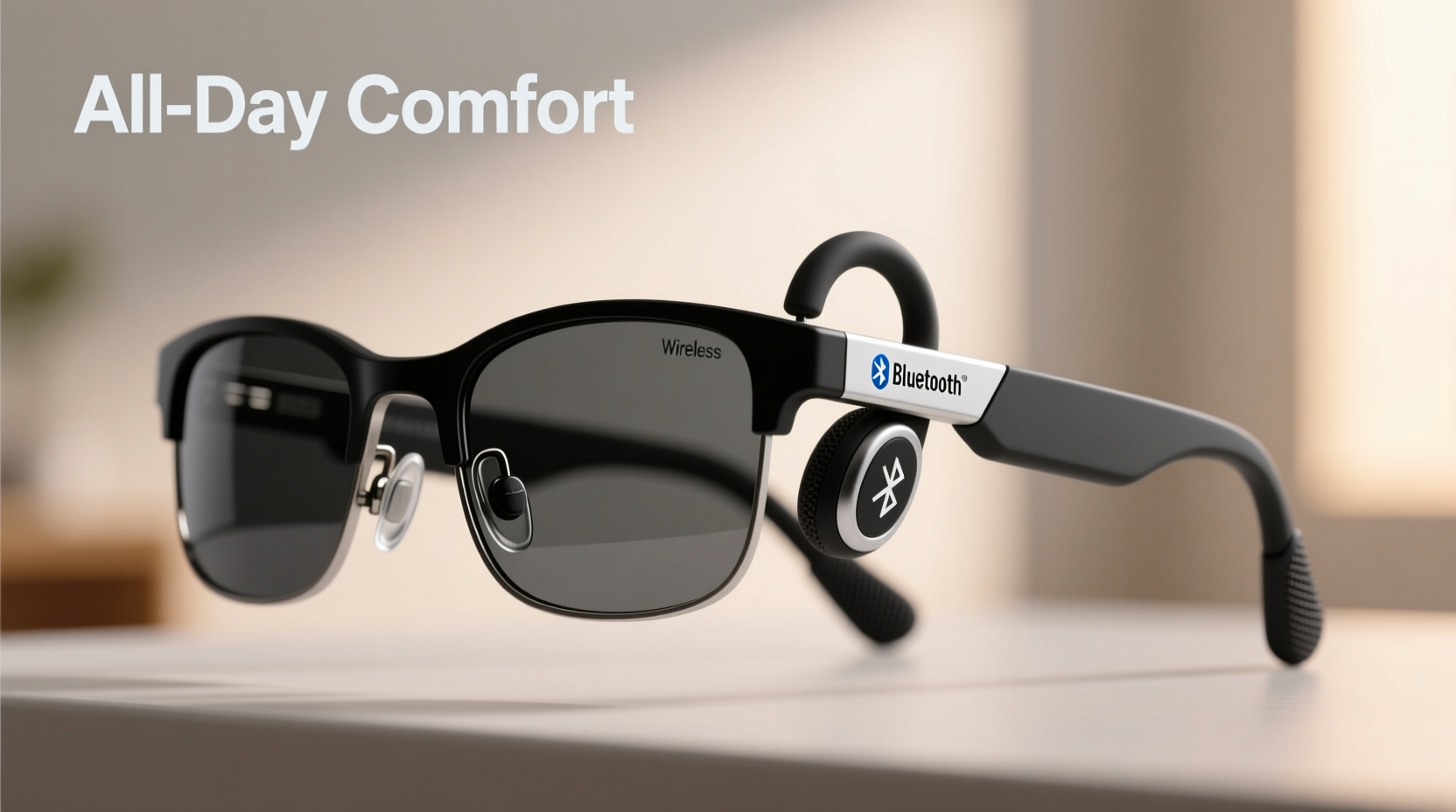
Before evaluating specific features, consider how you plan to use your Bluetooth glasses. Are they for outdoor walks, gym sessions, remote work, or travel? Usage patterns directly influence what specifications matter most. For example, someone walking in urban areas may prioritize noise transparency over bass-heavy audio, while a cyclist might need secure fit and wind resistance.
Extended wear demands lightweight construction and balanced weight distribution. If you're wearing them for eight hours straight—during a workday or a long flight—the frame material, nose pad design, and temple grip become critical. Comfort isn't just about softness; it's about ergonomics that prevent pressure points behind the ears or on the bridge of the nose.
Key Features That Impact All-Day Comfort
The best Bluetooth glasses don’t sacrifice comfort for tech. Here are the essential elements to evaluate before making a purchase:
Frame Material and Weight
Most high-end models use TR-90 nylon or titanium alloys—materials known for flexibility, durability, and low weight. TR-90 frames bend without breaking and adapt to facial contours, reducing strain during prolonged use. Titanium is even lighter and corrosion-resistant but often comes at a premium price.
Temple Design and Speaker Placement
The temples (arms) house the electronics: batteries, speakers, and controls. Poorly designed temples can press against the sides of your head or cause hot spots. Look for tapered or curved designs that follow the natural shape of your skull. Open-ear speaker placement should direct sound toward your ears without sealing them, allowing ambient awareness while minimizing auditory fatigue.
Nose Pads and Grip
Silicone or rubberized nose pads prevent slipping, especially when sweating. Adjustable nose pads offer a customized fit, crucial for those with flatter or higher nasal bridges. Frames that slide down constantly force subconscious readjustments, which add up to discomfort over time.
Battery Life and Charging
For full-day usability, aim for at least 6–8 hours of continuous playback. Some models offer quick-charge features—10 minutes for 60–90 minutes of play—which can be lifesavers during back-to-back meetings. Consider whether the charging case is compact enough to carry daily.
“Long-term comfort in wearable tech hinges on balance—between weight, heat dispersion, and acoustic design.” — Dr. Lena Patel, Human Factors Engineer at Wearable Insights Lab
Sound Quality vs. Environmental Awareness
Unlike over-ear headphones, Bluetooth glasses rely on open-ear audio delivery. This means sound projects near the ear canal without blocking external noise—a safety advantage for pedestrians and cyclists. However, this design can limit bass response and volume clarity in noisy environments.
Look for models with directional audio drivers and noise optimization algorithms. These technologies focus sound toward the ear while minimizing leakage to others nearby. Some brands use beamforming or haptic transducers to enhance mid-range frequencies—ideal for podcasts and calls—without requiring high volume levels that could lead to listener fatigue.
| Feature | Why It Matters | Recommended Spec |
|---|---|---|
| Driver Type | Affects sound direction and clarity | Open-ear bone conduction or directional dynamic drivers |
| Volume Optimization | Compensates for ambient noise without distortion | Adaptive EQ or environmental noise sensing |
| Audio Leakage | Potential disturbance to others | Low-leakage design (tested below 50dB at 30cm) |
| Call Clarity | Important for remote workers | Dual-mic with wind reduction and echo cancellation |
Step-by-Step Guide to Choosing Your Ideal Pair
- Assess your face shape and size. Round faces suit angular frames; oval faces can pull off most styles. Measure your pupillary distance (PD) if ordering prescription-compatible models.
- Set a realistic budget. Entry-level options start around $150; premium models with advanced audio and materials go up to $400.
- Check compatibility. Ensure Bluetooth version (5.0 or higher recommended) works with your primary devices—phone, tablet, laptop.
- Evaluate lens options. Polarized, blue-light filtering, or prescription-ready lenses increase versatility for daily use.
- Read real-user reviews. Focus on comments about long-term comfort, sweat resistance, and durability after months of use.
- Test return policies. Buy from retailers offering at least a 30-day trial period in case the fit isn’t right.
Real-World Example: A Remote Worker’s Experience
Jamal, a software developer based in Denver, transitioned to Bluetooth glasses after years of using earbuds during coding marathons. “I used to get ear pain by mid-afternoon,” he said. “Switching to a lightweight TR-90 frame with open-ear audio changed everything.” He chose a model with 7-hour battery life and blue-light filtering lenses, allowing him to take Zoom calls, listen to music, and reduce eye strain—all without removing his glasses. After six months, he reported no discomfort and appreciated the situational awareness during neighborhood walks with his dog.
His only regret? Not trying them sooner. “They’re not just audio devices—they’re part of my daily toolkit now.”
Checklist: Before You Buy
- ✅ Frame feels light and evenly balanced on your face
- ✅ Nose pads don’t pinch or slip when moving your head
- ✅ Temple arms don’t press tightly behind the ears
- ✅ Battery lasts through your typical day
- ✅ Audio remains clear at moderate volumes in outdoor settings
- ✅ Microphone picks up voice clearly in windy conditions
- ✅ Compatible with your phone’s voice assistant (Siri, Google Assistant)
- ✅ Comes with a protective case and charging cable
Frequently Asked Questions
Can I wear Bluetooth glasses with prescription lenses?
Yes, many brands offer prescription-ready frames or magnetic clip-in inserts. Some partner with vision providers to offer custom lens integration. Confirm compatibility before purchasing.
Are Bluetooth glasses safe for long-term use?
Yes. Because they don’t insert into the ear canal, they reduce risks associated with prolonged earbud use, such as ear infections or hearing fatigue. Volume should still be kept at safe levels (below 85dB) to protect hearing.
Do they work well in windy environments?
Performance varies. Higher-end models include wind-noise reduction microphones and shielded speaker ports. For cycling or running, look for aerodynamic frame designs and adjustable volume boost features.
Final Thoughts
Choosing comfortable wireless Bluetooth glasses for all-day wear goes beyond brand names or aesthetics. It’s about matching technology to your lifestyle—prioritizing ergonomic design, reliable battery performance, and audio that supports rather than distracts. With the right pair, you gain freedom: to move, listen, and stay aware of your surroundings without compromise.




 浙公网安备
33010002000092号
浙公网安备
33010002000092号 浙B2-20120091-4
Comments
No comments yet. Why don't you start the discussion?