
As holiday decor becomes more sophisticated, the interplay between artificial lighting and home ambiance plays a crucial role in creating warmth and authenticity. One of the most delicate challenges? Ensuring your flameless candles maintain their realism when surrounded by the shimmering glow of Christmas tree lights. Too often, LED candles appear flat, overly bright, or unnaturally colored when placed near twinkling bulbs—breaking the illusion of a cozy, candlelit space. The solution lies not in avoiding technology, but in mastering it. With careful selection based on light quality, movement, and design, you can enjoy the safety and convenience of flameless candles without sacrificing aesthetic integrity.
Why Realism Matters in Holiday Lighting
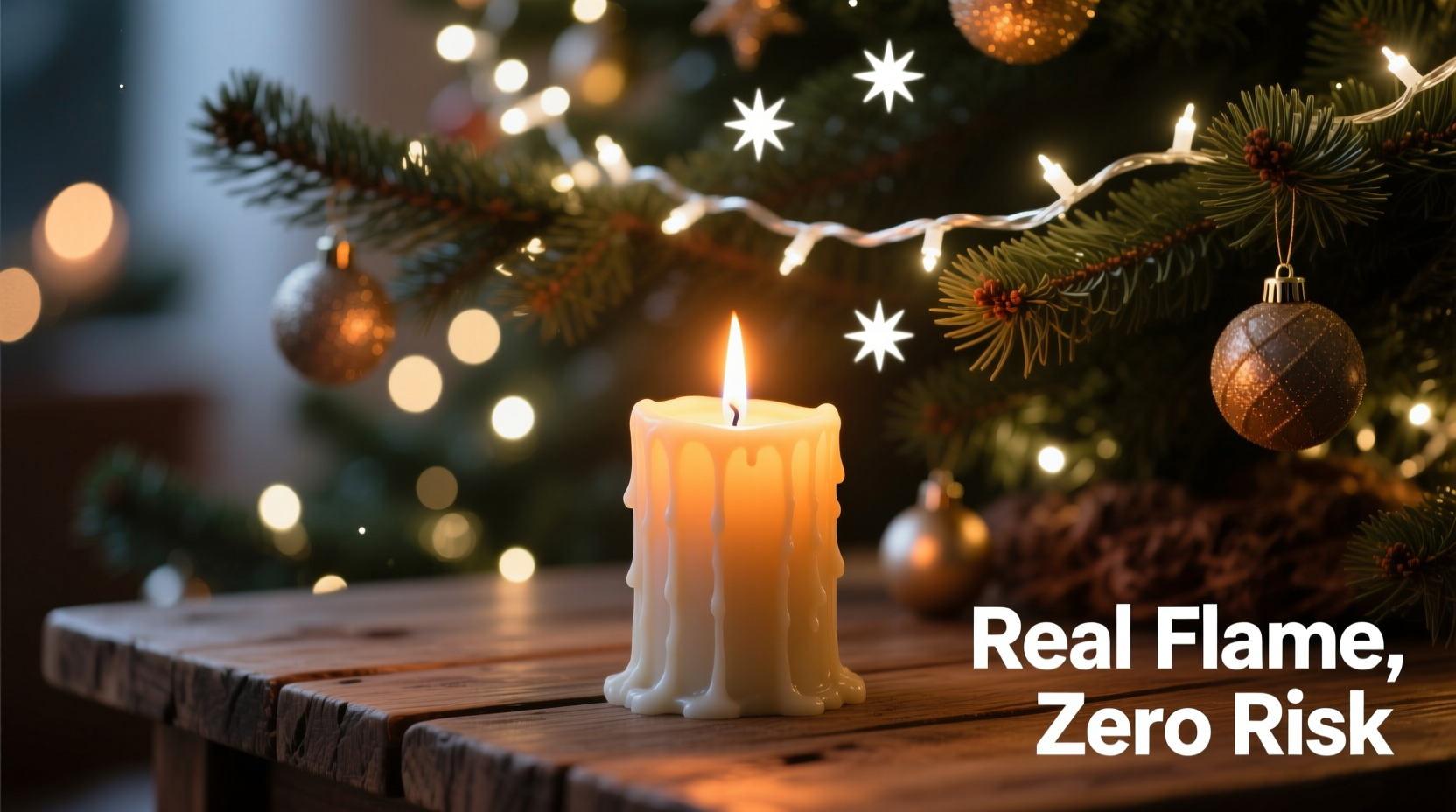
The magic of the holiday season often hinges on atmosphere. Real candles have long been associated with warmth, intimacy, and tradition. Their soft, flickering glow casts gentle shadows and interacts organically with reflective surfaces like tinsel, glass ornaments, and metallic decor. Flameless candles aim to replicate this experience—but many fall short when placed in complex lighting environments, especially under the dynamic sparkle of a lit tree.
Twinkling tree lights introduce rapid changes in brightness and color temperature. When paired with poorly designed LED candles, these fluctuations can make the candles appear static, plastic-like, or even alien in tone. A candle that looks convincingly real during daylight may seem glaringly artificial once the tree is turned on. This contrast disrupts visual harmony and diminishes the emotional impact of your decor.
To preserve authenticity, flameless candles must mimic not just the appearance but the behavior of real flames—particularly how they respond to ambient light. The goal is seamless integration: candles that don’t compete with the tree lights but instead complement them, enhancing depth and dimensionality in your space.
Key Features That Make Flameless Candles Look Real
Not all flameless candles are created equal. To achieve true realism under twinkling lights, focus on four critical features: flicker technology, color temperature, bulb quality, and physical design.
Flicker Effect Quality
The most important factor in realism is the candle’s flicker mechanism. Cheap models use a simple blinking LED, which produces an unnatural, robotic pulse. High-end flameless candles employ advanced flicker chips that simulate random flame motion—subtle shifts in intensity and direction that mirror real fire.
Look for terms like “realistic flicker,” “dancing flame,” or “micro-flicker technology.” These indicate that the candle uses multiple LEDs or modulated current to create organic movement. Some premium models even incorporate small rotating reflectors or diffusers inside the bulb to scatter light dynamically, mimicking how a real flame dances within a wax chamber.
Color Temperature Matching
Color temperature, measured in Kelvin (K), determines whether light appears warm (yellowish) or cool (bluish). Real candles emit light around 1800–2000K, producing a deep amber glow. Many LED candles, however, default to 2700–3000K, which appears whiter and can clash with the warmer tones of traditional incandescent-style tree lights.
When selecting candles, prioritize those labeled as “warm white” or, ideally, “candlelight white” (1800–2000K). Avoid “daylight” or “cool white” options. If your tree lights are LED-based, check their color temperature too. For cohesive lighting, both sources should fall within the 1800–2400K range.
Bulb Placement and Diffusion
A well-designed flameless candle hides its LED source. The light should appear to emanate from within the wax, not from a visible bulb at the top. Premium models use internal diffusion layers—such as frosted silicone tips or layered plastic cores—that scatter light evenly and eliminate harsh hotspots.
Candles with exposed LEDs often cast sharp, directional beams that look artificial, especially when reflected in mirrors or glass ornaments. Opt for candles where the light softly glows through translucent material, replicating the way wax naturally diffuses flame.
Physical Design and Texture
Realism extends beyond light output. The candle’s shape, texture, and surface details matter. Hand-textured molds that replicate drip marks, imperfections, and uneven edges add authenticity. Matte finishes are preferable to glossy ones, which can reflect tree lights too brightly and break immersion.
Tapered candles should have slight curvature and asymmetry; perfectly straight, machine-smooth tapers look mass-produced. Pillars benefit from subtle surface variation—minor cracks, cloudiness, or embedded “soot” particles—to avoid a sterile, plastic appearance.
Choosing the Right Candle for Your Tree Environment
Your specific decor setup influences which flameless candles will perform best. Consider the type of tree lights, room lighting, and candle placement when making selections.
| Tree Light Type | Recommended Candle Feature | Avoid |
|---|---|---|
| Warm white incandescent | Candles with 1800–2000K output | Cool white LEDs |
| Multi-color LED | Neutral base candles (off-white wax) | Highly tinted wax (e.g., blue or red) |
| Twinkling/meteor effect | Smooth, non-synced flicker | Strobe-like or rhythmic pulses |
| Dense bulb coverage | Lower-lumen candles (subtle glow) | Bright, spotlight-style LEDs |
In rooms with dim ambient lighting, even moderately bright candles can dominate the scene. Choose low-lumen models (under 50 lumens) for side tables or mantels near the tree. For larger spaces or distant viewing, slightly brighter candles (75–100 lumens) may be acceptable—but always test them in context before final placement.
“Lighting harmony is about balance, not brightness. A candle shouldn’t announce itself—it should belong.” — Daniel Reeves, Interior Lighting Designer
Step-by-Step Guide to Testing and Placing Flameless Candles
Selecting realistic flameless candles isn’t complete without proper testing in your actual environment. Follow this sequence to ensure seamless integration with your tree lights.
- Gather sample candles – Purchase one or two different models from reputable brands known for realistic flicker (e.g., Flameless Candle Co., Brightown, or Mpow).
- Set up your tree – Turn on your full string of lights in the evening, with curtains drawn and overhead lights off.
- Place candles in intended locations – Mantels, side tables, or window sills where they’ll coexist with tree reflections.
- Observe from multiple angles – Walk around the room. Notice how the candle glow interacts with reflections, shadows, and ornament shine.
- Use your phone camera – Record a short video. Digital sensors often reveal flicker inconsistencies invisible to the eye.
- Adjust or replace – If a candle looks static, too bright, or wrong in color, swap it out. Repeat until the glow feels natural.
This process typically takes less than 30 minutes but dramatically improves final results. Remember: the best candle is not the most realistic in isolation, but the one that blends seamlessly into your total lighting composition.
Mini Case Study: A Cozy Living Room Transformation
Sarah, a homeowner in Portland, struggled each holiday season with her elegant dining room setup. She loved using tall taper candles on her mantel but refused to light real ones due to pet safety concerns. Her previous flameless tapers looked obviously fake—especially when her vintage-style twinkling tree cast moving shadows across the room.
After researching flicker technology, she replaced her old set with hand-poured, matte-finish tapers featuring internal flicker modules calibrated to 1900K. She positioned them so their glow would reflect in a mirrored backsplash behind the mantel. When tested alongside her tree lights, the new candles produced soft, dancing highlights that mimicked real flame behavior.
The difference was immediate. Guests commented on the “warm, lived-in feel” of the room. Sarah later shared photos online, where several followers asked if she used real candles. This small upgrade transformed both aesthetics and confidence in her decor choices—all without compromising safety.
Checklist: Choosing Realistic Flameless Candles
- ✅ Prioritize candles with true 1800–2000K color temperature
- ✅ Choose models with randomized, non-repeating flicker patterns
- ✅ Ensure the LED is hidden and light is diffused through wax-like material
- ✅ Select matte or textured finishes over glossy surfaces
- ✅ Test candles in your actual room with tree lights on
- ✅ Avoid candles that sync flicker across multiple units (unless desired)
- ✅ Opt for lower lumen output (under 100) in intimate spaces
Frequently Asked Questions
Can I mix different brands of flameless candles?
Yes, but with caution. Different brands often use varying flicker frequencies and color temperatures. Mixing them in close proximity—like on a single mantel—can create visual discord. If combining brands, test them together first to ensure their light patterns blend naturally rather than compete.
Do flameless candles work with smart home systems?
Many modern flameless candles integrate with smart systems via Bluetooth or Wi-Fi. You can schedule them to turn on at dusk or sync with music for dynamic effects. However, for realism under tree lights, disable synchronization features unless you want coordinated flicker. Random, independent movement appears more authentic.
How long do realistic flameless candles last?
High-quality models typically last 50,000 hours of use—over five years if burned 24/7. In seasonal use (4–6 weeks per year), they can last decades. Battery compartments may degrade faster than LEDs, so consider plug-in or rechargeable models for longevity.
Final Thoughts: Elevate Your Holiday Ambiance
Choosing flameless candles that look real under twinkling tree lights isn’t about chasing perfection—it’s about attention to detail. By understanding how light behaves, what makes a flame appear alive, and how different elements interact in a decorated space, you gain control over the mood you create. Safety and convenience no longer require sacrificing beauty.
The right flameless candle doesn’t imitate reality—it participates in it. It catches the eye not because it’s bright, but because it belongs. As you decorate this season, take a moment to evaluate not just individual pieces, but how they work together. Let your candles breathe warmth into the room, quietly harmonizing with every twinkle of the tree.




 浙公网安备
33010002000092号
浙公网安备
33010002000092号 浙B2-20120091-4
Comments
No comments yet. Why don't you start the discussion?