
Creating a harmonious holiday atmosphere begins with thoughtful lighting choices. As more homes adopt energy-efficient LED Christmas lights and flameless candles for safety and convenience, one often overlooked detail can make or break the mood: color temperature. Mismatched warm white candles with cool white string lights create visual dissonance, undermining even the most carefully decorated spaces. Understanding how to align the color temperature of your flameless candles with your existing Christmas lights ensures a seamless, inviting glow throughout your home.
Color temperature—measured in Kelvin (K)—determines whether a light appears warm (yellowish), neutral, or cool (bluish). While it may seem like a technical detail, getting this right transforms scattered decorations into a unified aesthetic. This guide walks through the science of light color, practical selection strategies, and real-world applications so you can choose flameless candles that blend naturally with your holiday lighting scheme.
Understanding Color Temperature in Holiday Lighting
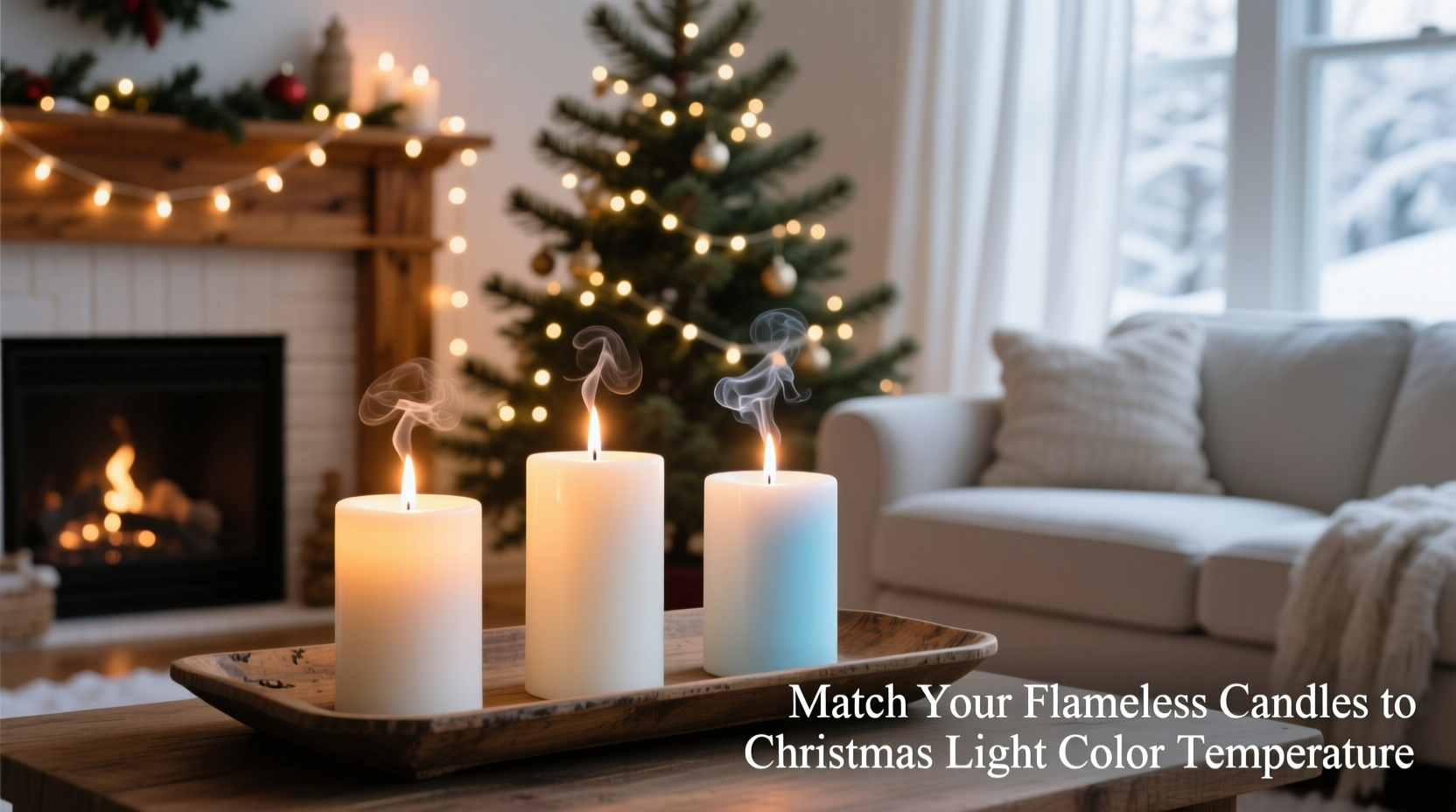
Light color temperature describes the hue of visible light emitted by a source. It’s not about heat but rather the appearance of light to the human eye. The scale runs from warm (lower Kelvin values) to cool (higher Kelvin values):
- Warm White (2700K–3000K): Mimics traditional incandescent bulbs and candlelight. Offers a cozy, golden glow ideal for living rooms and dining areas.
- Natural White (3500K–4100K): Balanced and clean, neither too yellow nor too blue. Often used in kitchens or modern decor.
- Cool White/Daylight (5000K–6500K): Crisp and bright, resembling midday sunlight. Common in task lighting and outdoor displays.
Most Christmas lights fall within the warm white range because it evokes nostalgia and comfort. However, many newer LED sets lean slightly cooler—around 3200K or even 3500K—for increased brightness and efficiency. Flameless candles, on the other hand, are typically marketed as “warm flicker” without specifying exact Kelvin ratings, making compatibility harder to judge at a glance.
“Matching color temperatures across lighting elements is essential for visual continuity. A single cool-toned candle among warm lights stands out like a mismatched thread.” — Daniel Reeves, Lighting Designer & Interior Consultant
How to Identify Your Christmas Light Color Temperature
Before selecting flameless candles, determine the actual color temperature of your existing lights. Many packaging labels include Kelvin ratings, but if yours don’t, use these methods:
- Check Packaging or Product Manual: Look for terms like “warm white,” “soft white,” or specific Kelvin values.
- Compare Visually: Turn on your lights next to a known reference. For example:
- If they resemble standard household incandescent bulbs, they’re likely 2700K–3000K.
- If they appear brighter and slightly whiter, closer to office lighting, they may be 3500K+.
- Use a Smartphone App: Free apps like Lux Light Meter Pro or Photone Measure can estimate color temperature using your phone’s camera (results vary by device).
- Observe Time of Day Perception: Warm lights feel relaxing and intimate; cool lights feel alerting and sharp. If your display feels “harsh” or overly bright, it's probably above 3500K.
Choosing Flameless Candles That Match
Once you’ve identified your light’s color temperature, focus on finding flameless candles with a matching output. Not all products are created equal—some use generic “warm” LEDs that skew too yellow, while others emit an unintended blue tint under certain conditions.
Here’s what to look for when shopping:
- Kelvin Specification: Prioritize brands that list the exact color temperature. Avoid vague terms like “cozy glow” unless backed by data.
- Flicker Realism: High-quality flameless candles simulate natural flame movement. Ensure the flicker doesn’t alter the base color—some cheaper models shift toward blue during dim cycles.
- Battery vs. Plug-In: Battery-operated candles sometimes dim over time, subtly changing perceived warmth. Rechargeable or AC-powered models maintain consistent output.
- Material and Diffusion: Wax-coated or silicone-tipped candles diffuse light more evenly than plastic shells, reducing hotspots and preserving color integrity.
Test potential matches before finalizing purchases. Place a sample candle near your lit tree or garland in the evening—the true test happens in low ambient light when contrasts are most apparent.
Comparison Table: Matching Candle Options by Light Type
| Your Christmas Lights | Target Candle Temp | Recommended Features | Avoid |
|---|---|---|---|
| Traditional Warm White (2700K) | 2700K–2900K | Flickering wax-style, amber LED core | Non-flicker, opaque plastic bodies |
| Slightly Warmer Incandescent Mix (3000K) | 2900K–3100K | Dimmable, memory function, soft diffusion | Fixed brightness, harsh glare |
| Natural/Cool White (3500K+) | 3300K–3600K | Bright flicker, neutral tone, remote control | Yellow-tinted glass inserts |
| Multicolor or RGB Sets | Adjustable (RGBW) | Smart candles with app control and white tuning | Single-color only models |
Step-by-Step Guide to Perfect Matching
Follow this process to ensure your flameless candles complement—not clash with—your Christmas lights:
- Assess Existing Lights: Turn them on in a dark room. Note their dominant hue—is it golden, neutral, or slightly blue?
- Find Specifications: Locate product details online or check original packaging for Kelvin rating.
- Select Candidate Candles: Choose 2–3 flameless candle options advertised within ±200K of your light temperature.
- Conduct a Side-by-Side Test: Place candles next to illuminated sections of your lights. Observe after 10 minutes to account for LED warm-up shifts.
- Evaluate Flicker Consistency: Watch for any momentary color drift during flicker cycles—especially in lower-end models.
- Make Final Selection: Pick the candle that blends seamlessly. Return or repurpose mismatched ones.
- Scale Up Thoughtfully: Buy additional units only after confirming consistency across batches—manufacturers sometimes change LED suppliers.
Real Example: A Cozy Living Room Transformation
Sarah, a homeowner in Vermont, spent years frustrated by her fireplace mantel display. She loved her vintage-style Edison bulb string lights (rated at 2800K), but every electric candle she tried looked “off”—either too orange or unnaturally dim.
After reading about color temperature alignment, she tested three flameless taper candles side by side. One claimed “warm white” but measured closer to 2500K—too amber. Another was labeled 3000K but had a plastic shell that diffused unevenly. The third, a premium brand listing 2850K with frosted silicone tips, matched almost perfectly.
She replaced all previous candles with the 2850K model and noticed immediate improvement. Guests commented on the “cinematic” warmth of the space. By aligning just one variable—color temperature—she elevated the entire holiday aesthetic.
Essential Checklist Before Buying
Checklist: Selecting Compatible Flameless Candles
- ✅ Determine your Christmas light color temperature (in Kelvin)
- ✅ Look for flameless candles with specified Kelvin ratings
- ✅ Prioritize flicker realism with stable color output
- ✅ Test samples in your actual environment before bulk purchase
- ✅ Choose diffusion materials that mimic real wax (not hard plastic)
- ✅ Consider smart or adjustable white candles for mixed setups
- ✅ Verify batch consistency if ordering multiple units
Frequently Asked Questions
Can I use warm white flameless candles with cool white Christmas lights?
Technically yes, but visually no. A warm candle (2700K) next to a cool light (5000K+) will appear dramatically different—one golden, the other bluish. This contrast draws attention and disrupts ambiance. If you must mix, consider upgrading to tunable-white smart candles that can shift to match.
Do flameless candles change color over time?
Yes, especially lower-quality LEDs. As components degrade, some may shift toward blue or green tints. High-end models use stable phosphor coatings to maintain consistency for thousands of hours. To minimize risk, buy from reputable brands and replace units showing visible discoloration.
Are there smart flameless candles that auto-match my lights?
Not yet universally, but emerging smart home systems allow manual syncing. Brands like Philips Hue and Govee offer smart flameless candles with adjustable white temperatures via app. You can set them to match your existing lights precisely. True auto-detection isn’t available, but manual calibration takes less than a minute.
Final Thoughts: Harmony Through Detail
The magic of holiday lighting lies not in individual pieces but in their collective effect. A single misaligned element—a cool-toned candle among warm lights—can subtly unsettle the eye, even if unconsciously. By treating color temperature as a design cornerstone rather than an afterthought, you elevate your decor from festive to flawless.
Flameless candles offer unmatched safety and convenience, especially around trees, fabrics, and children. But their full potential is realized only when they integrate seamlessly with surrounding light sources. With careful selection, testing, and attention to specification, you can enjoy the flicker of candlelight without compromise—safe, sustainable, and perfectly in tune with your holiday vision.




 浙公网安备
33010002000092号
浙公网安备
33010002000092号 浙B2-20120091-4
Comments
No comments yet. Why don't you start the discussion?