
Every hiker knows the moment: you're halfway up a rocky incline, the trail slick with morning dew, and your foot slips slightly on a moss-covered stone. That small loss of traction can lead to a sprain, a fall, or worse. For men who hike regularly—whether weekend trails or rugged backcountry routes—non-slip hiking shoes are not a luxury. They’re essential. The right pair provides stability, protects your joints, and keeps you moving confidently across unpredictable terrain. But with countless models, materials, and marketing claims, how do you pick the best non-slip hiking shoe? This guide cuts through the noise with actionable insights, real-world testing principles, and expert-backed criteria to help you make an informed decision.
Understand What Makes a Hiking Shoe “Non-Slip”
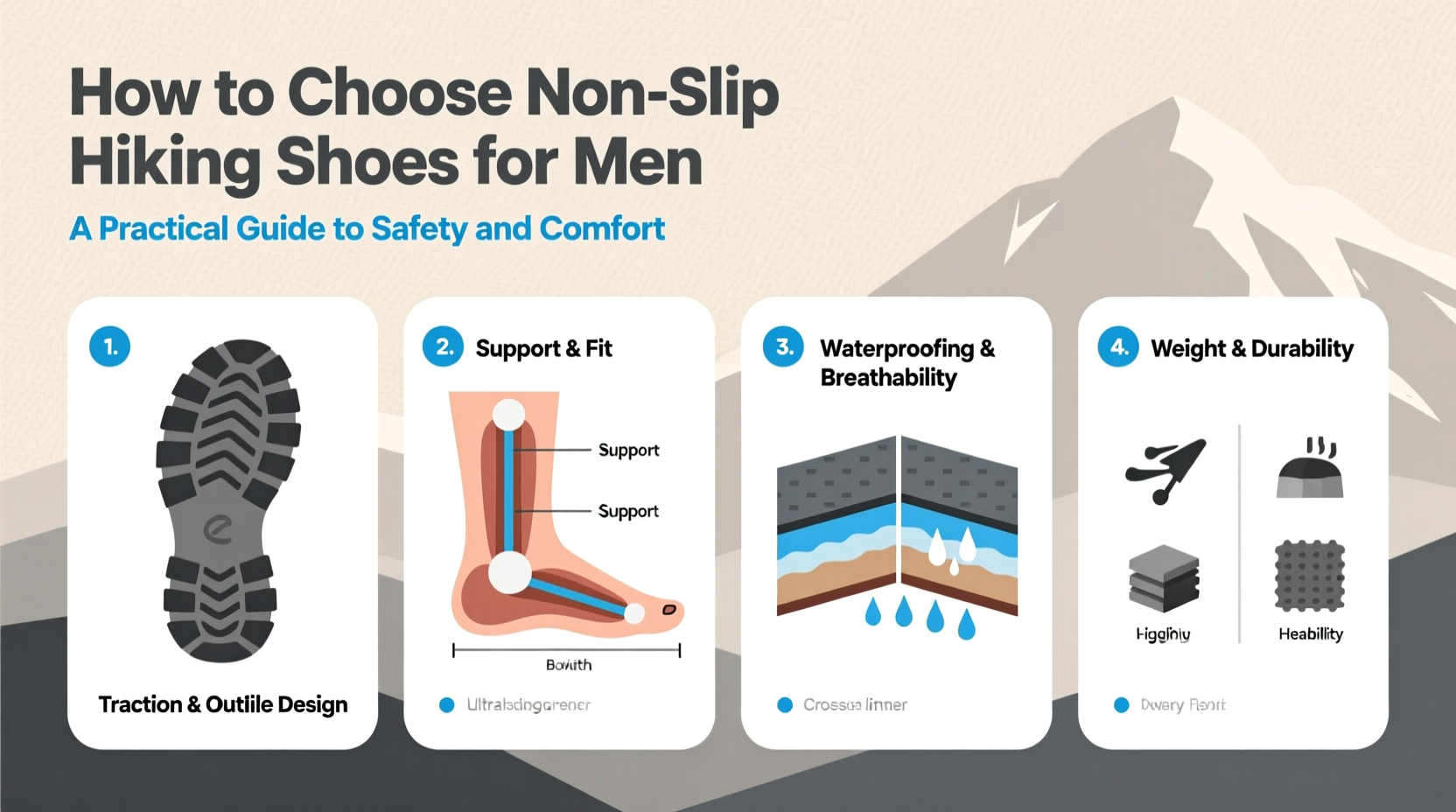
The term “non-slip” is often used loosely, but in hiking footwear, it refers to specific design features that maximize grip and minimize slippage on wet, uneven, or loose surfaces. True non-slip performance comes from three key elements: outsole compound, tread pattern, and midsole stability.
- Outsole Compound: High-quality rubber, such as Vibram® Megagrip or Continental™ rubber, offers superior adhesion on both wet rock and muddy soil. These compounds remain flexible in cold temperatures and resist abrasion over time.
- Tread Pattern: Deep, multidirectional lugs (typically 4–6mm) channel water and debris away from the contact surface. Lugs should be spaced to prevent clogging while maintaining continuous ground contact.
- Midsole Support: A firm yet cushioned midsole helps maintain balance on uneven ground, reducing micro-slips caused by ankle roll or instability.
Key Features to Evaluate Before Buying
Selecting the right non-slip hiking shoe isn’t just about the sole. Comfort, fit, and durability play equally important roles in long-term safety and performance.
Finding the Right Fit
A poorly fitting shoe compromises traction. If your foot slides inside the shoe during descent, even the stickiest rubber won't save you. Always try shoes later in the day when feet are slightly swollen, and wear the same socks you plan to hike in. There should be a thumb’s width of space between your longest toe and the end of the shoe. Heel lock is critical—your heel should not lift during downhill steps.
Water Resistance vs. Breathability
Wet feet aren’t just uncomfortable—they increase the risk of blisters and reduce insulation. Waterproof membranes like Gore-Tex offer protection in damp environments but may trap heat on dry, hot hikes. Consider breathable mesh uppers if you prioritize airflow over water resistance, especially in humid climates.
Ankle Support Level
Low-cut shoes offer agility and lighter weight, ideal for well-maintained trails. Mid-cut models provide added ankle stability on uneven terrain, making them better suited for technical or off-trail hiking. High-top boots are overkill for most day hikes but excel in backpacking or alpine zones.
“Traction starts with confidence in your step. That means a shoe that fits perfectly and supports natural movement.” — Dr. Marcus Hale, Podiatrist & Outdoor Sports Medicine Specialist
Comparison Table: Non-Slip Hiking Shoe Types
| Type | Best For | Traction Rating | Weight Range | Recommended Use |
|---|---|---|---|---|
| Trail Runners | Dry, well-groomed trails | Medium | 12–18 oz | Fast hikes, light loads |
| Hiking Shoes (Low-Cut) | Moderate terrain, mixed conditions | High | 18–24 oz | Day hikes, all-season use |
| Hiking Boots (Mid-Cut) | Rugged trails, loose rock, scree | Very High | 24–32 oz | Backpacking, variable weather |
| Mountaineering Boots | Icy, alpine, technical terrain | Extreme (with crampons) | 32+ oz | Glacier travel, winter climbs |
Step-by-Step Guide: How to Test Traction and Comfort
Before committing to a purchase, follow this practical evaluation process:
- Inspect the Outsole: Check for deep, multi-directional lugs made of sticky rubber. Avoid smooth or shallow patterns.
- Press the Heel and Forefoot: Press down on a hard surface to feel how the lugs compress. They should deform slightly, indicating flexibility and grip potential.
- Simulate Slope Movement: Stand on a slightly inclined tile or wet pavement. Shift your weight forward and backward. Your foot should stay planted without sliding.
- Walk on Varied Surfaces: If possible, test walk on gravel, grass, and a wet sidewalk. Listen for squeaks—consistent contact sounds indicate good grip.
- Assess Break-in Period: Some shoes require 10–20 miles to reach optimal comfort. Choose models known for minimal break-in if you need immediate performance.
Real-World Example: A Misstep Turned Lesson
James, an experienced hiker from Colorado, once relied on lightweight trail runners for early-season hikes. On a spring trek near Boulder, he encountered a steep, shaded section covered in melting snow and slick granite. His shoes slipped multiple times, forcing him to crawl partway down. After consulting a ranger, he learned that his soles lacked sufficient lug depth and sticky rubber for wet rock. He switched to a mid-cut hiking shoe with Vibram Megagrip outsoles. On his next outing—over similar terrain—he reported total confidence, even on icy patches. The improved traction prevented any slips, proving that gear choices directly impact safety.
Checklist: Choosing the Right Non-Slip Hiking Shoe
- ✅ Prioritize sticky rubber outsoles (e.g., Vibram, Continental)
- ✅ Ensure deep, multidirectional lugs (4mm or deeper)
- ✅ Try shoes with your hiking socks and load (add weight if backpacking)
- ✅ Walk on a wet or sloped surface before buying
- ✅ Confirm secure heel lock and toe room
- ✅ Match shoe height to terrain difficulty
- ✅ Balance waterproofing with breathability based on climate
- ✅ Read user reviews focused on wet traction and durability
Frequently Asked Questions
Can regular sneakers be used for hiking?
No. Sneakers lack aggressive tread, durable outsoles, and ankle support needed for trail safety. Their flat soles often slide on rocks and roots, increasing injury risk. Invest in purpose-built hiking footwear for any trail beyond a paved path.
How long do non-slip soles last?
Most high-quality hiking shoes retain effective traction for 300–500 miles, depending on terrain and weight carried. Inspect lugs regularly—if they appear flattened or smooth, replace the shoes even if the upper looks intact.
Are expensive hiking shoes worth it?
Not always—but premium models often use better rubber compounds, more precise lasts (foot molds), and superior construction. For frequent hikers or those tackling difficult terrain, the investment pays off in longevity, comfort, and reduced injury risk.
Final Thoughts: Safety Begins at Your Feet
Your hiking experience is only as strong as your foundation. A misstep due to poor traction can turn a peaceful day outdoors into an emergency. By focusing on proven outsole technology, proper fit, and terrain-appropriate design, you equip yourself with more than just shoes—you gain confidence with every step. Whether you're navigating a rainy forest trail or scrambling over wet boulders, the right non-slip hiking shoe keeps you upright, comfortable, and in control.




 浙公网安备
33010002000092号
浙公网安备
33010002000092号 浙B2-20120091-4
Comments
No comments yet. Why don't you start the discussion?