
For people with round facial features, finding sunglasses that stay put can feel like a constant battle. Slipping lenses during conversations, sliding down the nose while walking, or adjusting frames every few minutes are common frustrations. The root cause often lies in mismatched proportions and poor structural support. Choosing the right pair isn’t just about style—it’s about geometry, balance, and function. With the correct frame shape, bridge design, and material considerations, you can enjoy sunglasses that enhance your look and stay securely in place all day.
Understanding Facial Proportions: Why Round Faces Need Strategic Frame Choices
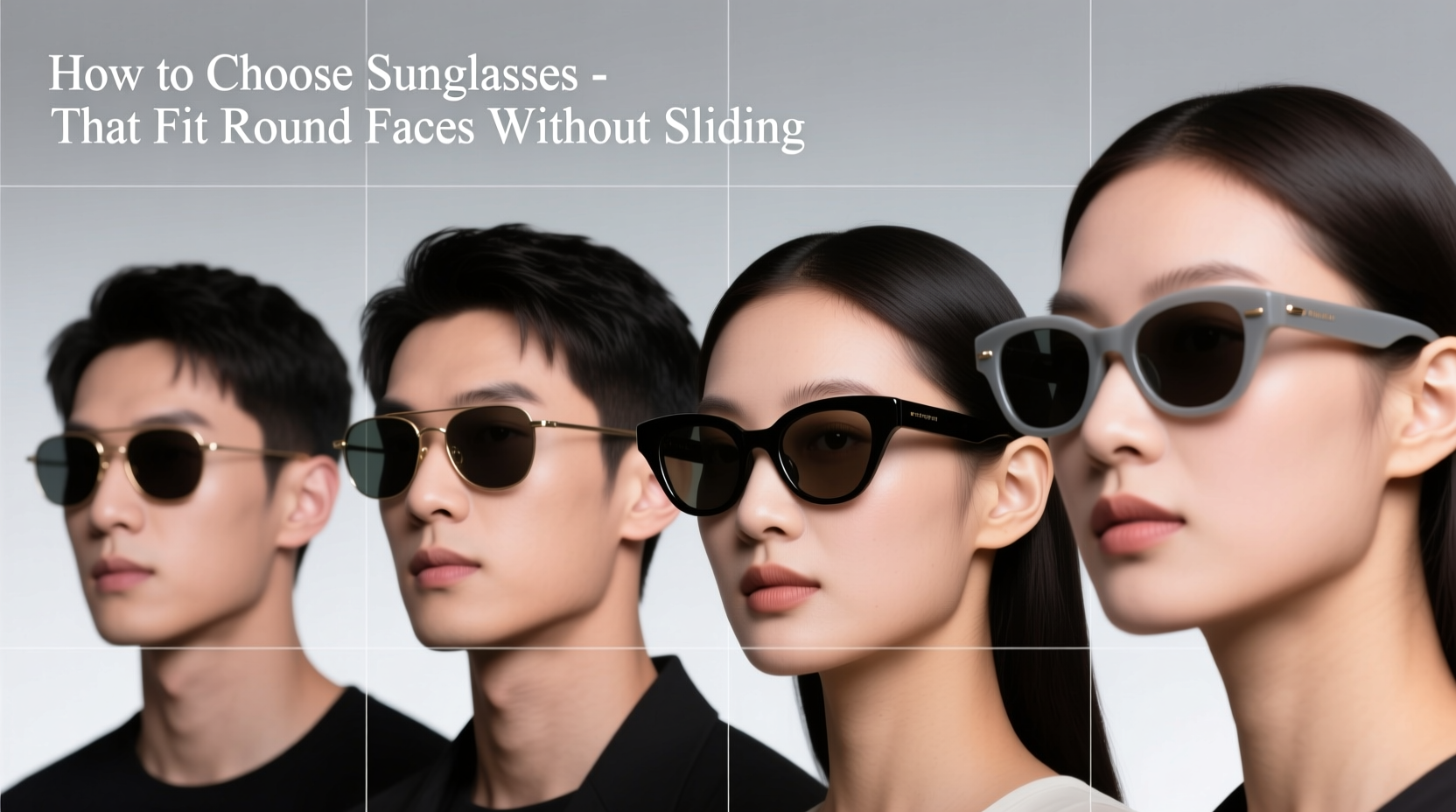
A round face is typically defined by soft curves, similar width and height measurements, and full cheeks. The jawline is gently rounded rather than angular, and the forehead, cheekbones, and jawline are nearly equal in width. Because of this symmetry, frames that lack definition or structure can make the face appear even rounder and fail to anchor properly.
The goal when selecting sunglasses for a round face is to introduce contrast—adding angles and length where there are curves. This not only creates visual balance but also improves stability. Frames that sit too low or extend beyond the cheekbones can create imbalance, leading to pressure points or slippage. Conversely, well-proportioned frames distribute weight evenly and use facial contours to their advantage.
“Sunglasses should complement the face, not fight it. For round faces, structure and lift are key—not just for aesthetics, but for staying power.” — Marcus Lin, Eyewear Designer at VistaFrame Studios
Frame Shapes That Work: Structure Over Symmetry
Not all frame shapes are created equal for round faces. The right silhouette adds definition and prevents slipping by aligning with the natural architecture of your features.
- Rectangular or Square Frames: These introduce sharp angles that contrast with facial curves, elongating the appearance of the face. They also tend to have longer temples and sturdier construction, which improves grip behind the ears.
- Aviators: With their teardrop shape and raised outer edges, aviators add vertical dimension. Their metal construction often includes adjustable nose pads, allowing for a customized, non-slip fit.
- Cat-Eye Styles: These lift the outer corners, creating an optical illusion of width and balance. When made with acetate or reinforced hinges, they offer superior hold without sacrificing comfort.
- Browline Frames: Featuring a bold upper rim and lighter lower section, browlines draw attention upward, adding perceived length. Their structured top bar often provides better weight distribution across the nose.
Avoid perfectly round or small circular frames—they echo the face’s shape, minimizing contrast and increasing the likelihood of slippage due to reduced surface contact.
Anatomy of a Secure Fit: Bridge, Nose Pads, and Temple Design
Finding sunglasses that don’t slide isn’t just about shape—it’s about engineering. Three critical components determine whether your frames stay in place: the bridge, nose pads, and temple arms.
The Bridge: Matching Your Nasal Profile
The bridge connects the two lenses and rests on the nose. For round faces, which often have lower or flatter nasal bridges, a poorly fitting bridge is the primary culprit behind slipping.
- Keyhole Bridge: This U-shaped design lifts the frame off the nose slightly, distributing pressure over a broader area. Ideal for low bridges.
- Adjustable Nose Pads: Common in metal frames, these allow micro-adjustments for grip and height. Silicone pads provide friction without pinching.
- Wide vs. Narrow Bridges: A wide bridge may gap on narrow noses, while a narrow one digs in. Aim for snugness without pressure.
Temple Arms: Grip Without Discomfort
The temples (or arms) must hug the sides of the head securely. Slippage often occurs when temples are too straight, too short, or made from slippery materials.
- Curbed or S-Curved Temples: These wrap gently around the ear, using the ear’s anatomy to lock the frame in place.
- Silicone Tips or Rubberized Coatings: Enhance grip, especially in heat or humidity. Found in performance and sport styles, they’re increasingly available in fashion lines.
- Length Matters: Temples should extend fully to the back of the ear without tension. Too short, and they lose purchase; too long, and they press uncomfortably.
| Feature | Recommended for Round Faces | Avoid |
|---|---|---|
| Bridge Type | Keyhole, adjustable nose pads | Narrow, rigid plastic bridges |
| Temple Design | Curved, silicone-tipped | Straight, glossy plastic |
| Lens Shape | Square, rectangular, cat-eye | Rounded, circular |
| Frame Material | Lightweight titanium, acetate with rubber inserts | Heavy metal without padding |
Step-by-Step: How to Test Sunglasses for Fit and Stability
Buying sunglasses online increases the risk of poor fit. Even in-store, many people overlook functional testing. Follow this sequence to ensure your new pair stays put.
- Assess Proportions: Stand in front of a mirror. The frame’s width should not exceed your cheekbones. The top edge should align with your eyebrows.
- Check Bridge Contact: Gently press the frame down. There should be even contact across the nose. If gaps appear on either side, the bridge is too wide.
- Test Temple Grip: Put the sunglasses on and tilt your head forward sharply. If they slide more than half an inch, they’re too loose.
- Simulate Movement: Shake your head side to side and nod up and down. The frames should remain stable without constant readjustment.
- Evaluate Weight Distribution: After wearing for five minutes, check for pressure points on the nose or behind the ears. Comfort is essential for long-term wear.
Real-World Example: From Constant Adjustments to All-Day Wear
Sophie, a 34-year-old landscape photographer based in Portland, spent years frustrated with her sunglasses. “I’d buy trendy round frames because they looked cool in ads,” she said, “but within ten minutes of being outside, they’d slide down my nose. I was constantly pushing them up, especially when hiking or biking.”
After consulting an optician, she switched to a pair of rectangular acetate frames with a keyhole bridge and rubberized temple tips. “The difference was immediate. They stayed put even during long shoots in humid forests. Plus, the angular shape made my face look more defined in client photos.”
Sophie now prioritizes fit over trendiness. “I realized that looking good starts with feeling confident—and that means not fidgeting with my glasses every five minutes.”
Enhancing Grip: Accessories and Modifications
Sometimes, even well-chosen frames need a little help. Several accessories can improve retention without altering appearance.
- Sunglass Retainers (Cords): Sporty but practical, these keep glasses secure during activity. Choose thin, neutral-colored cords for discreet use.
- Nose Pad Grips: Tiny silicone sleeves that slip over existing nose pads to increase friction.
- Temple Tips: Replace smooth plastic ends with rubberized or coiled silicone tips for better ear grip.
- Anti-Slip Sticks: Worn behind the ears, these sticky strips prevent temples from sliding backward.
Some eyewear brands now integrate these features directly into designs. Look for terms like “performance fit,” “sport-flex hinges,” or “non-slip coating” when shopping.
Checklist: Choosing Slippage-Free Sunglasses for Round Faces
Use this checklist before purchasing to ensure both style and stability:
- ✅ Frame shape is angular—square, rectangular, or cat-eye
- ✅ Bridge is keyhole-style or has adjustable nose pads
- ✅ Temples are curved and feature rubberized or silicone tips
- ✅ Frame width matches or slightly exceeds cheekbone width
- ✅ Lenses provide 100% UV protection (regardless of tint)
- ✅ Weight is balanced—no front-heaviness
- ✅ Fit tested with head movement and prolonged wear
- ✅ Optional: Includes anti-slip accessories or integrated grip features
FAQ: Common Questions About Sunglasses for Round Faces
Can I wear round sunglasses if I have a round face?
While not impossible, classic round frames often exaggerate facial roundness and lack the structural support needed for a secure fit. If you love the look, opt for a slightly oversized version with a keyhole bridge and textured nose pads to minimize slippage. However, angular alternatives usually offer better balance and stability.
Why do my sunglasses always slide down my nose?
This is commonly caused by a mismatch between your nasal bridge and the frame’s bridge design. Low or flat bridges need keyhole shapes or adjustable pads. Other factors include lightweight frames lacking grip, oily skin reducing friction, or straight temple arms that don’t wrap the ears.
Are expensive sunglasses more likely to fit better?
Not necessarily. While premium brands often use higher-quality materials and ergonomic designs, price doesn’t guarantee fit. Many mid-range and specialty brands prioritize facial ergonomics and offer customizable features like bendable temples or replaceable nose pads. Always prioritize fit over brand name.
Conclusion: Confidence Starts with a Secure Fit
Choosing sunglasses for a round face goes beyond fashion—it’s about harmony between form and function. The right pair should enhance your features, protect your eyes, and stay firmly in place without constant adjustment. By focusing on angular silhouettes, supportive bridges, and grippy temple designs, you transform sunglasses from a nuisance into a seamless part of your daily routine.
Don’t settle for frames that slip, pinch, or distort your look. Use the principles outlined here to make informed choices that combine style, comfort, and reliability. Whether you're walking through sunlight-dappled streets or facing a windy coastline, your sunglasses should stay where they belong—on your face, doing their job.




 浙公网安备
33010002000092号
浙公网安备
33010002000092号 浙B2-20120091-4
Comments
No comments yet. Why don't you start the discussion?