
Selecting the right pair of sunglasses goes beyond UV protection or brand appeal—it’s about harmony between frame design and facial structure. Many people rely on trial and error, cycling through multiple pairs before finding one that looks “right.” But with a clear understanding of face shapes and frame proportions, you can bypass the guesswork entirely. The key lies in balance: choosing frames that contrast your face’s dominant angles and proportions to create visual symmetry.
This guide breaks down the science of facial geometry, matches it with proven frame styles, and gives you a systematic method to select sunglasses that enhance your features—without ever stepping into a store.
Understanding Face Shapes: The Foundation of Flattering Frames
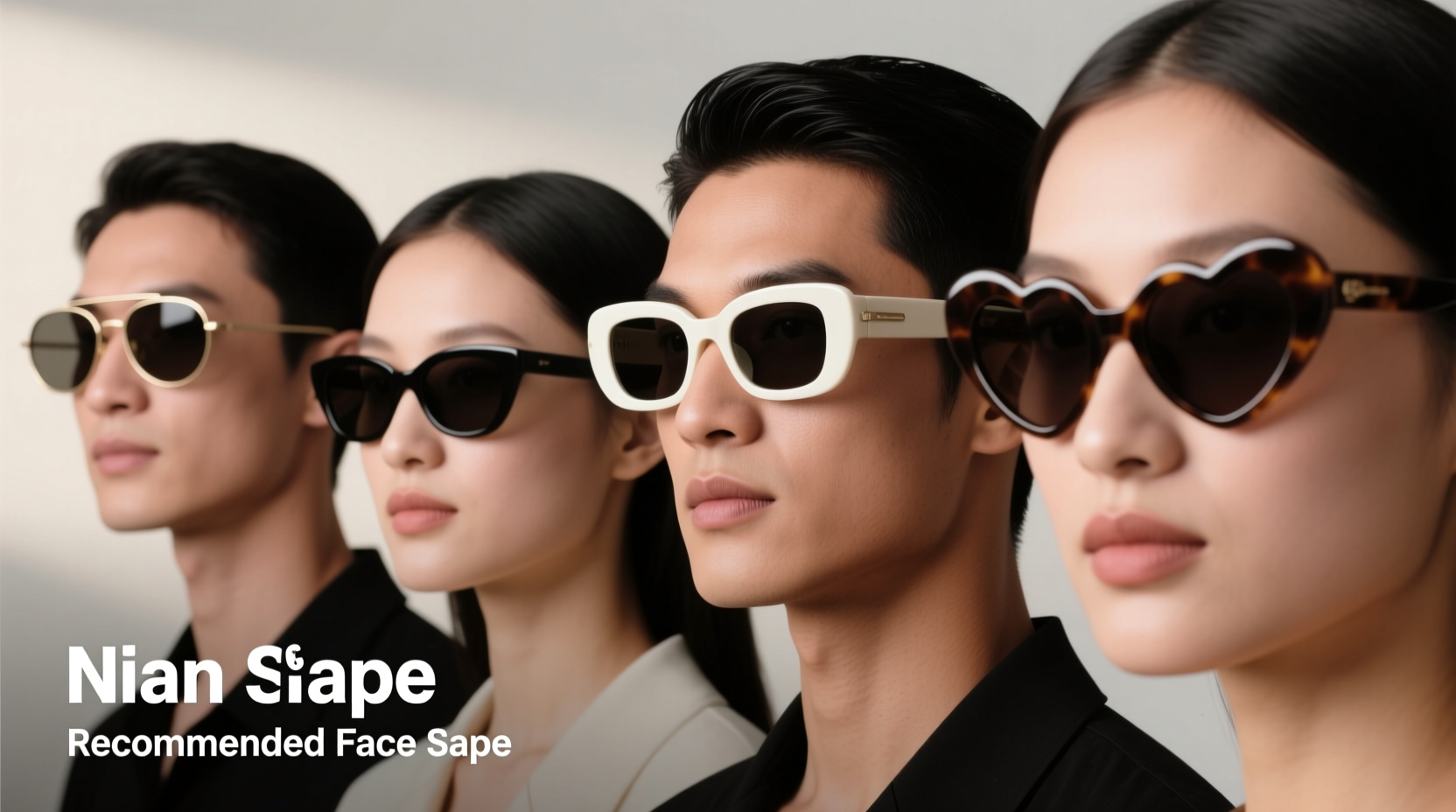
Before selecting sunglasses, identify your face shape. This isn’t about vanity; it’s about proportion. Each face shape responds differently to frame width, depth, angle, and rim style. There are six primary face shapes: oval, round, square, heart, diamond, and oblong. While subtle variations exist, most faces fall into one of these categories.
To determine your face shape, stand in front of a mirror and trace the outline of your face with a washable marker or use a well-lit selfie. Then compare the proportions:
- Oval: Forehead slightly wider than the chin, with softly rounded jawlines and balanced length-to-width ratio.
- Round: Equal width and length, full cheeks, and soft jawline.
- Square: Strong jawline, forehead and jaw nearly equal in width, angular features.
- Heart: Broad forehead, narrow chin, often with high cheekbones.
- Diamond: Narrow forehead and jaw, widest at the cheekbones, pointed chin.
- Oblong: Face longer than it is wide, with a flat or straight hairline and elongated jaw.
Matching Sunglasses to Your Face Shape
Once you know your face shape, apply the principle of counterbalance: choose frames that offset your face’s natural lines. For example, angular faces benefit from round frames, while round faces gain definition from angular designs.
Oval Faces: The Versatile Canvas
Oval faces are considered proportionally ideal because they already possess balance. This means almost any frame style works—but the goal should be to maintain that balance, not disrupt it.
Avoid overly large or small frames that distort proportions. Instead, opt for medium-sized, well-proportioned styles like aviators, rectangular frames, or cat-eyes. The key is keeping the frame width aligned with the widest part of your face.
Round Faces: Add Definition with Angularity
The goal for round faces is to add structure and length. Rectangular, square, or geometric frames help elongate the face and create the illusion of sharpness.
Choose frames with strong top lines and higher bridges. Avoid circular or overly curved styles—they’ll only emphasize roundness. Wayfarers, clubmasters, and rectangular acetate frames are excellent choices.
“Sunglasses should enhance, not echo, your face shape. For round faces, angular frames introduce visual contrast that defines the wearer’s look.” — Lena Park, Eyewear Stylist & Consultant
Square Faces: Soften Angles with Curves
If you have a square face, your features are bold and symmetrical. To soften the jaw and forehead, go for round, oval, or slightly curved frames. These shapes introduce fluidity and reduce visual weight at the angles.
Browse wire-rimmed circles, rounded rectangles, or vintage-inspired round lenses. Avoid boxy or oversized square frames—they amplify angularity. Also, consider frames that are slightly wider than your face to balance the jawline.
Heart-Shaped Faces: Balance the Forehead and Chin
Heart-shaped faces taper dramatically from forehead to chin. The objective is to widen the lower half of the face visually. Choose frames that are bottom-heavy or have decorative elements on the lower rim.
Cat-eye, butterfly, or round-bottomed frames work beautifully. Aviators also complement this shape due to their downward slope and emphasis on the cheekbones. Avoid top-heavy or narrow-lens styles that make the chin appear smaller.
Diamond Faces: Highlight Cheekbones, Soften Edges
Diamond-shaped faces have striking cheekbones but narrower foreheads and jaws. The best frames draw attention to the eyes and soften the angles at the temples and chin.
Oval, round, or rimless frames with detailing near the eyes are ideal. Cat-eye shapes also work by widening the forehead. Avoid narrow or geometric frames that accentuate the cheek width without balancing the rest of the face.
Oblong Faces: Shorten and Frame the Length
Oblong faces benefit from frames that add width and break up vertical length. Look for wide, deep-set frames with a strong horizontal line.
Wayfarers, square frames, or flat-brow designs help shorten the appearance of the face. Wraparound styles can also work if they don’t extend too far vertically. Avoid small or narrow lenses—they’ll stretch the face further.
Frame Features That Make or Break the Fit
Even with the right shape, poor frame details can ruin the effect. Consider these structural elements when shopping online or comparing options:
- Bridge fit: Low bridges suit flat nasal bones; high bridges prevent slipping on prominent noses.
- Temple arms: Should rest comfortably without pinching. Adjustable arms improve long-term wear.
- Lens height: Taller lenses can elongate round faces; shorter ones may suit oblong types.
- Frame width: Must align with or slightly exceed your face’s widest point to avoid a \"floating\" look.
Material and Color Considerations
While shape is paramount, color and material influence overall harmony. Darker frames add definition; translucent or neutral tones offer subtlety. Metallic finishes suit angular faces, while acetate brings warmth to softer shapes.
Consider your skin tone and hair color. Cool undertones (pink, blue veins) pair well with silver, gray, or black. Warm undertones (golden, green veins) shine with tortoiseshell, gold, or brown.
| Face Shape | Best Frame Styles | Styles to Avoid |
|---|---|---|
| Oval | Aviators, rectangles, cat-eyes | Extremely oversized or tiny frames |
| Round | Rectangular, square, geometric | Circular, small round frames |
| Square | Rounded, oval, wire-rim | Boxy, angular, narrow frames |
| Heart | Cat-eye, aviators, bottom-heavy | Narrow, top-heavy, small lenses |
| Diamond | Oval, rimless, cat-eye | Narrow, geometric, square |
| Oblong | Wide square, flat-brow, wraparound | Small, narrow, tall frames |
Step-by-Step Guide: Choosing Sunglasses Without Trying Them On
You don’t need a fitting room to find flattering sunglasses. Follow this five-step process:
- Measure your face: Use a mirror and ruler to record forehead, cheekbone, and jaw width, plus face length. Note the widest and longest points.
- Identify your face shape: Compare measurements. Is your face longer than wide? Are your cheekbones the broadest feature?
- Select frame category: Based on your shape, pick the recommended style group (e.g., rectangular for round faces).
- Check frame dimensions: Look for product specs. Frame width should match or slightly exceed your face width. Lens height should complement proportions.
- Evaluate bridge and temple design: If you have a low nose bridge, prioritize adjustable or saddle bridges. For sensitive ears, seek lightweight materials.
Real-World Example: Sarah’s Online Purchase Success
Sarah, a graphic designer with a round face, used to dread buying sunglasses online. Her last pair—a trendy circular metal frame—made her face look wider and undefined. After reading about face shape principles, she measured her face: 6 inches across the cheekbones, 5.8 inches long. She identified her shape as round and researched angular styles.
She filtered online options for “rectangular acetate sunglasses” with a width of at least 6 inches. She chose a pair with a slight wingtip and a medium bridge. When they arrived, they fit perfectly—not just physically, but aesthetically. Colleagues noticed the difference immediately. “You look sharper,” one said. Sarah avoided three returns and saved over $70 in exchange fees—all by applying simple shape logic.
Expert Checklist: Before You Buy
Use this checklist to ensure your next sunglass purchase flatters your face:
- ✅ I’ve measured my face and confirmed my shape.
- ✅ I’ve selected a frame style that contrasts my face’s natural lines.
- ✅ The frame width is equal to or slightly wider than my face.
- ✅ The lens height doesn’t overpower or underfill my facial space.
- ✅ The bridge type suits my nose profile.
- ✅ The color complements my skin tone and hair.
- ✅ I’ve reviewed customer photos of the same frame on similar face shapes.
Frequently Asked Questions
Can I wear round sunglasses if I have a round face?
Generally, no. Round frames on round faces increase softness and reduce definition. However, if the frame is small, has a strong top bar, or is paired with a contrasting outfit, minimal impact may occur. For most, angular alternatives are safer and more flattering.
What if my face is between two shapes?
Most faces are hybrids. Focus on the dominant trait—length, width, or angles—and prioritize recommendations for that characteristic. For example, if your face is mostly oval but slightly square-jawed, stick with oval guidelines but avoid overly angular frames.
Do gender-specific styles matter?
Modern sunglasses are increasingly unisex. Focus on proportions, not labels. A well-chosen frame transcends gender norms. What matters is how the shape interacts with your face, not the marketing category.
Final Thoughts: Confidence Starts with the Right Frame
Choosing sunglasses shouldn’t be a game of chance. With a clear understanding of facial geometry and frame dynamics, you can make informed decisions that elevate your appearance and confidence. Whether shopping online or in person, let data—not doubt—guide your choices. The perfect pair isn’t found by luck; it’s selected with intention.




 浙公网安备
33010002000092号
浙公网安备
33010002000092号 浙B2-20120091-4
Comments
No comments yet. Why don't you start the discussion?