
Selecting the perfect pair of sunglasses isn’t just about following trends or brand names—it’s about finding a frame that harmonizes with your facial structure. For many, the ideal pair feels like an extension of their personality and enhances their natural features. But what if you're shopping online, traveling, or simply don’t have access to a mirror and fitting room? The good news is, you can confidently choose sunglasses that flatter your face shape—without ever trying them on.
With a clear understanding of your face shape, proportion principles, and frame styles, you can make informed decisions from anywhere. This guide breaks down the science and art of matching sunglasses to your face shape using measurable cues, visual logic, and real-world strategies.
Understanding Face Shapes: The Foundation
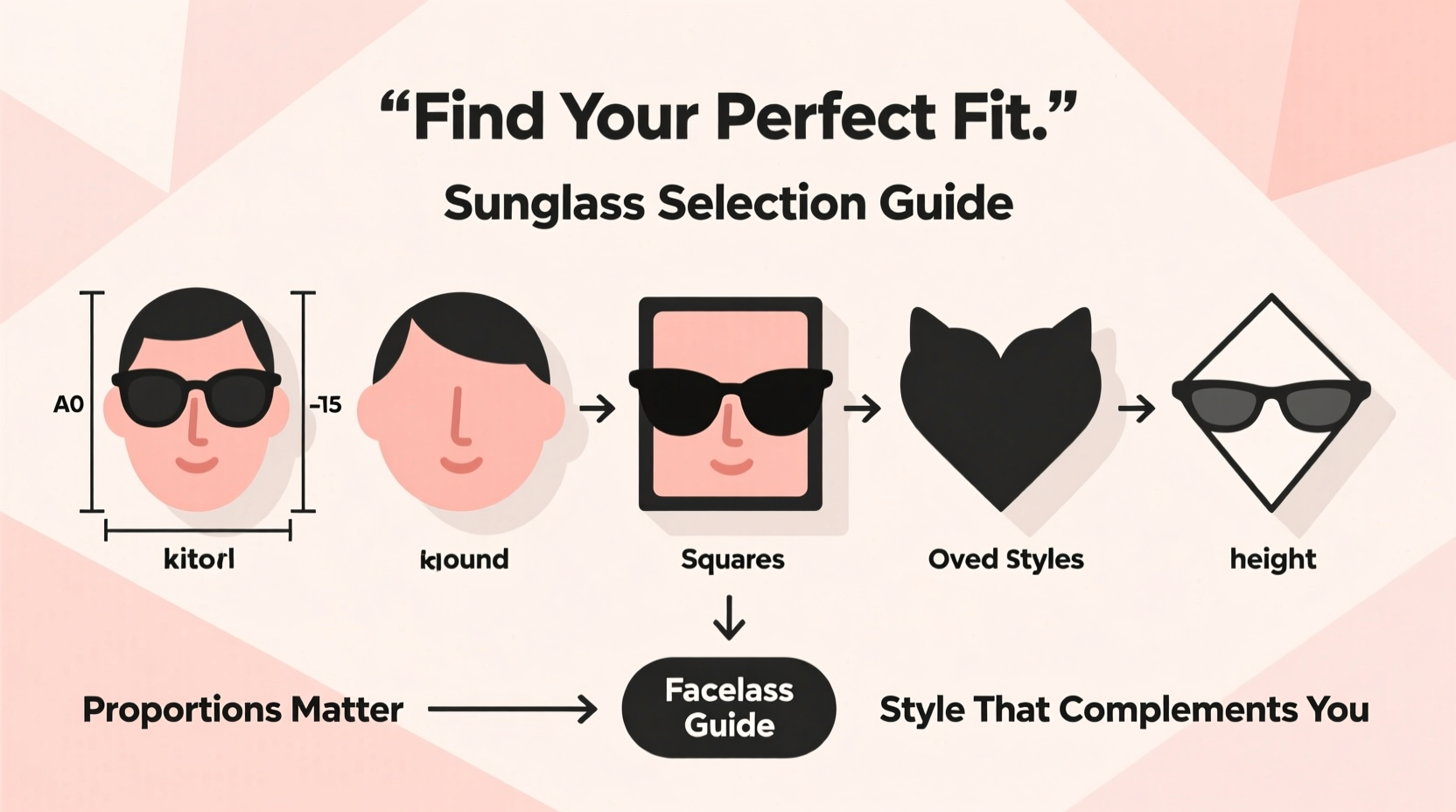
The first step in selecting suitable sunglasses without trying them on is identifying your face shape. While no two faces are identical, most fall into one of six common categories: oval, round, square, heart, diamond, and oblong. Each has distinct proportions and angles that respond differently to frame shapes.
To determine your face shape, use a tape measure or ruler along with a well-lit mirror (or a clear selfie). Measure the following:
- Forehead width: Across the widest part, usually above the brows.
- Cheekbone width: Across the fullest part of your cheeks.
- Jawline width: From jaw angle to jaw angle.
- Face length: From hairline to chin.
Compare these measurements and observe the overall outline. Is your face longer than it is wide? Are your cheekbones the broadest feature? Is your jaw sharp or softly rounded?
Common Face Shapes and Key Traits
| Face Shape | Forehead | Cheekbones | Jawline | Length vs. Width | Overall Outline |
|---|---|---|---|---|---|
| Oval | Slightly wider than jaw | Narrower than forehead | Gentle curve | Longer than wide | Egg-shaped, balanced |
| Round | Similar to jaw | Widest point | Curved, soft | Nearly equal | Circle-like with full cheeks |
| Square | Wide | Strong | Angular, defined | Almost equal | Boxy with sharp edges |
| Heart | Widest at top | Medium | Narrow, pointed | Longer at top | Inverted triangle |
| Diamond | Narrow | Widest point | Narrow | Longer than wide | Rhombus-shaped, angular |
| Oblong | Moderate | Moderate | Gentle | Significantly longer | Rectangle with even width |
Matching Frames to Facial Structure
Once you know your face shape, the next step is choosing frame styles that balance and complement your natural contours. The goal is contrast: if your face has soft curves, add angles; if it’s angular, soften it with round frames. Proportion also matters—oversized frames can overwhelm small faces, while tiny frames get lost on larger ones.
Frame Guidelines by Face Shape
- Oval Faces: Lucky in the sunglass game, oval faces can pull off most styles. Aim to maintain balance—avoid frames that extend beyond the cheekbones. Cat-eye, rectangular, and wayfarers work well. Steer clear of overly round frames that shorten the face.
- Round Faces: Seek angular frames to elongate and define. Square, rectangular, or geometric designs add structure. High-bridge frames or those with strong top lines create vertical lift. Avoid round or curved frames—they emphasize roundness.
- Square Faces: Soften strong jaws with round or oval frames. Round aviators, circular lenses, or browline styles balance sharp angles. Avoid boxy frames that mimic the jawline. Slightly oversized round frames are ideal.
- Heart-Shaped Faces: Balance a wide forehead with frames that add width at the bottom. Cat-eye, round, or rimless bottoms help. Aviators with thicker lower rims are excellent. Avoid top-heavy or narrow frames that exaggerate the forehead.
- Diamond Faces: Highlight cheekbones while softening narrow foreheads and jaws. Oval, cat-eye, or rimless frames with decorative temples draw attention. Almond-shaped lenses follow the face’s natural lines. Avoid narrow or straight-bar frames.
- Oblong Faces: Shorten the face with deep, wide frames. Wraparound, clubmaster, or flat-top styles reduce length. Avoid small or narrow frames—they stretch the face further. Look for low-set temples and close-fitting sides.
“Choosing sunglasses is like selecting architecture for the face—proportion, line, and balance determine harmony.” — Lena Torres, Eyewear Stylist & Consultant
Step-by-Step Guide: Choosing Sunglasses Without Trying Them On
Follow this practical sequence when shopping remotely or without mirrors:
- Measure your face using the method described earlier. Record forehead, cheekbone, jaw, and length dimensions.
- Determine your dominant shape by comparing ratios. Is your face 1.5 times longer than wide? Likely oval or oblong. Are cheekbones significantly wider? Consider diamond or round.
- Review brand size charts. Many online retailers provide lens width, bridge size, and temple length. Add up the total frame width (lens + bridge) and compare it to your cheekbone measurement. The frame should not exceed your cheekbone width by more than 5–10mm.
- Select frame shapes that contrast your face angles. Round face? Go angular. Square face? Choose round. Use the table and list above as reference.
- Consider nose bridge fit. If you have a low bridge, avoid high-nose frames. Asian-fit or unisex styles often accommodate flatter bridges. Adjustable nose pads are a plus.
- Check customer photos and reviews. Real users often mention fit, coverage, and how the shape appears on different faces. Look for reviewers with similar features.
- Use virtual try-on tools when available. Apps from Ray-Ban, Warby Parker, or LensCrafters let you upload a photo and superimpose frames. While not perfect, they offer realistic previews.
Real Example: Sarah’s Online Purchase Success
Sarah, a graphic designer from Portland, needed new sunglasses for a beach trip but couldn’t visit stores due to a tight deadline. She knew she had a heart-shaped face—wide forehead, narrow chin—but wasn’t sure which frames would suit her.
She measured her face: forehead 6.1 inches, cheekbones 5.7 inches, jaw 5.2 inches, length 7.3 inches. Consulting the guidelines, she ruled out narrow rectangular frames and instead explored cat-eye and aviator styles. She filtered online options for “medium-wide” fit and checked total frame width—aiming for 5.8 to 6.0 inches.
She chose a tortoiseshell cat-eye with slight upward tilt and a medium lens height. Customer photos showed the frame adding balance to similar face shapes. When the sunglasses arrived, they fit perfectly—compliments followed at her beachside meeting.
Sarah’s success came from combining data with design principles—no fitting room required.
Checklist: How to Buy Sunglasses Without Trying Them On
Before clicking “Buy Now,” run through this checklist:
- ✅ I’ve measured my forehead, cheekbones, jaw, and face length.
- ✅ I’ve identified my face shape based on proportions.
- ✅ I’ve selected a frame shape that contrasts my face’s natural lines.
- ✅ I’ve checked the total frame width against my cheekbone measurement.
- ✅ I’ve considered bridge fit (especially if I have a low or high nose bridge).
- ✅ I’ve read customer reviews mentioning fit and face compatibility.
- ✅ I’ve used a virtual try-on tool if available.
- ✅ I’ve confirmed the return policy in case adjustments are needed.
Frequently Asked Questions
Can I really choose sunglasses accurately without trying them on?
Yes—especially if you understand your face shape, proportions, and frame dynamics. Many people successfully buy sunglasses online by combining measurements with style rules. Virtual try-ons and detailed product specs enhance accuracy.
What if my face doesn’t fit neatly into one category?
Most faces are hybrids. Focus on the most dominant traits—e.g., if you have a square jaw but rounded forehead, prioritize frames that soften the jawline. You can also look for versatile styles like oval or slightly angled rectangles that bridge multiple shapes.
Are there universal sunglasses that work for all face shapes?
While no single frame suits everyone perfectly, oval and slightly rectangular frames come closest. Classic wayfarers in medium size often flatter a wide range of shapes due to their balanced proportions and gentle angles. However, exact fit still depends on individual measurements.
Final Tips for Long-Term Confidence
Choosing sunglasses without trying them on becomes easier with practice. Over time, you’ll recognize patterns—what widths feel comfortable, which shapes highlight your best features, and how lens tint affects your complexion.
Keep a record of your ideal frame dimensions and preferred styles. If you find a pair you love, note the model and brand—many companies maintain consistent sizing within collections.
Don’t overlook function: UV protection should never be sacrificed for style. Always ensure your sunglasses block 100% of UVA and UVB rays, regardless of lens color or frame appeal.
“The right sunglasses don’t hide your face—they reveal it better.” — Marcus Lin, Optician & Visual Wellness Advocate
Take Action Today
You don’t need a boutique or fitting mirror to find sunglasses that elevate your look. With a tape measure, a few minutes, and the principles outlined here, you can shop smarter, save time, and wear your shades with confidence.
Start by measuring your face tonight. Bookmark this guide, create your personal profile, and approach your next purchase with clarity. Whether you're upgrading your summer wardrobe or replacing worn-out pairs, you now have the tools to choose wisely—anywhere, anytime.




 浙公网安备
33010002000092号
浙公网安备
33010002000092号 浙B2-20120091-4
Comments
No comments yet. Why don't you start the discussion?