
For people who prize quiet spaces, intentional living, and emotional authenticity, traditional gift-giving can feel like a contradiction in terms. A beautifully wrapped sweater may sit unworn; a decorative candle burns out in weeks; a novelty mug joins a stack of others already lining the cupboard. What remains meaningful isn’t the object—it’s the feeling it evokes: warmth, recognition, continuity, love remembered or newly affirmed. Choosing a gift for someone who actively resists clutter yet treasures deep sentimental connection requires shifting focus from *what* you give to *how it lands in their life*. It means honoring their values—not just your impulse to “give something tangible.” This isn’t about minimalism as austerity; it’s about generosity as precision. The most resonant gifts for these recipients are those that dissolve into daily life without demanding space, deepen existing relationships without adding friction, and carry meaning that grows—not fades—with time.
Why Sentimental Value ≠ Physical Heaviness
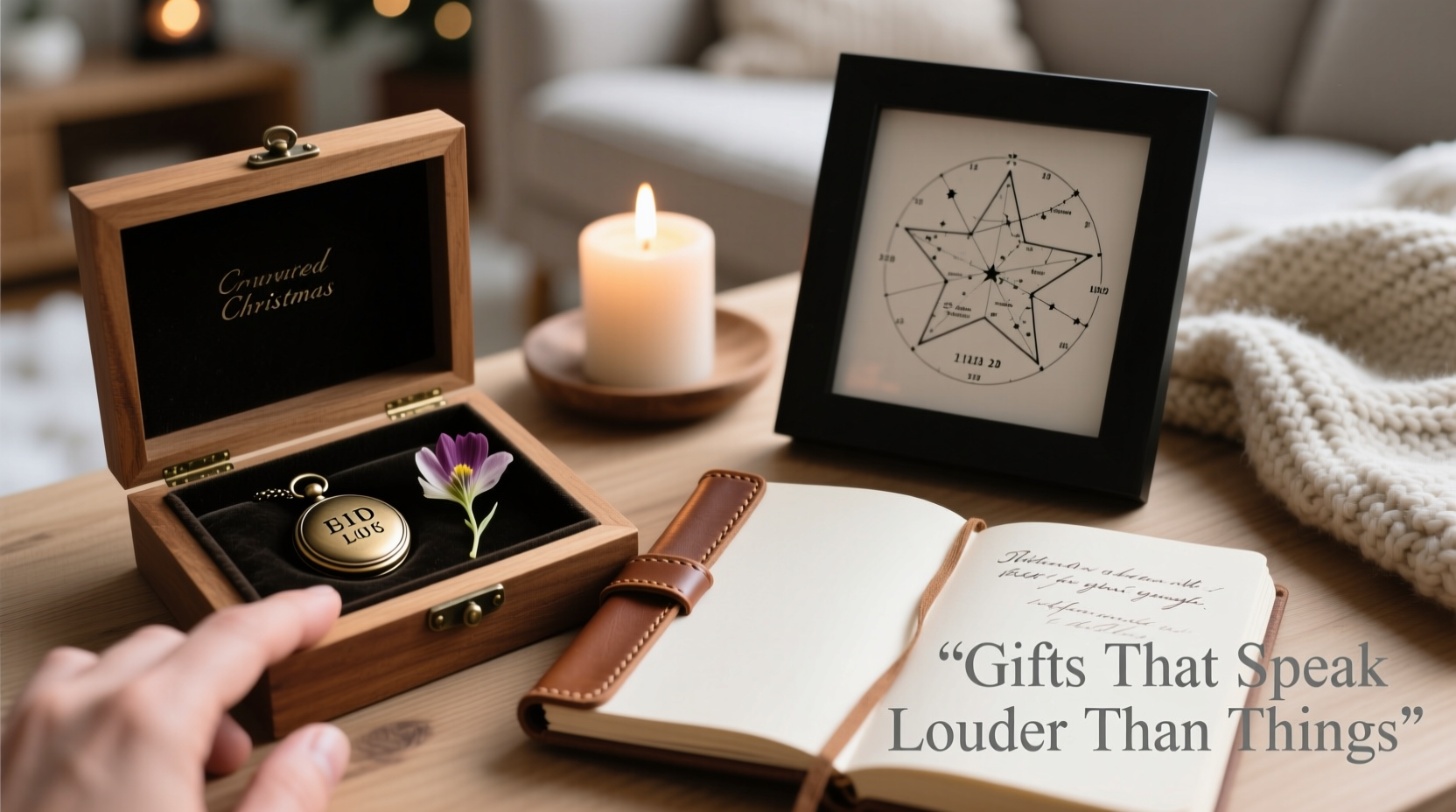
Sentimental value is often misunderstood as nostalgia tied to objects: photo albums, heirloom jewelry, childhood toys. But for many clutter-averse people—especially those with neurodiverse processing styles (e.g., ADHD or autism), chronic fatigue, caregiving responsibilities, or strong environmental ethics—the burden of *managing* objects outweighs any emotional return they might offer. Psychologist Dr. Sarah Lin, author of The Lightness Principle: Emotional Wellbeing in a Full World, explains: “Sentimentality isn’t stored in matter—it’s encoded in attention, repetition, and shared witness. A 90-second voice note replayed on a rainy Tuesday holds more enduring resonance than a framed certificate gathering dust on a shelf. The brain remembers how it felt *held*, not how many things were handed over.” In other words: the weight of sentiment lies in its authenticity and accessibility—not its material footprint.
“Clutter isn’t just stuff. It’s unfinished decisions, unmet expectations, and emotional labor deferred. A truly thoughtful gift respects the recipient’s right to lightness—and gives them permission to feel deeply without carrying more.” — Dr. Sarah Lin, Clinical Psychologist & Author
5 Principles for Clutter-Conscious, Sentiment-Rich Gifting
These principles serve as filters—helping you discard well-intentioned but mismatched ideas before they reach the wrapping paper.
- Principle 1: Prioritize Access Over Ownership
Choose experiences, services, or digital assets that live *outside* the home but remain emotionally accessible—like a curated playlist shared via link, a reserved table at their favorite café for New Year’s Eve, or access to a meditation app subscription renewed annually. - Principle 2: Anchor Meaning in Ritual, Not Object
Gifts gain staying power when they’re woven into recurring moments: a handwritten recipe card for their mother’s apple pie, paired with a promise to bake it together every December; a custom star map of the night sky on the day they met their partner; a quarterly letter exchange you commit to for the next three years. - Principle 3: Let Them Choose Their Own Resonance
A carefully selected gift card isn’t impersonal—if it’s for a purpose-aligned service (e.g., a local pottery studio’s workshop credit, a national park pass, or a donation to a cause they champion). The act of choosing becomes part of the gift. - Principle 4: Embrace Ephemeral Beauty
Some of the most cherished memories involve fleeting, sensory-rich moments: the scent of pine needles crushed underfoot, the sound of a vinyl record spinning, the taste of a specific seasonal tea. Gifts that evoke transience—like a single-origin hot chocolate kit with tasting notes, or a limited-edition spoken-word poetry album—honor impermanence while deepening presence. - Principle 5: Make It Extendable, Not Expandable
Avoid gifts that require storage, assembly, or upkeep. Instead, select offerings that integrate seamlessly: a monogrammed linen napkin (used weekly, not displayed), a custom Spotify playlist titled “Winter Walks With You,” or a hand-bound journal with only 24 pages—designed to be filled, gifted back, or composted after use.
Clutter-Free Gift Ideas That Carry Real Emotional Weight
The following ideas have been field-tested with recipients who identify as “anti-clutter but pro-heart.” Each includes implementation notes so you can adapt it thoughtfully—not transactionally.
| Category | Example Gift | Why It Works | How to Personalize |
|---|---|---|---|
| Ritual Anchors | A “First Snow” tradition kit: insulated thermos, two ceramic mugs, locally roasted cocoa blend, and a handwritten note describing your shared memory of watching snow fall together in 2018. | No assembly required. Used once yearly; components are either consumable or already owned. The ritual—not the items—is the gift. | Reference a specific memory (“Remember how we got caught in that blizzard walking home from the library?”) and include one small tactile element tied to it (e.g., a pressed leaf from that campus path). |
| Time-Shifted Presence | A recorded audio letter (via private SoundCloud link), narrated by you, reading three short letters you’ve written—one for each year of your friendship, sealed and dated to be opened on future Christmases. | No physical object. Delivers emotional continuity across time. Listened to privately, repeatedly, or shared selectively. | Record in a quiet room with ambient sounds you both associate with comfort (e.g., rain on a window, distant piano music). Mention small, true details only they’d recognize (“the way you always stir your tea clockwise”). |
| Legacy Lightening | A professional digitization service for one box of their old photos or letters—delivered as a password-protected online gallery and one USB drive (which they can store or discard). | Reduces physical clutter while preserving irreplaceable history. Gives them control over what stays analog and what moves to cloud. | Include a note: “I’m not asking you to curate your past—I’m offering space for it to breathe. Keep what sings. Let the rest rest.” |
| Embodied Connection | A co-created “gratitude calendar”: 24 small, blank cards. On each, you write one specific thing you appreciate about them—delivered one per day in December, or left for them to open at their pace. | Tangible only as long as needed. No storage after use. Builds anticipation and reinforces relational safety. | Focus on micro-moments (“how you laughed when the cat knocked over the plant last Tuesday”) rather than grand traits (“you’re kind”). Specificity breeds authenticity. |
| Permission-Based Giving | A “No-Gift Voucher” for one evening: you handle dinner, cleanup, childcare, pet care, or errands—so they can read, nap, walk alone, or simply sit in silence. Valid anytime in the next 12 months. | Zero physical footprint. Honors their need for autonomy and rest as sacred. Makes space—literally and emotionally. | Handwrite it on thick paper. Add: “No reciprocity expected. No explanation needed. Just say the word.” |
A Real Example: How Maya Gave Her Father His Most Meaningful Gift in 12 Years
Maya’s father, a retired architect, lives alone in a meticulously edited apartment. He keeps exactly 7 books on his shelf, owns one pair of winter gloves, and donates unused gifts within 48 hours. For years, Maya bought him ties, desk sets, and artisanal pens—each returned gently but firmly with a note: “So thoughtful. I’ll pass this along.” Last Christmas, she shifted strategy. She spent three weeks interviewing his oldest friends, his sister, and her own childhood babysitter—asking one question: “What’s a small, specific thing he did for you that you still remember?” She compiled 11 stories—none longer than four sentences—about moments where he’d shown quiet loyalty, dry humor, or unexpected tenderness. She bound them in a slim, cloth-covered booklet titled Things Held Lightly, with no introduction, no photos, and no index. She included only his name on the cover. When she gave it to him, he sat silently for seven minutes. Then he said, “I didn’t know anyone kept track.” He reads one story aloud to himself every Sunday morning. He hasn’t offered to donate it. He hasn’t even put it on a shelf—he keeps it in the drawer beside his bed, next to his glasses.
Your Step-by-Step Process: From Overwhelmed to Intentional
Follow this sequence—not as rigid rules, but as a grounded rhythm to align your intention with impact.
- Observe (3–5 days): Notice how they interact with objects. Do they reorganize shelves weekly? Decline free samples? Keep receipts for returns? What do they *keep*—and why?
- Listen Backwards (1 session): Reread old texts or emails from them. Highlight phrases revealing emotional anchors: “I miss our walks in Golden Gate Park,” “That song always makes me think of graduation,” “I wish I could hear Grandma’s voice one more time.”
- Identify One Ritual Gap: Is there a meaningful activity they’ve stopped doing? (e.g., writing letters, visiting a certain place, calling a sibling weekly.) Your gift bridges that gap—not with pressure, but with gentle scaffolding.
- Design the Container, Not the Content: Decide *how* the sentiment will arrive—a voice note? A physical token used once? A shared reservation? A digital archive? The container must match their preferred mode of receiving care.
- Test the Exit Strategy: Ask: “If this gift vanished tomorrow, would the meaning remain intact?” If yes, proceed. If no, revise the container or delivery method.
FAQ: Practical Questions Answered
What if they’ve explicitly said, “Don’t get me anything”?
Honor the boundary—but don’t assume it reflects indifference. Often, this is a protective statement rooted in overwhelm or past experiences of mismatched gifts. Respond with: “I hear you—and I won’t give you an object. But may I share something small that’s just for us? No strings, no expectation. If it doesn’t land, it dissolves quietly.” Then follow through with a non-transactional gesture: a 3-minute voice memo recalling a shared inside joke, or a single pressed flower from a walk you took together last spring.
Is it okay to give money—even if it’s for something meaningful?
Yes—if it’s framed as trust, not convenience. Attach a note explaining *why* this amount matters: “This covers your first month of pottery classes—the ones you mentioned wanting to try since your mom passed. I’m not giving you money. I’m giving you permission to begin.” Name the emotional doorway the money opens—not the transaction itself.
How do I explain my approach to family members who think “no physical gift” means “not trying”?
Lead with clarity, not apology: “I’ve learned that [Name] feels most loved when gifts honor their need for spaciousness and depth—not volume. So this year, I’m giving them presence, not packaging. If you’d like to join me, we could all write one sentence about what we cherish in them—and I’ll compile them into a tiny, beautiful card.” You model alignment; others follow or opt out gracefully.
Conclusion: The Gift Is the Attention
Choosing a Christmas gift for someone who hates clutter but loves sentiment isn’t about finding the perfect item—it’s about refining your attention until it becomes the gift itself. It asks you to slow down, listen deeper, remember more precisely, and act more gently. The person who declines ten objects a week isn’t rejecting love—they’re inviting you to love *better*: more attentively, more respectfully, more humanly. Every time you resist the gravitational pull of “more,” you affirm that their peace matters more than your performance. That their quiet matters more than your noise. That meaning isn’t measured in cubic feet—but in the quiet seconds after they read your note, hear your voice, or hold the mug you chose because it matches the color of their favorite sweater. Start small. Choose one principle. Try one idea. Notice what lands—not what sits untouched. And when you get it right, you won’t see a new object in their home. You’ll see their shoulders soften. You’ll hear laughter rise, unguarded. You’ll feel the quiet, steady hum of being truly known.




 浙公网安备
33010002000092号
浙公网安备
33010002000092号 浙B2-20120091-4
Comments
No comments yet. Why don't you start the discussion?