
Wireless earbuds like the Transformers TWS models offer immersive audio experiences, but their performance hinges on a critical detail often overlooked: the fit of the ear tips. A poor seal doesn’t just cause discomfort—it compromises sound clarity, bass response, and passive noise isolation. Choosing the right ear tip size isn’t guesswork; it’s a deliberate process that balances anatomy, acoustics, and daily usage. Getting it right transforms your listening experience from merely functional to truly exceptional.
Why Ear Tip Size Matters More Than You Think
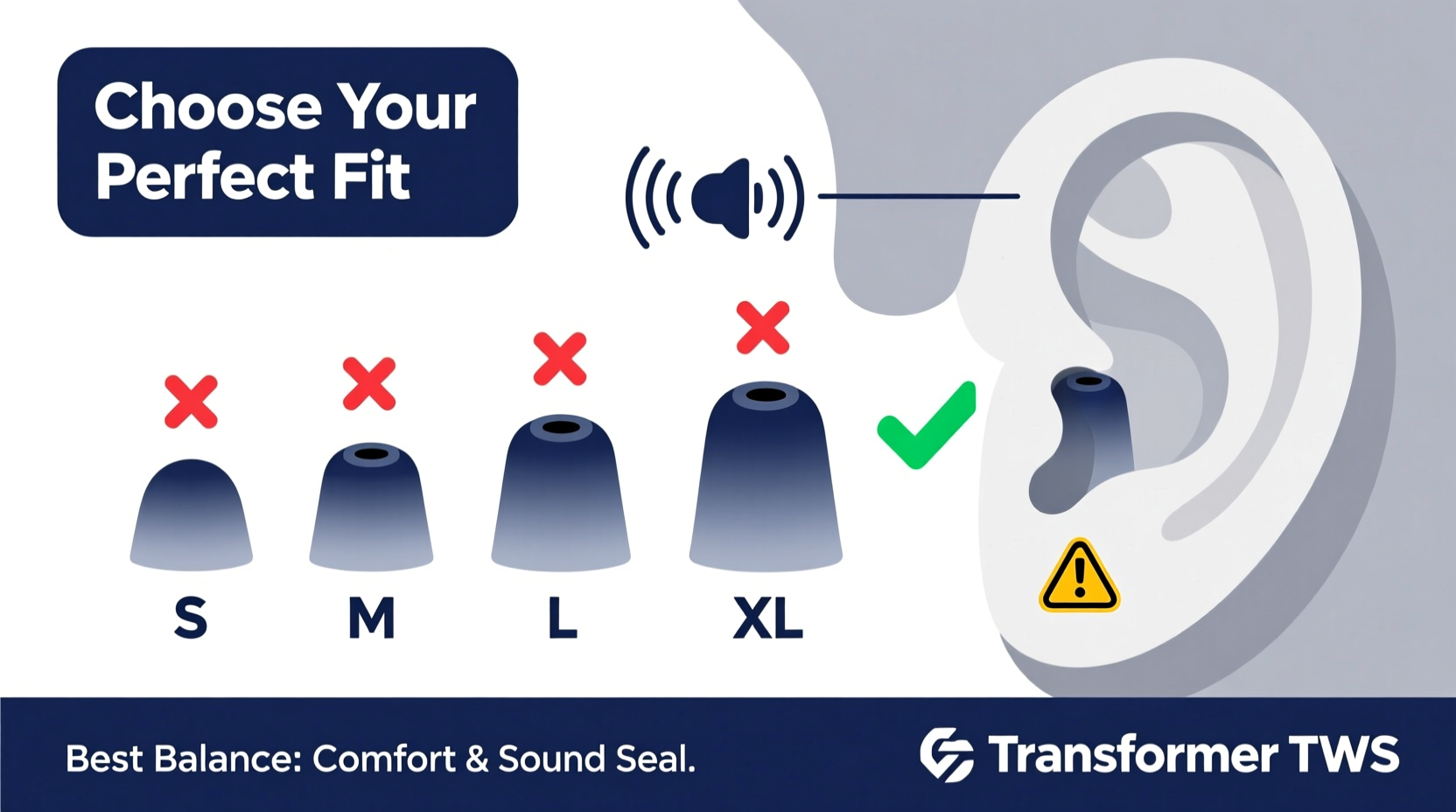
The ear tip is the only physical interface between your earbud and your ear canal. When properly seated, it creates an acoustic seal that allows low frequencies to build pressure—essential for rich, full-bodied bass. Without this seal, sound leaks out, external noise seeps in, and audio becomes thin and lifeless. Additionally, an ill-fitting tip can cause ear fatigue, soreness, or even long-term irritation from constant adjustment.
Transformers TWS earbuds typically come with multiple silicone tip sizes—small, medium, and large—to accommodate different ear canal dimensions. However, not all ears conform to standard sizing. Some people have narrow canals, others wide or angled ones. The goal is not just to insert the bud, but to achieve a secure, airtight fit that feels natural during extended wear.
“An ideal ear tip fit enhances sound quality by up to 40% and reduces listener fatigue significantly.” — Dr. Lena Patel, Audiology Researcher at SoundWell Institute
Step-by-Step Guide to Finding Your Ideal Fit
Selecting the correct ear tip size involves testing, observation, and attention to sensory feedback. Follow this structured approach to identify the best match for your ears.
- Start with the medium-sized tips – Most manufacturers design medium tips as the default, assuming average ear canal size. Begin here unless you already know your ears are unusually small or large.
- Insert gently and angle correctly – Rotate the earbud slightly upward and forward as you insert it, aligning with the natural curve of your ear canal. Avoid forcing it.
- Perform the wiggle test – Once inserted, lightly shake your head side to side or tap behind your ear. If the bud moves or falls out, the seal is weak—try a larger size.
- Play a bass-heavy track – Listen to music with deep lows (e.g., electronic or hip-hop). Poor bass indicates an incomplete seal. Try a larger or smaller tip accordingly.
- Check for comfort over time – Wear the buds for 10–15 minutes. Pressure, itching, or fullness suggests the tip is too large or rigid.
- Repeat for the other ear – It’s common for left and right ears to require different sizes. Test each independently.
Comparing Ear Tip Sizes: Performance and Comfort Trade-offs
Understanding how each size affects your experience helps make informed decisions. Below is a comparison of typical outcomes based on ear tip selection.
| Size | Best For | Sound Quality | Comfort Duration | Common Issues |
|---|---|---|---|---|
| Small | Narrow ear canals, children, petite users | Moderate bass, clear mids/highs | Up to 90 minutes | Loose fit, frequent slipping |
| Medium | Average ear canals (~70% of adults) | Balanced frequency response | 1–2 hours | Minor pressure if worn too long |
| Large | Wide or deep ear canals | Strong bass, excellent noise isolation | 30–60 minutes (may cause fatigue) | Ear fullness, discomfort over time |
Note that while larger tips often deliver superior sound isolation, they may press against sensitive cartilage, leading to “listener fatigue” during prolonged sessions. Conversely, smaller tips might feel comfortable but fail to block ambient noise effectively.
Real-World Example: Sarah’s Commute Upgrade
Sarah, a graphic designer in Chicago, purchased her Transformers TWS earbuds for use during her 45-minute train commute. Initially, she used the pre-installed medium tips but found the bass weak and the buds frequently dislodged when turning her head. After reading about fit optimization, she tested the included small and large options.
She discovered her left ear fit best with a large tip, while her right required medium. This asymmetrical setup dramatically improved stability and sound balance. With the correct seal, background train noise dropped noticeably, allowing her to enjoy podcasts at lower volumes. Within days, her listening fatigue decreased, and she began using the earbuds for focus work at the office.
Sarah’s case illustrates that optimal fit isn't one-size-fits-all—even within a single user.
Upgrade Options Beyond Stock Tips
While the included silicone tips are suitable for most, some users benefit from aftermarket alternatives. Consider these upgrades if stock tips don’t deliver lasting comfort or performance:
- Memory foam tips – Conform dynamically to ear shape, offering superior noise isolation and softness. Brands like Comply are popular.
- Tapered or dual-flange tips – Provide deeper insertion and tighter seals, ideal for active use or noisy environments.
- Hypoallergenic or medical-grade silicone – Reduce irritation for sensitive skin.
Frequently Asked Questions
Can the wrong ear tip size damage my hearing?
Not directly, but improperly sealed earbuds may lead to unsafe listening habits. If bass is weak due to poor fit, users often increase volume to compensate, risking noise-induced hearing loss over time.
My earbuds whistle when I wear them—what’s causing that?
Whistling or feedback usually indicates air leakage around the ear tip. Try a larger size or reinsert the bud more securely. Also check for cracks in the tip or debris in the speaker nozzle.
Do ear tip materials affect sound differently?
Yes. Silicone offers durability and consistent performance. Foam tips tend to enhance bass and reduce external noise but compress over time. Hybrid or textured surfaces can fine-tune high-frequency clarity.
Final Checklist: Are You Using the Right Ear Tips?
Before concluding your fit assessment, verify the following:
- ✅ The earbud stays securely in place during head movement
- ✅ Bass sounds deep and punchy, not hollow or tinny
- ✅ Ambient noise is noticeably reduced without active noise cancellation
- ✅ No pain, pressure, or itching after 15 minutes of wear
- ✅ Both ears feel balanced in volume and tone
- ✅ You’ve tested all included sizes, including mixing sizes between ears
Conclusion: Small Change, Big Difference
Choosing the right ear tip size for your Transformers TWS earbuds is one of the simplest yet most impactful adjustments you can make. It costs nothing, takes little time, and elevates both comfort and audio fidelity instantly. Whether you're commuting, working out, or focusing on creative tasks, a perfect seal ensures your earbuds perform as intended—not just as wireless gadgets, but as precision audio tools.




 浙公网安备
33010002000092号
浙公网安备
33010002000092号 浙B2-20120091-4
Comments
No comments yet. Why don't you start the discussion?