
Selecting the right iPhone case goes beyond aesthetics—it's about preserving one of your most essential daily tools. With screen replacements costing hundreds of dollars and repair delays disrupting routines, a high-quality full coverage case is an investment in both function and peace of mind. But with countless options flooding the market, from minimalist sleeves to rugged armor shells, how do you identify the ideal balance between protection and personal style? The answer lies in understanding materials, design features, drop-test performance, and long-term usability.
Understand What “Full Coverage” Really Means
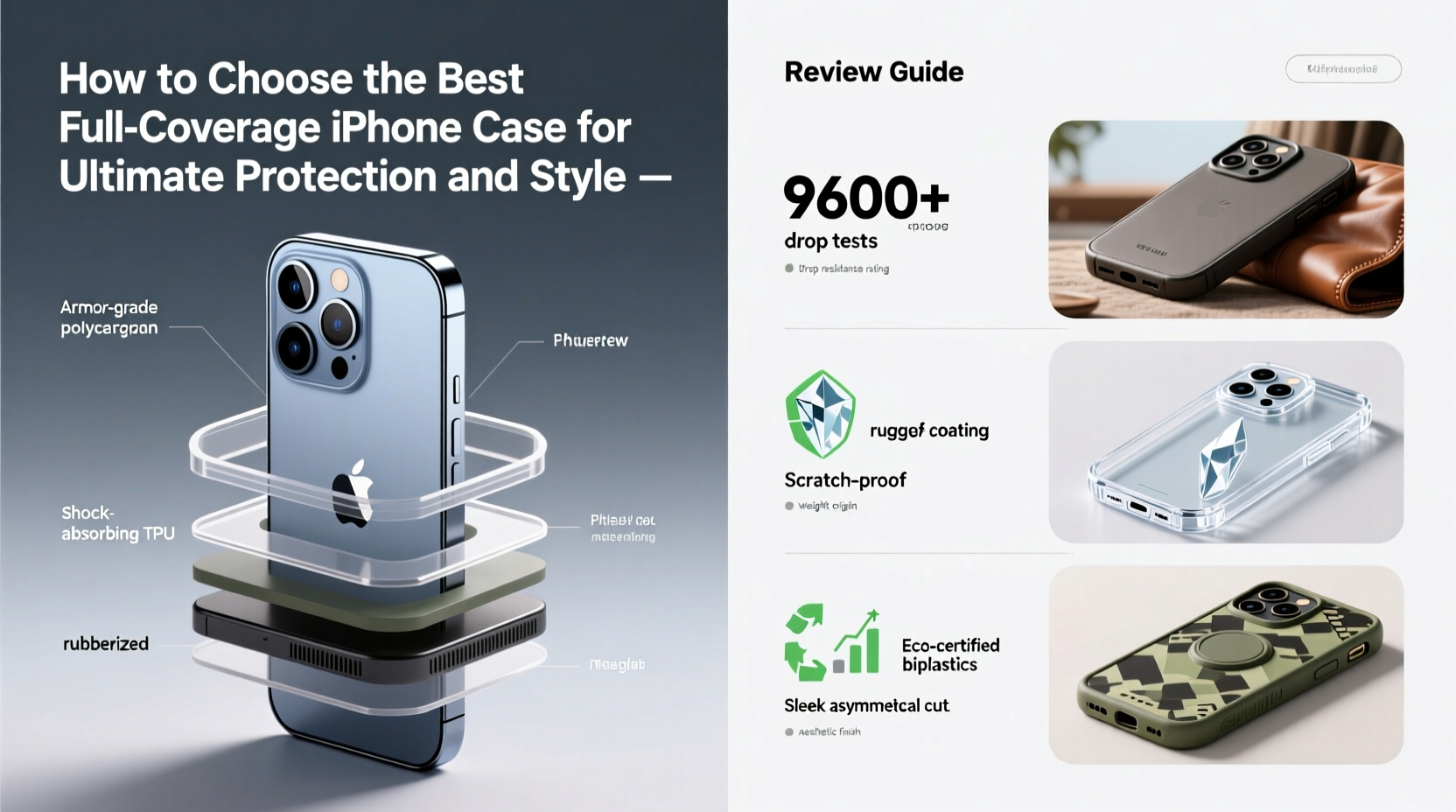
Not all cases labeled “full coverage” offer the same level of protection. True full coverage means every vulnerable part of your iPhone is shielded: raised bezels around the screen, reinforced corners, sealed ports, and camera cutouts with protective lips. Many so-called protective cases leave the screen exposed or have shallow edges that fail during face-down drops.
A well-designed full coverage case should extend at least 1.5mm above the display when placed on a flat surface. This ensures the glass never makes direct contact with surfaces during accidental drops. Similarly, the camera module—often the bulkiest and most fragile component—should sit within a slightly elevated rim to prevent lens scratches.
Material Matters: Breaking Down Case Construction
The material of your iPhone case directly impacts durability, grip, weight, and even signal strength. Most premium full coverage cases use a hybrid approach, combining multiple layers for optimal performance.
- Polycarbonate (Hard Plastic): Offers excellent scratch resistance and maintains structural rigidity. Often used as the outer shell in dual-layer designs.
- TPU (Thermoplastic Polyurethane): A flexible, rubber-like inner layer that absorbs shock during impacts. Soft TPU conforms to the phone’s shape and provides superior grip.
- Silicone: Smooth and stylish but less impact-resistant than TPU. Prone to collecting dust and losing shape over time.
- Aluminum/Metal Alloys: Found in ultra-premium cases, these add scratch resistance and a sleek look—but may interfere with wireless charging or signal reception.
- Eco-Leather or Recycled Materials: Increasingly popular among environmentally conscious users. These offer elegance and sustainability but require more maintenance to avoid stains.
“Hybrid cases with TPU inner cores and polycarbonate exteriors consistently outperform single-material alternatives in independent drop tests.” — Dr. Alan Zhou, Materials Engineer at Mobile Safety Labs
Key Features That Define Premium Protection
Beyond basic coverage, top-tier cases incorporate advanced engineering to handle real-world hazards. Look for these critical features:
- Military-Grade Drop Protection (MIL-STD-810G): This U.S. Department of Defense standard certifies that a case can survive repeated drops from up to 6 feet onto concrete. Not all brands test to this level, so verify claims through third-party reviews.
- Reinforced Corners: Over 70% of drops occur corner-first. Cases with air-cushioning or hexagonal shock channels in each corner dissipate impact energy more effectively.
- Dust and Water Resistance Seals: While iPhones have IP ratings, cases with port plugs or sealed button covers enhance protection against sand, moisture, and debris—especially useful for outdoor enthusiasts.
- Drop-Friendly Texture: A matte or textured finish improves grip, reducing slipperiness on smooth surfaces like glass tables or car dashboards.
- Wireless Charging Compatibility: Ensure the case doesn’t block Qi charging. Thicker materials or metal components can interfere unless specifically designed to allow it.
Style Without Sacrifice: Matching Your Lifestyle
Protection doesn’t mean compromising on appearance. Today’s best full coverage cases blend robust engineering with aesthetic refinement. Whether you prefer minimalist elegance, bold colors, or professional-grade durability, there’s a design suited to your identity.
Business professionals often favor slim-profile leather cases with subtle branding and card slots. Outdoor adventurers lean toward chunky, high-impact models in earth tones or bright hues for visibility. Creative individuals might opt for customizable backplates or artist collaborations.
| Lifestyle | Recommended Case Type | Top Priorities |
|---|---|---|
| Urban Commuter | Hybrid TPU + PC with wallet function | Scratch resistance, RFID blocking, pocket-friendly |
| Outdoor Enthusiast | Rugged dual-layer with belt clip option | Shock absorption, dust sealing, extreme temp tolerance |
| Fashion-Conscious User | Eco-leather with designer finishes | Color variety, slim fit, photo-worthy aesthetics |
| Parent or Active Professional | Ultra-durable with lanyard attachment | DROP protection, easy cleaning, secure grip |
Mini Case Study: From Cracked Screen to Confidence
Mark, a freelance photographer in Portland, relied on his iPhone 15 Pro Max for client shoots and editing. After dropping it twice in one month—once down a flight of stairs—he invested in a MIL-STD-810G-certified full coverage case with air-cushioned corners and a raised front lip. Six months later, after another fall onto pavement, he found only minor scuffing on the case’s edge. The screen remained intact, saving him over $350 in potential repair costs. “I used to think bulky cases were overkill,” Mark said. “Now I see them as insurance I actually want to carry.”
Step-by-Step Guide to Choosing Your Ideal Case
Follow this sequence to make a confident, informed decision:
- Identify Your Risk Profile: Do you frequently use your phone outdoors, near water, or in high-traffic environments?
- Determine Must-Have Features: List priorities—e.g., waterproofing, card storage, lanyard support, or antimicrobial coating.
- Check Compatibility: Confirm the model matches your iPhone version (e.g., iPhone 14 vs. 15) and supports features like MagSafe and Face ID.
- Read Verified Reviews: Focus on long-term user feedback mentioning yellowing, button wear, or camera fogging.
- Test Grip and Fit: If buying in-store, hold the phone in the case. Buttons should be responsive; edges smooth and aligned.
- Balance Thickness vs. Protection: Thinner isn’t always better. Evaluate whether added bulk justifies enhanced safety.
- Finalize Based on Value: Consider cost per year of expected use. A $60 case lasting three years offers better ROI than a $30 one replaced annually.
Frequently Asked Questions
Do full coverage cases affect sound quality or signal strength?
Well-designed cases use precision-cut speaker grilles and non-metallic materials to preserve audio clarity and cellular/WiFi reception. However, poorly made cases—especially those with thick metal plates—can muffle sound or weaken signals. Stick to reputable brands with acoustic channel engineering.
How often should I replace my iPhone case?
Inspect your case every 6–8 months for signs of wear: yellowing (common in clear TPU), cracks, loose buttons, or diminished edge height. Replace immediately if structural integrity is compromised. Clear cases typically degrade faster due to UV exposure and skin oils.
Are MagSafe-compatible cases safe for long-term use?
Yes, provided they’re designed with proper alignment and heat dispersion. Third-party MagSafe cases from trusted manufacturers (like Spigen, OtterBox, or Native Union) undergo rigorous testing to ensure magnets don’t interfere with internal components or battery health.
Conclusion: Protect Smart, Style Bold
Your iPhone is more than a device—it’s a hub for communication, creativity, and connection. Choosing a full coverage case isn’t just about avoiding cracks; it’s about ensuring reliability in every situation. By prioritizing certified protection, intelligent design, and personal expression, you can find a case that safeguards your investment while reflecting who you are. Don’t wait until after the first drop to act. Assess your needs, apply these insights, and equip your phone with the defense—and distinction—it deserves.




 浙公网安备
33010002000092号
浙公网安备
33010002000092号 浙B2-20120091-4
Comments
No comments yet. Why don't you start the discussion?