
Living with multiple cats brings joy, companionship, and a unique set of challenges—especially when it comes to managing their bathroom habits. A poorly chosen or overcrowded litter system can lead to unpleasant odors, territorial disputes, and even inappropriate elimination outside the box. The key to a harmonious multi-cat household lies in selecting the right litter box setup: one that prioritizes odor control, provides adequate space, and respects each cat’s individual needs. This guide breaks down the essential factors in choosing the best litter boxes for multiple cats, offering practical solutions backed by feline behavior science and real-world experience.
Understanding Multi-Cat Litter Box Dynamics
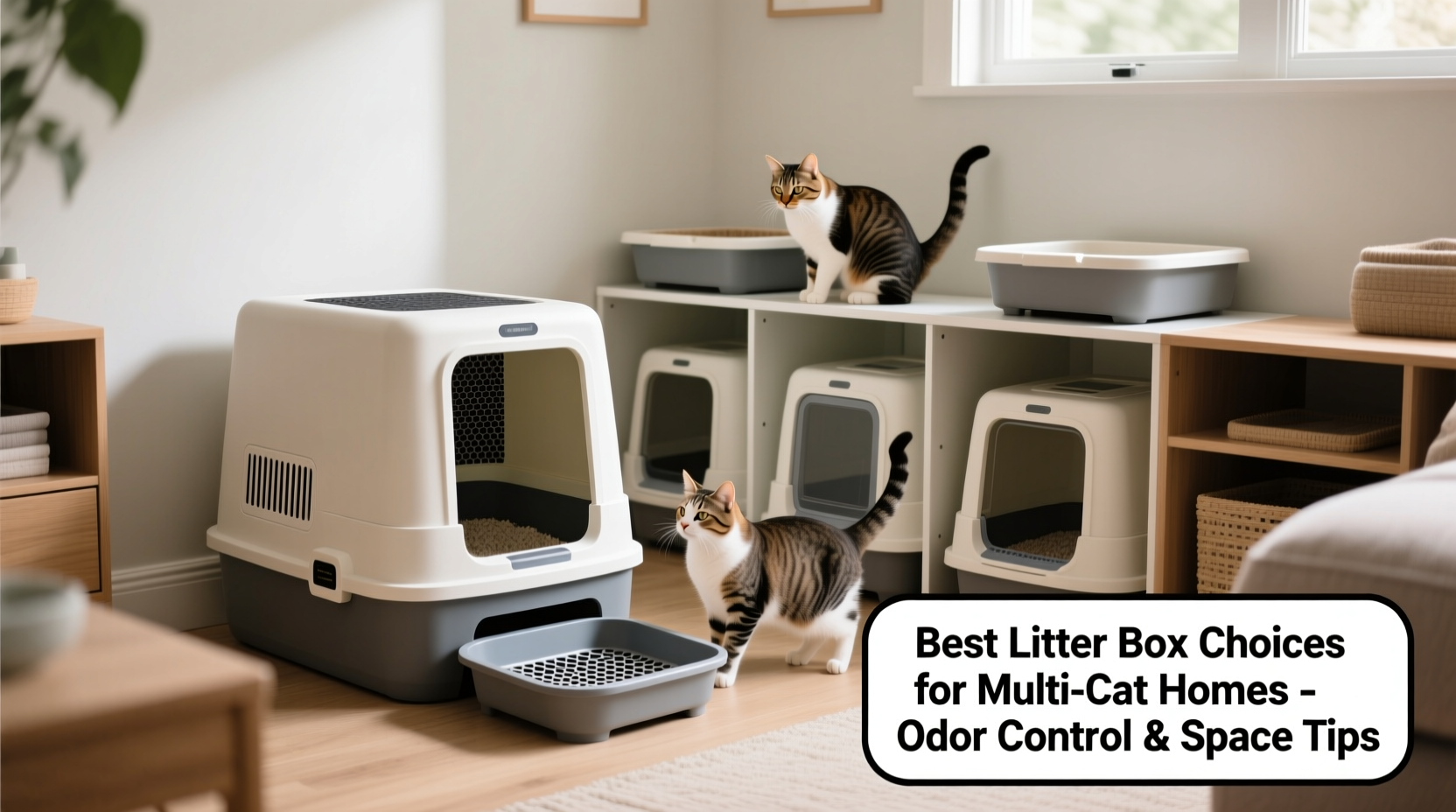
Cats are naturally clean animals, but they are also territorial. In homes with two or more cats, competition over resources—including litter boxes—can quickly escalate into stress and behavioral issues. According to the American Association of Feline Practitioners, the ideal number of litter boxes is one per cat, plus one extra. For three cats, that means four boxes. This formula reduces competition and gives each cat a safe, predictable place to eliminate.
It's not just about quantity, though. Placement matters. Boxes should be spread across different areas of the home, especially in multi-level houses. Avoid clustering all boxes in one location—even if you have enough units—as this creates a \"litter room\" that dominant cats may guard, leaving others anxious and reluctant to use the facilities.
Odor Control: Strategies That Actually Work
Odor is often the most pressing concern for cat owners with multiple pets. As waste accumulates, ammonia and sulfur compounds from urine and feces create strong, persistent smells. While no litter box eliminates odor completely, several design and maintenance practices significantly reduce it.
The first line of defense is high-quality, clumping, odor-controlling litter. Look for formulas with activated charcoal, baking soda, or natural plant-based ingredients like corn or pine. These materials absorb moisture and neutralize volatile organic compounds more effectively than basic clay litters.
Beyond litter choice, ventilation plays a critical role. Enclosed litter boxes with carbon filters—such as those found in many top-entry or self-cleaning models—can trap and filter airborne particles before they disperse into your living space. However, some cats avoid covered boxes due to poor airflow or feeling confined. If your cats prefer open access, consider placing a small air purifier nearby or installing a passive ventilation duct in the room.
Daily scooping is non-negotiable. Removing waste every 12–24 hours prevents bacterial breakdown that causes odor spikes. For households with three or more cats, twice-daily scooping may be necessary during peak usage times.
“Effective odor control starts with routine. Even the best litter box fails without consistent cleaning.” — Dr. Lena Patel, DVM, Feline Behavior Consultant
Best Litter Types for Odor Reduction
| Litter Type | Odor Control Rating (1–5) | Clumping Ability | Notes |
|---|---|---|---|
| Silica Gel Crystals | 5 | Low | Excellent moisture absorption; lasts longer but expensive |
| Activated Charcoal-Infused Clumping Clay | 4.5 | High | Balances performance and cost; widely available |
| Pine Pellets | 4 | None | Natural scent; biodegradable; may require secondary liner |
| Wheat-Based Clumping | 3.5 | High | Eco-friendly; may attract pests if not sealed properly |
| Basic Bentonite Clay | 2 | High | Affordable but poor long-term odor control |
Choosing the Right Litter Box Type for Multiple Cats
Not all litter boxes are created equal—especially under the demands of multiple users. Here’s a breakdown of common types and their suitability for multi-cat homes:
- Open-top boxes: Simple, affordable, and easy to clean. Ideal for cats that dislike confinement. However, they offer minimal odor containment and are prone to litter scatter.
- Covered boxes: Reduce smell dispersion and contain litter better. But poor ventilation and single entrances can deter timid or lower-ranking cats.
- Top-entry boxes: Excellent for odor and litter control. High walls prevent tracking, and built-in filters help neutralize smells. Some older or arthritic cats may struggle to climb in.
- Self-cleaning (automatic) boxes: Remove waste shortly after use, drastically cutting down on odor buildup. Models like the Litter-Robot or PetSafe ScoopFree handle multiple cats well but require proper calibration and regular maintenance.
- Modular systems: Expandable units that allow multiple entry points and larger capacity. Great for spacious homes where cats need privacy without isolation.
In multi-cat environments, a mix of box types often works best. For example, place an automatic box in a shared area for convenience, and supplement with open or top-entry boxes in quieter zones for cats that prefer solitude.
Space Optimization: Layout and Accessibility
Even in smaller homes, smart spatial planning ensures every cat has reliable access to a clean litter box. The goal is to distribute boxes strategically without sacrificing living space.
Begin by mapping out your home’s traffic patterns. Avoid placing boxes near food, water, or sleeping areas—cats instinctively separate elimination zones from other activities. Basements, laundry rooms, hallways, and spare bathrooms are ideal candidates.
Vertical space is underutilized in many homes. Consider elevated platforms or shelves designed for litter boxes, especially in apartments. Ensure the surface is stable and the box is secured to prevent tipping. Stair-accessible cat trees with integrated litter trays can also serve dual purposes.
If floor space is extremely limited, look into compact, high-walled open boxes or wall-mounted models (though these require structural reinforcement). Alternatively, repurpose unused closets with cut-out door entries and install ventilation fans to manage humidity and odor.
Step-by-Step: Setting Up a Multi-Cat Litter Zone
- Assess your space: Identify at least three quiet, accessible locations across different rooms or floors.
- Select box types: Choose a combination based on your cats’ age, mobility, and preferences.
- Position boxes: Space them apart—never side by side—to prevent territorial guarding.
- Add odor barriers: Use mats under boxes to catch litter, and place air purifiers or odor-neutralizing gels nearby.
- Introduce gradually: Let cats explore new boxes with positive reinforcement like treats or toys nearby.
- Maintain a schedule: Assign scooping duties daily and full litter changes every 2–3 weeks depending on usage.
Real-World Example: The Thompson Family’s Solution
The Thompsons live in a two-story townhouse with four cats: two adults, one senior, and one energetic kitten. Initially, they used two covered boxes in the basement laundry room. Within weeks, one cat began eliminating beside the box, and odors permeated the lower floor.
After consulting a veterinary behaviorist, they implemented a new strategy:
- Added two additional boxes: one open-top on the main floor near a guest bathroom, and one top-entry model upstairs near the bedroom.
- Replaced standard clay litter with a silica gel formula known for superior odor absorption.
- Installed a HEPA air purifier in the basement and placed bamboo litter mats at each box to reduce tracking.
- Established a family scooping rotation—each member responsible for one box per day.
Within ten days, inappropriate elimination stopped. Air quality improved dramatically, and all cats consistently used the boxes. The key was distribution, litter quality, and consistent upkeep—not relying on a single “high-tech” solution.
Checklist: Choosing the Best Litter Box System for Multiple Cats
- ☑ Provide one box per cat, plus one extra
- ☑ Distribute boxes across different rooms or floors
- ☑ Choose at least two different box styles to accommodate preferences
- ☑ Use high-performance, clumping, odor-control litter
- ☑ Scoop waste at least once daily (twice for heavy-use homes)
- ☑ Clean boxes thoroughly every 2–3 weeks with mild, unscented soap
- ☑ Add litter mats to reduce tracking
- ☑ Monitor cat behavior for signs of avoidance or stress
- ☑ Replace old or cracked boxes that harbor bacteria and odors
- ☑ Consider automatic boxes for high-traffic zones
Frequently Asked Questions
Can I use one large litter box for multiple cats?
While a large box may seem efficient, it doesn’t replace the need for multiple separate units. Cats value privacy and may avoid a shared space, especially if another cat has recently used it. A large box can also become a battleground for dominance. It’s better to have several appropriately sized boxes in different locations.
How do I stop litter from spreading all over the house?
Litter scatter is common with active diggers. Use high-sided boxes or top-entry designs to contain debris. Place textured, washable mats (preferably dual-layer) around each box to trap particles. Regularly vacuum the surrounding area and consider rubber-backed rugs that trap fine grains.
Are self-cleaning boxes safe for multiple cats?
Yes, many modern self-cleaning boxes are designed for multi-cat households. Look for models with weight sensors calibrated for cats (typically 5 lbs and up), manual override options, and clear error indicators. Introduce the box slowly—some cats are startled by movement or noise. Supervise initial uses and disable automatic cycles until all cats are comfortable.
Final Thoughts: Building a Better Bathroom Experience for Your Cats
Choosing the best litter box setup for multiple cats isn’t about finding a single perfect product—it’s about creating a thoughtful, adaptable system that supports hygiene, reduces stress, and maintains a pleasant living environment. Prioritize accessibility, cleanliness, and individual cat preferences over convenience or aesthetics. Invest in quality litter, maintain a rigorous cleaning schedule, and observe your cats closely for any shifts in behavior.
Remember, a well-managed litter system benefits everyone: your cats stay healthy and content, and you enjoy a fresher, more inviting home. Small adjustments today can prevent bigger problems tomorrow—from urinary tract infections to furniture soiling. Take action now: evaluate your current setup, add an extra box, upgrade your litter, and commit to consistency.




 浙公网安备
33010002000092号
浙公网安备
33010002000092号 浙B2-20120091-4
Comments
No comments yet. Why don't you start the discussion?