
A well-chosen throw blanket does more than provide comfort—it enhances your living space, reflects your personal taste, and offers reliable warmth when needed. Whether draped over a sofa, folded at the foot of a bed, or pulled close during a chilly evening, the right throw can elevate both function and aesthetics. But with so many materials, weaves, and designs available, selecting one that balances style and insulation isn’t always straightforward. Understanding what makes a throw effective—and beautiful—requires attention to fabric, construction, size, maintenance, and visual compatibility with your decor.
Understand the Role of Fabric in Warmth and Texture
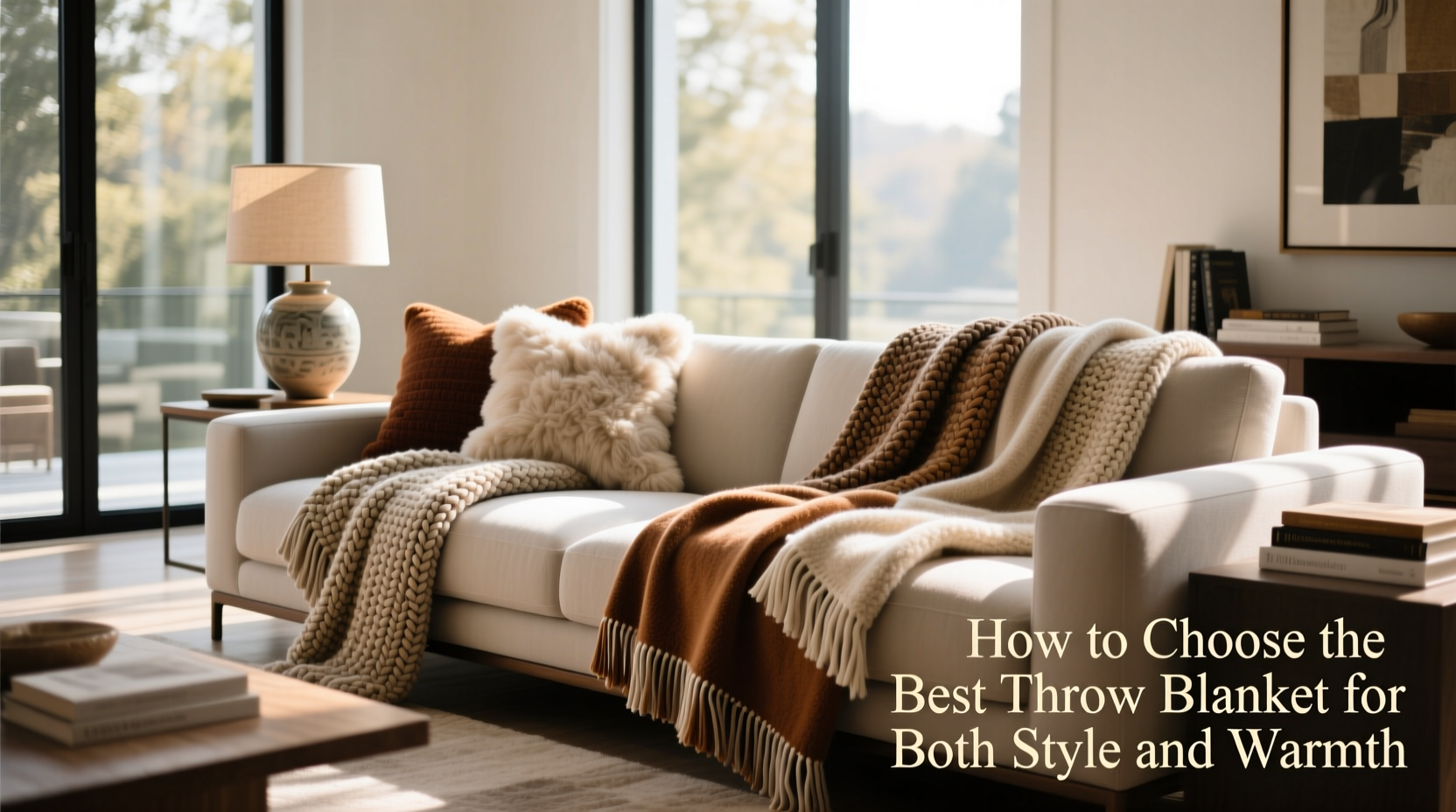
The material of a throw blanket is the primary factor determining its warmth, softness, durability, and care requirements. Different fibers offer distinct benefits and trade-offs. Natural fibers like wool, cotton, and cashmere are prized for breathability and temperature regulation, while synthetics such as acrylic and polyester deliver affordability and resilience.
Wool, particularly merino or Icelandic wool, is naturally insulating due to its crimped structure, which traps air and retains heat even when damp. It’s ideal for colder climates but may feel itchy to sensitive skin unless blended with softer fibers. Alpaca wool offers similar warmth with a silkier hand-feel and less lanolin, making it hypoallergenic and lighter than traditional wool.
Cotton throws are breathable and lightweight, perfect for year-round use in temperate environments. They’re easy to wash and resist pilling, though they lack the deep insulation of wool. A heavier cotton weave, like waffle or thermal knit, adds texture and modest warmth without overheating.
Cashmere is the gold standard for luxury—ultra-soft, lightweight, and exceptionally warm for its weight. However, it requires delicate care and comes at a premium price. Blends with merino wool (e.g., 70% wool, 30% cashmere) offer a balanced compromise between softness, warmth, and cost.
Synthetic options like microfiber and acrylic mimic the softness of natural fibers at a lower cost. Acrylic is especially popular for faux fur or chunky knits, offering bold textures and vibrant colors. While not as breathable, modern high-quality acrylics are engineered to resist static and maintain shape after repeated use.
Compare Weave Types and Their Functional Benefits
Beyond fiber, the way a throw is constructed influences drape, weight, and thermal performance. Common weaves include knit, woven, quilted, and sherpa-lined styles, each serving different needs.
Knit throws—especially cable knit, basketweave, or bouclé—are often associated with coziness. The open structure allows airflow while still trapping body heat. Chunky knits make a strong visual statement but may shed or stretch over time if not made from durable yarn.
Woven blankets, such as those made on a loom from cotton or wool, tend to be flatter and more compact. These are excellent for layering and maintain their shape well. Jacquard weaves incorporate intricate patterns directly into the fabric, adding decorative flair without sacrificing integrity.
Quilted throws feature stitched layers, often with a thin batting inside, providing moderate warmth and a tailored look. They’re ideal for beds or minimalist sofas where bulk is undesirable.
Sherpa or fleece-backed throws combine a smooth outer face with a plush, fuzzy reverse. This dual-texture design delivers maximum warmth on one side and sleek style on the other. They’re particularly effective in drafty rooms or for outdoor seating areas.
“Texture plays a silent role in interior design. A nubby cable knit says ‘rustic charm,’ while a smooth cotton weave whispers ‘modern simplicity.’ Choose based on the mood you want to create.” — Lena Torres, Interior Stylist & Textile Consultant
Select the Right Size and Weight for Your Space
Size affects both usability and aesthetic impact. Standard throw dimensions range from 50” x 60” to 60” x 80”, suitable for draping over a chair or sharing between two people on a couch. Larger throws (70” x 90”) function more like mini-duvets and work well on king-sized beds or spacious sectionals.
Weight correlates with warmth and drape. Lightweight throws (under 2 lbs) are ideal for decorative use or mild weather. Medium-weight options (2–4 lbs) strike a balance between comfort and manageability. Heavyweight throws (over 4 lbs), typically wool or densely knit acrylic, offer substantial insulation and a luxurious heft.
| Fabric Type | Warmth Level | Weight Class | Best Use Case |
|---|---|---|---|
| Merino Wool | High | Medium | Cold climates, living room throws |
| Cotton (thermal knit) | Low-Moderate | Light | Year-round layering, summer nights |
| Cashmere Blend | Very High | Light-Medium | Luxury lounging, bedroom accent |
| Acrylic Faux Fur | Moderate | Medium | Statement pieces, pet-friendly homes |
| Sherpa-Lined Polyester | High | Medium-Heavy | Drafty rooms, outdoor seating |
Harmonize Style with Your Existing Decor
A throw shouldn’t clash with your room—it should complement and complete it. Consider color theory, pattern scale, and existing textures when choosing a design.
Neutral throws in ivory, charcoal, or oatmeal are timeless and versatile. They blend seamlessly with changing seasons and decor updates. For a pop of personality, introduce a colored throw in a hue already present in your space—a rust-colored pillow, a navy rug, or artwork with earthy tones.
Patterns should align with your room’s visual rhythm. Small-scale geometrics or stripes work in modern interiors, while oversized plaids or folk-inspired motifs suit rustic or bohemian spaces. Avoid competing patterns; if your sofa has a busy print, choose a solid throw.
Texture can unify disparate elements. A nubby wool throw ties together a leather sofa and wooden coffee table by echoing organic imperfections. A silky satin-edge blanket adds refinement to a minimalist bedroom.
In a real-world example, Sarah, a designer in Portland, used a slate-blue cable-knit wool throw to anchor her gray sectional. “The room felt cold and flat,” she explained. “Adding that textured throw introduced warmth—not just physically, but visually. It became the focal point without overwhelming anything else.”
Follow a Practical Buying Checklist
To ensure you select a throw that satisfies both aesthetic and functional needs, follow this step-by-step checklist before purchasing:
- Assess your climate: Do you need heavy insulation or light layering?
- Measure your furniture: Ensure the throw will drape proportionally.
- Evaluate fiber content: Prioritize natural fibers for breathability and warmth, synthetics for durability and cost.
- Check care instructions: Can you machine wash it? Does it require dry cleaning?
- Test the texture: If shopping in person, feel the fabric for softness and weight. <6> Match to your palette: Hold a swatch or photo next to your sofa or bedding to confirm color harmony.
- Consider household factors: Pets and children may demand stain-resistant, washable materials.
- Review return policies: Especially important for online purchases where you can’t touch the product.
Maintain Longevity with Proper Care
Even the finest throw will degrade without proper upkeep. Always follow the manufacturer’s care label, but general guidelines apply across most materials.
Wool and cashmere should be hand-washed in cold water with a gentle detergent or dry cleaned. Lay flat to dry to prevent stretching. Machine washing risks felting, especially with agitation or hot water.
Cotton and synthetic throws are typically machine-washable on a gentle cycle. Use cold water and mild detergent. Tumble dry on low or air dry to preserve fibers and prevent shrinkage.
To refresh a throw between washes, air it outside for an hour or use a handheld steamer to remove odors and wrinkles. Store folded in a cool, dry place—avoid plastic bins, which trap moisture. Cedar blocks can deter moths in wool storage.
Frequently Asked Questions
Can a throw blanket be too warm for indoor use?
Yes. In centrally heated homes or warmer climates, overly dense wool or down-filled throws may cause overheating. Opt for lighter cotton, bamboo, or loosely knit acrylic instead. Layering allows adjustability—start with a light throw and add more if needed.
Are expensive throws worth the investment?
For high-use areas, yes. Natural fibers like merino wool or cashmere last longer, feel better, and age gracefully compared to cheap acrylics that pill and flatten. A $150 wool throw lasting 10 years costs less per use than replacing $30 synthetic throws every two years.
How do I prevent my throw from slipping off the couch?
Choose throws with weighted edges or tassels that drape over arms. Alternatively, use a non-slip blanket gripper or position it under a decorative pillow. Knit throws with tighter weaves also stay in place better than loose-looped ones.
Conclusion: Make Every Throw Count
Choosing the best throw blanket isn’t just about picking something soft—it’s about aligning function, form, and longevity. The right throw offers dependable warmth, enhances your room’s character, and withstands daily use without losing its appeal. By understanding materials, sizing appropriately, matching your decor, and caring for your investment, you create a detail that feels intentional and lived-in.
Don’t settle for a throw that merely covers a couch. Choose one that completes your space, comforts your body, and reflects your lifestyle. Whether you’re curling up with a book or hosting guests, let your throw be a quiet testament to thoughtful living.




 浙公网安备
33010002000092号
浙公网安备
33010002000092号 浙B2-20120091-4
Comments
No comments yet. Why don't you start the discussion?