
A coffee table is more than a centerpiece—it’s a functional hub in your living room. Magazines, remotes, toys, and chargers often accumulate on and around it, creating visual clutter. A well-chosen storage box can solve this while enhancing your décor. But not all storage boxes are created equal. The right one balances utility, proportion, material, and design harmony with your space. Choosing wisely means considering more than just aesthetics; it’s about integrating form and function seamlessly into your lifestyle.
Assess Your Storage Needs First
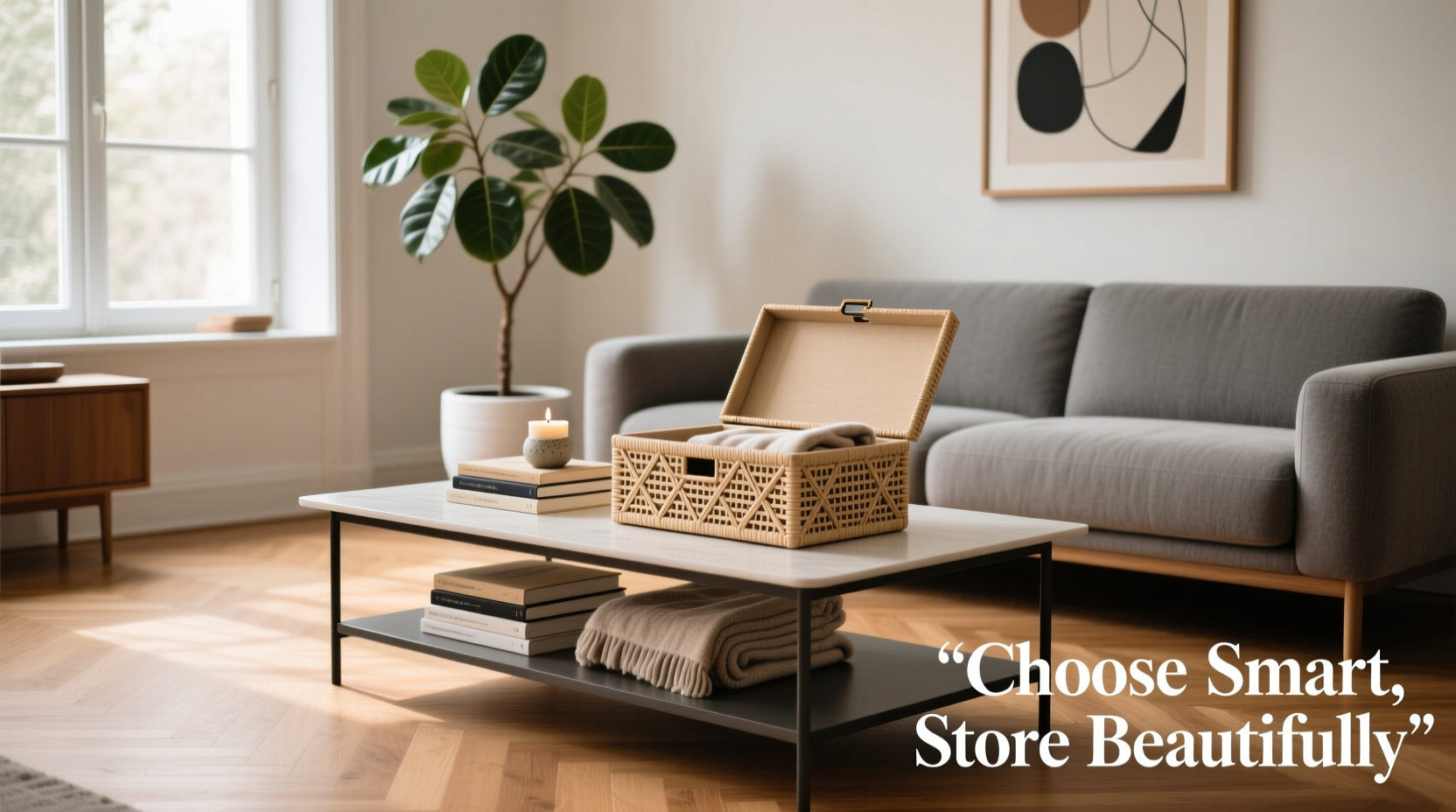
Before browsing materials or styles, determine what you need the box to store. This step shapes every other decision. Are you looking to hide daily essentials like TV remotes and coasters? Or do you need a solution for children’s toys, knitting supplies, or board games?
Think about frequency of access. If you’re retrieving items multiple times a day, a lidless open-top box may be more convenient. For less frequently used items—seasonal décor, spare cushions, or paperwork—a lidded container helps keep dust out and maintains a clean look.
Common Use Cases and Ideal Box Types
| Use Case | Ideal Box Type | Recommended Features |
|---|---|---|
| Daily clutter (remotes, chargers) | Low-profile open bin | Soft edges, easy access |
| Children’s toys | Medium-sized lidded box | Durable material, lightweight |
| Guest blankets or pillows | Large rectangular trunk | Hinged lid, fabric lining |
| Books and magazines | Narrow vertical bin | Rigid sides, minimal ornamentation |
| Seasonal décor | Stackable modular boxes | Dust-proof, labeled |
Match the Box to Your Room’s Proportions
The size of your coffee table and surrounding furniture dictates the appropriate dimensions for a storage box. A massive trunk on a small glass table creates imbalance; a tiny basket on a large rustic table looks lost.
A good rule is that the storage box should occupy no more than two-thirds of the table’s surface area. Leave breathing room around it—ideally 6–8 inches on each side—to maintain visual flow and allow for serving trays or drinks.
Height matters too. If your coffee table has a lower shelf, ensure the box doesn’t obstruct legroom or interfere with seating. For tables without shelves, consider whether you want the box to sit flush with the tabletop or slightly below for a sunken-storage effect.
“Proportion is everything in interior styling. A well-scaled storage piece feels intentional, not like an afterthought.” — Lena Torres, Interior Stylist & Home Organization Consultant
Select Materials That Complement Your Décor
The material of your storage box influences both durability and aesthetic cohesion. Choose based on your room’s existing textures and color palette.
- Wood: Warm and timeless, wood boxes suit traditional, rustic, or Scandinavian interiors. Opt for lighter oak in airy spaces or dark walnut in formal rooms.
- Wicker or Rattan: These natural fibers add texture and work well in bohemian, coastal, or organic modern styles. They’re breathable but can trap dust—best for dry, low-humidity areas.
- Metal: Sleek and industrial, metal bins suit urban lofts or minimalist spaces. Powder-coated finishes prevent scratching and offer color variety.
- Fabric-covered: Often padded and upholstered, these soften angular furniture and integrate well in elegant or eclectic rooms. Removable covers make cleaning easier.
- Acrylic or Lucite: Nearly invisible, these are ideal for small spaces where visual weight must be minimized. However, they show fingerprints and scratches easily.
Style Integration: Make It Part of the Design
A storage box shouldn’t just be hidden away; it can be a design accent. The key is alignment with your overall theme.
In a monochrome living room, a black leather storage trunk adds richness and sophistication. In a vibrant, maximalist space, a patterned fabric-covered box can serve as a focal point. Neutral-toned boxes recede into the background, which is useful if your coffee table already features bold design elements.
Consider hardware details. Brass corners on a wooden chest elevate its presence; fabric handles on a linen bin add softness. Even the way a lid opens—hinged, lift-off, or magnetic closure—can affect usability and elegance.
Mini Case Study: The Cluttered Mid-Century Living Room
Sarah, a graphic designer, loved her mid-century modern sofa and teak coffee table but struggled with remote control clutter and her toddler’s crayons. She chose a low, rectangular box made of light ash wood with a sliding bamboo lid. The natural finish matched her table, the open top allowed quick access, and the smooth surface resisted crayon marks. Within days, her coffee table looked curated, not chaotic. “It’s not just storage,” she said. “It’s part of the furniture now.”
Step-by-Step Guide to Choosing Your Perfect Box
- Inventory your clutter: List the items you want to store and their dimensions.
- Measure your coffee table: Note surface area, height, and clearance underneath.
- Determine access needs: Decide between open, lidded, or sliding-top designs.
- Identify your décor style: Match the box to dominant materials and colors in the room.
- Test proportions: Use newspaper or cardboard to simulate the box size on your table.
- Check durability: For homes with kids or pets, prioritize sturdy, scratch-resistant materials.
- Purchase and place: Position the box centrally or off-center depending on table symmetry.
FAQ
Can I use multiple smaller boxes instead of one large one?
Yes—and often, this is better. Multiple boxes allow for categorized storage (e.g., one for remotes, one for books) and greater flexibility in arrangement. Just ensure they share a common design language—color, material, or shape—to avoid visual chaos.
How do I keep the box from looking messy inside?
Line it with a fitted fabric insert, tray, or small organizers. For open bins, use uniform baskets or fabric pouches within the box to contain smaller items neatly.
Are there safety concerns with heavy storage boxes on glass tables?
Absolutely. Avoid overly heavy or sharp-edged boxes on tempered glass tables. Distribute weight evenly and consider using a non-slip pad underneath to prevent sliding and micro-scratches.
Final Checklist Before Buying
- ✅ Measured my coffee table and planned clearance
- ✅ Listed what I need to store and how often I’ll access it
- ✅ Chosen a material that matches my room’s style
- ✅ Confirmed the box isn’t too tall or wide for the space
- ✅ Checked for child- or pet-safe edges and finishes
- ✅ Verified ease of cleaning (especially for fabric or woven types)
Conclusion
The ideal coffee table storage box does more than tidy up—it elevates your living space by merging utility with intentionality. When chosen with care, it becomes an extension of your décor rather than a compromise. Whether you live in a spacious loft or a compact apartment, the right box brings order without sacrificing style. Take the time to assess your needs, match proportions, and select materials thoughtfully. Your coffee table should reflect calm, not clutter.




 浙公网安备
33010002000092号
浙公网安备
33010002000092号 浙B2-20120091-4
Comments
No comments yet. Why don't you start the discussion?