
Driving safely while staying connected is a daily challenge for millions of people. Whether you're navigating unfamiliar roads, taking hands-free calls, or using ride-sharing apps, having your phone within reach—without compromising safety—is essential. Magnetic car mount phone cases have emerged as a smart solution, combining convenience with stability. But not all cases are created equal. Choosing the right one requires understanding compatibility, strength, design, and long-term usability.
The ideal magnetic case doesn’t just hold your phone in place—it integrates seamlessly into your routine, enhances visibility, and protects your device. With so many options on the market, making an informed decision can save you time, money, and frustration.
Understand How Magnetic Mounts Work
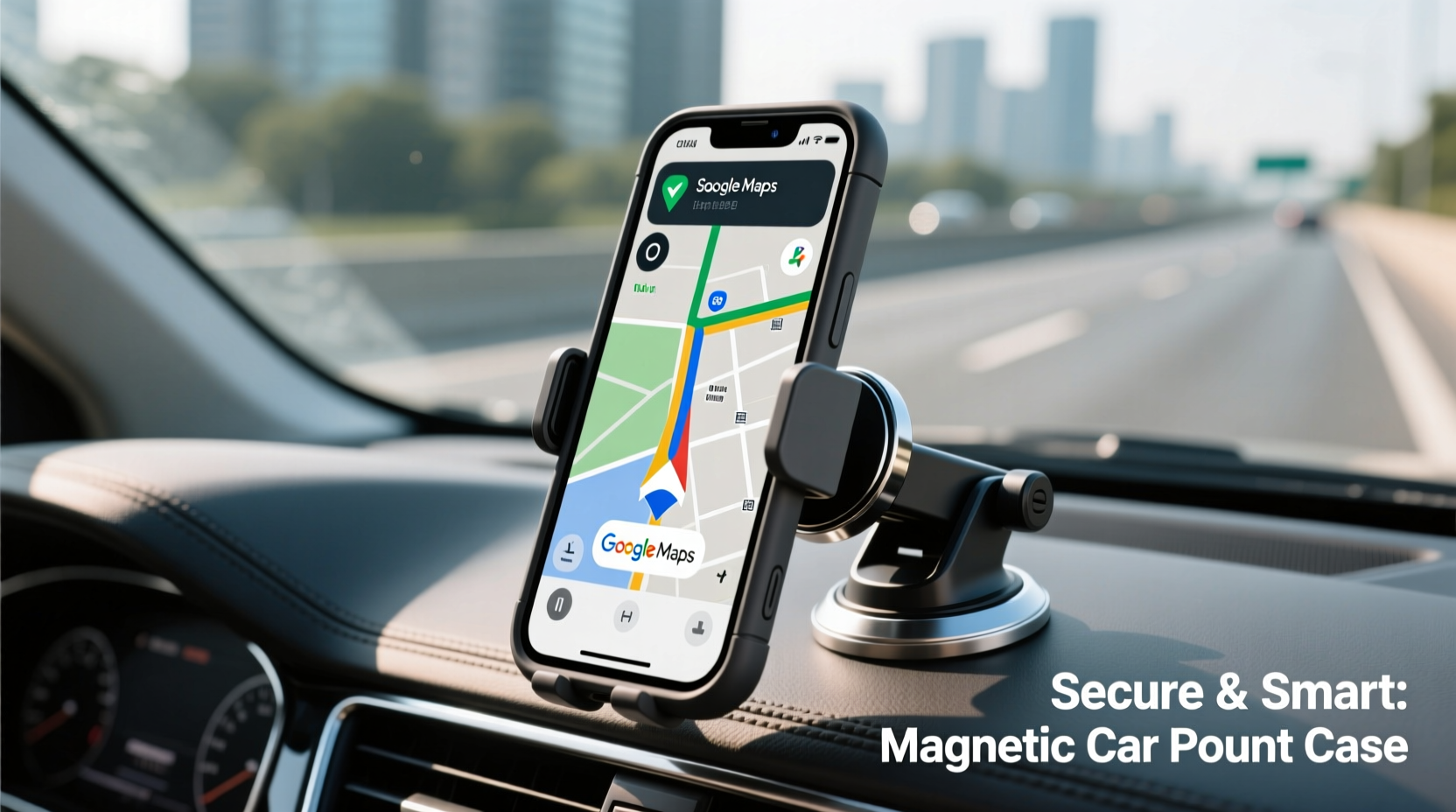
Magnetic car mounts rely on a simple principle: attraction between two magnets—one embedded in the phone case and the other in the dashboard or vent mount. When properly aligned, they create a strong, instant connection that allows quick attachment and removal.
Most systems use either a metal plate adhered to the back of the phone or a fully integrated magnet within the case. Cases with built-in magnets offer a cleaner look and eliminate the need for extra layers or adhesives. However, the strength and placement of the magnet are critical. Weak magnets may fail during sharp turns or bumpy rides, while poorly positioned ones can interfere with wireless charging or internal sensors.
Key Factors to Consider When Choosing a Case
Selecting the best magnetic car mount phone case isn’t just about sticking a magnet on your phone. It involves evaluating multiple aspects to ensure durability, functionality, and safety.
1. Compatibility with Your Phone Model
Not all cases fit every phone. Measure your device precisely and verify that the case supports your exact model. Some universal cases claim broad compatibility but may lack precise cutouts for cameras, buttons, or ports, leading to reduced usability.
2. Magnet Strength and Placement
A strong neodymium magnet is ideal for reliable holding power. Look for cases that specify magnet grade (e.g., N52). The magnet should be centered to balance weight distribution and minimize torque when mounted vertically or horizontally.
3. Wireless Charging Support
If you use wireless charging, confirm the case doesn’t block the signal. High-quality magnetic cases maintain compatibility with Qi chargers, even with the magnet in place. Avoid thick metal plates behind the phone, which can disrupt energy transfer.
4. Drop Protection and Material Quality
A good case must protect against drops and scratches. Opt for dual-layer designs with shock-absorbent TPU inner linings and scratch-resistant polycarbonate exteriors. Military-grade drop protection (MIL-STD-810G) is a strong indicator of resilience.
5. Vent, Dashboard, and Windshield Mount Flexibility
Your case should work with various mounting systems. Check whether the magnet aligns well with common third-party mounts. Some cases are optimized for vent clips, while others perform better on flat dashboards.
“Mount stability starts with the case. A poorly designed magnetic case can lead to dangerous distractions—even if the mount itself is high quality.” — David Lin, Automotive Tech Consultant at DriveSafe Labs
Comparison Table: Features to Look For
| Feature | Ideal Specification | What to Avoid |
|---|---|---|
| Magnet Type | Neodymium (N52 grade) | Ceramic or weak ferrite magnets |
| Charging Compatibility | Fully supports Qi wireless charging | Blocks charging or causes overheating |
| Drop Protection | MIL-STD-810G certified or equivalent | Thin, decorative-only shells |
| Mounting Flexibility | Works with vent, dash, and windshield mounts | Only compatible with proprietary systems |
| Phone Fit | Precise model-specific cutouts | Universal fit with loose edges |
Step-by-Step Guide to Selecting & Testing Your Case
- Determine your phone model: Note the exact make and version (e.g., iPhone 15 Pro Max).
- Check for magnetic compatibility: Confirm whether your phone has MagSafe (for Apple) or similar alignment tech. Non-MagSafe phones need stronger external magnets.
- Select a reputable brand: Choose brands known for automotive accessories (e.g., Spigen, Ringke, PITAKA).
- Verify wireless charging support: Read product specs and customer reviews focusing on charging efficiency.
- Install and test the case: Attach it to your preferred mount and simulate driving conditions—turn corners, tap brakes, and check for slippage.
- Assess screen visibility and access: Ensure volume buttons, camera, and charging port remain fully functional.
- Monitor long-term performance: After a week of use, inspect for wear, magnet degradation, or interference with compass/GPS.
Real-World Example: Sarah’s Commute Upgrade
Sarah, a delivery driver in Denver, used a basic silicone case with a sticky metal plate for her Android phone. Within weeks, the adhesive failed, causing her phone to fall during a highway merge. She switched to a rugged magnetic case with an embedded N52 magnet and MIL-STD-810G protection. Paired with a suction cup dashboard mount, it stayed secure through mountain roads and winter storms. “I used to fumble every time I got a new route,” she said. “Now I click it in place and go. No more stress.”
Her experience highlights the importance of durability and proper engineering—not just magnetism alone.
Common Mistakes to Avoid
- Using cheap adhesive metal plates: They peel off, leave residue, and add bulk.
- Ignoring GPS or compass interference: Strong magnets near sensors can distort navigation accuracy.
- Choosing style over function: Transparent or ultra-slim cases often lack structural integrity.
- Overlooking ventilation: Poor airflow around the phone can cause overheating, especially in hot climates.
- Assuming all ‘magnetic’ cases are equal: Marketing terms like “strong magnet” aren’t standardized—verify with real-world data.
Frequently Asked Questions
Can a magnetic case damage my phone?
No, modern smartphones are not affected by small magnets. Components like batteries, storage, and screens are immune to magnetic fields. However, very strong magnets placed directly over sensors (like the compass) may temporarily affect navigation apps until recalibrated.
Do magnetic cases work with all car mounts?
Most do, but compatibility depends on magnet size and orientation. Cases designed for MagSafe (Apple) work best with MagSafe-compatible mounts. For non-MagSafe phones, ensure the magnet is strong enough to engage with standard aftermarket mounts.
Will the magnet interfere with credit cards or key fobs?
Potentially. If you store cards or RFID devices inside the case or directly behind the magnet, demagnetization or signal blocking can occur. Keep sensitive items in a separate pocket or wallet.
Final Checklist Before You Buy
- ✅ Phone model-specific fit
- Ensures full access to ports and buttons.
- ✅ Built-in neodymium magnet (centered)
- Provides balanced, strong attachment.
- ✅ Supports wireless charging without removal
- Maximizes convenience and reduces wear.
- ✅ Shockproof and scratch-resistant materials
- Protects against daily wear and accidental drops.
- ✅ Positive user reviews on stability and longevity
- Look for feedback after 3+ months of use.
Drive Smarter, Not Harder
Choosing the right magnetic car mount phone case is more than a convenience—it’s a safety decision. The right combination of magnetic strength, structural protection, and seamless integration ensures your phone stays visible, charged, and secure without distracting you from the road. With the insights and checklist above, you’re equipped to make a choice that enhances both productivity and peace of mind.




 浙公网安备
33010002000092号
浙公网安备
33010002000092号 浙B2-20120091-4
Comments
No comments yet. Why don't you start the discussion?