
Selecting the right necklace isn’t just about the pendant or metal—it’s also about fit. A well-chosen necklace enhances your neckline, complements your frame, and feels natural throughout the day. Too short, and it may feel restrictive; too long, and it can get tangled or look lost. The key lies in understanding how necklace length interacts with your anatomy, clothing, and personal aesthetic.
While fashion trends come and go, choosing a necklace based on proportion and purpose ensures lasting wearability. Whether you're dressing up for an event or layering delicate chains for everyday elegance, getting the length right makes all the difference.
Understanding Standard Necklace Lengths
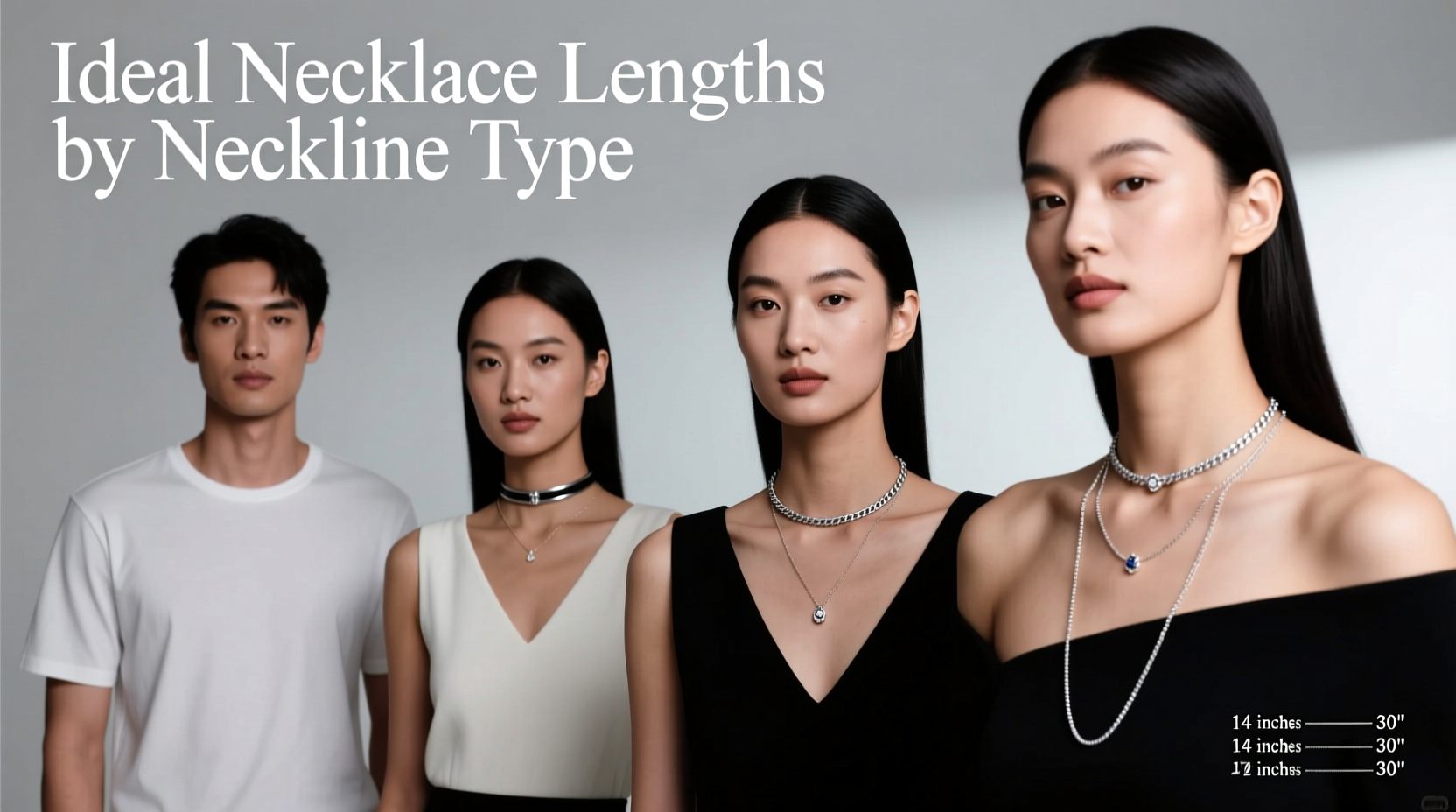
Necklaces are typically measured in inches, from end to end, including the clasp. Most jewelry retailers offer standard lengths that cater to different styles and silhouettes. Familiarizing yourself with these common sizes helps narrow down options and avoid guesswork when shopping online or in-store.
| Length (inches) | Name | Average Drop Position | Best For |
|---|---|---|---|
| 14–16 | Choker | Sits at base of neck | Diamond solitaires, minimalist pendants |
| 17–18 | Princess | Rests just below collarbone | Everyday wear, moderate pendants |
| 20–22 | Matinee | Falls between collarbone and bust | Blouses, V-necks, office attire |
| 24–30 | Opera | Reaches breastbone or upper chest | Dresses, layered looks, formal events |
| 34+ | Rope / Lariat | Below bust or waist | Dramatic statements, doubling as wraps |
These categories serve as starting points. However, individual proportions vary—what drapes perfectly on one person might sit awkwardly on another. That’s why customization and context matter.
Matching Necklace Length to Your Body Type
Your height, neck length, and torso shape influence how a necklace appears. The goal is balance: elongating shorter necks, accentuating broad shoulders, or drawing attention to the face without overwhelming your features.
- Long Necks: Can carry shorter chokers or princess-length pieces without feeling constricted. Avoid overly long chains that may visually extend the neck too much.
- Shorter Necks: Benefit from longer lengths (20”+) that create a vertical line, giving the illusion of elongation. Steer clear of tight chokers unless worn open with a pendant.
- Curvier or Fuller Figures: Often suit matinee or opera lengths that drape gracefully over the décolletage. These provide symmetry and draw focus upward.
- Taller Individuals: Have more flexibility but often shine in longer styles (24”+) that harmonize with their stature.
Aligning Necklace Length With Neckline and Outfit Style
The neckline of your top or dress plays a crucial role in determining which necklace length works best. Pairing them thoughtfully avoids visual clutter and highlights both the jewelry and the garment.
- V-Neck Tops: Ideal for pendants on 18”–22” chains. The chain follows the angle of the neckline, creating a cohesive look.
- Crew Necks & Turtlenecks: Shorter chokers (14”–16”) work well, especially if the top is simple. Long necklaces may get tangled in fabric folds.
- Scoop Necks: Princess or matinee lengths (18”–22”) rest beautifully within the curve, framing the collarbone.
- Off-the-Shoulder or Strapless: Chokers or multi-strand designs emphasize bare shoulders. Consider 16”–20” for maximum impact.
- High-Collar Shirts: Opt for very short chokers or skip necklaces altogether. Longer chains may catch on fabric or appear disjointed.
When layering multiple necklaces, combine varying lengths—e.g., a 16” choker with an 18” and a 24” chain—to create depth without tangling. Ensure the longest piece doesn’t fall below the shortest by more than two inches for a balanced cascade.
Expert Insight: The Importance of Proportion and Purpose
“Jewelry should enhance, not compete. The right necklace length brings harmony between the wearer’s body, outfit, and occasion.” — Lena Torres, Jewelry Stylist & Editorial Consultant
Torres emphasizes that many people default to trendy lengths without considering daily comfort. “A 30-inch rope necklace might photograph beautifully, but if it gets caught on doorknobs or pulls during meetings, it won’t be worn,” she notes. Functionality should never be sacrificed for fashion.
She recommends evaluating how often you’ll wear a piece and under what conditions. Office wear calls for subtlety and security; evening events allow bolder choices. Even weight distribution matters—longer chains with heavy pendants can strain the neck over time.
Step-by-Step Guide to Finding Your Ideal Necklace Length
Follow this process to determine your most flattering and comfortable necklace length:
- Measure Your Current Favorite: Put on a necklace you love and feel confident wearing. Use a soft tape measure to check its total length from clasp to pendant tip.
- Test with String: Cut a piece of string to common lengths (16”, 18”, 20”). Loop it around your neck and observe where it falls in a mirror while wearing typical tops.
- Consider Your Daily Wardrobe: List your most-worn necklines. Match them to recommended lengths using the guide above.
- Evaluate Comfort: Wear the string for 15–30 minutes. Does it tug? Feel too tight? Get caught on zippers? Adjust accordingly.
- Try Layering (Optional): If interested in stacked styles, test combinations. Start with a base length (e.g., 18”), then add ±2” variations.
- Shop with Confidence: Use your findings to filter online options or guide in-store selections. Prioritize adjustable chains for versatility.
Mini Case Study: Sarah’s Search for the Perfect Everyday Chain
Sarah, a 5'4\" marketing professional, struggled with necklaces that either disappeared under her blouses or felt too flashy for work. She mostly wore crew-neck sweaters and button-down shirts. After trying a 16” choker, she found it clashed with her turtlenecks. A 24” chain swung too low and tangled in her desk chair.
Using the string method, she discovered that an 18” princess-length necklace rested just below her collarbone, visible over most tops without interfering with movement. She chose a slim gold chain with a small bar pendant—minimalist yet polished. Now, it’s her go-to accessory for meetings and casual Fridays alike.
Checklist: Choosing Your Ideal Necklace Length
- ☑ Know your most common necklines
- ☑ Measure a necklace you already love
- ☑ Test potential lengths with string or a measuring tape
- ☑ Assess comfort after wearing for 20+ minutes
- ☑ Match length to occasion (casual, office, evening)
- ☑ Consider pendant size—larger drops need slightly longer chains
- ☑ Look for adjustable chains for flexible styling
Frequently Asked Questions
What is the most versatile necklace length?
The 18-inch princess length is widely considered the most versatile. It suits most body types, works with a variety of necklines, and transitions easily from day to night.
Can I wear a choker if I have a short neck?
Yes—but choose wisely. Opt for a looser choker (16”) or one with a central pendant that draws the eye downward, creating a lengthening effect. Avoid tight, solid bands.
How do I prevent long necklaces from tangling?
Store them flat or hang individually. When wearing, tuck the pendant through the loop before fastening to reduce twisting. Lightweight chains tangle less than thick, textured ones.
Final Thoughts: Make It Personal
There’s no universal “perfect” necklace length—only what works best for you. While guidelines help, personal preference and lifestyle ultimately decide what feels right. Comfort, confidence, and consistency are the true markers of a good choice.




 浙公网安备
33010002000092号
浙公网安备
33010002000092号 浙B2-20120091-4
Comments
No comments yet. Why don't you start the discussion?