
Commuting with a poorly sized shoulder bag can turn a routine journey into a frustrating experience. Too large, and it becomes cumbersome; too small, and you’re forced to carry essentials in your hands or leave them behind. The right shoulder bag should feel like a seamless extension of your daily routine—supportive, organized, and unobtrusive. Yet, many people overlook the importance of proper sizing, focusing instead on style or brand. Selecting the ideal size isn’t just about aesthetics—it’s about ergonomics, load distribution, and long-term comfort.
A well-chosen shoulder bag supports posture, reduces strain on the neck and shoulders, and keeps your essentials secure and accessible. Whether you're walking to work, riding public transit, or cycling across town, the right dimensions make all the difference. This guide breaks down the key factors that determine the optimal shoulder bag size for commuting, offering practical insights grounded in real-world use.
Understand Your Body Proportions
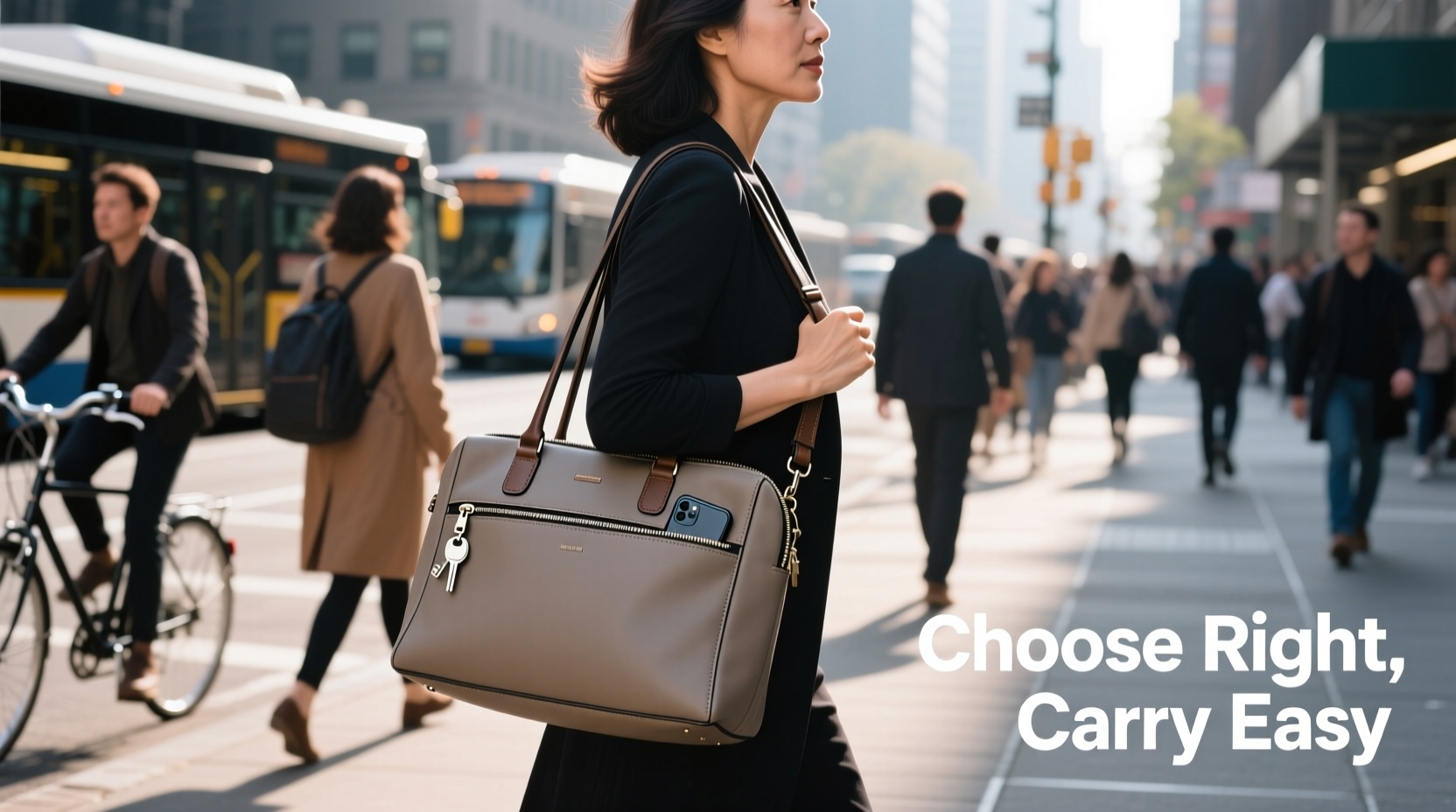
The first step in choosing the right shoulder bag is aligning its size with your body frame. A bag that drapes comfortably on one person might hang awkwardly on another due to differences in height, torso length, and shoulder width.
As a general rule, the bottom of your shoulder bag should rest between your hip bone and mid-thigh when worn. Bags that extend below the upper thigh can throw off your balance and cause dragging, especially during quick movements. For individuals under 5'4\", compact to medium-sized bags (10–13 inches in height) are typically most proportionate. Those over 5'8\" can usually accommodate larger bags (14–16 inches) without compromising balance.
Shoulder strap length also plays a crucial role. Adjustable straps allow you to customize the drop—the distance from the shoulder to the bottom of the bag—so the weight sits securely without slipping or pulling. Ideally, the strap should allow the bag to rest snugly against your side, minimizing swing during movement.
Assess Your Daily Carry Needs
Your lifestyle dictates what goes into your bag, which directly influences the size you need. A minimalist commuter carrying only a phone, wallet, and keys requires far less volume than someone transporting a laptop, lunch, gym clothes, and documents.
Create an inventory of your essential items before shopping. Common commuting items include:
- Laptop or tablet (with protective sleeve)
- Water bottle (preferably collapsible)
- Wallet, phone, keys
- Umbrella or travel raincoat
- Snacks or lunch container
- Notebook or planner
- Headphones or charger pack
Once listed, estimate the combined volume. A standard 13-inch laptop requires a compartment at least 11” x 9” x 1”. Add space for padding and additional items. Most commuters find that bags with a capacity between 10 and 18 liters strike the best balance between utility and manageability.
Recommended Capacity by Use Case
| Commute Type | Typical Items | Recommended Bag Size |
|---|---|---|
| Light Urban Commute | Phone, wallet, keys, small notebook | 7–10 liters (small crossbody or mini satchel) |
| Standard Office Commute | Laptop, lunch, water, jacket | 12–15 liters (medium shoulder tote or structured satchel) |
| Active or Multi-Stop Commute | Gym gear, change of clothes, bulkier items | 16–20 liters (larger shoulder duffel or hybrid backpack-shoulder bag) |
“Many people overpack because they choose a bag that’s too big. A properly sized bag encourages intentionality—you only bring what you truly need.” — Marcus Lin, Urban Mobility Consultant
Evaluate Ergonomic Design Features
Size isn’t just about external dimensions—it’s also about internal organization and weight distribution. A well-designed shoulder bag includes padded straps, balanced compartments, and structured bases to prevent sagging.
Padded shoulder straps reduce pressure points, especially important for heavier loads. Look for wide straps (at least 1.5 inches) made from breathable, non-slip material. Some premium models feature contoured or S-shaped straps designed to follow the natural curve of the shoulder.
Internal pockets help distribute weight evenly. A dedicated laptop sleeve near the back panel keeps heavy electronics close to your body, improving balance. Front pockets for quick-access items like transit cards or keys minimize the need to dig deep, reducing strain.
A flat or reinforced bottom prevents the bag from slumping when set down, maintaining shape and protecting contents. Soft-bottomed bags may be lighter but often lose structure when packed.
Step-by-Step Guide to Testing Bag Fit
- Load it realistically: Bring your typical items or use equivalent weights (e.g., books for a laptop).
- Wear it while moving: Walk, climb stairs, and simulate boarding a bus or train.
- Check the swing: The bag should stay close to your body, not swinging forward or bouncing.
- Assess access: Can you reach essentials without removing the bag?
- Monitor comfort after 10 minutes: Any pinching, slipping, or shoulder fatigue?
Real-World Example: Sarah’s Commute Upgrade
Sarah, a graphic designer in Chicago, used to carry a large leather tote she loved for its style. At 18 inches tall and nearly 20 liters in volume, it held her 15-inch laptop, sketchbook, lunch, and coat. But her 30-minute walk to the L station left her right shoulder sore and her posture slumped.
After switching to a structured 14-liter shoulder bag with a padded, adjustable strap and rear laptop compartment, she noticed immediate improvement. The smaller size encouraged her to streamline her load—using a foldable tote for groceries and leaving non-essentials at the office. Within a week, her shoulder pain diminished, and she felt more agile during rush hour.
The change wasn’t about sacrificing function; it was about matching size to actual need. “I didn’t realize how much discomfort I’d accepted as normal,” she said. “The right size made my commute something I don’t dread.”
Common Mistakes to Avoid
- Choosing style over function: A trendy oversized bag may look good in photos but cause strain over time.
- Ignoring weight limits: Even durable materials can become uncomfortable when overloaded.
- Overlooking closure types: Magnetic snaps are quick but less secure than zippers for crowded environments.
- Forgetting weather readiness: A fabric that soaks up rain adds unexpected weight and damages contents.
Frequently Asked Questions
Can a shoulder bag be too small even if it fits my essentials?
Yes. If you’re stuffing items tightly, compressing the bag’s shape, or struggling to close it, you’re compromising both comfort and longevity. A slightly roomier bag with organizational pockets offers better usability.
Is a shoulder bag suitable for long commutes?
It can be, provided it’s ergonomically designed and appropriately sized. For commutes exceeding 45 minutes or involving heavy loads, consider a convertible model with optional backpack straps or a chest stabilizer strap.
How do I know if a bag will suit my body type?
Try it on with a moderate load. Stand sideways in front of a mirror: the bag should hang naturally without tilting forward or pulling your shoulder downward. If your arm swings unnaturally or the bag hits your knee, it’s likely too large.
Final Checklist Before Buying
- Measure your torso and compare with bag drop length.
- List all daily essentials and test fit them in-store or via specs.
- Check for padded, adjustable straps and structured base.
- Ensure critical items (laptop, wallet) have secure, padded compartments.
- Verify durability: stitching, hardware quality, and water-resistant material.
- Test wearability: walk around with it loaded for at least 10 minutes.
Conclusion
Selecting the ideal shoulder bag size for commuting isn’t about chasing trends or maximizing storage. It’s about alignment—between your body, your daily needs, and your movement patterns. The perfect bag feels almost invisible: it carries your world without weighing you down. By prioritizing proportion, purpose, and ergonomics, you invest not just in a product, but in daily comfort and efficiency.




 浙公网安备
33010002000092号
浙公网安备
33010002000092号 浙B2-20120091-4
Comments
No comments yet. Why don't you start the discussion?