
Selecting the right tablecloth goes beyond aesthetics. The material determines how well it withstands spills, how often it needs cleaning, whether it suits formal or casual dining, and even how long it lasts. With so many options—from classic cotton to modern PVC—making the best choice requires understanding the strengths and weaknesses of each fabric. This guide compares PVC against widely used alternatives to help you match the material to your lifestyle, occasion, and maintenance preferences.
Durability and Maintenance: PVC vs. Natural and Synthetic Fabrics
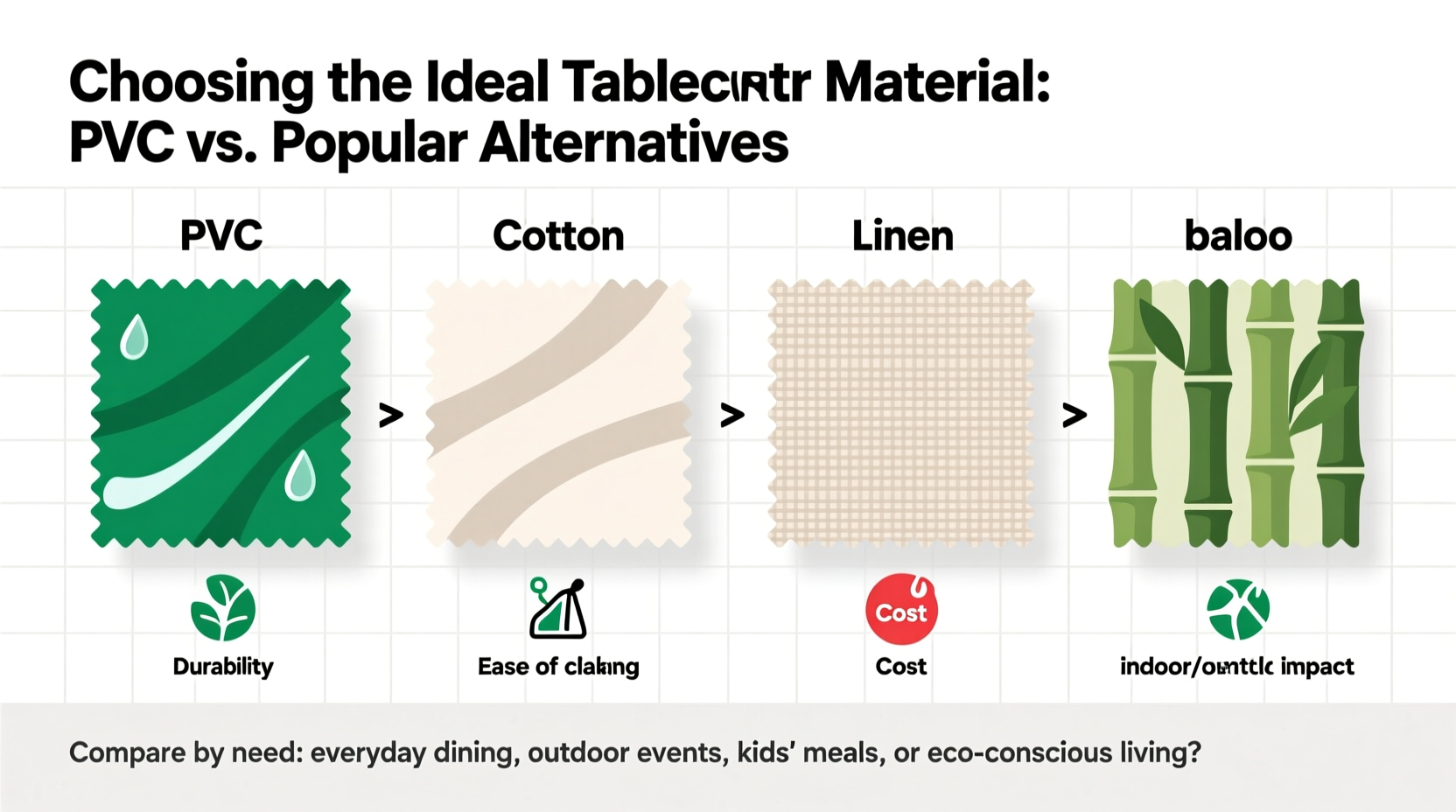
PVC (polyvinyl chloride) tablecloths are known for resilience. They resist stains, repel water, and can be wiped clean with a damp cloth—ideal for households with children or outdoor dining where spills are common. Unlike natural fabrics such as cotton or linen, which absorb liquids and require laundering, PVC offers low-maintenance convenience. However, this durability comes at a cost: PVC is less breathable, can feel plasticky, and may degrade under prolonged UV exposure.
In contrast, cotton and linen are breathable, soft, and naturally elegant. Linen develops a relaxed charm over time, while cotton provides a crisp, traditional look. Both demand regular washing and ironing to maintain their appearance. Polyester blends offer a middle ground—wrinkle-resistant and more durable than pure cotton, yet still washable and softer than PVC.
Comparative Overview: Key Tablecloth Materials
To make an informed decision, consider five core factors: maintenance, durability, texture, environmental impact, and suitability for indoor or outdoor use. The table below summarizes how PVC stacks up against common alternatives.
| Material | Maintenance | Durability | Texture/Feel | Eco-Friendliness | Best For |
|---|---|---|---|---|---|
| PVC | Wipe clean; no washing needed | High (resists stains, tears) | Smooth, plastic-like | Low (non-biodegradable, contains chlorine) | Outdoor dining, family meals, events with heavy use |
| Cotton | Machine washable; may shrink | Moderate (absorbs spills, prone to staining) | Soft, natural | Medium (biodegradable if untreated) | Everyday indoor use, rustic or farmhouse decor |
| Linen | Washable but wrinkles easily | High (strong fibers, ages well) | Textured, crisp, becomes softer over time | High (natural, biodegradable, low water footprint) | Formal dining, summer gatherings, minimalist interiors |
| Polyester | Easy care, machine washable, quick-drying | High (resists shrinking and stretching) | Smooth, slightly synthetic feel | Low (derived from petroleum, sheds microplastics) | Budget-friendly everyday use, mixed indoor/outdoor settings |
| Vinyl (non-PVC) | Wipeable; similar to PVC | High (waterproof and tear-resistant) | Flexible, rubbery | Low (but some newer versions are phthalate-free) | Commercial use, patios, rental events |
When PVC Shines—and When It Doesn’t
PVC excels in environments where practicality outweighs elegance. Think backyard barbecues, picnic tables, or busy cafes. Its waterproof surface prevents wine, oil, or sauce from soaking through, and cleanup takes seconds. Many PVC tablecloths also come with reinforced edges or elastic hems for secure fitting.
However, PVC has notable drawbacks. It’s not heat-resistant—placing hot pans directly on it can cause warping or melting. It lacks breathability, leading to condensation buildup underneath, which may damage wood finishes over time. Indoors, especially in warm rooms, PVC can emit a faint chemical odor, particularly when new. Additionally, its glossy finish can appear artificial under certain lighting, making it less suitable for formal dinners.
“While PVC is unbeatable for spill resistance, it shouldn’t be the default choice for every table. Match the material to the moment.” — Clara Mendez, Interior Stylist & Textile Consultant
Choosing Based on Occasion: A Practical Guide
The ideal tablecloth depends heavily on context. Consider these scenarios:
- Family Dinners with Kids: Opt for PVC or polyester blends. Spills happen daily, and easy cleanup keeps stress low.
- Formal Gatherings: Choose linen or high-thread-count cotton. Their refined drape and texture elevate the table setting.
- Outdoor Entertaining: PVC or treated canvas works best. Wind-resistant and rain-ready, they stay put and dry quickly.
- Seasonal Decor: Cotton allows for vibrant prints and seasonal themes. It’s easy to switch out and store.
- Commercial Use (Restaurants, Catering): Vinyl or heavy-duty PVC ensures longevity and hygiene under constant use.
Environmental and Health Considerations
PVC has faced criticism for environmental and health reasons. During production and disposal, it can release harmful dioxins. Some PVC tablecloths contain phthalates—chemicals used to increase flexibility—that may leach over time, especially when exposed to heat. While food-safe grades exist, prolonged contact with acidic foods (like tomato sauce) could accelerate degradation.
For eco-conscious buyers, linen and organic cotton are superior. Grown with minimal processing, they decompose naturally and have lower carbon footprints. Recycled polyester is another emerging option, reducing reliance on virgin plastics. If choosing PVC, look for phthalate-free, lead-free certifications and dispose of it responsibly—do not burn.
Mini Case Study: A Café’s Material Shift
A small brunch café in Portland initially used PVC tablecloths across all 12 tables. Staff appreciated the ease of wiping down surfaces between customers. However, customers complained about the “plastic smell” in summer and the unnatural look. After six months, the owner switched to linen-blend cloths for indoor seating and reserved PVC only for sidewalk tables exposed to weather. Customer satisfaction rose by 34%, and the café developed a more upscale image, proving that material choice influences perception as much as function.
Essential Checklist: How to Choose Your Ideal Tablecloth
- ✅ Determine primary use: daily dining, occasional entertaining, or outdoor?
- ✅ Assess cleaning capacity: Do you prefer machine washing or wipe-and-go?
- ✅ Consider table type: Will heat, moisture, or sunlight affect the cloth?
- ✅ Evaluate aesthetic goals: Do you want rustic charm, sleek modernity, or timeless elegance?
- ✅ Check dimensions: Measure your table and decide on drop length (e.g., 6–12 inches for casual, floor-length for formal).
- ✅ Review eco-values: Are biodegradability and non-toxic materials important to you?
- ✅ Test a sample: Order swatches to feel textures and judge colors in your lighting.
Frequently Asked Questions
Can I use a PVC tablecloth indoors every day?
Yes, but it may not provide the cozy or elegant atmosphere desired in living spaces. PVC is better suited for utility-focused areas like breakfast nooks or playrooms. For main dining areas, consider pairing it with a top cloth for visual warmth.
How do I prevent PVC tablecloths from sliding?
Use non-slip table pads underneath or opt for versions with elastic edges. Avoid placing them on very smooth or glass surfaces without grip enhancement.
Are there safe alternatives to PVC that still resist spills?
Yes. Look for polyurethane-coated cotton or linen, which offers water resistance without the environmental concerns of PVC. These hybrids are increasingly available in stylish designs and are safer for indoor use.
Making the Right Choice for Your Needs
The ideal tablecloth balances form and function. PVC stands out for durability and ease of care, making it a smart pick for high-use or outdoor environments. Yet, natural textiles like linen and cotton bring unmatched elegance and sustainability to the table. By aligning material properties with your lifestyle, event type, and values, you create a dining experience that’s both beautiful and practical. Whether hosting a holiday feast or managing a bustling household, the right tablecloth makes a lasting impression—not just visually, but in how effortlessly it supports your daily rhythm.




 浙公网安备
33010002000092号
浙公网安备
33010002000092号 浙B2-20120091-4
Comments
No comments yet. Why don't you start the discussion?