
In environments where every inch of terrain is unpredictable—construction sites, backcountry hikes, emergency response zones—a standard iPhone case won’t survive long. For professionals and adventurers who rely on their phones in rugged conditions, only a truly durable, military-grade case will do. But not all cases labeled “rugged” are created equal. Understanding what makes a case genuinely tough—and how to verify its claims—is critical when your device needs to withstand drops, dust, water, and extreme temperatures.
Military-grade protection isn’t just marketing jargon. It refers to specific testing standards designed to simulate real-world abuse. Choosing the right case means looking beyond thickness or bulk and focusing on materials, certification, design integrity, and field performance.
Understanding Military-Grade Protection: What Does MIL-STD-810 Actually Mean?
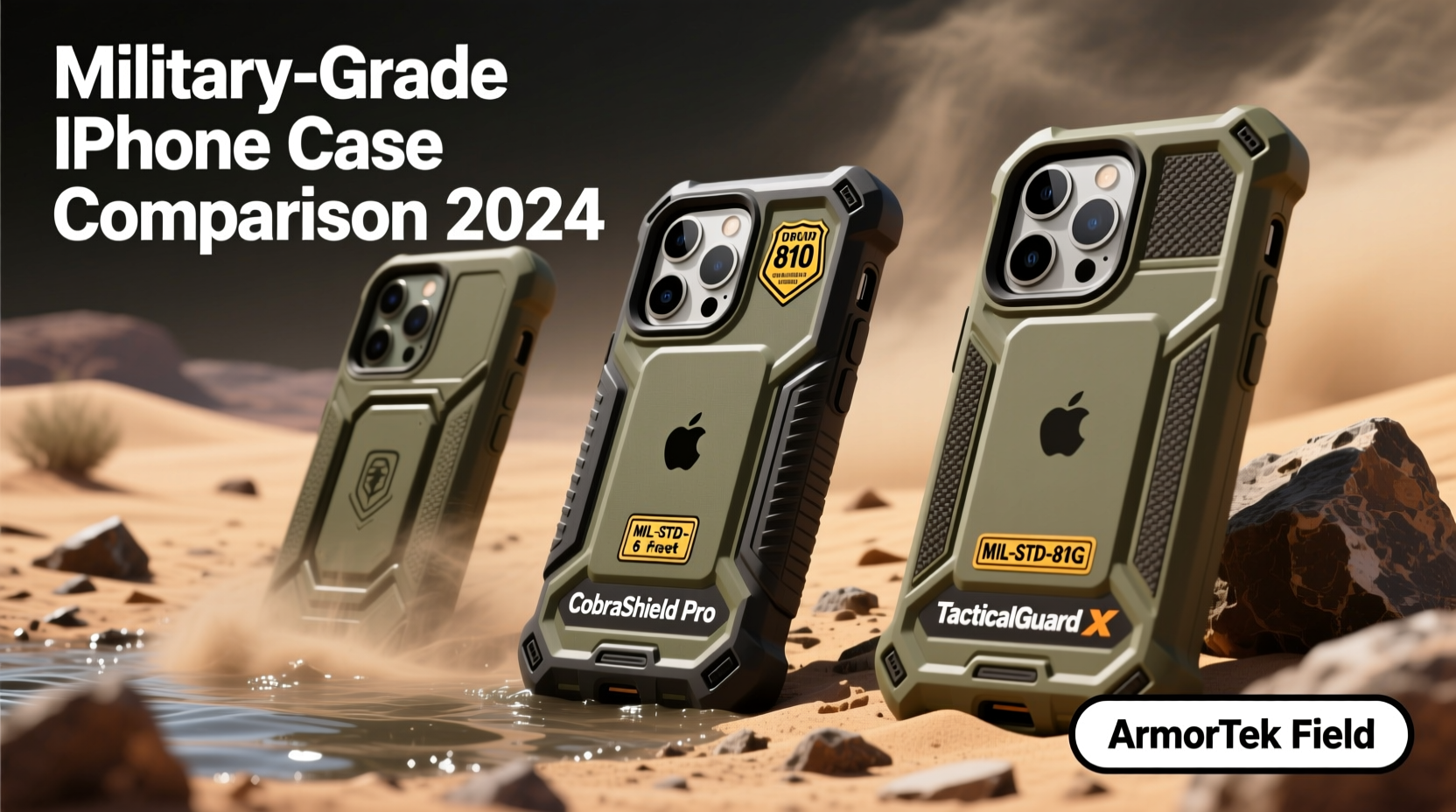
The term “military-grade” often appears on product packaging, but it’s meaningless without context. True military-grade durability refers to compliance with MIL-STD-810, a U.S. Department of Defense testing standard that evaluates equipment under harsh environmental conditions. While this standard was originally developed for full-scale military gear, manufacturers now apply portions of it—particularly drop, vibration, temperature, and humidity tests—to consumer electronics accessories.
For iPhone cases, the most relevant part is MIL-STD-810G Method 516.6, which involves multiple 6-foot (1.8-meter) drops onto concrete from various angles. A case that passes this test has demonstrated resilience against repeated high-impact shocks—exactly the kind of punishment encountered during field use.
“MIL-STD-810 compliance isn’t a guarantee, but it’s the closest thing consumers have to an independent benchmark for real-world toughness.” — Dr. Alan Reeves, Materials Testing Engineer at Pacific Reliability Labs
Be cautious of vague terms like “meets military standards” without specifying the method or providing third-party test results. Always look for explicit references to MIL-STD-810G or H, ideally backed by lab reports.
Key Features of a Field-Ready iPhone Case
A durable case must balance protection, usability, and reliability. Here are the essential features to evaluate:
- Drop Protection Rating: Look for cases tested to survive drops from at least 6 feet (1.8 meters), preferably higher. Independent lab verification adds credibility.
- Material Composition: Dual-layer designs with a rigid polycarbonate outer shell and shock-absorbing TPU (thermoplastic polyurethane) inner liner offer optimal impact dispersion.
- Water and Dust Resistance: An IP68 rating ensures protection against submersion (up to 6 meters for 30 minutes) and complete dust sealing—critical for outdoor or industrial work.
- Elevated Edges: The screen and camera lens should sit slightly behind raised bezels to prevent direct contact when placed face-down.
- Tactile Buttons: Reinforced, responsive buttons ensure reliable operation even with gloves on.
- Mounting & Lanyard Compatibility: Built-in slots or MagSafe alignment allow secure attachment to belts, bags, or vehicle mounts.
Top-Rated Brands and Real-World Performance Comparison
Several brands consistently deliver high-performance rugged cases validated through both lab tests and user feedback. Below is a comparison of leading options based on durability, design, and practicality.
| Brand & Model | MIL-STD-810 Certified | Drop Height | Water/Dust Rating | Weight (approx.) | MagSafe Compatible |
|---|---|---|---|---|---|
| Griffin Survivor Tactical | Yes (810H) | 8 ft (2.4 m) | IP68 | 4.1 oz | No |
| Urban Armor Gear (UAG) Plasma | Yes (810G) | 6 ft (1.8 m) | IP68 | 3.7 oz | Yes |
| OtterBox Defender Pro | Labeled as \"tested to\" 810G | 6 ft (1.8 m) | Sealed edges, no formal IP | 4.5 oz | Limited (with adapter) |
| Supcase Unicorn Beetle Pro | Claimed to meet 810G | 6.6 ft (2 m) | IP5X (dust-resistant) | 3.9 oz | Yes |
| Ballistic Alpha Series | Independently tested to exceed 810G | 7 ft (2.1 m) | IP68 | 4.3 oz | Yes |
While OtterBox remains a household name, newer entrants like Griffin and Ballistic are pushing boundaries with higher drop ratings and better ingress protection. UAG stands out for combining ruggedness with a relatively sleek profile and full MagSafe support.
Step-by-Step Guide: How to Select the Right Case for Your Needs
Choosing the best case isn’t just about maximum protection—it’s about matching durability to your actual usage environment. Follow this process:
- Assess Your Environment: Are you working in wet conditions? Exposed to dirt, sand, or chemicals? Frequent drops from height? Identify the primary risks.
- Verify Certification Claims: Visit the manufacturer’s website and look for detailed test documentation. If it’s not available, assume the claim is unverified.
- Check Compatibility: Ensure the case supports wireless charging, MagSafe accessories, and precise port alignment. Some ultra-rugged cases block signals or interfere with Face ID.
- Test Ergonomics: A heavy case may protect well but become impractical for daily carry. Consider grip comfort and pocketability.
- Read Field User Reviews: Look for feedback from construction workers, hikers, or first responders who’ve used the case under stress.
- Budget vs. Lifespan: Premium rugged cases cost $50–$80 but often last 2–3 times longer than budget alternatives, reducing long-term replacement costs.
Real-World Example: A Search and Rescue Technician’s Experience
Jamal Reyes, a search and rescue team leader in Colorado, relies on his iPhone during mountain operations. Last winter, during a high-altitude recovery mission, his phone slipped from his glove-covered hand and fell nearly 15 feet down a rocky slope. He recovered it cracked-free inside a Griffin Survivor Tactical case.
“I’ve gone through three cheaper cases in two years,” he said. “They split at the corners after minor drops. This one took a 15-foot fall, got soaked in snowmelt, and still worked perfectly. That’s when I realized—real protection isn’t optional in my job.”
His current protocol: replace the case every 18 months regardless of appearance, as micro-cracks in TPU can compromise structural integrity over time.
Frequently Asked Questions
Does MIL-STD-810 certification mean the iPhone itself is protected?
No. The certification applies only to the case’s ability to absorb impact and resist environmental stress. The internal phone’s durability depends on Apple’s build quality. However, a certified case significantly reduces the risk of damage during drops or exposure.
Can a rugged case affect signal strength or battery life?
Poorly designed metal-reinforced cases can interfere with cellular, GPS, or NFC signals. Most reputable brands use non-conductive materials and strategic cutouts to maintain performance. Battery drain is typically unaffected unless the case adds constant accessory load (e.g., battery packs).
How often should I replace a rugged iPhone case?
Even without visible damage, TPU degrades over 18–24 months due to UV exposure, temperature swings, and repeated impacts. Inspect for stiffness, discoloration, or cracking. Proactive replacement ensures consistent protection.
Final Checklist Before You Buy
- ✅ Confirmed MIL-STD-810G or 810H certification (not just claimed)
- ✅ Drop tested from at least 6 feet (preferably higher)
- ✅ IP68 or equivalent water/dust resistance
- ✅ Raised edges for screen and camera protection
- ✅ Functional tactile buttons and precise cutouts
- ✅ Supports MagSafe or has mounting options
- ✅ Positive reviews from field users (not just studio testers)
Conclusion: Build Confidence Through Verified Protection
Your iPhone is more than a communication tool—it’s a navigation system, flashlight, emergency beacon, and data hub when you’re off-grid or on duty. Choosing a case that’s truly built for military-grade protection means investing in reliability, not just resilience. By prioritizing verified standards, intelligent design, and real-world validation, you ensure your device survives the challenges of field use without compromising functionality.




 浙公网安备
33010002000092号
浙公网安备
33010002000092号 浙B2-20120091-4
Comments
No comments yet. Why don't you start the discussion?