
Selecting a laptop bag isn’t just about style or convenience—it’s an investment in protecting your essential work gear. With daily commutes, travel demands, and unpredictable weather, your bag faces constant wear. A poorly constructed model may fray, break, or fail to protect your device within months. But the right one can last years, offering reliable protection, comfort, and professional appeal. The key lies in understanding what makes a laptop bag truly durable and how to evaluate it beyond marketing claims.
Understand What Makes a Laptop Bag Durable
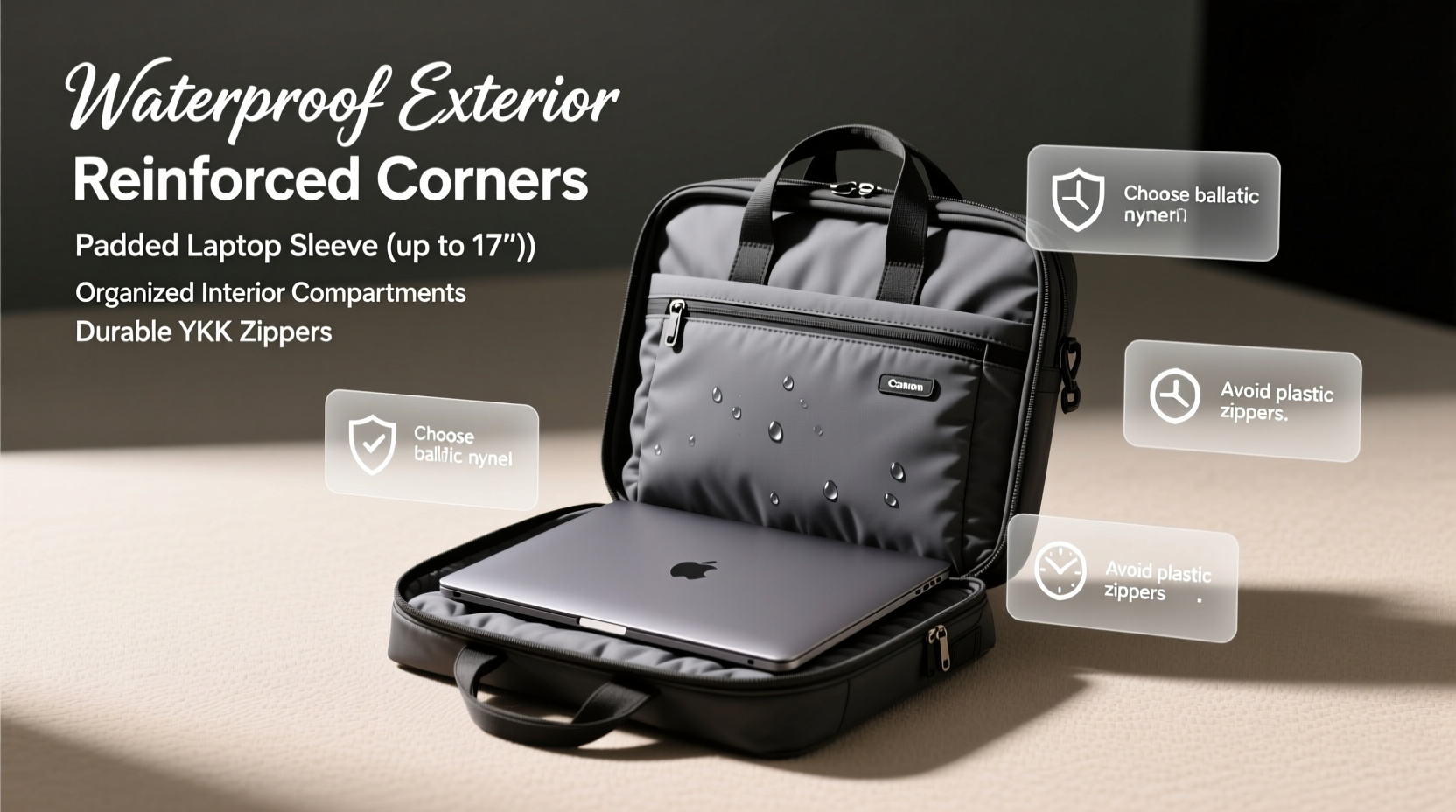
Durability isn’t just about thick fabric. It’s the combination of material quality, stitching integrity, hardware resilience, and structural design. A bag might look rugged but fail at critical stress points like handles or zippers. True durability means consistent performance under real-world conditions—rain, heavy loads, frequent use, and accidental drops.
The foundation of longevity starts with high-denier fabrics. Nylon, especially 600D to 1680D ballistic nylon, resists abrasions, tears, and moisture better than polyester or canvas. Leather offers elegance and strength but requires maintenance and isn't ideal for wet climates unless treated. Recycled fabrics are gaining traction, but verify their denier and coating before assuming durability.
“Durability starts with the weave and ends with the weakest component—often the zipper or strap attachment.” — Jordan Lee, Product Design Engineer at UrbanGear Labs
Essential Features of a Long-Lasting Work Laptop Bag
Not all features contribute equally to durability. Prioritize those that enhance both protection and endurance:
- Padded, suspended laptop compartment: Prevents direct impact. Look for neoprene or closed-cell foam padding that doesn’t compress over time.
- Water-resistant or waterproof construction: Full-coated lining (e.g., TPU or PU coating) prevents internal damage from spills or rain.
- Metal zippers with rubber pulls: YKK zippers are industry standard for reliability. Avoid plastic sliders that crack under pressure.
- Reinforced bottom panel: Molded EVA or rubberized base protects against ground moisture and wear when placed on rough surfaces.
- Ergonomic, detachable shoulder straps: Thick webbing with anti-slip padding reduces strain and distributes weight evenly.
- Internal organization with secure closures: Keeps contents stable and prevents shifting that strains seams.
Material Comparison: What Lasts Longest?
| Material | Durability Score (1–5) | Pros | Cons |
|---|---|---|---|
| 1680D Ballistic Nylon | 5 | Extreme tear resistance, water-repellent, lightweight | Premium price, limited aesthetic variety |
| Full-Grain Leather | 4.5 | Ages beautifully, highly resistant to abrasion | Heavy, requires conditioning, vulnerable to mold if damp |
| 600D Polyester | 3 | Affordable, colorfast, widely available | Less resilient to sharp impacts, prone to pilling |
| Recycled PET Fabric | 3.5 | Eco-friendly, often coated for water resistance | Long-term performance varies by brand |
| Cotton Canvas | 2.5 | Breathable, classic look | Absorbs water, stretches when overloaded, mildew risk |
How to Test Durability Before Buying
You don’t need lab equipment to assess quality. Use these practical checks before purchasing:
- Lift and swing test: If buying in-store, pick up the empty bag and gently swing it. Listen for creaking seams or loose hardware.
- Zipping resistance: Open and close each zipper multiple times. It should glide smoothly without snagging.
- Press the base: Apply firm thumb pressure to the bottom. A quality bag won’t dent easily or feel flimsy.
- Check stitching density: Aim for 8–12 stitches per inch. Wider gaps indicate weaker seams.
- Inspect attachment points: Straps should connect through metal rings or bar-tacked fabric, not just sewn directly.
Mini Case Study: The Consultant Who Switched Bags Twice in a Year
Mark, a management consultant based in Chicago, went through two laptop bags in 11 months. The first, a stylish canvas tote, split at the handle after four months of train commuting. The second, a budget synthetic backpack, developed a broken zipper during a flight. Both lacked reinforced bases and used low-denier fabric.
After researching durability metrics, he invested in a 1680D nylon messenger with a molded base and YKK zippers. Two years later, the bag shows minimal wear despite daily subway rides, weekend trips, and exposure to snow and rain. “I paid more upfront,” Mark says, “but I’ve saved money and stress. It’s survived coffee spills, downpours, and being stuffed into overhead bins.”
Expert Tips for Maximizing Bag Longevity
Even the best bag degrades faster with poor habits. Follow these strategies to extend its life:
- Rotate between two bags: Reduces continuous strain and allows materials to recover shape.
- Empty nightly: Prevents items from pressing against the laptop compartment and warping padding.
- Clean regularly: Wipe down exteriors with a damp cloth; use specialized cleaners for leather or technical fabrics.
- Avoid overloading: Carry only essentials. Excess weight stresses seams and distorts structure.
- Store properly: Keep in a dry, ventilated area away from heat sources. Use a breathable cotton dust bag if storing long-term.
“The lifespan of a bag is 30% material quality and 70% user behavior. How you treat it matters more than the brand label.” — Lena Patel, Sustainable Product Advisor at TechLifestyle Review
Dos and Don’ts of Laptop Bag Maintenance
| Do | Don’t |
|---|---|
| Use a microfiber cloth to wipe stains immediately | Let spills sit overnight |
| Condition leather every 3–4 months | Expose leather to direct sunlight for hours |
| Check for loose threads early | Ignore small rips—they expand quickly |
| Loosen straps when not in use | Hang heavy bags by thin hooks that strain stitching |
| Apply fabric protector spray annually | Machine-wash non-machine-safe bags |
FAQ: Common Questions About Durable Laptop Bags
Is a more expensive bag always more durable?
Not necessarily. While premium brands often use superior materials, some mid-range options deliver comparable durability. Focus on construction details—stitching, fabric denier, zipper type—rather than price alone. A $120 bag with 1680D nylon and bar-tacked straps can outlast a $250 fashion-forward model with weak interior lining.
Can I repair a damaged laptop bag instead of replacing it?
Yes, many issues are fixable. Broken zippers can be replaced by a tailor. Detached straps can be resewn with industrial thread. Some manufacturers offer repair programs. However, if the main compartment lining is torn or the base is cracked, replacement is usually safer to avoid sudden failure during transit.
What size laptop compartment should I get?
Choose a sleeve that matches your device size exactly. Too large, and the laptop shifts during movement; too small, and you risk damaging corners when forcing it in. For 13–14\" laptops, aim for 14\" compartments. For 15–16\" models, go for 16\". Always check internal dimensions in product specs, not just marketing claims.
Final Checklist: Choosing Your Ideal Durable Laptop Bag
- Confirm your laptop size and add 0.5–1 inch for padding clearance.
- Choose a material suited to your climate (e.g., nylon for rain, leather for dry offices).
- Verify denier rating (600D minimum, 1000D+ preferred).
- Ensure zippers are metal-based (YKK or equivalent).
- Check for a rigid or semi-rigid base.
- Test strap comfort with weight simulated (add books).
- Look for a manufacturer warranty (2+ years indicates confidence).
- Read verified owner reviews focusing on long-term use.
Take Action Today: Invest in Protection That Lasts
Your laptop is likely your most valuable daily tool. Protecting it starts with the bag you carry it in. Durability isn’t a luxury—it’s a necessity for professionals who rely on mobility, consistency, and preparedness. By focusing on proven materials, smart design, and responsible usage, you can find a bag that withstands years of demanding work life without compromise.




 浙公网安备
33010002000092号
浙公网安备
33010002000092号 浙B2-20120091-4
Comments
No comments yet. Why don't you start the discussion?