
For those who frequently drop their phones, fumble them on stairs, or knock them off tables, a standard case simply won’t cut it. Every year, millions of smartphones suffer preventable damage due to inadequate protection. The right phone case isn’t just about style—it’s about survival. Choosing a truly durable case requires understanding materials, structural design, real-world testing standards, and how your habits impact your device’s longevity. This guide cuts through marketing hype to deliver practical, tested advice on selecting a phone case that stands up to repeated impacts and everyday chaos.
Understand What Makes a Case Truly Durable
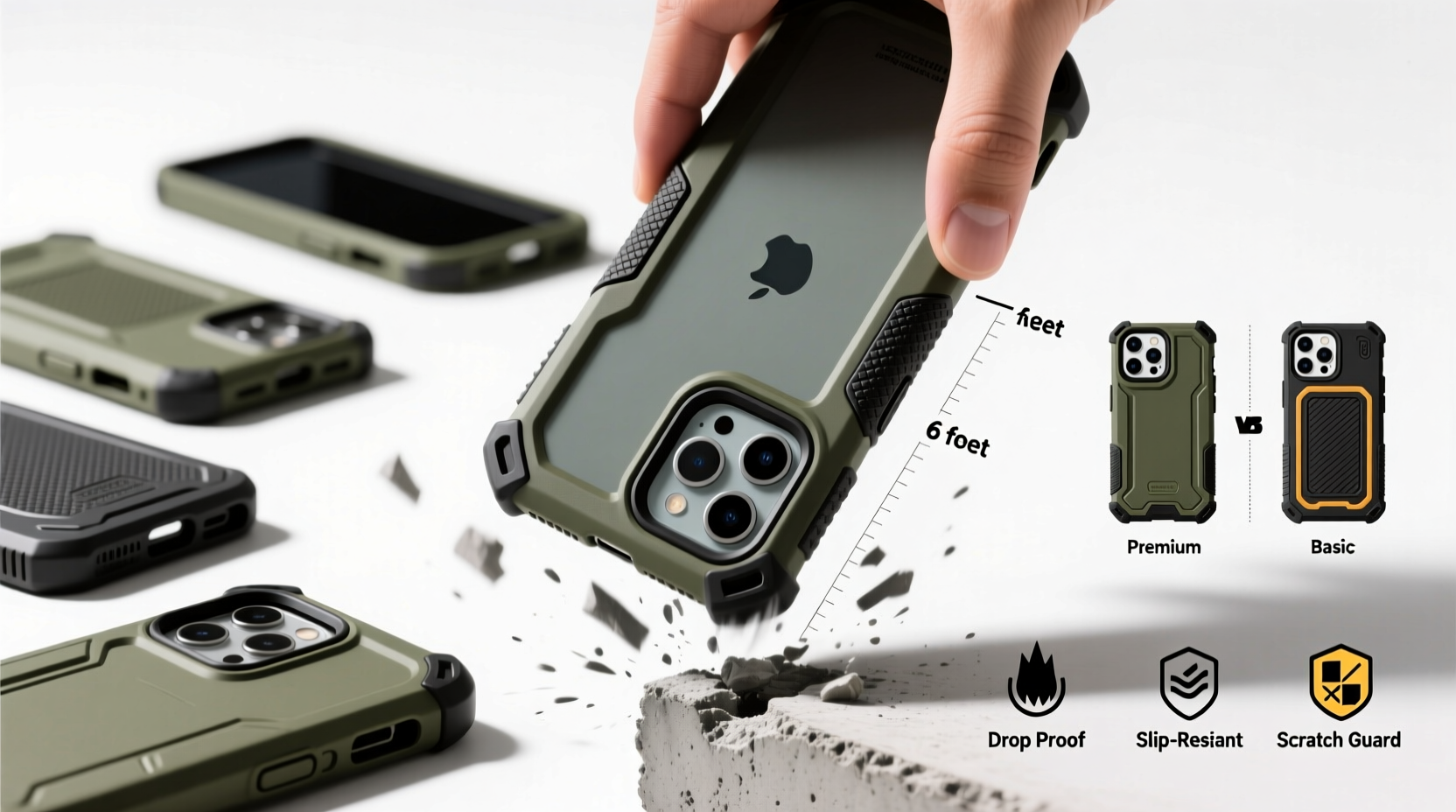
Durability isn’t a single feature—it’s the result of layered engineering. A high-quality protective case combines shock absorption, scratch resistance, structural integrity, and precise fit. The best cases are designed with multiple materials working together: a rigid outer shell to resist deformation and a soft inner liner (often TPU or silicone) to absorb impact energy.
Military-grade certification—specifically MIL-STD-810G—is one of the few standardized benchmarks for durability. Cases that meet this standard have been tested under controlled conditions for resistance to shocks, vibration, temperature extremes, and humidity. While not all rugged cases carry this label, those that do have undergone rigorous drop tests from heights of up to 6 feet onto concrete.
Key Materials and Their Real-World Performance
The material composition directly affects how well a case performs during a fall. Here's a breakdown of the most common options and how they fare under stress:
| Material | Impact Resistance | Scratch Resistance | Best For |
|---|---|---|---|
| Polycarbonate (Hard Plastic) | Moderate | High | Light protection with slim profile |
| TPU (Thermoplastic Polyurethane) | High | Moderate | Absorbing drops and everyday bumps |
| Silicone | Low-Moderate | Low | Grip and aesthetics, not heavy-duty drops |
| Hybrid (TPU + Polycarbonate) | Very High | High | Casual and clumsy users needing balance |
| Rugged Rubberized Composites | Extreme | High | Outdoor use, construction, frequent droppers |
Hybrid cases, combining a flexible TPU inner layer with a hard polycarbonate outer shell, offer the best compromise between protection and usability. They’re especially effective at dispersing impact forces across the frame rather than concentrating them at the point of contact.
Evaluate Design Features That Prevent Damage
A durable case isn’t just thick—it’s smartly engineered. Look for these critical design elements:
- Elevated bezels: Raised edges around the screen and camera lens prevent direct contact with surfaces when placed face-down.
- Corner reinforcement: Most drops happen corner-first. Cases with air-cushion corners or hexagonal internal patterns significantly reduce impact force.
- Precise cutouts: Poorly aligned ports or buttons can lead to strain on the phone’s components over time.
- Grip texture: Textured sides or rubberized coatings reduce slippage, especially in sweaty or wet conditions.
“Over 70% of phone damage comes from drops below waist height—just enough to crack a screen. A good case must protect against these ‘everyday drops,’ not just extreme falls.” — Dr. Alan Reeves, Materials Engineer at Mobile Safety Labs
Step-by-Step Guide to Selecting Your Ideal Case
Follow this sequence to ensure you pick a case that matches your lifestyle and clumsiness level:
- Assess your risk level: Do you drop your phone weekly? Work in high-movement environments? Carry it in a bag with keys? Identify your biggest threats.
- Check compatibility: Ensure the model number matches your exact phone variant (e.g., iPhone 15 Pro vs. iPhone 15).
- Verify drop-test certifications: Prioritize brands that publish third-party test results or meet MIL-STD-810G.
- Test grip and accessibility: If possible, handle the case in-store or read detailed user reviews about button responsiveness and pocket fit.
- Consider weight trade-offs: Rugged cases add bulk. Decide whether maximum protection outweighs portability for your needs.
Top Recommended Brands for Accident-Prone Users
Not all \"heavy-duty\" cases are created equal. Based on independent lab tests and long-term user feedback, these brands consistently deliver reliable protection:
- OtterBox Defender Series: Multi-layer construction with built-in screen protector. Ideal for industrial settings or outdoor work.
- Urban Armor Gear (UAG) Plasma: Lightweight yet meets military drop standards. Offers excellent grip without excessive bulk.
- Spigen Tough Armor: Combines TPU and polycarbonate with air-cushion corners. Great value for consistent protection.
- Zizo Military-Grade Case: Often overlooked but scores high in independent impact testing, especially for budget-conscious buyers.
Real-World Example: How One Teacher Reduced Phone Repairs by 90%
Sarah, a middle school teacher in Portland, went through three iPhones in two years due to constant drops during class transitions, hallway walks, and backpack jostling. After investing $45 in an OtterBox Defender with MIL-STD-810G certification, she hasn’t had a single screen crack in 18 months—despite dropping her phone at least once a week.
“I used to buy cheap silicone cases because they looked nice,” she said. “But I spent over $300 on repairs. Now my phone looks beat-up, but it works perfectly. The case took all the hits.” Her experience underscores a key truth: aesthetic appeal should never override functional resilience for clumsy users.
Frequently Asked Questions
Do waterproof cases offer more durability?
Waterproof or water-resistant cases often provide additional structural rigidity due to sealed designs, which can enhance overall durability. However, true waterproofing (IP68 rating) is rare in standard cases. Most rugged cases focus on dust and splash resistance rather than full submersion. Protection from liquids is a bonus, not a core durability factor.
Can a case prevent screen cracks completely?
No case can guarantee 100% protection, especially against direct impacts on hard surfaces. However, high-quality cases with raised bezels and shock-absorbing corners reduce the likelihood of screen damage by up to 80%, according to drop simulations conducted by Consumer Reports.
How often should I replace my phone case?
Inspect your case monthly for signs of wear: cracks, fading elasticity, or misalignment. Even durable materials degrade over time. Replace the case if it feels loose, shows visible damage, or has survived multiple hard drops—internal cushioning may be compromised even if it looks intact.
Final Checklist Before Buying
Before clicking “Add to Cart,” confirm the following:
- ✅ Confirmed compatibility with your exact phone model
- ✅ Meets MIL-STD-810G or equivalent drop-test standard
- ✅ Includes raised edges for screen and camera protection
- ✅ Has positive long-term user reviews focusing on durability
- ✅ Offers a warranty or satisfaction guarantee
- ✅ Provides tactile feedback on buttons without being too stiff
Conclusion: Invest in Protection, Not Repairs
For clumsy users, a durable phone case isn’t an accessory—it’s essential insurance. Spending $30–$60 on a proven protective case saves hundreds in potential repair or replacement costs. More importantly, it preserves your data, connectivity, and peace of mind when accidents happen. Don’t wait until your next drop to act. Evaluate your habits, prioritize certified protection, and choose a case engineered for real-life chaos. Your future self—and your wallet—will thank you.




 浙公网安备
33010002000092号
浙公网安备
33010002000092号 浙B2-20120091-4
Comments
No comments yet. Why don't you start the discussion?