
Animal plush keychains are more than just accessories—they’re tiny expressions of personality, comfort, and whimsy. Whether clipped to a backpack, purse, or keys, they add a touch of softness to everyday life. But not all plush keychains are created equal. Some lose shape after weeks, others shed fibers, and many lack the charm that made you fall in love at first sight. Choosing the right one means balancing durability, design, and emotional appeal.
The best plush keychains endure daily use without sacrificing cuteness. They’re crafted with care, styled with intention, and made from materials that stand up to handling. This guide walks through what truly matters when selecting your ideal plush companion—so you invest in joy that lasts.
Evaluate Material Quality First
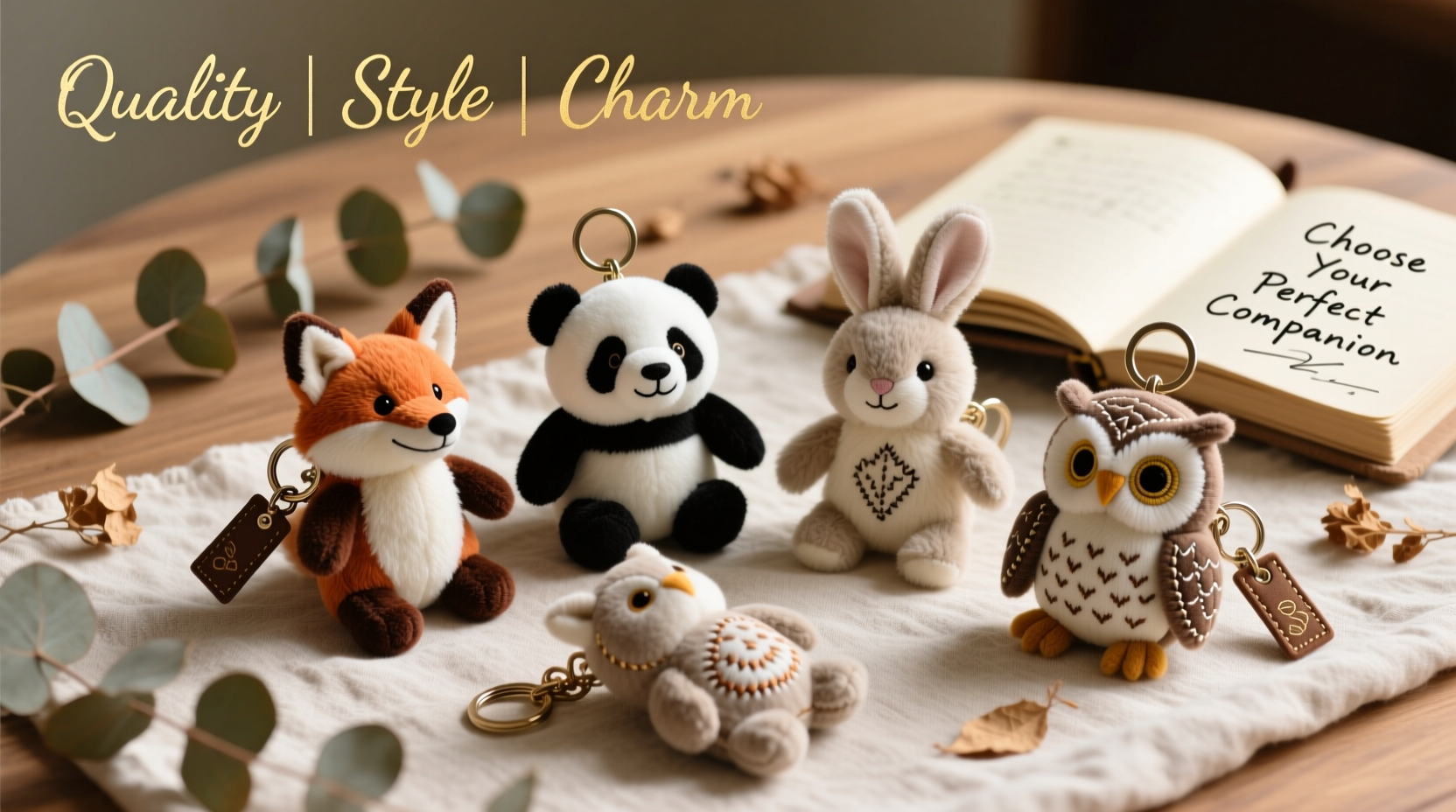
The fabric is the foundation of any plush keychain. Low-quality synthetics may look soft initially but often flatten quickly or develop pilling. High-grade plush uses tightly woven polyester or acrylic fibers that maintain fluffiness over time. Look for descriptions like “premium short-pile plush” or “anti-shed fleece,” which indicate better manufacturing standards.
Inside, the stuffing determines resilience. Cheap versions use recycled fiberfill that clumps and compacts. Seek out options with hypoallergenic polyfill—specifically labeled as “high-resilience”—which bounces back after compression. A well-stuffed keychain should feel firm but yielding, not lumpy or overly squishy.
Check Stitching and Seam Strength
Fine stitching isn’t just about appearance; it prevents unraveling during regular jostling. Inspect seams closely: stitches should be tight, even, and double-stitched at stress points like limbs and necks. Avoid pieces with visible gaps or loose threads. Reinforced joints mean the ears won’t tear off after a month of use.
Pay special attention to where the plush attaches to the keyring. This junction must withstand constant pulling. The best designs embed a metal loop deep within the body and secure it with layered stitching or molded resin anchors—not just glued-on plastic connectors.
Choose a Style That Reflects Personality
Style goes beyond color. It’s about proportion, expression, and character. Some prefer hyper-realistic animals with detailed embroidery for eyes and noses. Others love kawaii-style exaggerations—oversized heads, tiny paws, and blushing cheeks. Both have merit, but consistency in design language matters. A mismatched aesthetic (e.g., realistic fur with cartoon eyes) can make a piece feel cheap or confused.
Consider scale. Oversized heads on small bodies amplify cuteness due to neoteny—the human preference for juvenile features. If charm is your goal, this design principle works in your favor. However, if realism is preferred, seek balanced proportions and natural coloring.
“Emotional connection drives attachment to plush items. The most beloved ones aren’t always the most accurate—they’re the ones that spark joy.” — Dr. Lena Torres, Consumer Psychologist specializing in tactile objects
Colorfastness and Long-Term Appearance
Bright colors fade. Dark dyes bleed. To preserve vibrancy, verify whether the fabric has been treated for UV resistance and color retention. If purchasing online, read reviews mentioning “still looks new after months” or “no fading.” Brands based in Japan and South Korea often lead in dye technology for novelty goods, making them reliable sources.
Size and Practicality Balance
Plush keychains range from 2 cm miniatures to 15 cm statement pieces. Smaller ones (3–5 cm) are practical for travel and don’t snag easily. Larger ones (8+ cm) offer greater detail and huggability but may interfere when carried daily.
Think about intended use:
- Daily carry: Opt for compact, lightweight models under 6 cm.
- Decorative display: Larger, detailed versions shine on zippers or shelves.
- Gifts: Match size to recipient’s lifestyle—a student might appreciate something pocket-sized, while a collector may value intricacy over portability.
Attachment Mechanism Matters
A beautiful plush is useless if it detaches prematurely. Common attachments include:
| Type | Pros | Cons |
|---|---|---|
| Swivel lobster clasp | Durable, rotates smoothly, resists tangling | Slightly bulkier than other types |
| Spring ring | Secure, common, easy to clip | Can weaken over time with repeated use |
| Carabiner-style | Strong, modern look | Heavier, may scratch surfaces |
| Plastic snap | Cheap, colorful | Breaks easily, not long-term reliable |
For longevity, swivel lobster clasps are ideal. They distribute tension evenly and resist accidental unclipping.
Step-by-Step Guide to Selecting Your Ideal Plush Keychain
Follow this sequence to ensure you make a thoughtful, lasting choice:
- Define purpose: Is it for personal use, gifting, or collection?
- Set size limits: Will it fit comfortably on your bag or keys?
- Inspect material claims: Look for premium plush, high-resilience filling.
- Review photos critically: Zoom in on seams, stitching, and joint construction.
- Read user feedback: Prioritize reviews mentioning durability after 2+ months.
- Verify attachment type: Prefer metal hardware over plastic.
- Trust your emotional response: Does it bring a smile? That feeling is part of the value.
Real Example: Sarah’s Search for the Perfect Cat Keychain
Sarah wanted a cat plush keychain to commemorate her rescue kitten. She initially bought an inexpensive version online. Within three weeks, the tail detached, and the fabric matted. Disappointed, she researched brands known for quality. She found a Japanese-made keychain with embroidered safety eyes, dense polyfill, and a reinforced loop. Now six months later, it remains intact despite daily use. “It still looks like it did the day I got it,” she says. “And every time I see it, I think of my cat.” Her second purchase cost more—but brought longer joy.
Checklist: Before You Buy
- ✅ Fabric feels dense and resilient, not thin or slick
- ✅ Stitches are tight and consistent, especially at limb connections
- ✅ Filling is evenly distributed with no hard or flat spots
- ✅ Eyes and nose are securely embroidered or firmly molded
- ✅ Metal attachment is integrated into the body, not surface-mounted
- ✅ Size fits intended use (portable vs. decorative)
- ✅ Reviews confirm long-term durability
Frequently Asked Questions
Are handmade plush keychains better than mass-produced ones?
Not necessarily. Handmade items often feature unique details and care, but quality varies by artisan. Mass-produced keychains from reputable manufacturers (especially in Japan, Korea, or Germany) benefit from strict quality control and durable materials. Focus on construction over production method.
How do I clean a plush keychain without damaging it?
Spot clean with a damp cloth and mild soap. Avoid soaking or machine washing unless the label explicitly allows it. Air dry completely before reuse. For delicate pieces, use a soft brush to remove dust gently.
Can I replace the keyring if it breaks?
Yes, most standard keyrings are interchangeable. Use small pliers to open the existing loop and attach a new one. Choose replacements made from stainless steel to prevent rust and breakage.
Final Thoughts
Choosing the perfect animal plush keychain blends practicality with sentiment. It’s not just about what looks cute in a photo—it’s about what holds up in real life. When you prioritize material integrity, thoughtful design, and secure construction, you select more than an accessory. You choose a small companion that brings comfort, expresses identity, and endures through daily moments.




 浙公网安备
33010002000092号
浙公网安备
33010002000092号 浙B2-20120091-4
Comments
No comments yet. Why don't you start the discussion?