
Anime wall scrolls have evolved from niche collectibles into mainstream interior design elements. Whether you're a lifelong fan of Studio Ghibli or deeply immersed in the world of Demon Slayer, displaying a scroll isn’t just about fandom—it’s a statement of identity and taste. But selecting one that enhances your space requires more than picking your favorite character. The right scroll should harmonize with your room’s color scheme, lighting, furniture, and overall atmosphere. Done well, it becomes a focal point that elevates the entire room. Done poorly, it can clash and disrupt visual balance. This guide walks you through the thoughtful process of choosing an anime wall scroll that doesn’t just hang on your wall—it belongs there.
Understand Your Room’s Aesthetic Identity
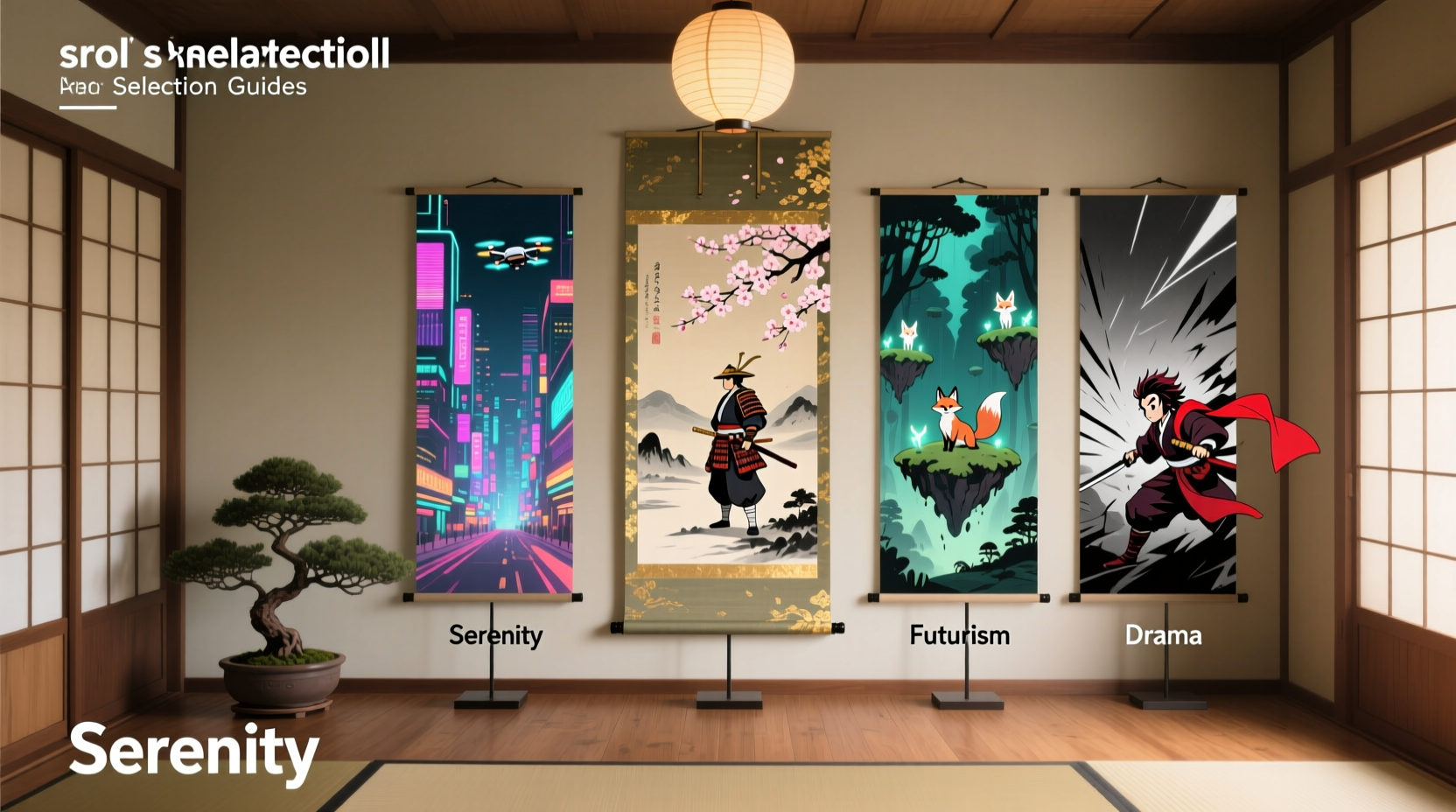
Before browsing artwork, define the core style of your room. Is it minimalist with neutral tones? Bohemian with layered textures? Modern with sleek lines and metallic accents? Or perhaps it leans into Japandi—blending Japanese minimalism with Scandinavian functionality? Each aesthetic responds differently to visual stimuli like color intensity, pattern density, and subject matter.
A cluttered, vibrant scroll of a battle scene may overwhelm a serene, monochrome bedroom. Conversely, a soft-toned, contemplative image might get lost in a high-energy gaming den. Aligning your scroll with your room’s existing personality ensures cohesion rather than contrast for the sake of contrast.
Common Room Aesthetics and Compatible Scroll Styles
| Room Style | Recommended Scroll Themes | Colors to Prioritize |
|---|---|---|
| Minimalist | Single-character portraits, nature scenes (e.g., Spirited Away), abstract anime art | Soft pastels, muted earth tones, black-and-white |
| Modern Industrial | Action sequences, cyberpunk themes (e.g., Akira), mecha designs | Neon accents, grays, deep blues, metallics |
| Bohemian | Fantasy landscapes, magical girls, ethereal characters | Rich purples, emerald greens, warm golds |
| Japandi | Traditional Japanese settings, seasonal motifs, Studio Ghibli forests | Natural wood tones, indigo, cream, moss green |
| Gaming / Otaku Den | Iconic duels, popular series banners (e.g., Naruto vs. Sasuke) | Bold primaries, high-contrast combinations |
Match the Scroll to the Wall Space
Size matters—not just in physical dimensions, but in visual weight. A large scroll on a small wall can feel oppressive, while a tiny scroll on a broad surface may look forgotten. Measure your available wall space and consider negative space around the scroll as part of the composition.
Standard anime wall scrolls typically range from 24x60 inches to 36x72 inches. For a balanced look, follow the “two-thirds rule”: the scroll should occupy roughly two-thirds of the vertical or horizontal wall space, depending on orientation. If flanking furniture like a bed or desk, ensure at least 6–8 inches of clearance on each side.
“Proportion is everything in interior harmony. A well-sized piece draws the eye without dominating the room.” — Lena Tran, Interior Stylist & Art Curator
Vertical vs. Horizontal Orientation: What Works Where?
- Vertical scrolls suit tall walls, narrow spaces, or rooms with high ceilings. Ideal behind beds, entryways, or beside bookshelves.
- Horizontal scrolls work best above sofas, desks, or low consoles. They emphasize width and grounding, making a room feel more stable.
- Dual-scroll setups can create symmetry when placed on either side of a central object (like a mirror or window), especially if they share a thematic link—e.g., paired characters from the same series.
Select Colors That Harmonize, Not Clash
Color psychology plays a subtle but powerful role in how a scroll influences a room’s mood. Reds and oranges energize; blues and greens calm. Choose hues that support the intended function of the space. A fiery Goku transformation might invigorate a workout corner but disturb a meditation nook.
To test compatibility, use digital tools like Adobe Color or Canva to overlay potential scroll images onto photos of your room. Alternatively, print out a scaled version and tape it temporarily to the wall for a real-world preview.
Case Study: Transforming a Dorm Room with Intentional Selection
Maya, a university student, wanted to personalize her dorm without violating housing decor rules. Her room had white walls, gray bedding, and walnut furniture—clean but impersonal. She loved My Hero Academia but knew a bright red Bakugo scroll would clash.
Instead, she chose a vertical scroll of Izuku Midoriya standing calmly under cherry blossoms—soft pinks, sage greens, and muted whites. The image added personality without overwhelming the space. By placing it above her desk, she created a daily motivational focus. Resident advisors complimented the tasteful integration, and Maya reported feeling calmer and more focused during study sessions.
The lesson? Fandom expression doesn’t require loud visuals. Emotional resonance often comes from subtlety.
Choose the Right Material and Finish
Not all anime scrolls are created equal. The material affects durability, appearance, and how light interacts with the surface. Common options include:
- Polyester fabric: Lightweight, wrinkle-resistant, vibrant color reproduction. Ideal for long-term display under indirect light.
- Cotton canvas: Matte finish, premium texture, excellent for artistic prints. Requires framing or careful mounting to avoid sagging.
- Silk-blend: Traditional feel, luxurious drape. Best for decorative purposes in low-traffic areas due to delicate nature.
Finish type also matters. Glossy finishes enhance vibrancy but may reflect glare in sunny rooms. Matte finishes reduce reflections and suit minimalist or professional spaces.
Step-by-Step: How to Evaluate Scroll Quality Before Purchase
- Check product specifications for material type and printing method (dye-sublimation offers better fade resistance than basic inkjet).
- Read customer reviews focusing on color accuracy and durability over time.
- Zoom into online images to assess detail sharpness—especially important for facial features or intricate backgrounds.
- Verify hanging mechanism: Most scrolls come with a wooden rod at the top and bottom. Ensure the top rod includes a sturdy loop or hook system.
- Confirm care instructions: Machine washing is not recommended. Most require spot cleaning only.
Curate a Thematic Narrative, Not Just a Decoration
The most compelling displays tell a story. Instead of choosing randomly, ask: what emotion or memory do I want this scroll to evoke? Is it nostalgia for childhood shows? Admiration for a character’s resilience? Celebration of a cultural art form?
For example, a scroll of Chihiro walking toward the spirit town at dusk can symbolize transition and courage—perfect for a home office during career changes. A quiet scene of Totoro waiting at a bus stop evokes patience and wonder, ideal for a reading corner.
If you rotate scrolls seasonally, align them with time of year: sakura themes in spring, snowscapes in winter, festival scenes in autumn. This practice, inspired by traditional Japanese tokonoma alcoves, brings rhythm and mindfulness to decor.
FAQ: Common Questions About Anime Wall Scrolls
Can I hang an anime wall scroll in a bathroom or kitchen?
It’s not recommended. High humidity and temperature fluctuations can cause fabric to warp, colors to fade, and promote mold growth. Reserve scrolls for climate-controlled, dry areas like bedrooms, living rooms, or studies.
How do I prevent my scroll from fading over time?
Avoid direct sunlight. UV exposure is the leading cause of pigment degradation. If your wall receives strong light, opt for UV-resistant prints or install sheer curtains to diffuse rays. Rotate scrolls every 6–12 months if display rotation is possible.
Are anime wall scrolls suitable for rental apartments?
Yes—especially if using removable adhesive hooks or tension rods instead of nails. Many renters use over-the-door hangers or command strips to preserve walls. Just ensure the mounting method supports the scroll’s weight evenly to prevent tilting or slipping.
Final Checklist: Choosing the Perfect Anime Wall Scroll
- ✅ Define your room’s aesthetic (minimalist, boho, modern, etc.).
- ✅ Measure wall space and choose appropriate scroll dimensions.
- ✅ Match scroll colors to existing palette using swatches or digital overlays.
- ✅ Select a theme that resonates emotionally or narratively.
- ✅ Verify material quality and printing technique.
- ✅ Confirm safe, damage-free hanging method for your wall type.
- ✅ Consider lighting conditions and UV exposure.
- ✅ Plan for long-term care and potential rotation.
Conclusion: Let Your Walls Speak With Purpose
Choosing the perfect anime wall scroll isn’t about finding the most popular image or the largest size—it’s about intention. When thoughtfully selected, a scroll transcends decoration. It becomes a silent companion, reflecting who you are and shaping how you feel in your space. Whether it’s a whisper of nostalgia or a bold declaration of passion, let your scroll be more than seen. Let it be felt.




 浙公网安备
33010002000092号
浙公网安备
33010002000092号 浙B2-20120091-4
Comments
No comments yet. Why don't you start the discussion?