
Selecting the right keyring for your bag isn’t just about aesthetics—it’s a functional decision that affects durability, usability, and even the longevity of your accessories. Whether you're customizing a handbag, repairing a vintage piece, or designing your own leather goods, the keyring must align with the hardware, strap strength, and intended use. Too small, and it won’t accommodate your keys; too large, and it may distort the bag’s structure or snag on fabric. This guide breaks down the essential factors in choosing the ideal keyring size, supported by practical examples, expert insights, and actionable checklists.
Understanding Keyring Functions in Bag Design
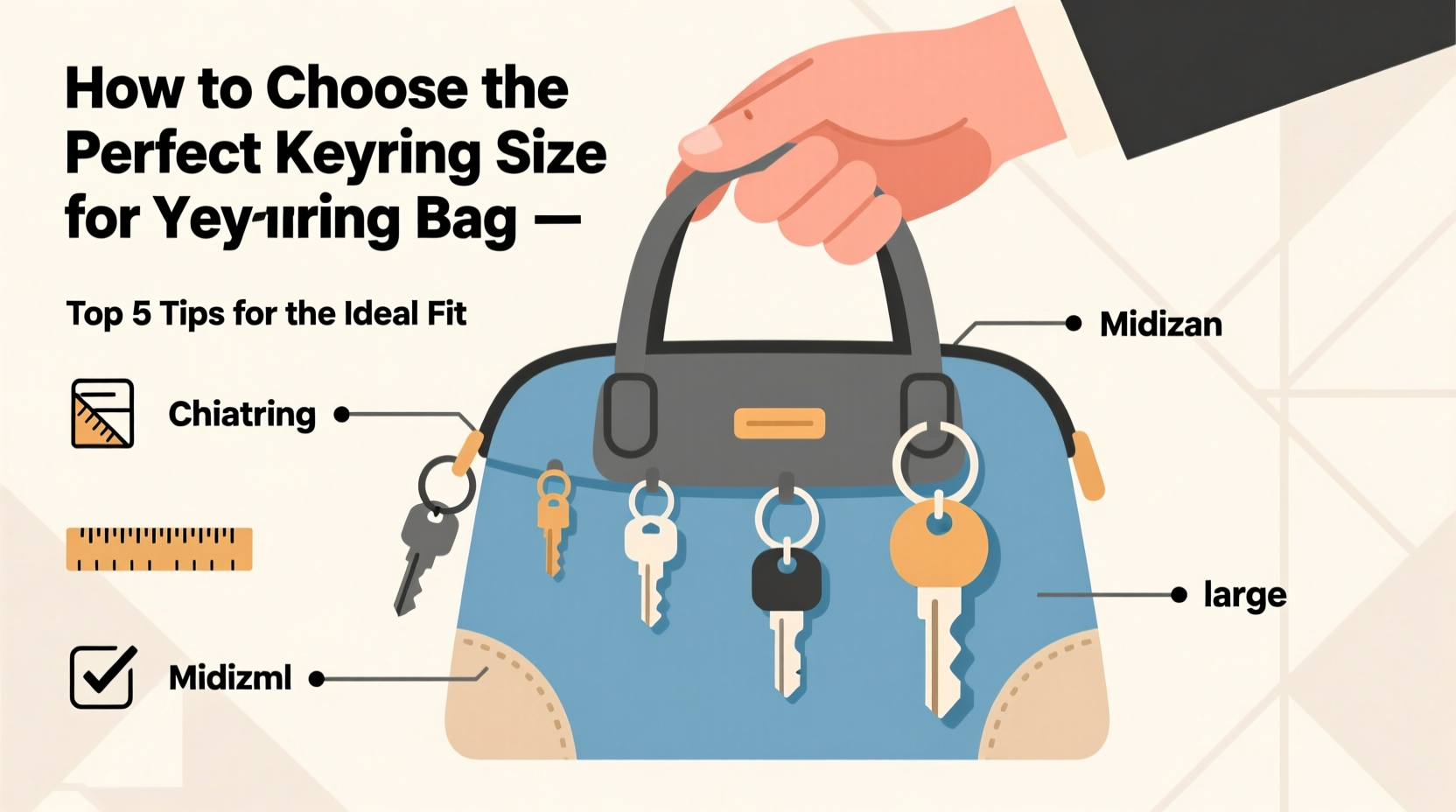
A keyring on a bag serves more than just holding keys. It acts as a functional anchor point, often doubling as a decorative element or organizational tool. In structured bags like totes, satchels, or crossbodies, the keyring connects to an internal loop, D-ring, or zipper pull. Its role includes:
- Securing essential keys without losing them in the bag’s interior
- Providing quick access while maintaining security
- Enhancing visual balance when paired with other hardware
- Preventing strain on zippers or straps by distributing weight
The effectiveness of a keyring depends heavily on its size relative to the bag’s components. A mismatched ring can lead to broken stitching, torn lining, or difficulty attaching and detaching keys. Understanding the interplay between ring diameter, chain length (if applicable), and attachment mechanism is crucial.
Key Sizing Metrics: Diameter, Gauge, and Compatibility
Choosing the right size involves three primary measurements: inner diameter, wire thickness (gauge), and opening clearance. These determine both functionality and compatibility with your bag’s existing hardware.
| Size Category | Inner Diameter (mm) | Wire Gauge (mm) | Ideal For |
|---|---|---|---|
| Mini | 10–15 | 1.0–1.5 | Dainty clutches, jewelry organizers, lightweight keychains |
| Standard | 18–25 | 1.8–2.2 | Everyday handbags, tote interiors, medium-duty use |
| Oversized | 30+ | 2.5+ | Bulky keys, tool attachments, statement designs |
The inner diameter should allow smooth insertion and removal of your largest key. As a rule, the ring’s inner width should exceed the widest part of your key head by at least 3–5 mm. The wire gauge influences strength—thicker rings resist bending but add weight. For delicate fabrics or thin straps, avoid oversized rings that could tear stitching over time.
“Many customers overlook wire thickness when replacing keyrings. A 2.0 mm gauge offers the best balance of strength and flexibility for most everyday bags.” — Daniel Reyes, Leather Goods Artisan & Hardware Consultant
Step-by-Step Guide to Selecting the Right Keyring
Follow this sequence to ensure your chosen keyring complements both form and function:
- Assess Your Key Load: Gather all keys you plan to attach. Measure the widest key head and count the total number. More than three bulky keys require a larger ring.
- Check Attachment Point Strength: Examine the D-ring, O-ring, or fabric loop on your bag. Ensure it can support the combined weight without stretching.
- Measure Clearance: Open the current keyring (or mock-up) and test if keys slide on easily. If using a split ring, ensure the gap allows passage of the thickest key.
- Evaluate Bag Style: Slim wallets and evening bags suit mini rings (10–15 mm). Daily totes and work bags benefit from standard sizes (18–25 mm).
- Test Before Committing: Temporarily attach a candidate ring and carry the bag for a day. Check for snagging, imbalance, or stress on seams.
Common Mistakes and How to Avoid Them
Even experienced bag owners make avoidable errors when selecting keyrings. Recognizing these pitfalls ensures long-term satisfaction:
- Ignoring Weight Distribution: Heavy keys on a flimsy ring can pull down one side of the bag, leading to uneven wear.
- Overlooking Material Compatibility: Brass rings may tarnish on leather; stainless steel is safer for sensitive materials.
- Mismatching Ring Type: Split rings are secure but hard to load; lobster clasps offer ease but less permanence.
- Forgetting Future Needs: Choose a size that accommodates potential additions like luggage tags or bottle openers.
Real-World Example: Upgrading a Vintage Tote
Sophie, a boutique accessory restorer, recently refurbished a 1970s canvas tote with worn leather trim. The original keyring had corroded and snapped under the weight of four house and car keys. She measured the keys’ maximum width at 22 mm and noted the D-ring’s 6 mm internal diameter. Opting for a 24 mm stainless steel O-ring with a 2.0 mm gauge ensured compatibility and durability. She added a small leather charm for balance, preventing the ring from swinging excessively. After six months of daily use, the repair remains intact—proof that precise sizing prevents premature failure.
Hardware Compatibility Checklist
Use this checklist before purchasing or installing a new keyring:
- ✅ Inner diameter exceeds widest key by 3–5 mm
- ✅ Wire gauge is at least 1.8 mm for regular use
- ✅ Ring type matches usage (split ring for security, O-ring for accessibility)
- ✅ Finish matches other bag hardware (e.g., gold-tone, nickel, antique brass)
- ✅ Attachment point is reinforced and shows no signs of wear
- ✅ Total key weight does not exceed 200 grams for lightweight bags
Frequently Asked Questions
Can I replace a split ring with an O-ring?
Yes, provided the O-ring’s inner diameter fits over the existing attachment point and your keys can be loaded comfortably. O-rings are easier to use but may open accidentally if not fully closed.
How do I prevent my keyring from scratching my bag’s lining?
Choose rings with smooth finishes and consider adding a fabric sleeve or silicone cover. Alternatively, position the ring so it rests against a sturdier section of the bag, away from delicate linings.
Are larger keyrings always stronger?
Not necessarily. Strength depends more on material and wire gauge than size. A large, thin-gauge ring may bend more easily than a smaller, thicker one. Prioritize construction quality over dimensions alone.
Final Recommendations and Action Steps
The perfect keyring blends proportion, strength, and purpose. Start by evaluating your current setup: remove the ring, lay out your keys, and measure critical dimensions. Compare those numbers to the sizing chart and select a ring that allows room for growth—both in key count and usage patterns. When in doubt, opt for a standard 22 mm stainless steel ring with a 2.0 mm gauge; it suits most medium-sized bags and key loads. Always inspect the attachment point for wear, reinforcing it if necessary before installation.
Remember, a well-chosen keyring enhances both utility and design. It keeps essentials secure without compromising the integrity of your favorite bag. Take a few minutes to assess your needs today—your bag will thank you tomorrow.




 浙公网安备
33010002000092号
浙公网安备
33010002000092号 浙B2-20120091-4
Comments
No comments yet. Why don't you start the discussion?