
In an era of digital overload and visual noise, the minimalist watch has emerged as a quiet rebellion—a deliberate choice for those who value clarity, precision, and elegance. But minimalism doesn’t mean invisibility. The most compelling minimalist watches do more than tell time; they communicate intention, taste, and confidence without raising their voice. Choosing one that feels both understated and impactful requires careful consideration of design, material, movement, and personal alignment. It’s not about stripping away until nothing remains, but about refining until only what matters is left—and ensuring that what remains speaks volumes.
The Essence of Minimalist Design
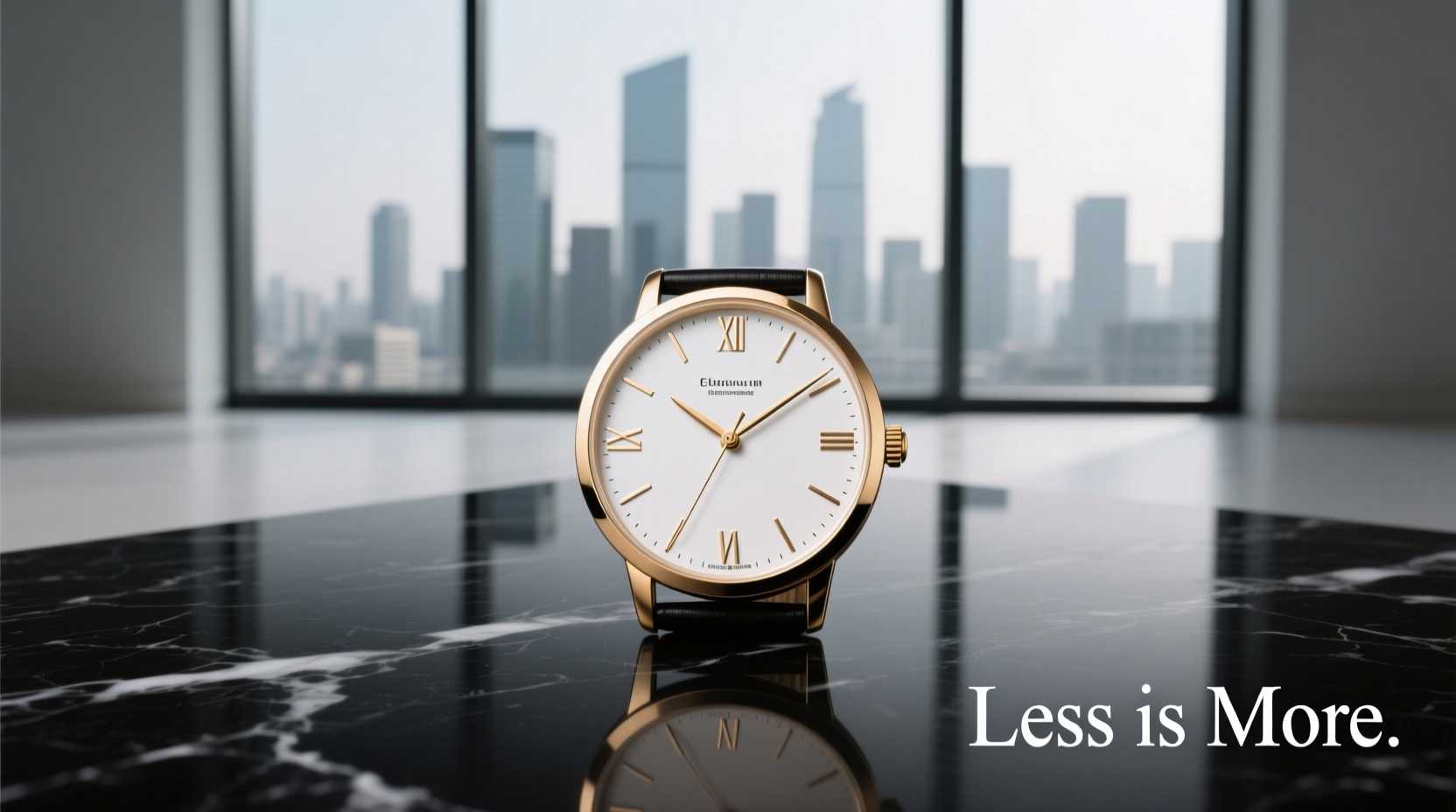
Minimalism in watchmaking isn’t just the absence of clutter—it’s a philosophy rooted in purposeful restraint. A truly minimalist watch eliminates superfluous elements: no excessive branding, no ornate dials, no bulky cases. What’s left is a clean face, legible markers, and often a monochromatic or neutral color palette. Yet within this simplicity lies opportunity: space for craftsmanship, proportion, and subtle details to shine.
Consider the dial layout. Watches like the Junghans Max Bill or Nomos Tangente exemplify this principle. Their open faces feature thin hands, sparse numerals or indices, and generous negative space. This creates a sense of balance and calm, allowing the viewer’s eye to rest rather than race across complications. However, true minimalism isn’t synonymous with plainness. The finest minimalist watches use texture, font choice, and hand finish to elevate their presence.
Materials That Speak Quietly but Command Respect
A minimalist watch relies heavily on its materials to convey quality. With fewer visual distractions, every element—from case to strap—must be intentional and well-executed. Stainless steel remains a top choice for its durability and timeless luster, but brushed finishes are preferable over polished ones in minimalist designs. Brushing reduces glare and adds a tactile, modern feel.
Titanium is another excellent option, especially for those seeking lightweight comfort without sacrificing strength. Its muted gray tone complements minimalist aesthetics naturally. For even greater subtlety, ceramic cases offer scratch resistance and a velvety finish, though they come at a premium.
The crystal is often overlooked but critical. Sapphire crystal, while more expensive, provides superior scratch resistance and optical clarity—essential when the dial is meant to be seen clearly and cleanly. Avoid plastic (acrylic) unless you’re pursuing vintage charm, as it degrades visually over time.
“Minimalism amplifies the importance of material integrity. When there’s less to look at, imperfections become louder.” — Daniel Reyes, Horological Designer
Finding the Right Proportions and Scale
One of the most common mistakes in choosing a minimalist watch is ignoring size relative to wrist proportions. A 36mm case may look elegant on paper, but if it drowns on a larger wrist, it loses authority. Conversely, a 42mm watch might dominate a smaller wrist, undermining the refined intent of minimalism.
The ideal diameter typically falls between 36mm and 40mm for men and 32mm to 36mm for women, though unisex models have blurred these lines. Case thickness also matters—thin profiles (under 9mm) enhance elegance and reduce visual weight, aligning perfectly with minimalist ideals.
Lug-to-lug distance—the measurement from the tip of one lug to the other—determines how the watch sits on the wrist. Even a 38mm watch can wear large if the lugs extend too far. Try to keep this under 47mm for a snug, balanced fit.
| Wrist Size (Circumference) | Recommended Case Diameter | Lug-to-Lug Target |
|---|---|---|
| 5.5–6 inches (14–15 cm) | 32–36mm | ≤ 45mm |
| 6–7 inches (15–18 cm) | 36–40mm | 45–47mm |
| 7+ inches (18+ cm) | 38–42mm | 47–50mm |
Movement: The Hidden Soul of Simplicity
Beneath the serene surface of a minimalist watch beats its mechanical heart. While quartz movements offer accuracy and affordability, many enthusiasts gravitate toward automatic (self-winding) mechanisms for their craftsmanship and heritage. An automatic movement adds intrinsic value—even if unseen, knowing the watch is powered by motion enhances emotional connection.
That said, high-end quartz—such as Citizen’s Eco-Drive or Longines’ VHP (Very High Precision)—shouldn’t be dismissed. These combine minimal maintenance with exceptional accuracy, sometimes losing less than ten seconds per year. For someone prioritizing function and reliability, premium quartz can be the smarter minimalist choice.
If opting for mechanical, consider transparency. Some minimalist watches feature exhibition case backs, revealing the movement’s architecture. This contrasts beautifully with the clean front—minimalism on one side, complexity on the other. Brands like Nomos Glashütte and Tissot excel here, offering finely finished movements at accessible prices.
Straps and Wearing Experience
The strap is the handshake between watch and wearer. In minimalist design, it must complement—not compete—with the case. Leather straps in black, brown, or charcoal offer warmth and versatility. Opt for smooth or grained calfskin with minimal stitching. For a sleeker, more contemporary look, consider vegan leather or ultra-thin rubber.
Bracelets should be simple and integrated. H-link or mesh bracelets work well if finely crafted, but avoid chunky links that disrupt the clean line. Milanese loops provide adjustability and breathability while maintaining elegance.
Interchangeable straps increase utility. A single minimalist watch can shift from office formal (black leather) to weekend casual (NATO strap) to evening refinement (suede). Ensure lug width compatibility—common sizes are 18mm, 20mm, and 22mm—and invest in quick-release spring bars for easy swaps.
Step-by-Step Guide: Selecting Your Statement Minimalist Watch
- Assess your lifestyle needs: Will you wear it daily? In formal settings? During workouts? Choose water resistance accordingly (at least 50m for daily wear).
- Determine wrist proportions: Measure circumference and test case sizes using cardboard cutouts or apps.
- Define your aesthetic: Monochrome? Warm tones? Matte or glossy? Collect images of watches you’re drawn to.
- Research trusted brands: Focus on those known for minimalist design—Orient Bambino, Braun, Skagen, Credor, or Fossil’s minimalist lines.
- Compare movements: Decide whether quartz accuracy or mechanical soul matters more to you.
- Check finishing quality: Look for crisp printing, aligned indices, and seamless case construction in reviews or close-up photos.
- Test wearability: If possible, try before buying. Pay attention to weight, comfort, and how it catches light.
- Consider long-term value: Will this still feel relevant in five years? Avoid trends; focus on timeless cues.
Real Example: The Architect’s Choice
Carlos, a 38-year-old architectural designer based in Barcelona, wanted a watch that reflected his design ethos: functional beauty, clean lines, enduring materials. He wore flashy chronographs in his twenties but found them distracting. After months of research, he chose a 38mm stainless steel Nomos Club Campus with a white dial and blue hands.
What made it stand out wasn’t loud branding or complications—it was the way sunlight played across its matte finish during morning site visits, or how the slim case slipped neatly under shirt cuffs during client meetings. Colleagues began asking about it. “It’s quiet,” one said, “but impossible to ignore.” For Carlos, that was the point. The watch didn’t shout; it resonated.
Do’s and Don’ts: Quick Checklist
- Do prioritize legibility—simple fonts and high contrast between hands and dial.
- Do check lug width and strap compatibility for future customization.
- Do consider lug design—short, curved lugs hug the wrist better than angular, protruding ones.
- Don’t sacrifice comfort for aesthetics—thin bezels and low profile matter for all-day wear.
- Don’t overlook clasp quality—buckles should feel secure, deployants smooth.
- Don’t assume price equals minimalism—some affordable brands execute better than luxury names.
FAQ
Can a minimalist watch be considered a luxury item?
Absolutely. Luxury in minimalism comes from refinement, not ornamentation. Watches like the Cartier Tank or Grand Seiko SBGW231 prove that restraint, combined with impeccable finishing and heritage, defines true luxury. It’s not about how much is there, but how well everything is done.
Is it okay to wear a minimalist watch with a suit and tie?
Yes—minimalist watches are among the most suitable for formal wear. Their clean lines and lack of visual clutter complement tailored clothing perfectly. Stick to metal bracelets or leather straps in black or dark brown, and avoid oversized cases that disrupt the sleeve line.
How do I know if a minimalist watch will age well?
Look for timeless design cues: symmetrical dials, neutral colors, durable materials. Avoid trendy fonts, colored accents, or gimmicky features. A good test: would this watch look out of place in a photo from ten years ago? If not, it will likely endure the next decade.
Conclusion: Make Silence Speak
Choosing the perfect minimalist watch isn’t about finding the thinnest case or the emptiest dial. It’s about discovering the intersection where simplicity meets significance. The right watch won’t demand attention—but once noticed, it won’t be forgotten. It becomes an extension of your values: clarity over chaos, substance over spectacle, presence over noise.
Start with intention. Define what elegance means to you. Then, apply discernment—evaluate materials, proportions, and mechanics not as isolated specs, but as parts of a unified statement. Whether it’s a $200 Orient or a $10,000 Patek Philippe, the power lies in coherence and authenticity.




 浙公网安备
33010002000092号
浙公网安备
33010002000092号 浙B2-20120091-4
Comments
No comments yet. Why don't you start the discussion?