
Selecting the right makeup bag isn’t just about aesthetics—it’s about function, accessibility, and long-term usability. Whether you're packing for a weekend getaway, commuting to work, or building a professional artist kit, the size of your makeup bag can make or break your routine. Too small, and essentials get left behind; too large, and organization becomes impossible. This guide breaks down how to match bag size to your lifestyle, product load, and storage habits—so you never overpack or underprepare again.
Understanding Your Makeup Bag Needs by Lifestyle
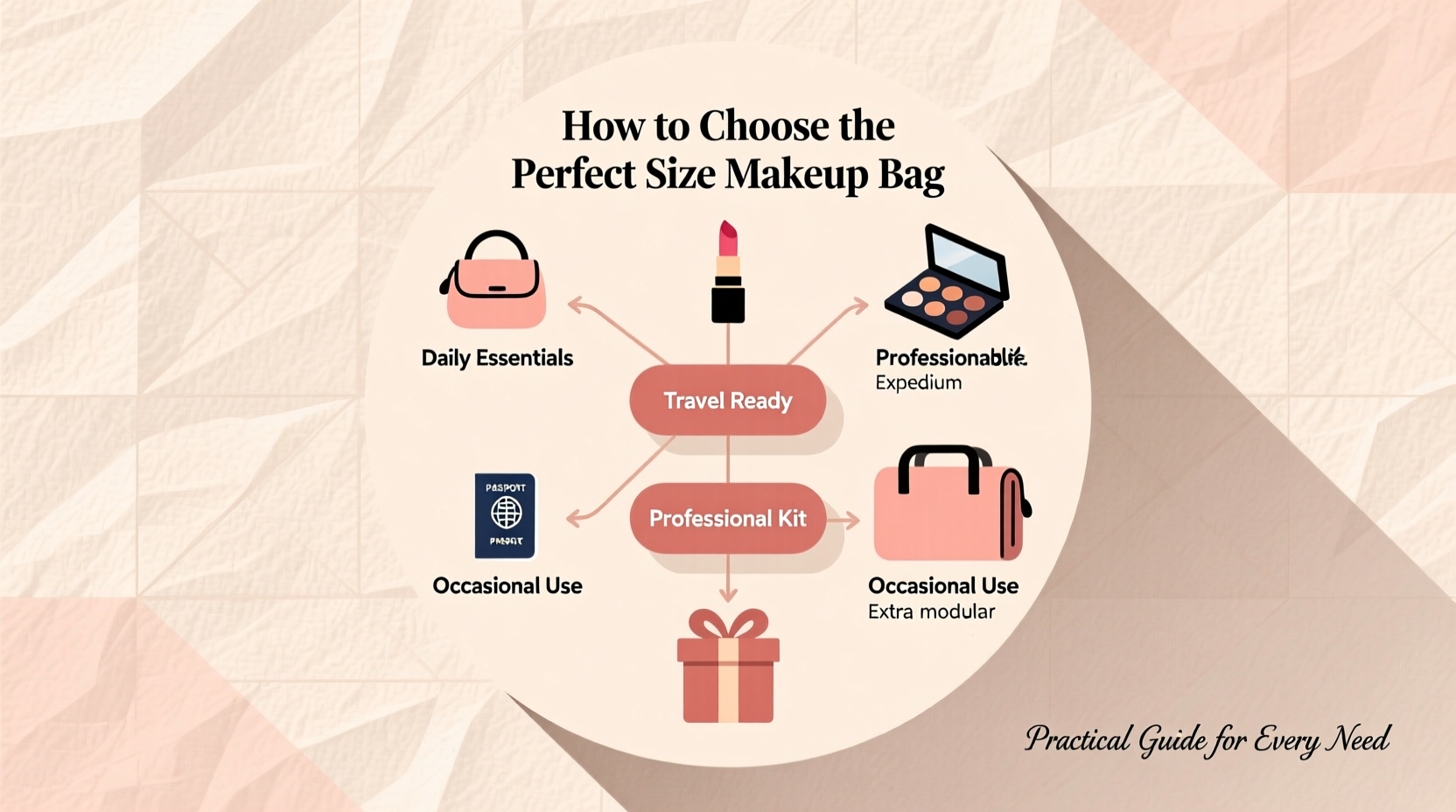
Your daily routine determines the ideal size of your makeup bag. A minimalist who uses five core products has vastly different requirements than a freelance makeup artist carrying 50+ items. Begin by assessing your typical usage scenario:
- Daily commuters need compact, lightweight bags that fit into work totes without adding bulk.
- Frequent travelers benefit from medium-sized, TSA-compliant options with smart compartments.
- Makeup artists require larger, structured cases with multiple tiers and durability for gear protection.
- Minimalists or skincare-first users may prefer slim pouches for touch-ups only.
The key is aligning capacity with actual use—not aspiration. Just because a bag *can* hold 30 lipsticks doesn’t mean it should.
Size Categories and What They Hold
Makeup bags generally fall into three size categories. Understanding what each can realistically carry helps prevent frustration later.
| Size | Dimensions (Approx.) | Ideal For | Typical Contents |
|---|---|---|---|
| Small (Pouch) | 6 x 4 x 2 inches | Touch-ups, minimalists, clutch-style use | Lip balm, lipstick, powder, mini mascara, blotting papers |
| Medium (Travel/Everyday) | 9 x 6 x 3 inches | Daily routines, short trips, flight-safe | Foundation, concealer, brush set, eyeshadow palette, setting spray (mini), wipes |
| Large (Artist/Extended Trip) | 12 x 8 x 5 inches+ | Professional use, week-long vacations | Full-size products, multiple brushes, tools, sponges, removers, accessories |
Note: Dimensions vary by brand and shape. Always check interior volume if available, especially for cylindrical or irregularly shaped bags.
Step-by-Step: Choosing the Right Size for You
Follow this process to ensure your selection fits your real-world needs—not just your wishlist.
- Inventory your makeup: Lay out every product you use in a week. Group them by category—face, eyes, lips, tools.
- Separate essentials from luxuries: Which items do you use daily? Which are situational (e.g., glitter, full coverage foundation)?
- Measure your largest items: Foundation bottles, palettes, and brushes dictate space. Stack them to estimate height and width.
- Test bag dimensions mentally: Visualize how your top 10 essentials fit. Can you access the bottom item without dumping everything?
- Consider portability: Will this go inside another bag? Does it need to fit under an airplane seat?
- Prioritize organization: Multiple compartments reduce the need for oversized bags by preventing clutter.
This method prevents impulse buys based on looks alone. A beautifully designed bag that can’t hold your sunscreen is useless.
Material and Structure Impact Effective Capacity
Not all bags of the same dimensions offer equal usability. The material and internal design influence how much you can actually store—and how easily you can retrieve items.
- Rigid vs. soft-sided: Structured bags maintain shape and protect contents but are heavier. Soft pouches compress but collapse when packed tightly.
- Zipped gussets: Expandable sides add up to 40% more volume without increasing footprint.
- Interior layout: Zippered mesh pockets, elastic loops, and removable trays help organize without sacrificing space.
- Water-resistant linings: Prevent leaks from spreading, protecting both products and bag integrity.
“Many clients come to me with oversized bags because they’re disorganized, not because they need more space. A well-designed medium bag often outperforms a chaotic large one.” — Lena Torres, Professional Makeup Organizer & Artist
Real-Life Example: From Overpacked to Optimized
Sophie, a digital marketer based in Portland, used a large duffel-style makeup bag for her daily commute. It held everything—but she rarely used half the contents. Finding her concealer meant unpacking brushes, expired samples, and seasonal products. After auditing her routine, she realized she only used six items daily and eight extras for evening events.
She switched to a medium-sized rectangular bag with two zip compartments: one for daily essentials, one for occasion-based items. The new bag fit neatly into her tote, reduced morning stress, and even saved weight on flights. By downsizing intelligently, she gained efficiency without losing access.
Checklist: How to Confirm Your Makeup Bag Fits Your Life
Before purchasing, run through this checklist to avoid regret:
- ✅ Holds all daily-use products without cramming
- ✅ Allows quick access to frequently used items (no unzipping three compartments for lipstick)
- ✅ Fits within your primary handbag, backpack, or luggage
- ✅ Includes secure closures (zipper preferred over drawstring for travel)
- ✅ Has at least one dedicated pocket for small tools or cotton pads
- ✅ Made of wipeable, durable material (e.g., nylon, vegan leather, coated canvas)
- ✅ Doesn’t exceed 10% of your total carried weight
FAQ: Common Questions About Makeup Bag Sizing
Can I use one makeup bag for both travel and daily use?
Yes—if it’s medium-sized and highly organized. Many people keep a single versatile bag with removable sections: one for everyday basics, one for travel extras. Just ensure it doesn’t become a catch-all for unused products.
How do I prevent my bag from getting too heavy?
Limit full-size liquids. Opt for minis, solid formats (cream blushes, lipsticks in compacts), and multi-use products. A loaded bag over 2 lbs becomes cumbersome, especially when carried daily.
What’s the best size for carry-on compliance?
A bag no larger than 9 x 7 x 3 inches typically fits within personal item limits and works with TSA’s quart-sized liquids rule. Look for flat, rectangular designs—they pack efficiently into clear security bags.
Final Thoughts: Size Isn’t Everything—But It Matters
The perfect makeup bag strikes a balance between capacity and convenience. It holds what you need, protects what you own, and simplifies your routine instead of complicating it. Resist the temptation to buy large “just in case.” Instead, build intentionality into your selection process: know your products, understand your movement patterns, and prioritize access over volume.
When size and structure align with lifestyle, your makeup bag becomes less of a container and more of a tool—one that supports confidence, efficiency, and self-care, wherever you go.




 浙公网安备
33010002000092号
浙公网安备
33010002000092号 浙B2-20120091-4
Comments
No comments yet. Why don't you start the discussion?