
Finding a smartwatch that delivers reliable fitness tracking without draining your wallet is more than possible—it's practical. With hundreds of models flooding the market each year, it’s easy to feel overwhelmed by choices. However, by focusing on core needs rather than flashy extras, you can identify a device that tracks workouts accurately, integrates seamlessly with your lifestyle, and fits comfortably within your budget.
The key isn’t just buying cheap; it’s buying smart. Many mid-range and even budget-friendly watches now offer advanced sensors, GPS, heart rate monitoring, and sleep tracking that rival premium models. The challenge lies in filtering out marketing noise and honing in on what actually matters for your fitness goals.
Understand Your Fitness Tracking Needs
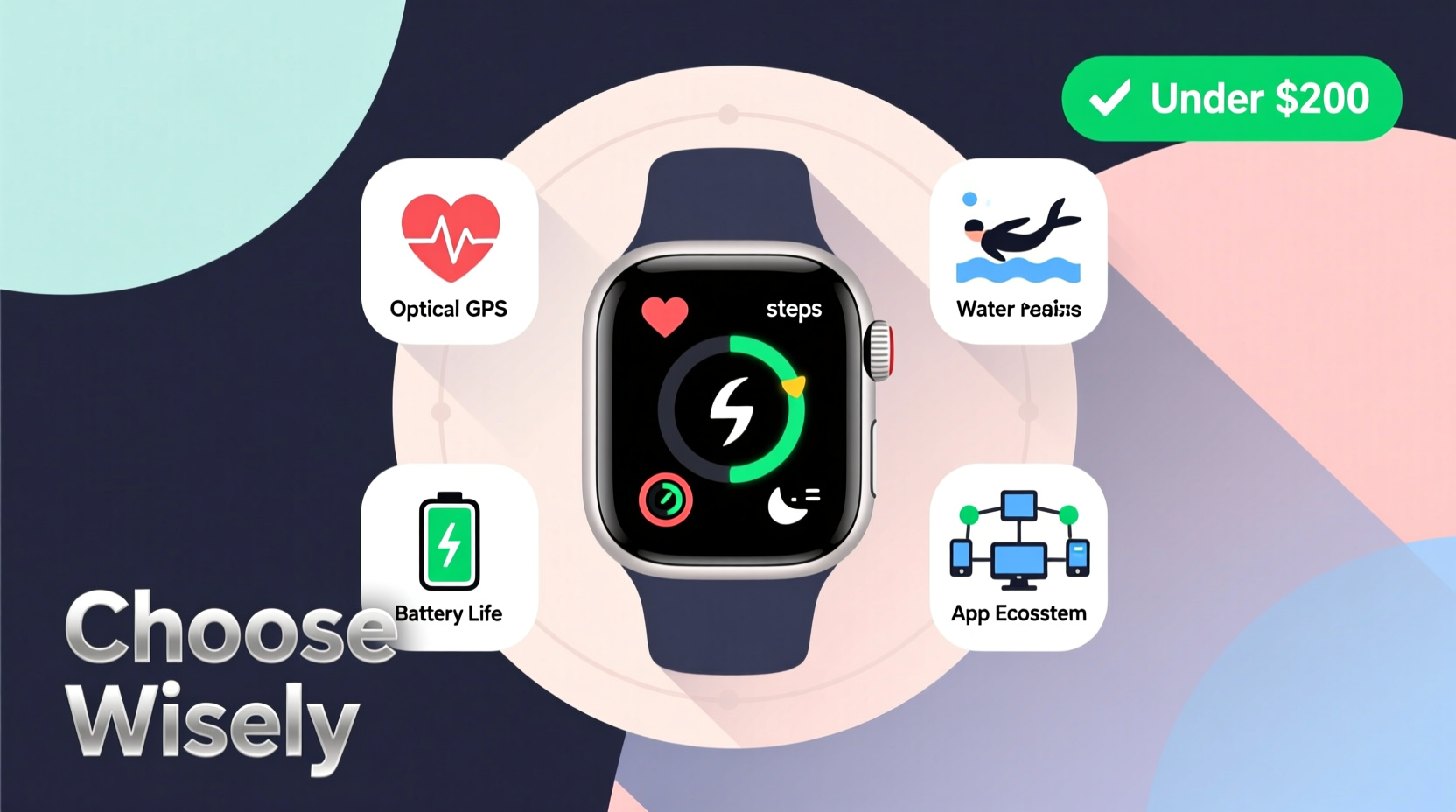
Before browsing product pages or comparing specs, take a moment to define how you plan to use your smartwatch. Are you training for a marathon? Monitoring daily steps and sleep? Or simply staying active during short walks and gym sessions? Your usage pattern determines which features are essential—and which ones you can live without.
- Basic Activity Tracking: If you're focused on general wellness, step counting, calorie estimation, and sleep stages may be sufficient.
- Cardio & Heart Rate Monitoring: For runners, cyclists, or HIIT enthusiasts, continuous heart rate tracking and zone alerts are crucial.
- GPS & Route Mapping: Outdoor athletes benefit from built-in GPS to map runs, hikes, or bike routes without carrying a phone.
- Swim Tracking: Water resistance (ATM rating) and swim stroke detection matter if you’re a regular swimmer.
- Advanced Metrics: VO₂ max estimates, recovery time, stress scores, and SpO₂ monitoring add insight but often come at a higher price.
Key Features That Matter Most—And Which Ones Don’t
Not all smartwatch features deliver equal value, especially when budget-conscious. Prioritize functionality over bells and whistles. Here’s a breakdown of what’s worth investing in versus what’s often overpriced fluff.
| Feature | Why It Matters | Worth Paying Extra? |
|---|---|---|
| Optical Heart Rate Sensor | Essential for tracking intensity during workouts and resting heart rate trends. | Yes — but accuracy varies. Look for models with proven sensor performance. |
| Built-in GPS | Allows route tracking without a phone. Critical for runners and hikers. | Yes — unless you always carry your phone while exercising. |
| Water Resistance (5ATM+) | Enables swim tracking and withstands sweat and rain. | Yes — especially for multisport users. |
| ECG / Blood Pressure | Medical-grade readings available on high-end models. | No — unless prescribed or monitored by a doctor. |
| Luxury Materials (Titanium, Sapphire Glass) | Durability and aesthetics improve, but don’t enhance tracking. | No — avoid unless durability is a top concern. |
| App Ecosystem & Notifications | Nice for convenience, but not fitness-critical. | Sometimes — only if integration with your phone OS is smooth. |
Focus on hardware that directly impacts data reliability. A precise heart rate sensor and accurate GPS will give better long-term insights than a flashy screen or third-party app store.
Set a Realistic Budget—and Stick to It
Smartwatches range from under $50 to over $800. For most fitness-focused buyers, the sweet spot lies between $100 and $250. This range includes capable devices from reputable brands like Garmin, Fitbit, Amazfit, Samsung, and Xiaomi.
Spending more doesn’t always mean better tracking. Premium models often prioritize design, brand prestige, or niche health features irrelevant to everyday users. Conversely, ultra-cheap watches (<$70) frequently cut corners on sensor quality, software updates, and battery life.
“Consumers assume higher price equals better accuracy, but we’ve tested $120 watches outperforming $400 models in heart rate consistency and GPS lock speed.” — Dr. Lena Torres, Wearable Tech Researcher at MIT Media Lab
To stay on budget:
- Wait for seasonal sales (Black Friday, Prime Day).
- Consider previous-generation models (e.g., Garmin Venu 2 instead of Venu 3).
- Avoid carrier-exclusive bundles that inflate prices.
- Check refurbished programs from manufacturers (Apple, Samsung, Garmin offer certified pre-owned options).
Step-by-Step Guide to Choosing Your Watch
Follow this logical process to narrow down your options efficiently and confidently.
- Define Your Primary Use Case: Running, swimming, gym work, or general activity? Write down your top three activities.
- List Must-Have Features: Based on your use case, decide if GPS, water resistance, or specific workout modes are non-negotiable.
- Set a Hard Budget Cap: Choose a maximum amount you’re willing to spend and eliminate anything above it.
- Shortlist 3–5 Models: Use sites like DC Rainmaker, The Verge, or Wirecutter to find well-reviewed watches in your range.
- Compare Battery Life: Longevity affects usability. A 5-day battery is better than one requiring daily charging.
- Check App Compatibility: Ensure the companion app works with your smartphone (iOS vs Android) and syncs with fitness platforms like Strava or MyFitnessPal.
- Read Real User Reviews: Focus on feedback about sensor accuracy, comfort, and long-term reliability—not just first impressions.
- Purchase from a Source with Return Options: Buy from retailers offering at least a 14-day return window in case the fit or function doesn’t meet expectations.
Real Example: Sarah’s Smartwatch Journey
Sarah, a 34-year-old teacher and weekend runner, wanted to start tracking her 5K training. She initially considered the Apple Watch Series 9 ($399), attracted by its sleek design and notifications. But after researching, she realized she didn’t own an iPhone and wouldn’t use most of its features.
Instead, she looked at the Garmin Forerunner 255 ($299) and later discovered the Amazfit Bip 5 ($129). Though less known, the Bip 5 offered GPS, heart rate tracking, sleep analysis, and a 10-day battery—all compatible with her Android phone. After reading reviews confirming decent accuracy for casual running, she bought it during a 20% discount sale for $103.
Six months later, Sarah completed her first 10K race using only her Amazfit for pacing and distance. “I saved over $250,” she said, “and got everything I needed. No regrets.”
Fitness Smartwatch Checklist Before Buying
📋 Pre-Purchase Checklist- ✅ Does it have built-in GPS if I run/walk outdoors?
- ✅ Is the optical heart rate sensor known for accuracy?
- ✅ Is it water-resistant to at least 5ATM (suitable for swimming)?
- ✅ Does the battery last at least 5 days on a charge?
- ✅ Is the companion app free and compatible with my phone?
- ✅ Can it sync with my preferred fitness apps (Strava, Google Fit, etc.)?
- ✅ Does it support my primary workout types (running, cycling, yoga, etc.)?
- ✅ Is there a return policy or trial period?
- ✅ Have recent reviews mentioned durability or software bugs?
- ✅ Is it priced within my set budget, including straps or accessories?
Frequently Asked Questions
Can a budget smartwatch accurately track heart rate?
Many budget smartwatches now use upgraded optical sensors that perform well under steady conditions. However, they may lag during rapid intensity changes (like sprints). For consistent cardio monitoring, look for models validated in independent tests—such as those reviewed by DC Rainmaker or Trusted Reviews.
Do I need an expensive brand for good fitness tracking?
Not necessarily. Brands like Amazfit, Huawei, and Mobvoi offer strong tracking capabilities at lower prices. While Garmin and Apple lead in algorithm sophistication, mid-tier brands have closed the gap significantly. Focus on real-world performance, not brand name alone.
Will my smartwatch become obsolete quickly?
Some budget models receive limited software updates, which can affect security and feature support. Check the manufacturer’s update policy: ideally, the device should get at least two years of firmware updates. Avoid unknown brands with no track record of post-launch support.
Final Thoughts: Value Over Vanity
The perfect fitness smartwatch isn’t the most expensive or the flashiest—it’s the one that aligns with your routine, delivers trustworthy data, and lasts for years without constant charging or glitches. By cutting through marketing hype and focusing on proven features, you can make a confident choice that supports your health journey without stretching your finances.
Remember, technology serves your goals—not the other way around. Whether you're walking 10,000 steps a day or training for a triathlon, the right tool should enhance your effort, not distract from it.




 浙公网安备
33010002000092号
浙公网安备
33010002000092号 浙B2-20120091-4
Comments
No comments yet. Why don't you start the discussion?