
Thread count is one of the most commonly cited metrics when shopping for sheets, often treated as the ultimate indicator of quality. But the reality is far more nuanced. A high thread count doesn’t automatically mean better sleep or longer-lasting linens. In fact, misleading labeling and inflated numbers have turned thread count into a marketing tool rather than a reliable guide. To truly select bedding that feels soft, breathes well, and stands up to years of use, you need to look beyond the number on the tag.
Understanding Thread Count: What It Really Means
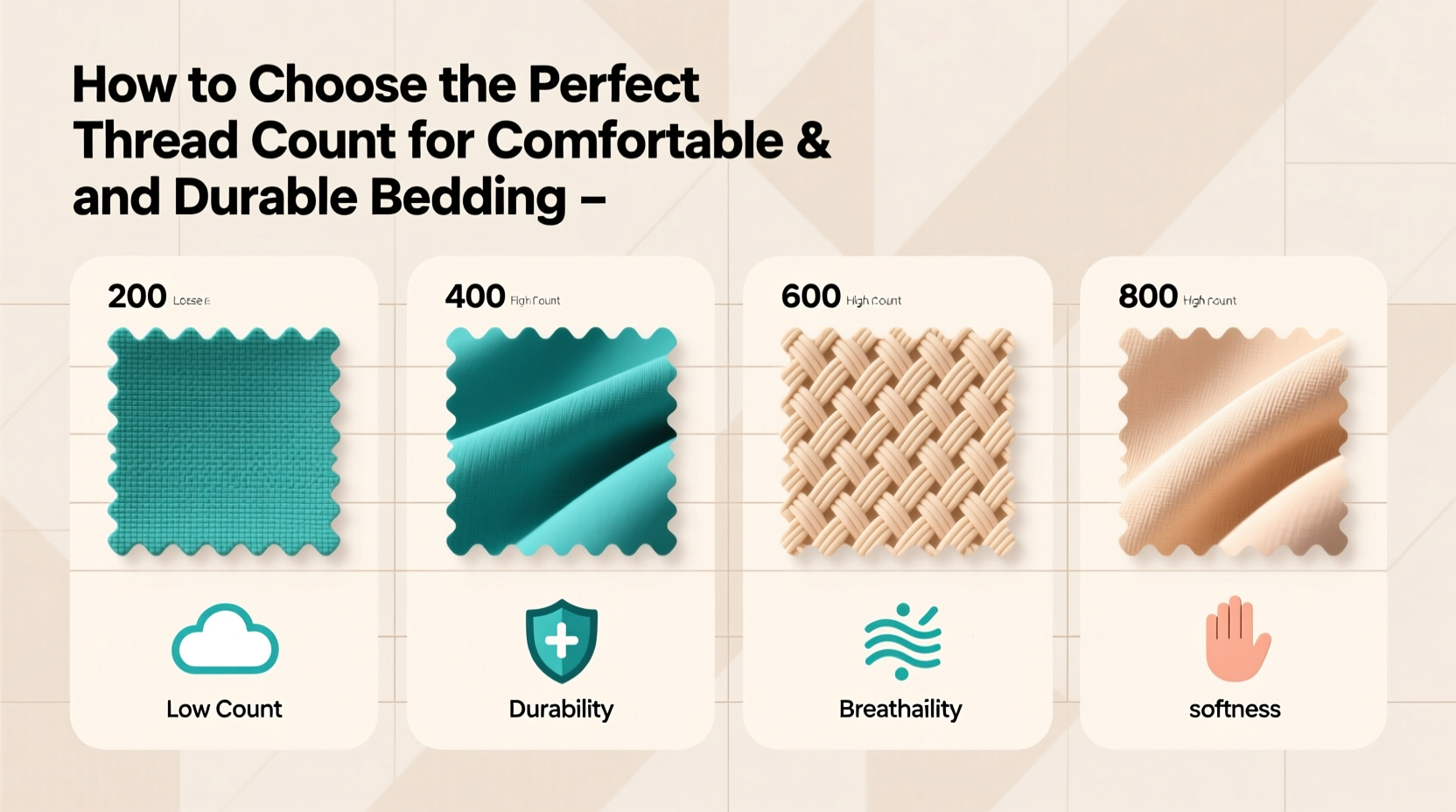
Thread count refers to the number of horizontal (weft) and vertical (warp) threads woven into one square inch of fabric. For example, a sheet with 100 warp threads and 100 weft threads per inch has a thread count of 200. While this seems straightforward, manufacturers can manipulate these numbers through multi-ply yarns or tightly twisted fibers, artificially inflating counts without improving quality.
The Federal Trade Commission (FTC) recommends transparent labeling, but enforcement is inconsistent. Some brands count individual plies in a single thread, turning a 250-thread-count fabric made from two-ply yarn into a \"500 thread count\" product. This practice misleads consumers into believing they’re getting a premium product when, in reality, the fabric may be heavier, less breathable, and prone to pilling.
“Thread count is just one factor. The quality of the cotton, weave type, and finishing processes matter more than the number alone.” — Dr. Linda Chen, Textile Scientist at the American Association of Textile Chemists and Colorists
Optimal Thread Count Ranges by Fabric Type
Not all fabrics benefit from ultra-high thread counts. Different materials perform best within specific ranges. Here’s a breakdown of ideal thread counts based on common bedding fabrics:
| Fabric Type | Recommended Thread Count Range | Why This Range Works |
|---|---|---|
| Cotton (Single-Ply) | 200–400 | Balances softness, breathability, and strength. Higher counts in this range offer silkier feel without compromising airflow. |
| Pima or Egyptian Cotton | 300–400 | Long-staple fibers are naturally smoother and stronger, so even moderate thread counts feel luxurious and last longer. |
| Percale Weave | 200–360 | Tighter plain weave benefits from moderate counts; higher numbers can make percale stiff and less crisp. |
| Sateen Weave | 300–500 | Higher thread counts enhance the smooth, lustrous finish, but only if made from single-ply, long-staple cotton. |
| Bamboo or Tencel™ | 300–400 | Naturally soft and moisture-wicking; high thread counts can reduce breathability and increase cost unnecessarily. |
What Matters More Than Thread Count
While thread count gets the spotlight, several other factors have a greater impact on comfort and longevity:
- Fiber Quality: Long-staple cotton (like Egyptian or Pima) produces stronger, softer, and more durable yarns. Shorter fibers create rougher textures and are more likely to pill.
- Weave Type: Percale offers a cool, crisp feel ideal for warm sleepers, while sateen provides a silky, slightly warmer surface. Choose based on your sleep preferences, not thread count.
- Yarn Construction: Single-ply yarns are lighter and smoother than multi-ply, which are thicker and coarser. Multi-ply can be used to inflate thread count without improving quality.
- Dyeing and Finishing: Chemical finishes can make low-quality sheets feel soft initially but degrade after a few washes. OEKO-TEX® certified bedding ensures non-toxic processing.
Step-by-Step Guide to Choosing Bedding That Lasts
Selecting the right sheets doesn’t require guesswork. Follow this practical process to ensure you get both comfort and durability:
- Determine your sleep climate: Hot sleepers should prioritize breathable weaves like percale or natural fibers like linen and Tencel™.
- Check the fiber source: Opt for long-staple cotton, bamboo, or certified sustainable materials.
- Verify the weave: Match the weave to your texture preference—crisp (percale), silky (sateen), or textured (linen).
- Inspect the thread count claim: If it exceeds 500, question whether it’s counting plies. Anything above 800 is almost certainly misleading.
- Read independent reviews: Look for feedback on durability after multiple washes, not just initial softness.
- Consider care requirements: Some high-thread-count sateens require delicate washing; simpler weaves are easier to maintain long-term.
Mini Case Study: Sarah’s Search for Cool, Durable Sheets
Sarah, a nurse who works night shifts and sleeps during hot summer days, struggled with overheating and sheets that wore out quickly. She initially bought a 1,000-thread-count set marketed as “luxury hotel-grade,” but found them clammy and prone to pilling after three months.
After researching fiber types and weaves, she switched to a 300-thread-count organic cotton percale set. Though the number was lower, the long-staple fibers and tight plain weave provided excellent airflow and a crisp, cool feel. Two years later, the sheets remain soft, intact, and her favorite purchase.
Her experience underscores a key truth: real comfort comes from thoughtful material choices, not exaggerated numbers.
Common Misconceptions About Thread Count
Several myths persist in the bedding market, often driven by aggressive advertising:
- Myth: Higher thread count = softer sheets. Reality: Softness depends on fiber length and finish. A 200-thread-count Pima cotton sheet can feel silkier than a 900-thread-count poly-cotton blend.
- Myth: Thread counts over 1,000 are superior. Reality: Such claims are typically deceptive, using multi-ply yarns. True single-ply fabrics rarely exceed 500 without sacrificing breathability.
- Myth: All 400-thread-count sheets are equal. Reality: Two sheets with the same thread count can differ drastically in feel and lifespan based on cotton quality and weave.
FAQ
Is 1,000 thread count bedding worth it?
No. Thread counts above 500 are often misleading due to multi-ply yarn counting. These sheets tend to be less breathable and no more durable than well-made 300–400 thread count options.
Do lower thread counts wear out faster?
Not necessarily. A 200-thread-count sheet made from long-staple cotton and tight weave can outlast a poorly made 600-thread-count set. Fiber quality and construction matter more than the number.
Can I machine wash high thread count sheets?
Yes, but check the care label. Many high-count sateens recommend gentle cycles and cold water to preserve the finish. Over time, harsh washing degrades fibers regardless of thread count.
Final Checklist Before You Buy
- ☑ Is the cotton long-staple (Egyptian, Pima, Supima®)?
- ☑ Is the yarn single-ply, not multi-ply?
- ☑ Does the thread count fall between 200 and 500?
- ☑ Is the weave suited to my climate (percale for cool, sateen for warmth)?
- ☑ Are there third-party certifications (e.g., OEKO-TEX®, GOTS)?
- ☑ Do reviews mention durability after 6+ months of use?
Conclusion
Choosing the perfect bedding isn’t about chasing the highest number on the label. It’s about understanding what truly contributes to comfort and durability—fiber origin, weave structure, and honest manufacturing. By focusing on quality over quantity, you invest in sheets that feel great from day one and continue to perform for years. Don’t let marketing gimmicks dictate your sleep experience. Make informed choices, prioritize natural materials, and enjoy restful nights on bedding that earns its reputation.




 浙公网安备
33010002000092号
浙公网安备
33010002000092号 浙B2-20120091-4
Comments
No comments yet. Why don't you start the discussion?