
Digital nomadism isn’t just a trend—it’s a lifestyle shift. As more professionals work remotely from hostels in Bali, cafés in Lisbon, or co-working spaces in Medellín, the right gear becomes critical. At the heart of every mobile professional’s kit is their travel backpack. Unlike traditional luggage, a well-chosen backpack supports mobility, protects expensive electronics, and adapts to ever-changing environments. But not all backpacks are built for this kind of life. Choosing the wrong one can lead to back strain, damaged devices, or even theft. The key is understanding which features truly matter when living and working on the move.
Ergonomics and Comfort: Carry It All Without Paying the Price
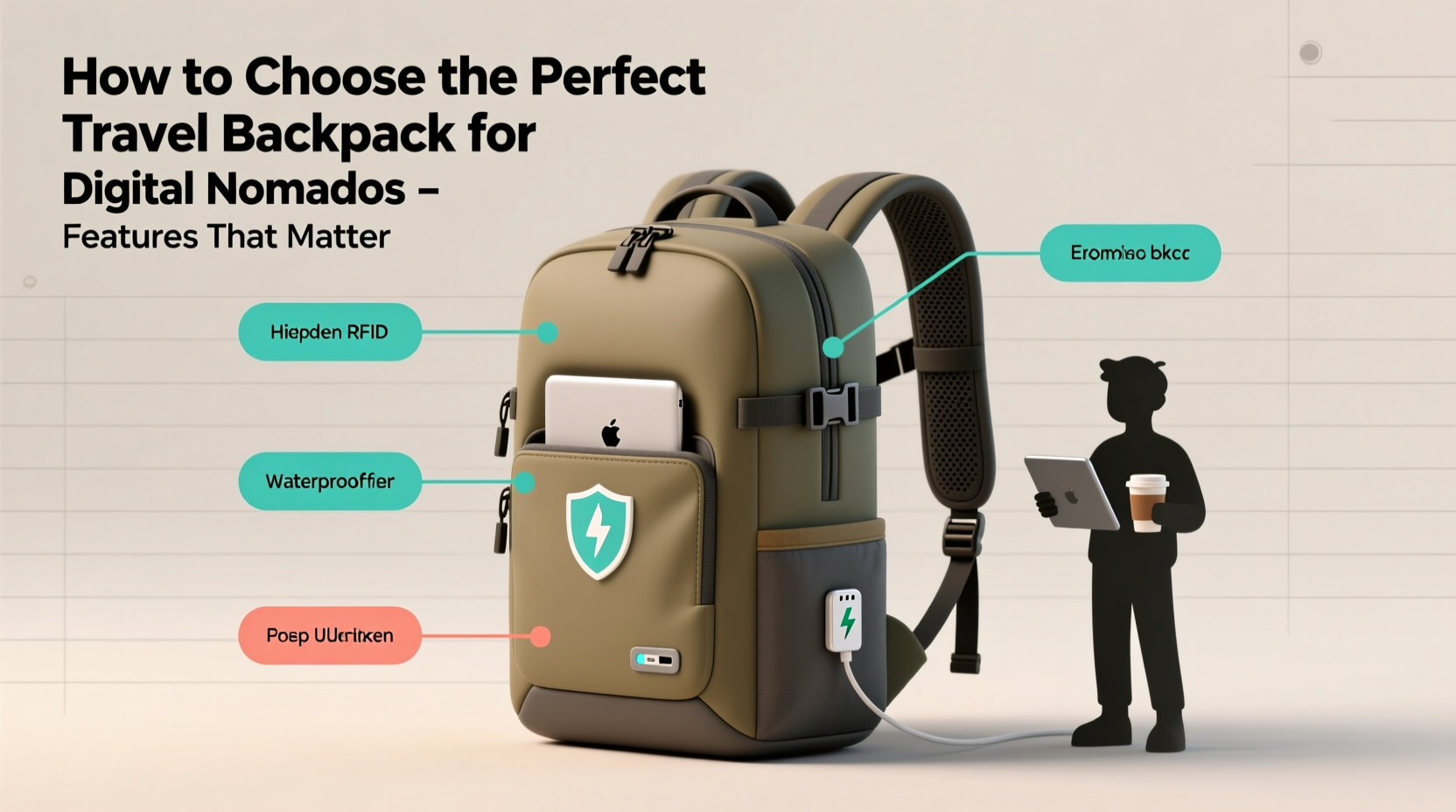
For digital nomads, time spent walking through airports, train stations, and cobblestone streets adds up quickly. A poorly designed backpack may seem light at first but can cause chronic shoulder, neck, or lower back pain after weeks on the road. Ergonomic design isn’t a luxury—it’s a necessity.
Look for backpacks with padded, adjustable shoulder straps and a supportive hip belt. The hip belt transfers up to 80% of the weight from your shoulders to your hips, significantly reducing upper body fatigue. Ventilated back panels help prevent excessive sweating during long treks, especially in tropical climates.
Adjustability matters too. Torso length varies greatly between individuals. Backpacks with customizable harness systems allow you to align the shoulder straps and load lifters correctly, ensuring optimal weight distribution. Women-specific models often feature shorter torso lengths and contoured straps for better fit.
Key Features for Long-Term Wear
- Load-bearing hip belt: Distributes weight efficiently and stabilizes the pack.
- Sternum strap: Reduces shoulder strain and keeps straps in place during movement.
- Multiple adjustment points: Customize fit across torso, shoulders, and chest.
- Breathable mesh back panel: Enhances airflow and reduces sweat buildup.
Tech Organization: Protect Your Tools of Trade
Your laptop, tablet, phone, chargers, and cables are not just accessories—they’re your livelihood. A digital nomad’s backpack must offer intelligent tech storage that balances accessibility, protection, and organization.
A dedicated laptop compartment should be both padded and suspended, meaning the laptop sleeve floats within the backpack rather than sitting directly against the outer shell. This design absorbs shock from drops or bumps. Look for compartments that accommodate laptops up to 16 inches, as many professionals rely on larger screens for coding, design, or video editing.
Beyond the laptop, consider secondary pockets for tablets, e-readers, power banks, and dongles. Zippered mesh pockets help separate cords and adapters, preventing tangles. Some premium models include RFID-blocking pockets for credit cards and passports, adding an extra layer of identity protection.
External USB charging ports are common in marketing materials, but use caution. These require connecting a power bank inside the bag to a port on the outside, which can compromise water resistance and security. A better solution is internal cable routing: small openings near the top of the bag that let you run charging cables from an internal battery to your device without exposing it.
“Over 70% of remote workers report replacing damaged electronics within their first year abroad—often due to poor bag design.” — Lena Torres, Digital Nomad Gear Analyst
Durability and Weather Resistance: Built for Unpredictable Conditions
Digital nomads face rainstorms in Chiang Mai, dusty roads in Morocco, and humid markets in Hanoi. A backpack made with flimsy fabric or weak zippers won’t survive six months of such conditions. Durability hinges on three factors: material, construction, and weather protection.
High-denier nylon—such as 600D or 1000D—is standard in premium travel packs. These numbers refer to thread density; higher denier means greater resistance to abrasion and tearing. Ballistic nylon and Cordura are even stronger options used in military-grade gear.
Zippers should be YKK or equivalent—a brand trusted for reliability. Water-resistant zippers with storm flaps add protection during sudden downpours. Seams should be reinforced, and stitching should be tight and consistent, ideally with bar-tacking at stress points like handles and strap anchors.
Many modern backpacks come with built-in rain covers stored in a bottom compartment. If yours doesn’t, invest in a custom-fit cover. Alternatively, use a lightweight dry sack liner inside the main compartment to protect clothes and electronics if caught in heavy rain.
| Material Type | Durability Level | Best For | Trade-offs |
|---|---|---|---|
| 600D Nylon | Good | Urban travel, short-term trips | Less resistant to sharp abrasion |
| 1000D Nylon | Excellent | Long-term travel, rugged terrain | Slightly heavier |
| Cordura | Exceptional | Extreme conditions, off-grid travel | Premium cost |
| Polyester | Fair | Budget options | Prone to pilling and moisture retention |
Security and Theft Deterrence: Stay Safe in High-Risk Areas
In crowded cities or overnight buses, pickpocketing is a real threat. A secure backpack incorporates subtle anti-theft features that deter opportunists without sacrificing usability.
Lockable zippers are essential. Use small combination locks or zipper clips to secure main compartments and side pockets. Hidden pockets—placed against the back panel—are ideal for storing passports, cash, or backup drives. These are difficult for thieves to access without drawing attention.
Some brands integrate cut-proof materials into shoulder straps and base panels. Slash-resistant webbing prevents thieves from slicing open your bag with a knife while you're distracted. While extreme, these features have proven effective in high-risk zones like Southeast Asian night markets or European metro lines.
Design also plays a role. Top-loading backpacks are harder to sneak into than front-zip models. However, they sacrifice quick access. A hybrid approach—front-loading with a clamshell opening—offers both visibility and security, allowing you to lay the bag flat like a suitcase while still locking the zippers.
Capacity and Packing Efficiency: Balancing Minimalism and Functionality
The sweet spot for most digital nomads is between 30 and 45 liters. Anything under 30L forces constant laundry cycles or limits gear options. Over 45L becomes cumbersome, exceeds carry-on size limits on some airlines, and encourages overpacking.
A 35L backpack typically fits:
- One week of clothing (rolled, not folded)
- 15” laptop + accessories
- Toiletries and travel-sized essentials
- Light jacket or foldable shoes
- Water bottle or hydration bladder
Compression straps help reduce bulk when the bag isn’t full. Internal dividers or packing cubes maintain order and make it easier to find items without unpacking everything. Consider whether the backpack has a separate compartment for dirty laundry or shoes—this small detail improves hygiene and odor control during extended trips.
Step-by-Step Guide: How to Test a Travel Backpack Before Buying
- Check dimensions: Confirm it meets airline carry-on requirements (typically under 55 x 35 x 20 cm).
- Load it up: Place 7–10 kg of weight inside, simulating your typical load.
- Wear it for 15 minutes: Walk around, sit down, bend over—test real-life movements.
- Access frequently used items: Open the laptop sleeve, charge your phone, retrieve a water bottle.
- Inspect stitching and hardware: Run fingers along seams, test zippers, tug on straps.
- Try the security features: Lock zippers, check hidden pockets, assess slash resistance.
- Test weather resistance: Spray water on the fabric or research IPX ratings if available.
Real-World Example: From Burnout to Balanced Travel
Jess, a freelance graphic designer from Canada, started her nomadic journey with a stylish city backpack. Within three months, she’d damaged her laptop from repeated drops, developed shoulder pain from uneven weight distribution, and lost a portable hard drive to a pickpocket in Barcelona. After returning home briefly, she invested in a 38L anti-theft backpack with a suspended laptop compartment, hip belt, and lockable zippers.
The difference was immediate. She could hike to mountain viewpoints without discomfort, access her gear quickly at co-working spaces, and feel confident leaving her bag under the table while ordering coffee. Over the next 14 months, she visited 12 countries without a single equipment failure or theft incident. “It wasn’t the most fashionable bag,” she said, “but it gave me peace of mind—the most valuable thing when you’re working abroad.”
Top 7 Features Checklist: What to Prioritize
Before making a purchase, verify that your chosen backpack includes these non-negotiable features:
- ✅ Padded, suspended laptop compartment (fits your screen size)
- ✅ Adjustable harness system with hip belt
- ✅ Durable, high-denier fabric (600D+ nylon or Cordura)
- ✅ Lockable zippers and hidden anti-theft pockets
- ✅ Carry-on compliant dimensions
- ✅ Internal cable routing for charging
- ✅ Rain cover or water-resistant coating
FAQ: Common Questions About Travel Backpacks for Digital Nomads
Can I bring a 40L backpack as carry-on?
Most airlines accept 40L backpacks as carry-on if they meet linear dimension limits (usually under 115 cm / 45 inches total). However, low-cost carriers like Ryanair or AirAsia have stricter rules. Always check specific airline policies before travel.
Is a laptop sleeve enough protection?
A basic sleeve offers minimal impact absorption. Opt for a backpack where the laptop compartment is both padded and suspended—meaning it’s encased in foam and hung away from direct contact with the outer shell. This provides far better drop protection.
How do I clean a travel backpack?
Spot clean with mild soap and a damp cloth. Avoid submerging the entire bag, as this can damage coatings and zippers. Remove all contents, wipe down interior pockets, and air dry completely in a shaded area. Never machine wash unless explicitly stated by the manufacturer.
Final Thoughts: Your Backpack Is Your Mobile Office
Choosing the perfect travel backpack isn’t about chasing the latest model or the lowest price. It’s about selecting a tool that aligns with how you live and work. For digital nomads, this bag carries more than clothes—it holds your income, your creativity, and your freedom. Investing time in evaluating comfort, tech integration, durability, and security pays dividends in reduced stress, fewer replacements, and uninterrupted productivity.
The best backpacks blend functionality with discretion, offering smart organization without looking like a tourist target. They adapt to city streets and mountain trails alike, supporting your journey without becoming a burden. When you find one that checks all the critical boxes, you’re not just buying luggage—you’re investing in a seamless, sustainable remote lifestyle.




 浙公网安备
33010002000092号
浙公网安备
33010002000092号 浙B2-20120091-4
Comments
No comments yet. Why don't you start the discussion?